Residents of Meghalaya, who are at high risk from wild animals, have been adopting various measures for safety, awareness, and income generation.
We use Google Cloud Translation Services. Google requires we provide the following disclaimer relating to use of this service:
This service may contain translations powered by Google. Google disclaims all warranties related to the translations, expressed or implied, including any warranties of accuracy, reliability, and any implied warranties of merchantability, fitness for a particular purpose, and noninfringement.
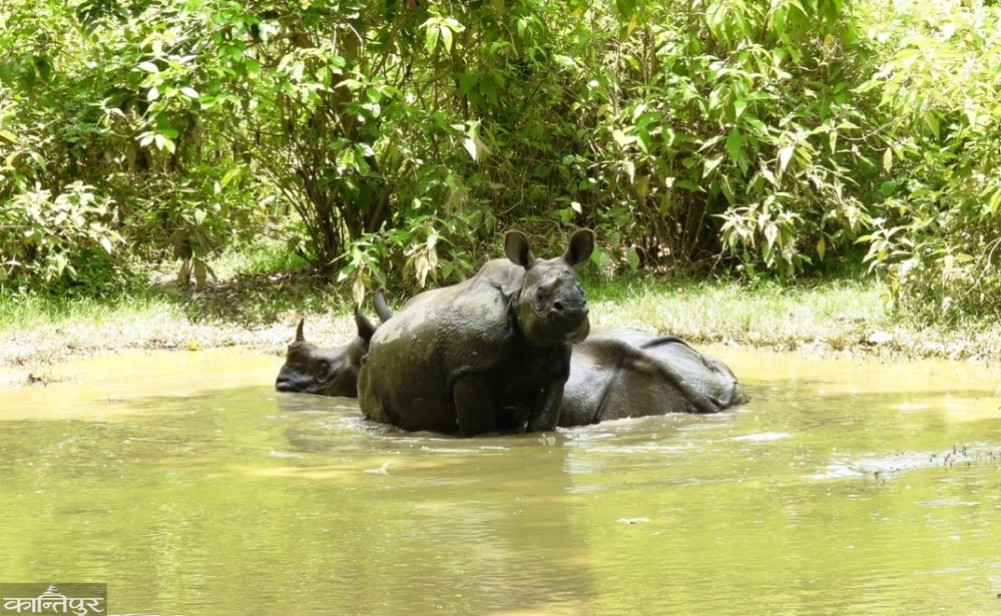
The old tourist area of Chitwan, Meghauli, is located near the Meghauli River, Stream and National Park, so wild animals are also prone to the same problem. Every year, animals are injured and killed when they enter the area. Wild animals also eat crops and domesticated animals.
The residents of Meghauli have come up with many tricks to protect themselves from wild animals. After the Meghauli Consumers' Committee of Chitwan National Park provided a siren, the locals installed it on Saturday afternoon. 'A wild elephant was seen in the evening.' And in the afternoon, we sounded the siren installed at the southwest corner of Meghauli Airport. This alerted people,' said local Yama Bahadur Thapa Magar. A microphone has been installed on a 40-foot-high iron tower. If there is a danger of wild animals entering the village, the siren is sounded.
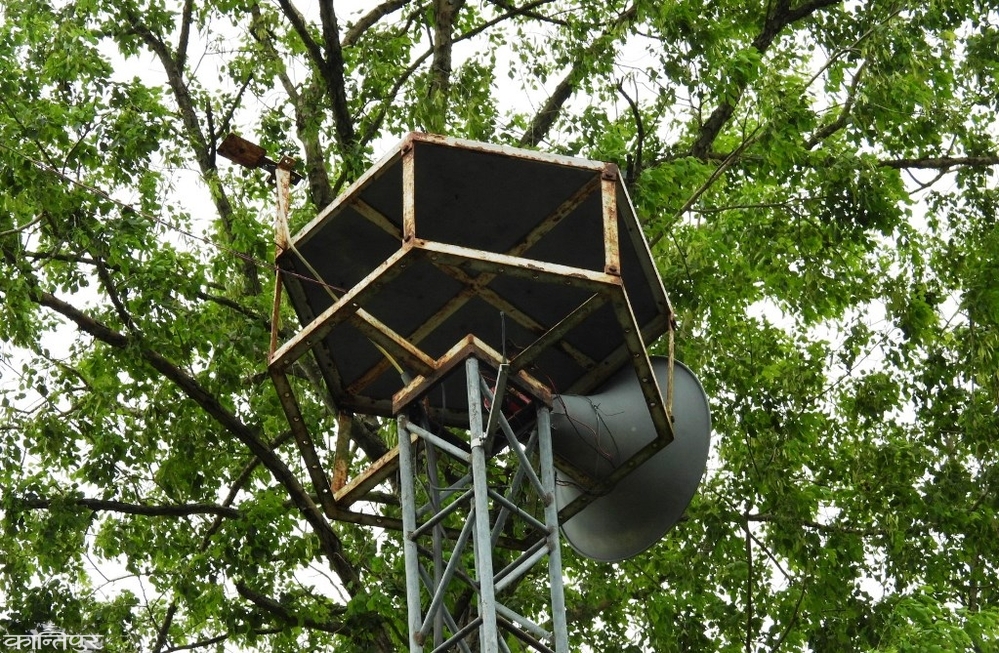
The sound coming from the microphone can be heard around three kilometers away. ‘After this siren, the villagers do not go near the forest. If they stay home and be alert, the army will help if the animals need to be chased away,’ said Thapa Magar.
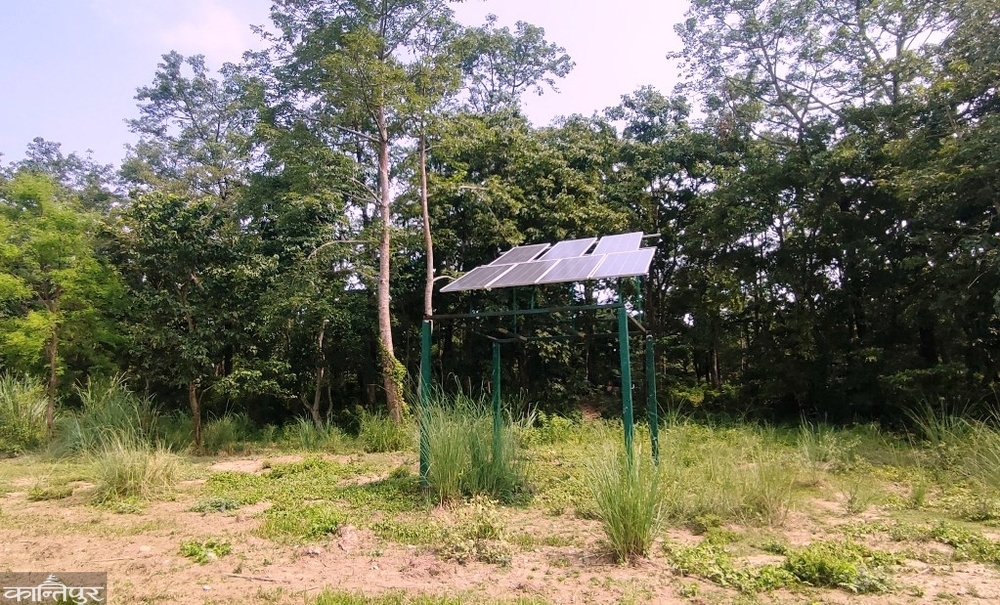
On the afternoon of Bhadra 12, 60-year-old Khem Bahadur Sunar of Andrauli, a village in western Meghauli, was killed when a rhinoceros attacked him. His house is connected to the Rapti Control Intermediate Community Forest. There is a risk of encountering wild animals when the locals go to cut grass. If there is no good grass and a place to play in the forest, wild animals tend to wander out of the forest. The forest committee has run a motor powered by solar energy to prevent large animals like rhinoceros, elephants and deer from entering the forest. ‘The motor runs on solar energy. This has provided water for irrigation. We have used water from this pump to irrigate the grasslands so that they do not dry out. Once the grass and vegetation are established, the wildlife will stop going to the village,' said Vishal Kumal, chairman of the Rapti Control Intermediate Forest.
Villages like Andrauli and Golaghat are densely populated by the indigenous Kumal community. 'There is also a high risk of wild animals in that area. That is why we have paid more attention to the management of water for irrigation and grasslands there,' said Mayaram Chaudhary, chairman of the Meghauli Intermediate Consumers' Committee. Chairman Chaudhary said that a siren that sounds to warn if wild animals appear will also be connected there. Such sirens will be installed at three places in Meghauli.
In addition to installing solar pumps inside the forest and sirens in the villages, the consumer committee has also carried out other activities to protect itself from animals.
Chairman Chaudhary said that since the formation of the Intermediate Consumers Committee in Meghauli, 13 locals have died from rhinos, 6 from tigers and 3 from wild elephants from 2054 to 2081 Baisakh 3. He said that since then, 4 more people have lost their lives due to wild animal attacks. ‘The number of people injured in attacks is also the same. In 25 years, 51 people have been injured from rhinos, 9 from elephants, 3 from tigers, 3 from bears and 3 each from wild boars,’ he said.
The forest of the park is adjacent. The Narayani River flows in the north and the Rapti River in the south. The Rapti and Narayani rivers merge at Golaghat, the last point of Meghauli. Chaudhary says that forests are indispensable to protect against floods, inundation and erosion.
There are nine intermediate community forests in Meghauli. Five buffer forests are located on the Rapti River and four on the Narayani River. These forests have become a good habitat for wildlife even though they block the rivers and streams from entering the villages. Each forest is connected to the village settlement.
Chairman Chaudhary informed that 22,898 households live in the Meghauli Sub-district Committee in wards 27 and 28 of Bharatpur Metropolitan City. Parks, rivers, streams and community forests have provided good shelter to wildlife. But that shelter is connected to a densely populated area. Therefore, Chaudhary said that the risk of wildlife invasion in Meghauli is high.
A study conducted by the Terai Landfill and Conservation Project (TAL) five years ago showed that the Meghauli, Bardiya's Khata and the Kamdi corridor of Banke National Park are at high risk of wildlife attacks, said Prem Poudel, coordinator of the eastern cluster of the project. Therefore, various plans related to animal conservation have been made to protect the lives of the residents of the buffer zone, he informed. The Nepal government has been operating the Tal project with the support of the World Wildlife Fund (WWF).
Poudel says that even if you do not have general information about the behavior of wild animals, you are at risk of local attacks. "It was found that people did not take into account what kind of clothes to wear when going to the forest, what time of day it is risky to enter the forest, and what other common measures can be taken to avoid attacks," said Poudel. "The Madhyaprasad Committee has identified such communities and deployed three activists to the villages." Chairman Chaudhary said that they will go door to door to inform people about how to avoid attacks by wild animals. There are 400 such households.
Patihani village in Meghauli is also at risk. Renu Mahato of Patihani lives in an ordinary house. Since it is close to the forest, she is equally afraid of rhinos and elephants. She said that wild boars and chitals destroy crops. To provide relief to such communities, Madhyaprasad has introduced a duck breeding program. Renu and her husband Ramkumar started raising two mother ducks together. Now 26 babies are growing. After five months, a duck costs Rs 1,800. As homestays and hotels have flourished, the demand for ducks and chickens in Meghauli is good. That is why Renu and Ramkumar have seen the benefits of ducks.
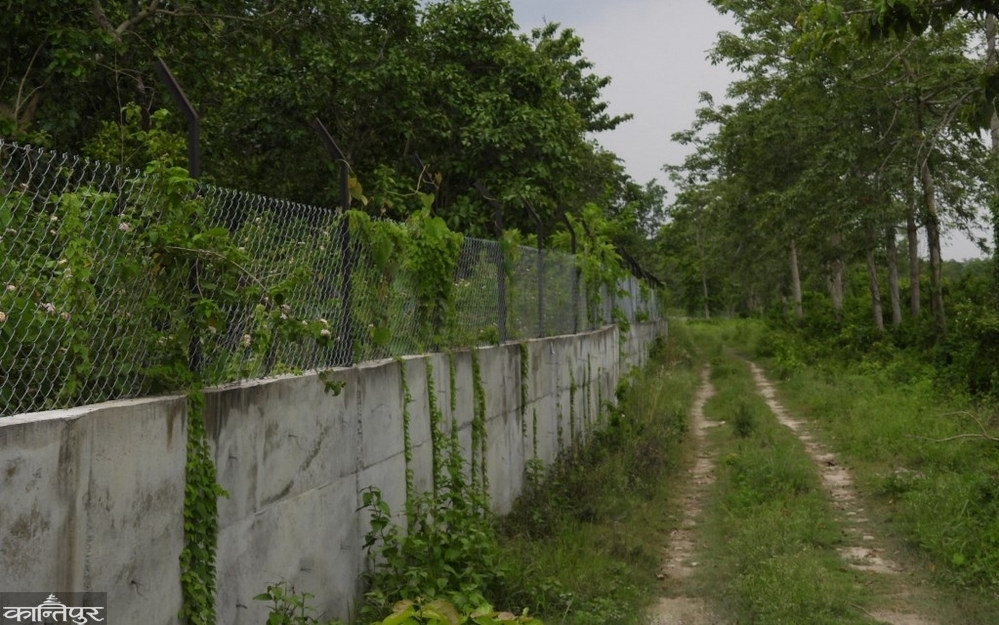
A small Anjana Ghol flows from Patihani. A concrete wall has been built near the forest to keep wild animals out. But it was not possible to build a wall in Anjana Ghol. Animals came from there and started causing trouble. Chairman Chaudhary said that now, if the water flows in the Ghol, it opens at the same speed, otherwise it closes, but the animals cannot open it and a barrier has been built to keep the animals out.
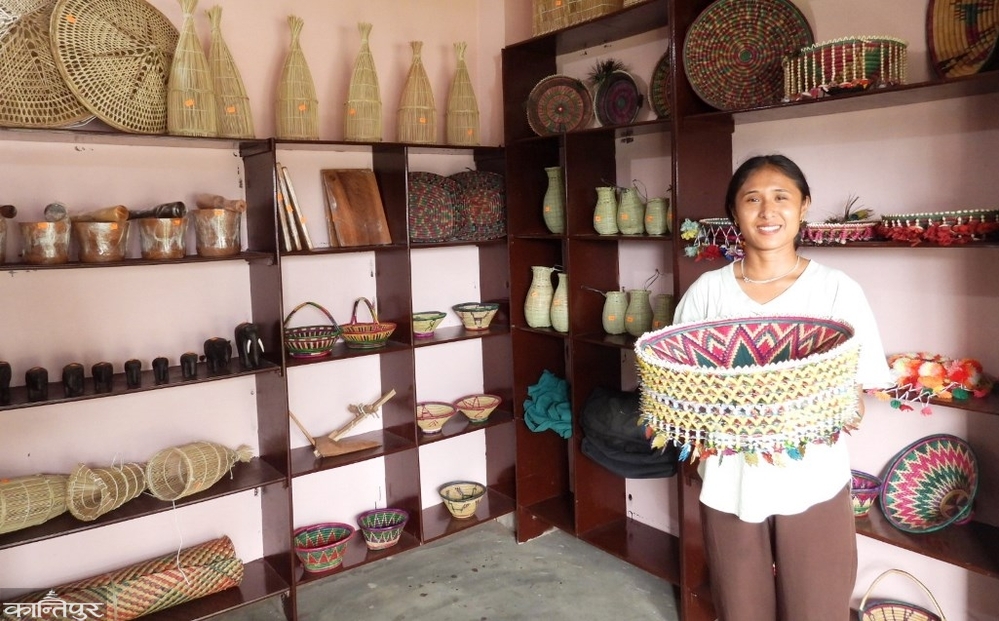
The Bethari River flows through five intermediate community forests on the banks of the Rapti. The river was covered with water lilies. Chaudhary said that it has also been cleaned and mud mountains have been built in places to make it easier for the animals to live. 18 women have also been trained to make handicrafts made by the Tharu community. The materials they have prepared are kept at the ‘Meghauliko Chino’ shop. The items range from Rs 300 to Rs 8,000. Domestic and foreign tourists visiting hotels and homestays buy such handicrafts. ‘Women prepare such items in their free time. This has stopped them from going to the forest unnecessarily,’ said Laxman Kumar Chaudhary, in-charge of the shop. The goat pen in front of the house of Deumaya Thapa Magar of Andrauli is safe from leopards. The consumer committee has built 41 such pens. ‘We have installed 75 percent concrete walls in the community forest on the Rapti side. It is open on the Narayani side. We have taken small and big measures to reduce the risk of animals and involve the locals in conservation. The results of this will definitely be visible in a year or two,' said Chairman Chaudhary.