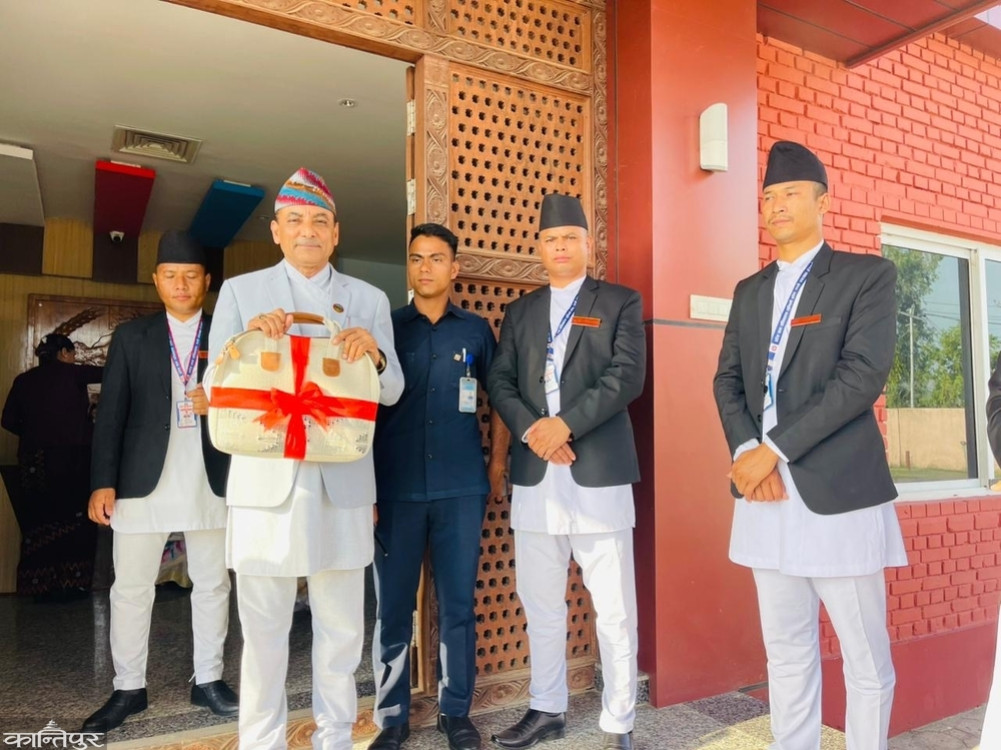
Koshi, Gandaki, Karnali and Sudurpaschim have increased the size of the budget, while Bagmati, Madhesh and Lumbini have reduced it. The provinces are focusing on information technology, innovation programs, pride projects, health, agriculture and tourism.
We use Google Cloud Translation Services. Google requires we provide the following disclaimer relating to use of this service:
This service may contain translations powered by Google. Google disclaims all warranties related to the translations, expressed or implied, including any warranties of accuracy, reliability, and any implied warranties of merchantability, fitness for a particular purpose, and noninfringement.
The provincial governments presented the income and expenditure (budget) for the fiscal year 2083/84 on Monday, prioritizing expenditure cuts. In the Far West, the budget was presented only late at night due to lack of agreement among the ruling coalition. The provinces have prioritized infrastructure development in the budget.
Koshi, Gandaki, Karnali and Sudurpaschim have increased the size of the budget compared to the current fiscal year. Citing the limited internal revenue sources and the reduction in grants received from the union, Bagmati, Madhesh and Lumbini have reduced the budget. Compared to last year, Koshi, Madhesh, Bagmati, Gandaki and Lumbini have reduced the budget allocation for the current year. Karnali, on the other hand, has increased the budget under both the current and capital headings along with the size of the budget.
Similarly, despite reducing the current budget, Koshi, Madhesh, Bagmati, Gandaki and Lumbini have increased the capital budget. Some provinces have increased the budget by 8 to 10% in the budget.
It has been mentioned that there will be a 9-member cabinet. Along with the purchase of new vehicles, meetings, conferences, seminars, symposiums and fuel expenses have been discouraged. The budget has been allocated by pointing out the needs and possibilities of the province. New programs have been added in addition to continuing the old ones. Along with Gaurav's projects, health, agriculture and tourism have been prioritized. There are programs for information technology and innovation.
Koshi's target : Economic growth rate 5 percent
The Koshi government had set a target of achieving an economic growth rate of 5.3 percent in the budget for the fiscal year 2082/83. However, according to the revised estimate, the economic growth in the current year is expected to be limited to 3.13 percent. In the upcoming fiscal year, the target of increasing the growth rate to 5 percent has been made public. In the public budget on Monday, it is estimated that the per capita income of the province will reach 1,410 US dollars.
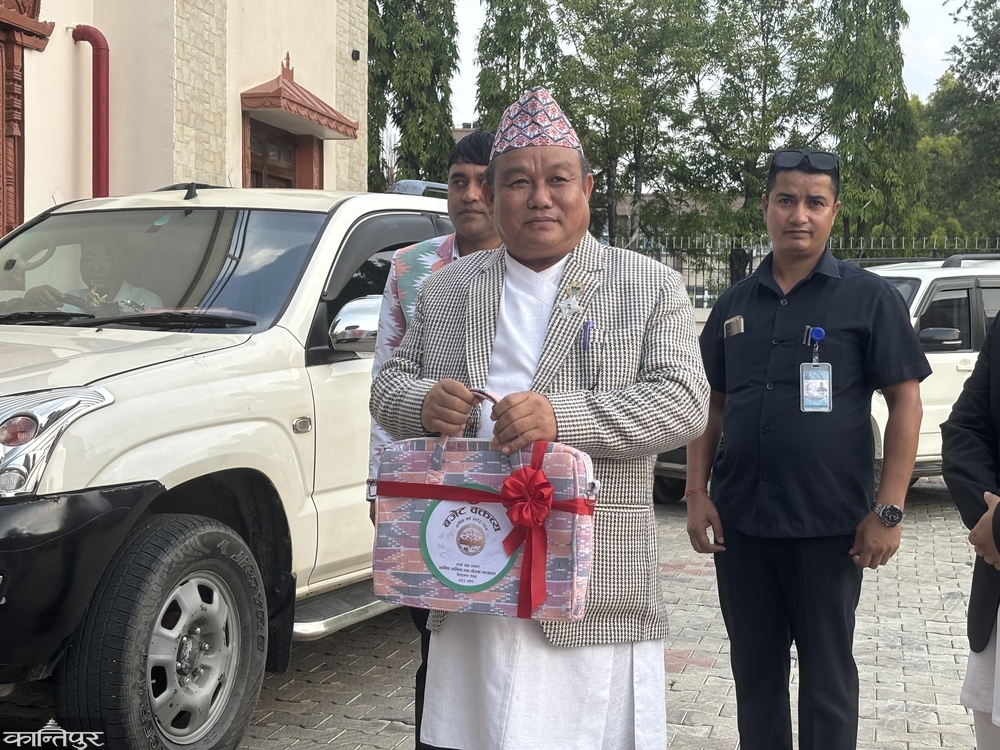
The budget statement states that the absolute poverty rate is 17.19 percent. Koshi Province's contribution to the national gross domestic product is 15.8 percent. The Koshi government on Monday unveiled a budget of Rs 40 billion 449.8 million for the upcoming fiscal year 2083/84. Minister for Economic Affairs and Planning Bidur Kumar Lingthep has brought a budget that is 12.74 percent more than the current fiscal year.
A budget of Rs 35 billion 879.9 million was brought for the current fiscal year. The provincial government has not only increased the size of the budget this year, but has also made significant changes in the structure of expenditure. Last year, 52 percent of the total budget, or Rs 18 billion 673.3 million, was allocated for current expenditure.
Current expenditure has been reduced to Rs 13 billion 976.3 million, or 34.55 percent of the total budget, next year. On the contrary, priority has been given to capital expenditure. The capital budget, which was 17.10 billion 65 million rupees last year, or 47.7 percent, has been increased to 20.75 billion 99 million rupees this year, or 51.32 percent. The allocation for financial management has also been increased from 100 million to 150 million.
The provincial government has allocated 5.56 billion 36 million rupees for financial transfer to the local level. The target for internal revenue in the budget resource management remains at 5.5 billion. The amount received from revenue sharing is projected to increase from 12.39 billion 60 million rupees to 12.87 billion. The fiscal equalization grant received from the federal government has also increased from 8.98 billion 34 million rupees to 9.12 billion rupees. The conditional grant is estimated at 5.95 billion, the complementary grant at 840 million, and the special grant at 550 million rupees. The provincial government has also expanded the policy of using last year's cash balance to cover the budget deficit.
Last year, Rs 3.13 billion was planned to be used, but this year Rs 5 billion will be used. Physical infrastructure has been prioritized in the upcoming budget.
Rs 12.38 billion has been allocated for road infrastructure alone. Rs 2.92 billion has been allocated for agriculture, industry and production growth programs. The tourism sector has also been given continuous priority. Last year, the government, which put forward the concept of 'Koshi Province Tourism Year 2082', has announced that it will run 'Koshi Province Visit Year' from Shrawan 2083 to Asard 2085 this year.
Rs 3.49 billion has been allocated for the tourism and forest sectors. Rs 3.61 billion has been allocated for the health sector and Rs 3.10 billion for education, sports and employment promotion. Special importance has been given to technology-friendly service delivery in this year's budget.
The programs include installing 'smart CCTV' in main urban areas, making GPS systems mandatory in public vehicles, digitizing driver's license management, and starting teaching through digital boards in 100 community schools.
A plan has been brought to provide training on artificial intelligence (AI) and information technology to 5,000 youth with the aim of making the youth skilled in the field of information technology. The 'Saksham Chhori' program and school nursing program will also be expanded.
Madhesh government's emphasis on 'policy reform'
The Madhesh government has made policy reforms in the budget and has made arrangements for a 9-member council of ministers including the Chief Minister. The government has emphasized cost cutting. Along with the purchase of new vehicles, it has banned meetings, conferences, seminars, symposiums, and fuel expenses except for essential ones. It has been stated that a committee will be formed to study the number of employees under the government and their workload.
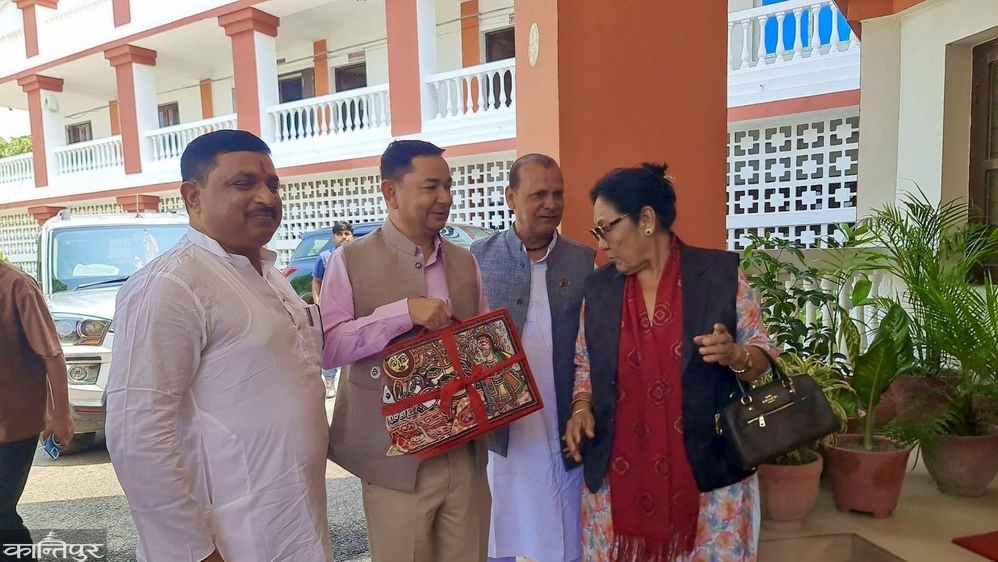
The recruitment of new employees has been suspended until the committee submits its report, Finance Minister Yubaraj Bhattarai informed while presenting the income and expenditure (budget) for the upcoming fiscal year 2083/84 in the Provincial Assembly on Monday.
Minister Bhattarai, while presenting the budget on Monday, said that the necessary budget has been allocated to recruit police by implementing the Provincial Police Act. The Madhesh government has already brought a bill in 2075 BS to make provisions for the formation of the Provincial Police, which is in the single list of provinces in the constitution.
The federal government has not been able to bring the police under the province due to delays in the adjustment. The Chief Ministers of the governments formed so far have been complaining that they are facing problems in working due to the police not being under the administration.
While the federal government is showing reluctance, the Madhesh government has allocated budget for the first time to recruit provincial police for the implementation of the Police Act. Finance Minister Bhattarai has presented a budget of 41.13 billion 8.6 million rupees for the fiscal year 2083/84. In which 14.66 billion 32 million or 35.54 percent has been allocated for current and 26.47 billion 53 million or 64.36 percent for capital. It is estimated that 11.22 billion 75 million will be collected from internal revenue and miscellaneous next year and 12.83 billion will be received from the federal government for revenue sharing.
Minister Bhattarai informed that the financial grant received from the federal government will be 9.49 billion 59 million and 6.85 billion from the remaining cash balance of the current fiscal year. It is stated that the insufficient amount of 1.5 billion will be met from internal loans. It is estimated that a total of 17.69 billion 27 million will be received, including 7.84 billion 85 million for financial equalization grant received from the federal government, 8.10 billion 28 million for conditional grant, 947 million for supplementary grant and 700 million for special grant. It has been mentioned in the budget that 12.83 billion rupees will be received for federal revenue sharing.
The largest budget has been allocated for physical infrastructure. The Ministry of Physical Infrastructure and Development has been allocated Rs 12.1 billion. The Ministry of Industry, Commerce and Tourism has been allocated Rs 2.44 billion, the Ministry of Education and Culture has been allocated Rs 2.9 billion, the Ministry of Health and Population has been allocated Rs 5.95 billion, the Ministry of Energy, Irrigation and Drinking Water has been allocated Rs 3.77 billion, the Ministry of Labor and Transport has been allocated Rs 331 million, the Ministry of Land Management, Agriculture and Cooperatives has been allocated Rs 3.77 billion, the Ministry of Forest and Environment has been allocated Rs 1.33 billion, the Ministry of Sports and Social Welfare has been allocated Rs 1.40 billion, and the Ministry of Home, Communications and Law has been allocated Rs 683.4 million.
Priority for infrastructure in Bagmati
The Bagmati government has prioritized physical infrastructure. Minister for Economic Affairs and Planning Prabhat Tamang has presented the budget by continuing the old plans. The size of the budget has been reduced. A budget of Rs 66.93 billion has been presented for the coming year.
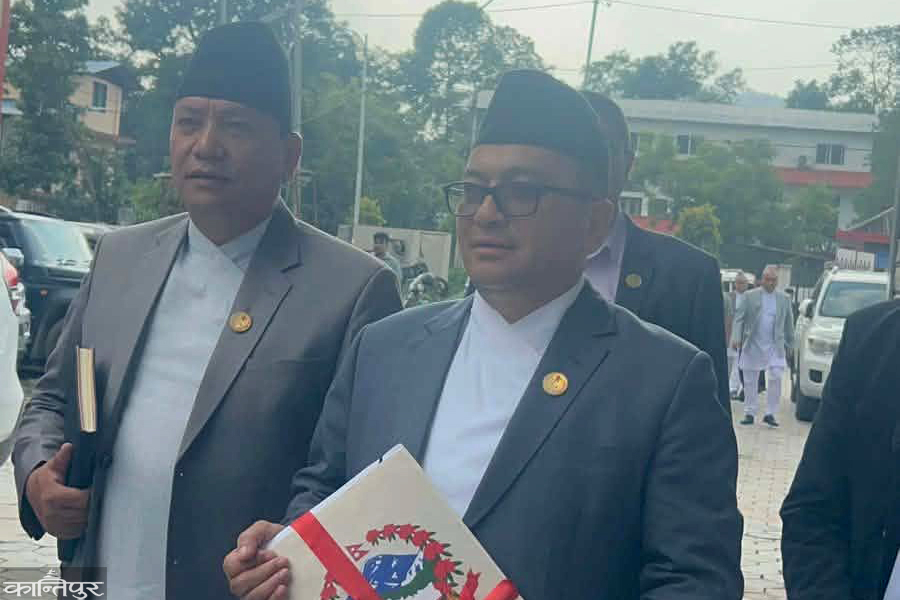
The budget for the current year was Rs 67.47 billion 73 lakh. The budget for the coming year is Rs 544 million less than the current one. According to Economic Affairs Minister Tamang, of the proposed total allocated budget, Rs 22.96 billion 19 lakh 30 thousand or 34.31 percent is for current and Rs 65.69 percent or 43.97 billion 14 lakh 3 thousand is for capital.
It is estimated that the government will receive Rs 30.15 billion 156 lakh 68 thousand from tax revenue, Rs 7.73 billion 99 lakh 12 thousand from other revenue, and Rs 15.31 billion 48 thousand from federal financial transfer. It is estimated that the estimated savings and miscellaneous receipts of the current year's consolidated fund will be Rs 12.76 billion 79 lakh 53 thousand and the remaining amount will be received from loan repayments from other institutions.
The government has set a target of reducing administrative expenditure by 11 percent at once. ‘We have brought a program to cut expenses in the budget for the upcoming fiscal year,’ said Minister Tamang. ‘We have allocated a budget to reduce the 14 ministries in Bagmati by 8, and we believe that the number of employees will also be reduced by more than 700.’ He said that capital expenditure has been given high priority, focusing on development and infrastructure expansion rather than current expenditure.
The highest amount of Rs 25.6 billion has been proposed for the Ministry of Physical Infrastructure Development. He said that a budget of Rs 7.1 billion has been allocated for the roads of the Provincial Road Master Plan. He said that the necessary funds have been ensured to complete the infrastructure development started in the past.
He said that budget has been allocated for the feasibility study of the operation of the metro rail in coordination with the federal government to manage the increasing pressure in the Kathmandu Valley, and for the feasibility study of the Bhimphedi-Kulekhani tunnel route. Rs 6.71 billion 7.72 billion 24 thousand have been allocated for the Ministry of Agriculture, Livestock, Forests and Environment, Rs 5.37 billion 5.57 billion 74 thousand for the Ministry of Industry, Tourism, Labor and Transport, Rs 9.62 billion 39 thousand for the Ministry of Health and Social Development, Rs 8.9 billion 6.18 billion 85 thousand for the Ministry of Drinking Water, Energy and Irrigation, and Rs 727.757 million for the Ministry of Internal Affairs, Law and Cooperatives.
Minister Tamang did not mention the budget size of the Office of the Chief Minister and Council of Ministers and the Ministry of Economic Affairs and Planning. Minister Tamang said that programs such as installing CCTVs for peace and security in the province will be taken forward and Rs 10 million has been allocated for the insurance and social security fund of journalists within the province.
Rs 200 million has been allocated under the Chief Minister's Innovation Program for the operation of information technology-related programs. Minister Tamang said that Rs 200 million will be allocated for interest subsidy on loans for those returning from foreign employment to run skill-based businesses, Rs 2 billion will be allocated for completing drinking water projects that have progressed more than 50 percent in the current year's budget, Rs 1.7 billion for 157 drinking water projects covering all constituencies of the province, and the provincial capital ring road, Gauritar Stadium, health center and integrated provincial administrative building in Hetauda will be promoted as projects of provincial pride.
Under the Chief Minister's Housing Program, Rs 300 million will be allocated for the construction and distribution of safe housing to 1,000 poor families within the coming fiscal year, Rs 565 million for the construction of integrated administrative buildings, provincial assembly buildings and housing, and Rs 447 million for regular maintenance of roads and bridges as per the 'repair first, then construction' policy. According to Minister Tamang, priority has been given in the budget to youth self-employment, promotion of entrepreneurship, technical education, IT schools, hackathons, smart education and IT skill fellowship programs. The government has estimated that about 71 percent of the total budget allocated for the current fiscal year 2082/83 will be spent.
Gandaki's emphasis on infrastructure and transport
Gandaki Province has allocated a budget of 11.96 billion rupees for the physical infrastructure and transport sector. 5.3 billion rupees have been allocated for multi-year resource-assured projects for strategic roads in the province, 1.1 billion rupees for priority roads including Korala-Triveni and Shaligram corridors, 120 million rupees for the construction of Bailey Bridges, and 50 million rupees for printing driving licenses from the province. Gandaki's Minister for Economic Affairs Jit Bahadur Sherchan presented a budget of 32.99 billion rupees for the fiscal year 2083/84 on Monday.
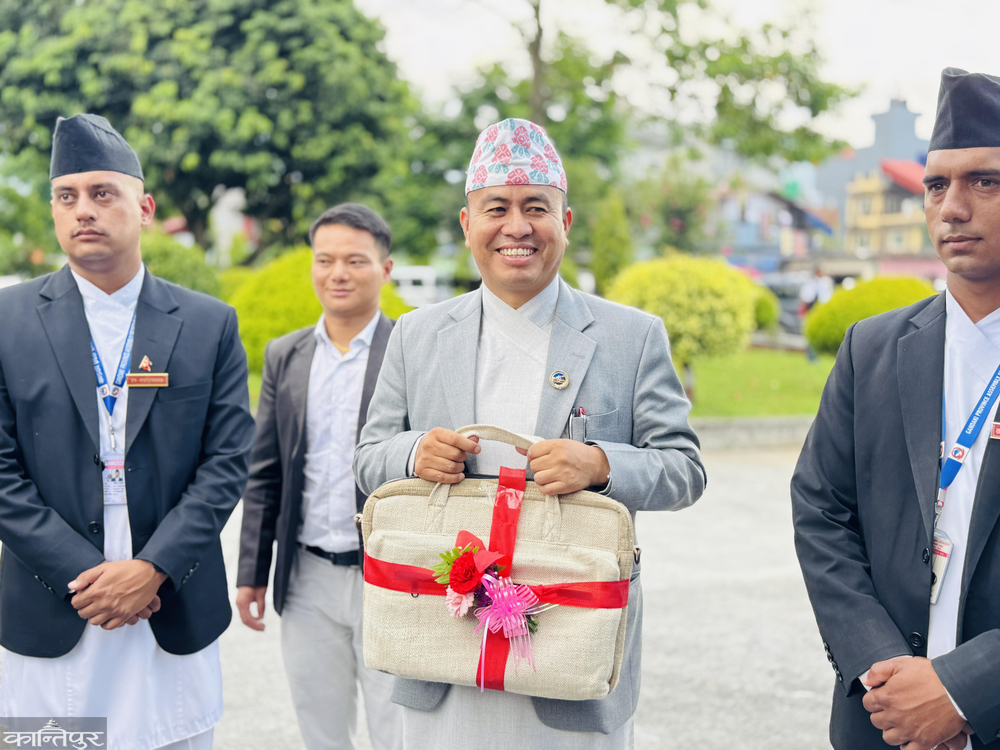
This is about 1.2 billion rupees, or 3.19 percent, more than the budget of 31.97 billion rupees for the current fiscal year. This time, priority has been given to capital expenditure. Of the total allocation, 20 billion 261 million 22 thousand or 60.68 percent has been allocated for capital expenditure and 12 billion 723.7 million 78 thousand or 38.56 percent has been allocated for current expenditure. 3 billion 31 million has been allocated for the health sector. 4 billion 77 million has been allocated for the energy, water resources and drinking water sector. Out of this, 1 billion 70 million has been allocated for multi-year drinking water projects and 1 billion 60 million for irrigation and drinking water system improvement. The budget has expressed a commitment to declare the province a 'Bright Gandaki Province' by providing access to electricity to all households in the province within the coming fiscal year. 2 billion 16 million has been allocated for the social development, youth and sports sector, 2 billion for the agriculture and land management sector and 2 billion for the industry and tourism sector. 1 billion 21 million has been allocated for the forest and environment sector. 300 million rupees have been allocated for the expansion of commercial orchards including walnuts, kiwi, apples, avocados and others on 2,500 hectares of land in the hilly areas of Gandaki, and 40 million rupees have been allocated for the implementation of interest subsidy and minimum support price for the promotion of commercial agriculture.
50 million rupees have been allocated for the beautification of the central area of Fewa Lake. Within this, plans have been put forward to complete the 'closed circuit' by continuing the 'Round Fewa: View Fewa' program, and to construct the Fewa Horizon Pedestrian Bridge (Selfie Bridge) and a glass bridge in Rupatal. The budget includes a plan to coordinate with the Union Government to re-operate the ailing Gorkhali Rubber Industry and Bhrikuti Paper Factory.
The budget is estimated to come from the revenue sharing from the Union of 10.16 billion 47 lakh 48 thousand and from the fiscal equalization grant of 7.84 billion 82 lakh. It is estimated that Rs 3.93 billion 3 lakh will be received from conditional grants, while the target is to raise Rs 5.84 billion 18 lakh 52 thousand from internal revenue. The budget mentions that the shortfall of Rs 1.75 billion will be met from internal loans.
Rs 1.99 billion will be transferred to the local level through fiscal equalization, supplementary and special grants. Despite the increase in the size of the budget, the question of spending capacity has arisen. Only 33.03 percent of the total allocation has been spent till mid-Baisakh of the current fiscal year. Out of the allocation of Rs 31.97 billion, only Rs 10.58 billion 6 lakh has been spent. The remaining Rs 19.31 billion 20 lakh has been accumulated in the provincial consolidated fund.
The data that the expenditure rate had further decreased to 23.56 percent from 28.9 percent in the same period of the previous year reveals the structural weakness in expenditure implementation. The government argues that the expenditure could not be spent due to the Gen-G uprising of Bhadra 23 and 24 and the disruptions seen in the international supply chain. Former Minister for Economic Affairs of Gandaki, Ramji Prasad Baral, considered the budget's attempt to emphasize agricultural production and job creation as a positive effort, but overall it was limited to traditional and continuity. He said that bringing a budget of 33 billion without any source was more ambitious when the Policy and Planning Commission had set a ceiling of 29.5 billion rupees. Stating that there were no concrete projections of domestic revenue growth in the budget and there was no strong basis for revenue estimates, he claimed that even though the budget tried to touch all sectors in terms of language, there was no adequate budget allocation even for the agriculture sector, which was prioritized.
Lumbini's priority is good governance and prosperity
The Lumbini government has prioritized strengthening the provincial structure, institutional development of the federal democratic system, strengthening the provincial economy, good financial governance, expanding public and private sector participation, and economic prosperity through the upcoming year's budget. Minister for Economic Affairs and Planning, Dhanendra Karki, said that the budget has been formulated to implement the long-term vision of 'prosperous Lumbini, happy citizens'.
The government has allocated a total budget of 37.38 billion 45 lakh rupees for the coming year. The budget has been allocated 11.11 billion, 27.10 million rupees for the current year and 22.71 billion 65 lakh 40 thousand rupees for the capital. The government had brought a budget of 389.1 million rupees for the current year. Minister Karki presented the budget in the provincial assembly on Monday.
Minister Karki said that the total budget has been set at 37.38 billion 45 lakh rupees including the amount for financial management. The government has allocated 5.65 billion rupees for the development of the health sector. Lumbini Province has allocated 2.12 billion rupees for the Lumbini Provincial Hospital and other hospitals, which are being built as a pride project.
Similarly, telemedicine services are going to be operated in Lumbini Provincial Hospital. The government has also prioritized expanding Rapti Provincial Hospital to 200 beds. 10.18 billion rupees have been allocated for the physical infrastructure sector. The government has put forward 237 roads as multi-year projects for physical infrastructure.
4.15 billion rupees have been allocated for urban development and drinking water. Continuing the 'One House, One Drinking Water' campaign, a new settlement development plan has been introduced. 3.5 billion rupees have been allocated for education and social development. 110 million rupees have been allocated for innovation centers. 1.44 billion rupees have been allocated for the development of the industry and tourism sector, 1.78 billion rupees for agriculture, land management and cooperative sectors, 2.81 billion rupees for energy irrigation, and 380 million rupees for youth and sports.
The budget has prioritized payment of obligations in infrastructure development with a commitment to extending the benefits of federalism to the common citizen. Provision has been made to provide complete exemption to entrepreneurs establishing industries other than alcohol and tobacco industries. A 'Enterprise Development Fund' will be established to run startup and innovation programs.
The provincial government has put forward a policy of conducting work through eight ministries and reviewing posts. The Digital Lumbini Province program has been prioritized. Under the financial transfer to the local level, Rs 960 million has been allocated in financial equalization grants, Rs 984 million in supplementary grants, Rs 200 million in special grants, and Rs 1.41 billion 1250 thousand in conditional grants. Rs 49.9 million has been allocated to increase the productivity of the agricultural sector and Rs 27.8 million for the expansion of technical services.
Towards education and social development, Rs 110 million has been allocated for technical education, Rs 400 million for community campuses and schools, and Rs 109 million for all 109 local levels for child marriage-free local levels. Rs 15 million has been allocated for teacher capacity building and Rs 76 million for scholarships. An additional Rs 5 per student has been provided for the school midday meal program. Rs 35 million has been allocated for the expansion of specialist health services in remote areas. The budget mentions that Rs. 200,000 per person will be provided for kidney transplant, cancer treatment and heart valve replacement. A scheme focused on sports infrastructure development and employment creation will be implemented.
Relief and insurance programs will be launched to increase the income of rural communities and reduce human-wildlife conflict. Continuing the 'Let's Complete the Unfinished' campaign towards rural and urban development, Rs. 666 million has been allocated to complete projects that have achieved more than 80 percent physical progress. A model settlement development program will be launched to reduce migration and a new settlement development program will be launched in the postal and mid-hill highway areas. Rs. 110 million has been allocated for waste management in the provincial capital area.
Rs. 864.1 million has been allocated for the development and expansion of the irrigation sector. Priority has been given to the protection of water sources. Priority has been given to the construction of sustainable and quality physical infrastructure, and roads included in the master plan and roads connecting to the national highways have been given priority. Under the Province Gaurav project, Rs 210 million has been allocated for the construction of Rampur-Kapurkot road. Arrangements have also been made in the budget to establish a separate identity for the roads constructed by the province.
Rs 4 billion has been allocated for the completion of multi-year projects. Disaster management, information technology and digital service expansion programs have also been prioritized. Budget has been allocated for the construction of Lumbini Portal, while programs for formulating a good conduct policy, policy dialogue programs, implementing a province project bank and strengthening public service delivery have also been included in the budget. The government has stated that it has adopted a policy of achieving the goal of shared prosperity through collaboration between the public, private and cooperative sectors and making service delivery more effective through capacity building of civil servants. Rs 10.18 billion 45 million has been allocated for physical infrastructure development.
'One village, one garden' in Karnali
The Karnali province government has also prioritized infrastructure development. Rs 15.74 billion has been allocated in the coming fiscal year to complete various infrastructure development plans. According to the budget presented on Monday, Rs 560 million has been allocated for 14 strategic roads and Rs 367 million for 122 suspension bridges in the coming year.
It was informed that Rs 192.2 million has been allocated for the 'One Village, One Garden' program, Rs 213.5 million for the conservation of Karnali's major tourist destinations Raratal, Kankrebihar, Kupinde Daha and Syaarputal, and Rs 538.6 million for the development of other tourist infrastructure. According to Minister for Economic Affairs and Planning Rajiv Bikram Shah, Rs 209 million has been allocated for climate change adaptation and entrepreneurship, Rs 70 million for digital technology support in community schools, and Rs 236.5 million for upgrading the Provincial Hospital Surkhet to the Institute of Health Sciences. The Karnali government has made public a budget of Rs 35.39 billion for the fiscal year 2083/84. Minister for Economic Affairs and Planning Shah has presented a budget of Rs 2.4 billion (7.28 percent) more than the current fiscal year of Karnali.
For the coming year, a budget of Rs 20.74 billion (58.61 percent) has been brought for capital expenditure, Rs 8.60 billion (24.31 percent) for current expenditure, and Rs 5.54 billion (15.67 percent) for financial transfers.
Shah informed that the government has allocated Rs 50 million for organizing the 10th National Sports Competition, Rs 35 million for competition preparations, Rs 90 million for the construction of a provincial stadium, and Rs 50 million for the construction of a state-of-the-art library at Madhya Paschim University. According to him, a revenue collection target of Rs 855 million (90 thousand) has been set for the coming year, while it is estimated that Rs 10.66 billion (49 thousand) will be received for revenue sharing.
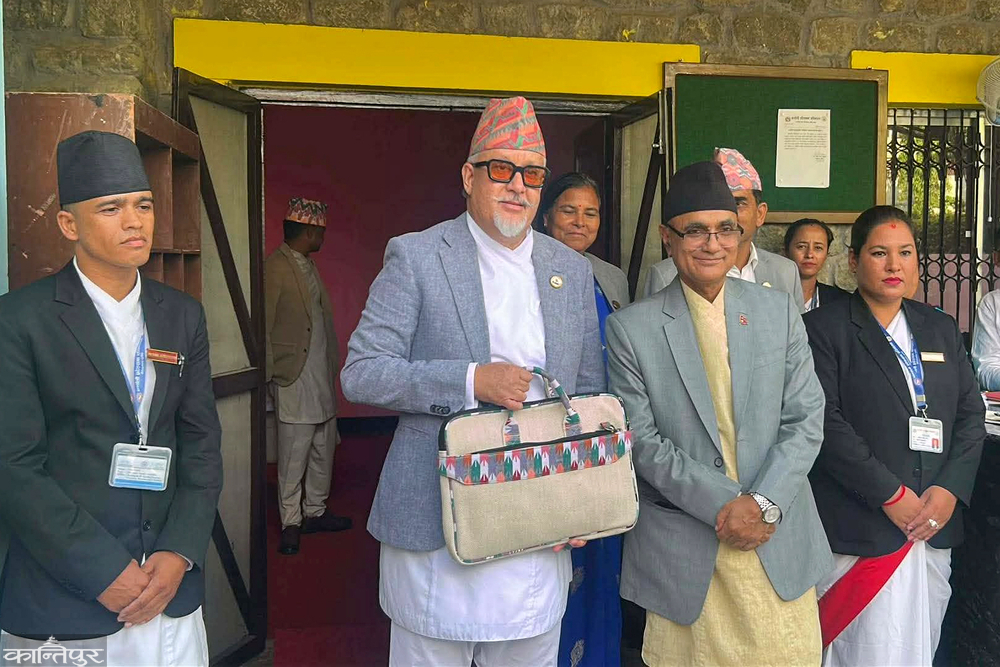
The federal government has provided Karnali with Rs 10.63 billion 23 million towards fiscal equalization, Rs 5.67 billion 25 million towards conditional grants, Rs 667.8 million as supplementary grants and Rs 485.6 million as special grants. Minister for Economic Affairs and Planning Shah informed that the provincial consolidated fund is expected to have a balance of Rs 6.41 billion 51 million 9 thousand this year.
Budget at midnight amid division of shares between the ruling coalition
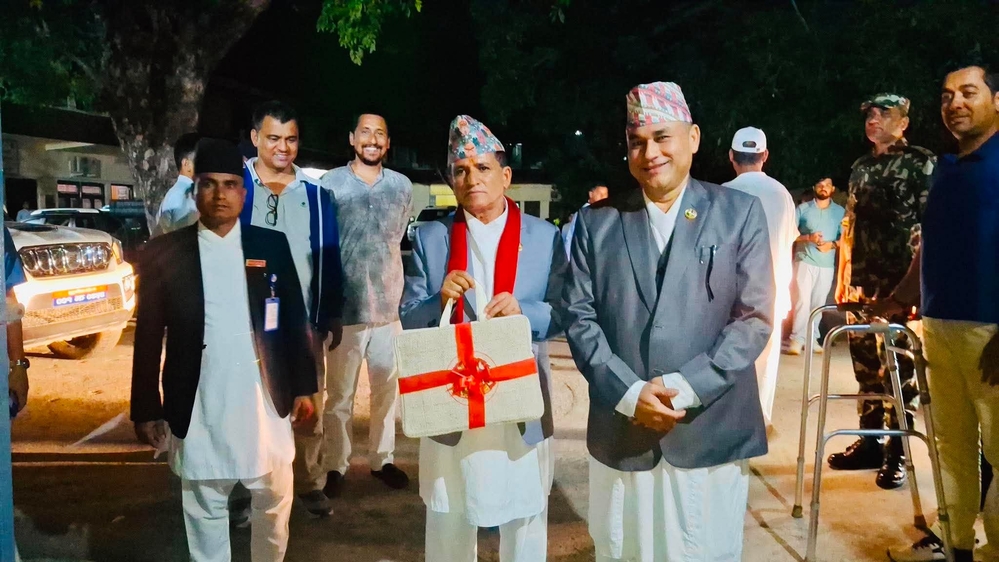
The Sudurpaschim provincial government has presented the budget at midnight amid a long tug-of-war over division of shares between the ruling parties. The budget presentation program has been boycotted by opposition party MPs.
Minister for Economic Affairs and Planning Bikram Singh Dhami has presented a budget of Rs 37.7 billion for the fiscal year 083/84 in the provincial assembly. The budget for the coming year is about Rs 4 billion more than the Rs 33.47 billion brought in the current fiscal year 082/83. Although Minister Bikram Singh Dhami mentioned the total budget and budget sources in his statement, he did not present the figures for the current and capital budget allocation. According to sources, despite preparing the budget statement, the government has not prepared a detailed program.
In the budget statement, Minister Dhami mentioned that the highest figure in the budget has been allocated for road improvement. He has allocated Rs 1.74 billion 7.9 billion for road improvement. Similarly, Rs 65 million has been allocated for sheep farming in the high hill districts of Darchula, Bajhang and Bajura.
Similarly, Rs 285 million has been allocated for climate resilient projects in Bajura and Bajrang. He mentioned that the budget has been allocated to establish a tourist help desk and operate the Dewatavi tourism development program under the tourism sector development program. Budget has been allocated to run nutrition improvement programs in six local levels with high poverty rates - Dhakari Rural Municipality and Kamalbazar Municipality of Achham, Shikhar Municipality of Doti, Triveni Municipality of Bajura, and Sigas and Shivnath Rural Municipality of Baitadi.
Budget has been allocated to upgrade Seti, Mahakali and Tikapur Provincial Hospitals to 100 beds, and to upgrade district hospitals in hilly districts to 25 to 50 beds for health sector improvement. The statement mentioned that the necessary budget has been allocated to strengthen the dialysis service being provided by Seti, Mahakali and Tikapur Hospitals.
The meeting scheduled for 5 pm could not be held due to disputes between the ruling parties, so it was postponed to 9 pm. The budget was pushed to midnight after the meeting of the Council of Ministers could not be held by 9 pm. It was decided to increase the budget ceiling set by the Provincial Policy and Planning Commission due to the division of labor. आयोगले सुरुमा २४ अर्बको बजेट सिलिङ दिएर पूर्वनिर्धारित बजेट सिलिङबाट सत्ता साझेदार दल एमाले र आफ्नै दलका सांसदको मागअनुसार भागबन्डा नपुग्ने भएपछि मुख्यमन्त्री कमलबहादुर शाह आकार बढाउन बाध्य भएको बजेट निर्माणमा संलग्न एक पदाधिकारीले बताए ।
आइतबारदेखि दुई दलबीच भएको रस्साकसीका क्रममा एमालेले सरकार छाड्नेसम्मको धम्की मुख्यमन्त्रीलाई दिएको एक कांग्रेस सांसदले बताए । त्यसपछि मुख्यमन्त्री थप दबाबमा परेका थिए । सुदूरपश्चिम सरकारले ल्याएको बजेट हालसम्मकै ठूलो आकारको हो । सरकारले आगामी वर्षका लागि सुरुमा प्रत्यक्षतर्फका सांसदलाई पाँच करोड र समानुपातिकतर्फका लागि तीन करोड बजेट दिने तयारी गरेर उनीहरूबाट योजनाको सूची माग्ने तयारी गरेको थियो । तर सांसदहरूले नमानेपछि अन्तिम समयमा प्रत्यक्षतर्फका सांसदका लागि सात करोड र समानुपातिकतर्फ पाँच करोड बजेट दिइएको छ ।