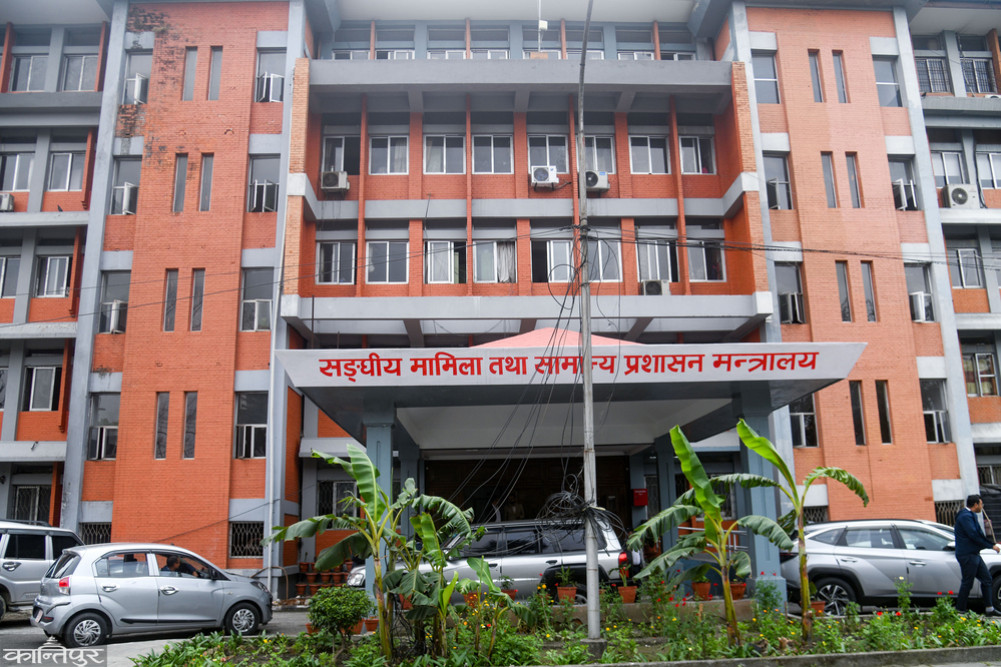
The Ministry of Federal Affairs and General Administration has prepared a draft of the Civil Service Bill to retire approximately 10,000 employees at all levels simultaneously.
We use Google Cloud Translation Services. Google requires we provide the following disclaimer relating to use of this service:
This service may contain translations powered by Google. Google disclaims all warranties related to the translations, expressed or implied, including any warranties of accuracy, reliability, and any implied warranties of merchantability, fitness for a particular purpose, and noninfringement.
The draft Civil Service Bill prepared by the government to retire those who have completed 55 years of age or 30 years of service has created a stir in the employee class. When the proposed provision becomes law, employees who are in a position to retire have started expressing dissatisfaction. Employees who do not have to retire are looking forward to the possibility of early promotion and an increase in their employment tenure.
The draft Civil Service Bill, which provides for 55 years of age or 30 years of service and a three-year term for secretaries, will retire by Ashar. Similarly, 268 joint secretaries will be laid off due to the new provision on age or service. The draft Civil Service Bill has been prepared by the Ministry of Federal Affairs and General Administration to send about 10,000 employees at all levels to retirement simultaneously. The draft, which has been approved by the Ministry of Finance, is currently with the Ministry of Law.
High-level employees are unhappy that the new law is trying to send them to retirement early. They have started complaining to the Chief Secretary on this issue. Joint secretaries, who are expecting to retire as secretaries, are more unhappy with the provision of 55 years of age or 30 years of service. There is also dissatisfaction with the proposal to reduce the tenure of a secretary from five years to three years.
The government is going to introduce the provision of retirement for employees who have completed 30 years of service or the age of 55 years only once. After the law comes into force, the draft of the Civil Service Bill has made a provision to fix the retirement age at 60 years. Currently, the retirement age is 58 years. The length of service is not calculated for retirement.
The draft also proposes to reduce the tenure of the Chief Secretary from 3 years to 2 years. There is no mention in the draft about additional facilities for employees who are going to retire early.
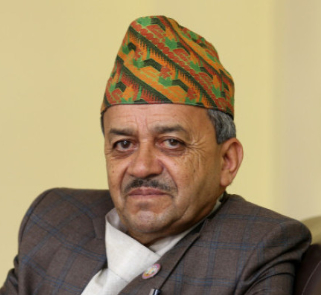 The government should choose an option such as introducing a voluntary retirement model with a good package to reduce the size of the staff or not filling vacant posts for some time. - Umesh Mainali , former secretary A joint secretary reacted to the government's attempt to take steps against the constitution and existing laws. He argued that the system of trying to retire those who are 55 years old or have completed 30 years of service for a single time is not fair. 'What do you mean by "single time"? On the day the law comes into force, those who have completed 55 years or 30 years of service will be retired, and those who survive will be retired at 60 years? Punishment for one, reward for the other. Where is the justice in this?,' he said, 'The constitution has given the right to equality. The Civil Service Act states that the condition of starting service cannot be broken without the consent of the employee.'
Another joint secretary, who is likely to retire due to his age of 55, alleged that such a proposal was brought due to the conspiracy of some employees. 'Some employees convinced the political leadership to bring such a proposal with the idea of not retiring and getting promoted quickly,' he said, 'The government should not make thousands of employees unhappy and forcibly send them home for the sake of the interests of some employees.'
Officials from the Law Ministry call the proposed provision for retirement wrong. A law official said that the Constitution itself gives equal rights to everyone. Similarly, he argued that the current Civil Service Act also contains a provision that the service conditions at the time of joining the job cannot be broken without the consent of the employee. ‘We will make a suggestion,’ he said, ‘if the concerned ministry agrees, the proposal will be withdrawn, otherwise it will remain as is.’
The official pointed to Section 58 of the existing Civil Service Act. The section states that ‘no civil servant shall be subject to any change in the terms and conditions of service relating to salary, gratuity, pension and other facilities in force at the time of his appointment without his consent.’ It states that ‘if any subsequent amendment adversely affects the above terms and conditions of service of any civil servant in office before such amendment, such provision shall not be applicable to him without the written consent of the person who has agreed to do so in accordance with such amended provision.’
A secretary argued that those who entered the service on the condition of retiring at the age of 58 should not be retired at the age of 55. ‘There is an attempt to treat those born one day earlier or later or those who have taken up employment as if they were brothers.’ This is against the constitution and the law,' he said, 'The state cannot cheat those who have been hired by the Public Service Commission with a condition. Can the state discriminate against its citizens?'
Employees say that if they have to be dismissed, they should be sent willingly with a special package. But they are not ready to speak formally on the matter right now. 'We have heard that the draft bill is in the process, let's see what form it takes,' a secretary said, 'If it seems that it will come as discussed now, some steps can be taken after further discussions among the employees.'
The government led by Girija Prasad Koirala had reduced the retirement age from 60 to 58 years 34 years ago. On 21 Kartik 2049, the Koirala government had made the 29th amendment to the Civil Service Regulations and retired employees who had completed 58 years of age or 30 years of service simultaneously. While giving retirement like that, pension facility was given on the assumption that one had worked till the age of 60. ‘One person was not given retirement at 58 and the other at 60. With the retirement at 58, the retirement age for all employees was fixed at 58,’ said another secretary. ‘Now a discriminatory proposal has been brought.’
Former administrator Umesh Mainali, who was also the chairman of the Public Service Commission, does not consider the method of sending a large number of employees home at once to be good. ‘If employees who have reached the age of 55 or 30 years of service are sent home, experienced and skilled employees will also be affected,’ he said. ‘That can have an impact on the governance system. Experienced human resources are the assets of the state. They should not be considered a burden.’ When the principle is that good and experienced employees should not leave as much as possible, it is not good to send all the experienced ones home.'
Mainali suggests that the government should choose an option such as introducing a voluntary retirement model with a good package to reduce the size of the staff or not hiring in vacant posts for a while. Stating that the government made a mistake in the past by sending all experienced employees home at once, he said that such history should not be repeated. 'The government that came with a big mandate may have various ambitious goals. It is the responsibility of the employees to cooperate wholeheartedly to make them successful,' he said. 'Experienced employees can be more helpful than new administrators in achieving the government's goals.'
According to the latest data from the Civil Service Library, 92,157 employees are working at the federal, provincial and local levels. The Civil Service Act is a law governing employees in the administration, foreign affairs, health, federal parliament, agriculture, forestry, justice, audit, and education services. It does not include security agencies and teachers.