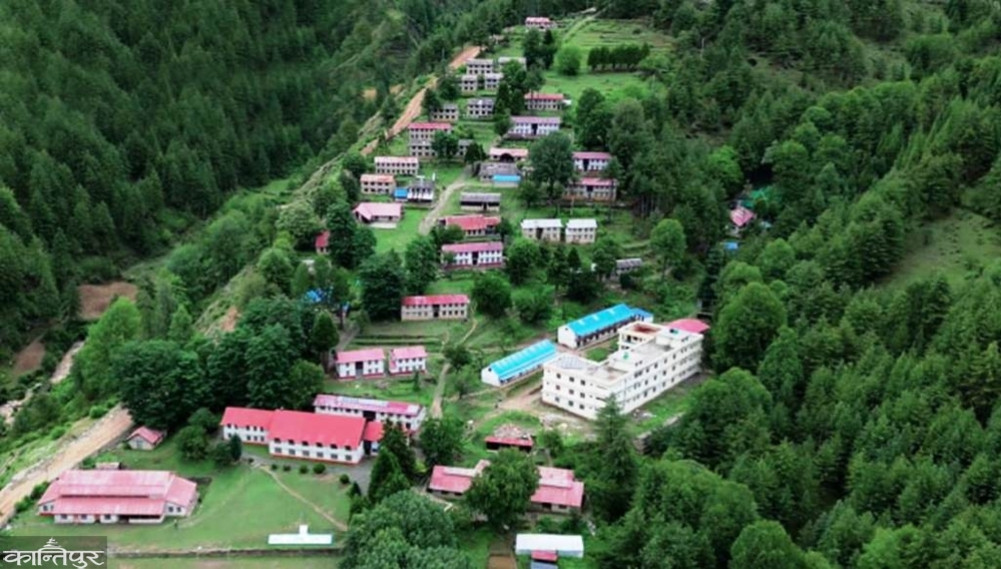
Karnali Technical College, which was born 46 years ago out of a dream to make remote areas including Karnali self-reliant with skilled manpower, is facing financial difficulties.
We use Google Cloud Translation Services. Google requires we provide the following disclaimer relating to use of this service:
This service may contain translations powered by Google. Google disclaims all warranties related to the translations, expressed or implied, including any warranties of accuracy, reliability, and any implied warranties of merchantability, fitness for a particular purpose, and noninfringement.
In 2037, there were only half a dozen secondary schools in Jumla. There were no roads, few means of communication, and higher education opportunities were far away. At that time, Karnali Technical School (KTS) was established in Jumla with the aim of providing skill-based education to the youth of Karnali in the villages.
This institution had already come into operation eight years before the establishment of the Council for Technical Education and Vocational Training (CTEVT). KTS is spread on the quiet hills of Ghughuti, about three kilometers north of Khalanga Bazaar in Jumla. Surrounded by meadows and a river flowing nearby. Old, attractive buildings made of limestone and stone. At first glance, it is no less than a 'star hotel'.
As attractive as the school, spread over 652 ropanis, its history is equally glorious. Karnali Technical School is the first to lay the foundation of technical education in Nepal. This school was born about 46 years ago with the dream of making remote areas self-reliant with skilled manpower.
This school, known as the pride of Karnali, is now facing various challenges. Many buildings built in the 2030s are becoming dilapidated. The school's own small hydropower plant, which was washed away by floods, has not been able to be re-operated. School principal Bikal Adhikari said that although nearly 2 million rupees are needed for repairs, they have not been able to raise the funds. The school also lacks fencing. He said that up-to-date equipment, hostel management and additional educational buildings are also needed. The school administration says that the school does not have the necessary resources to meet all these shortcomings. The school principal Adhikari complains that some work has been stopped due to lack of budget due to high operating expenses due to the remote geography. 'Local and provincial governments also shy away from taking ownership, saying that it is under the federal government,' he said.
The school was self-sufficient in its own electricity till four years ago. But after the flood of 2079 BS washed away the school's micro-hydropower plant, it has not been operational since then. Earlier, the school used to be supplied with electricity from this project. From agriculture to lab equipment, it was operated from this. Now the school is connected to the national transmission line. But due to load shedding, there has been disruption in educational activities and the burden of electricity tariffs.
According to the school administration, a budget of 20 to 30 lakhs is required to repair the micro-hydropower plant. The school says that despite repeated requests for budget for repairs from the federal, provincial and local governments, no response has been received. In addition, the main challenges of the school include the repair of old buildings, poor internet service and increasing operating costs due to remote geography. The old buildings are leaking due to lack of maintenance, roofs are gradually collapsing and walls are becoming weak. This leads to high risk of earthquakes and challenges during the rainy season. In this regard, Ramadevi Kathayat, Deputy Mayor of Chandannath Municipality, said that since it is an educational institution under the federal government, the budget is not being allocated.
The school is a blessing for Karnali. It is the foundation of technical education here. The school has not only produced skilled manpower but also contributed to the economic activities of the entire Karnali: Former Home Affairs Minister of Karnali Province Naresh Bhandari The background of the establishment of the school is also very interesting. Most of the youth of Jumla were limited to agriculture and animal husbandry. At the same time, the Ministry of Education of the Government of Nepal and the international non-governmental organization United Mission to Nepal (UMN) came up with a plan to expand technical education in Karnali. Under this plan, a team including American citizen Larry C. Acer and Nepali Tankanath Sharma, who are associated with the Gandaki Boarding School in Pokhara, visited various districts of Karnali.
Jumla was selected while searching for a suitable place to provide skill-based education to the youth of the rural areas. The formal inauguration of KTS, whose construction began in 2035, was held on 5th Shrawan 2037. After the establishment of CTEVT in 2045, KTS became its first constituent school. Therefore, it is considered the first technical school in Nepal. The founding principal of the school was Larry C. Acer. Living in a difficult geography, Sharma and Larry made significant contributions to the expansion of the school. Larry was the first head of the school from 2037 to 2040. Sharma took the school forward as the second head.
According to Nanda Chaulagain, the deputy head of the school and alumnus of the school, the agricultural and veterinary JTA program was initially conducted. Students who had passed grade 7 were selected from villages. After three years of study, 10 months of on-the-job training (OJT) were conducted. The school itself made most of the arrangements for accommodation, food and study materials. ‘We paid only 25 rupees a month as a fee while studying,’ says Chaulagain, ‘We had to sell firewood to meet that expense.’ Having joined KTS as a student in 2044 BS, he is now at the leadership level of the school. Chaulagain says that he owes the school the credit for reaching this level.
According to Chaulagain, the deputy head of the school, in the initial phase, there were only about 20-22 students in the school. The number of teachers and trainers was sufficient. Along with Nepali instructors who studied agricultural science, volunteers from Canada and the Netherlands also worked here. ‘At that time, one teacher could supervise two students all day long,’ recalls Chaulagain.
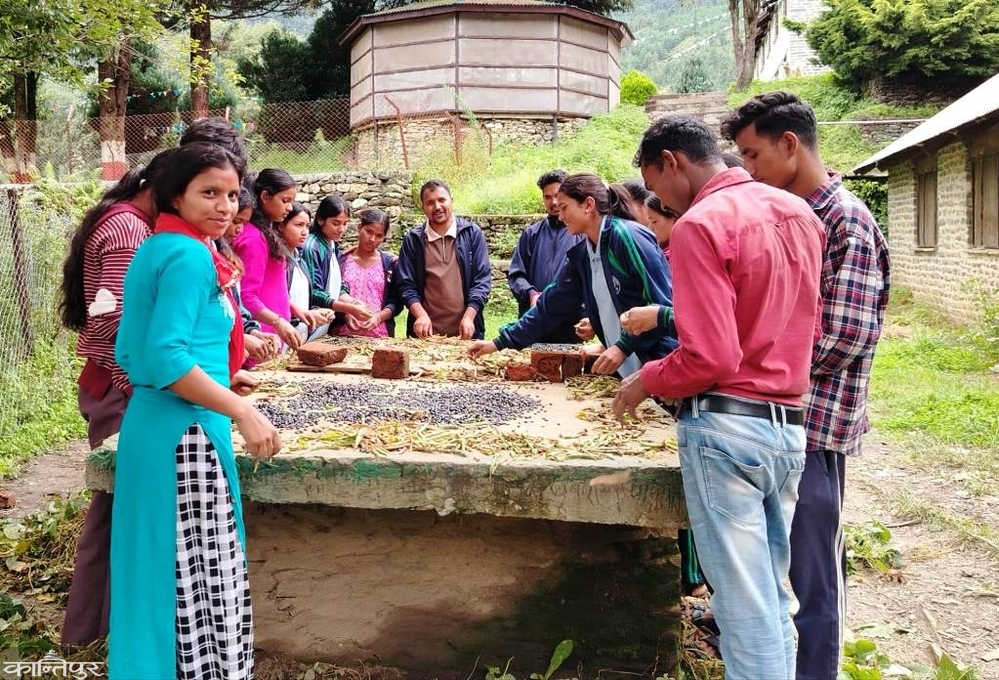
UMN took over the management of the school for about 15 years from its establishment. Only in 2052, UMN completely handed over the institution to the Government of Nepal. Since then, the school has been fully operated under CTEVT. According to the school administration, more than 500 students from all seven provinces are currently studying here. The curriculum and programs have also changed over time. Currently, the school offers civil engineering, plant science, forestry, pharmacy and sub-overseer programs under pre-diploma at diploma level. HA and plant science programs are also run under special scholarships. In the past, programs like CMA and UNMI were operated.
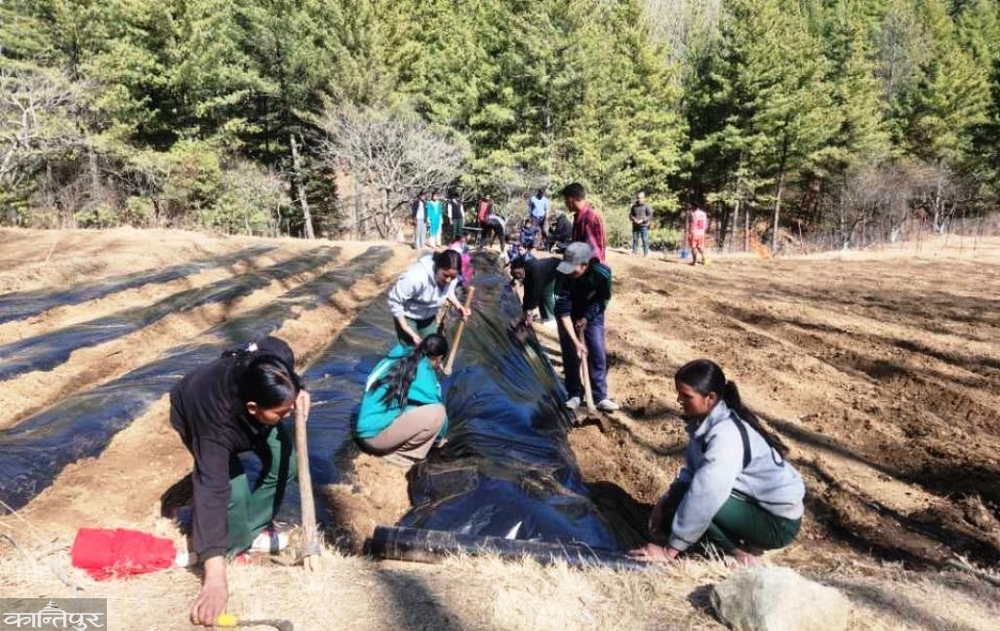
According to the school head Bikal Adhikari, there is sufficient infrastructure like more than 50 buildings, hostels, libraries, computer labs, pharmacy labs, civil engineering labs, agricultural farms and laboratories. ‘KTS is known as an institution that provides quality technical education at low fees because of its adequate infrastructure,’ he says.
Basant Bhandari, who came to Jumla from Bajura to study plant science, said that he chose KTS because of its ancient history and experienced teachers. ‘The education is better than he expected,’ he said. Civil engineering student Sagar Bhandari’s experience is also similar. He said that he found both the experimental and teaching aspects better than expected.
This school has produced many technical manpower in the past four decades. Students who have studied here are working in various parts of the country in the fields of agriculture, forestry, health, construction and infrastructure development. KTS alumni are found from remote villages of Karnali to the federal capital.
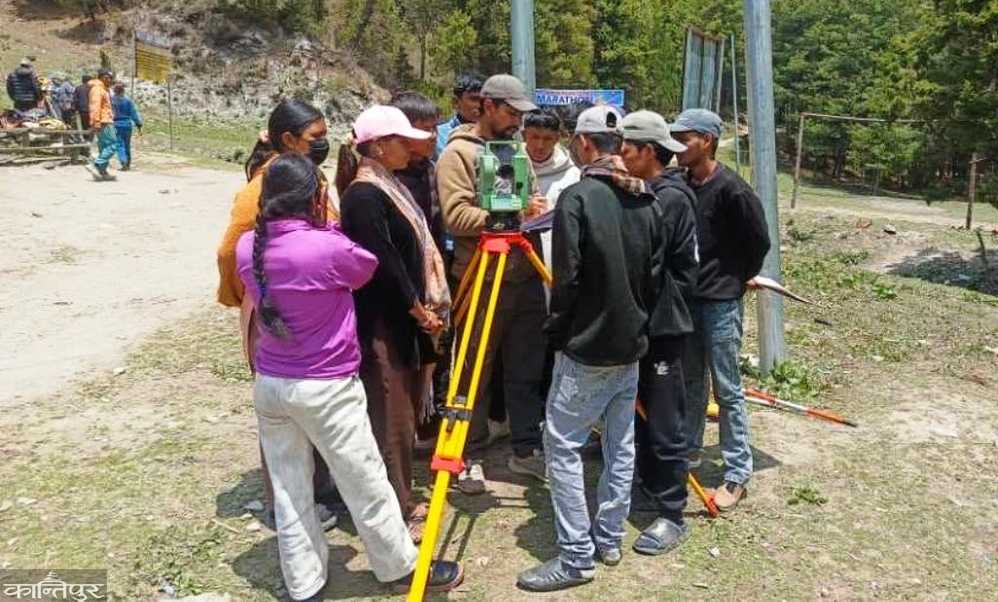
Despite the challenges, KTS is continuously moving forward on its journey to produce skilled manpower and make it self-reliant, claims the chief officer. Currently, 530 students from all over the country are studying in the school under five programs.
Three-year diploma programs are being run in pharmacy, civil engineering, plant science and forestry. In addition, an 18-month pre-diploma civil engineering program is also being run. The school, which has been providing technical education at a lower fee compared to other private colleges, charges Rs 70,000 for pharmacy, Rs 60,000 for civil engineering and Rs 55,000 for plant science and forestry. There is a provision for students to pay the fee in installments. Various scholarship programs are also being run for financially weak and meritorious students.
The school has more than 50 buildings, hostels, libraries, laboratories and agricultural farms. There is also a hostel facility that can accommodate more than 200 students. Currently, 150 students are staying in the hostel. According to the school administration, the teachers teaching here are skilled human resources selected through a competitive process.
The school has been coming up with various schemes to attract students. Recently, the school has come up with a plan to provide free scholarships to 25 students in collaboration with Lakshmi Sunrise Bank. In addition, 3 students are given CTEVT classified scholarships out of the 40 student admission quota in each class. And arrangements have been made for the best students of each year not to have to pay the admission fee the next year. The school's chief officer said that the student pressure is decreasing as technical education programs have been expanded in community schools. According to him, programs like UNMI and CMA that were in operation in the past have been closed, and now those subjects are not being taught.
Former Home Affairs Minister of Karnali Province Naresh Bhandari said that the school is not only producing skilled human resources but also contributing to the economic activities of the entire Karnali region. ‘The school is a boon for Karnali. It is the foundation of technical education here. The products here are now spread across the country,’ said Bhandari, ‘We should prioritize providing quality education by reconstructing the structure.’
Former Minister Bhandari said that the school should be promoted as a university. ‘We should start teaching staff nurses.’ For this, the Medical Education Commission should give permission, he said, ‘We should prioritize providing quality education by reconstructing the dilapidated structure. Developing it as a technical college and developing it as a hub of technical education is the need of the hour.’