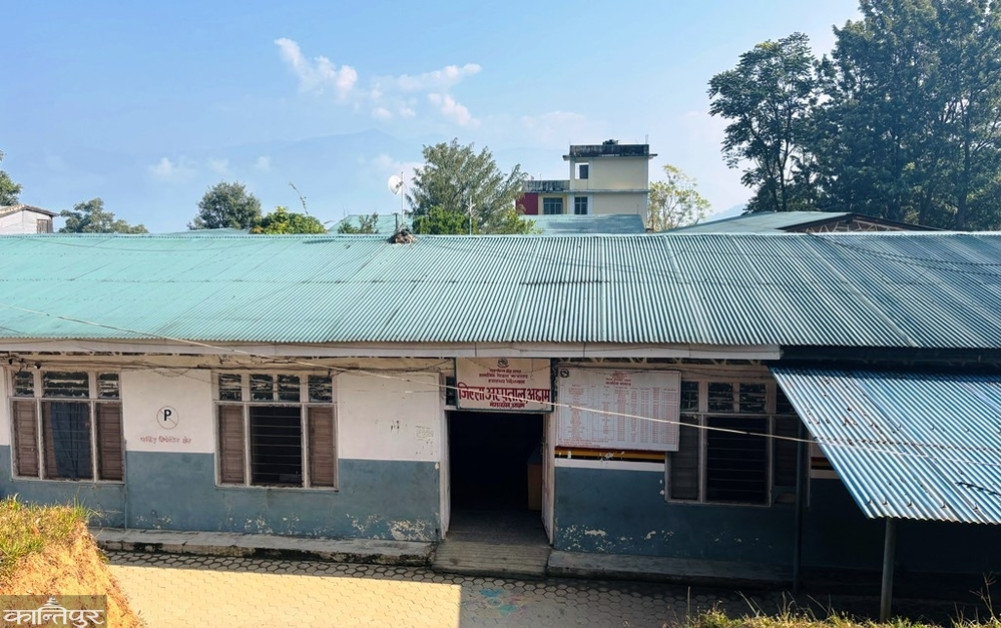
Due to early marriage, lack of nutrition and superstition, the number of stillbirths in Achham has not decreased as expected. In the last 6 years, 362 babies have been born stillborn in the district.
We use Google Cloud Translation Services. Google requires we provide the following disclaimer relating to use of this service:
This service may contain translations powered by Google. Google disclaims all warranties related to the translations, expressed or implied, including any warranties of accuracy, reliability, and any implied warranties of merchantability, fitness for a particular purpose, and noninfringement.
Although the number of stillbirths in Achham is decreasing, satisfactory results have not been achieved. According to the health office, 362 babies have been born dead in the district from the fiscal year 2077/78 to this period of 2082/83.
Health workers say that the expected improvement in this situation has not been achieved due to early marriage, malnutrition, and superstition. According to the health office, 3,050 teenage girls under the age of 20 became pregnant in the district in the six-year period from 2077/78 to the fiscal year 2082/83. Health workers say that the main reason for the risk of the baby in the womb is due to pregnancy without being physically and mentally mature, hard labor, and lack of nutrition.
A total of 362 babies have been born dead in Achham during this six-year period. Although the number of stillbirths has been decreasing in recent years, it has not decreased satisfactorily. In 2077/78, 109 babies were stillborn in the district. This number has increased to 86 in 2078/79, 59 in 2079/80, 36 in 2080/81, 39 in 2081/82 and 33 in 2082/83. Of this total number in 6 years, 173 babies died during labor or birth, while 189 babies died before birth (in the womb).
A 14-year-old girl studying in class 6 of Turmakhand Rural Municipality-4, which has a remote geography, married a 16-year-old boy studying in class 7. Two years later, she became pregnant. Having left school at a young age and married, they were not physically, mentally and socially mature. After becoming pregnant, the girl began to be burdened with additional work inside and outside the house. Becoming pregnant at a young age, she had to face many deprivations, including a lack of nutritious food during pregnancy. Which also affected the baby growing in her womb. When she did not feel any pain even after a week of her due date, the Turmakhand health post immediately sent her to the District Hospital Mangalsen. The teenager reached the district hospital with her husband. The doctor at the hospital suggested that she undergo an immediate surgery as the time had passed.
According to Budhamagar, Information Officer and Senior Nursing Inspector of District Hospital Achham, the condition of the baby in the womb was fine till then. After the hospital's suggestion, the couple replied, "We will undergo the surgery only after consulting at home" and returned home secretly without informing. "After undergoing the surgery, the body will deteriorate and become inoperable. The in-laws started shouting that a normal delivery should be done. We could not bear the pressure from home and ran away from the hospital," the teenager said. "After reaching home, we took the Dhami-Jhakri to ask why the pain did not subside." We even vowed to the gods and goddesses to be responsible.’
Meanwhile, the district hospital said that the pregnant girl in a risky condition was constantly searching for her. A week after returning from the hospital, when they reached the hospital again, it was too late. Nursing officer Budhamagar said that the girl’s baby had died in the womb due to not receiving timely treatment. She had to deliver a dead baby
A year ago, 38-year-old Nanda (name changed) of Dhakari Rural Municipality-5 arrived at the district hospital to give birth to her sixth child. She had previously given birth to five daughters in a row. Due to social pressure to have a son, she became pregnant for the sixth time at the age of 38.
According to health workers, giving birth to children many times and in short intervals weakens the mother’s physical condition and uterus. This poses a serious risk to the unborn child. Nanda suffered labor pains for 12 hours at home. Due to the lack of facilities and equipment to manage complicated deliveries at the Dhaka health facility, she was rushed to the district hospital. According to Information Officer Magar, despite the tireless efforts of the doctors, the baby in the womb could not survive and was born dead.
The greatest pain for Nanda came when she learned that the stillborn baby was a boy. Earlier, her family and society had been mentally abusing her for giving birth to a daughter. ‘I endured a lot of abuse for not having a son, and now everyone blames me for being unlucky for not being able to save her even after giving birth to a son,’ she said. ‘After learning that the baby who died in the womb was a boy, my husband who was in Kuruwa also left me stranded. There was no one to comfort me when I performed the last rites of the dead child.’
After the baby was stillborn and her husband left her at the hospital, the world became even more difficult for Nanda. Aside from the pain of losing a child and her husband's betrayal, she did not receive the care she needed during childbirth. 'Her husband and in-laws still look down on her for not being able to bring a son who would carry the family line to earth alive.'
Sarita (name changed) 21 years old from Mangalsen Municipality-7 had planned to have a child only after two years on her husband's advice. The couple understood that it would be impossible to take care of a child born between the kitchen, fairs and studies. However, as soon as she got married, her family had been constantly pressuring her to have a child. 'My in-laws had started taking me to a doctor after complaining about my not having a child for two years after my marriage,' said Sarita. 'Unable to bear the pressure from the family, we finally planned to have our first child.' However, after she became pregnant, the workload at home started increasing more than before. Sarita's husband used to go to India for work. She says that her in-laws used to put a lot of pressure on her to do household chores during her pregnancy, taking advantage of the fact that her husband was not at home. The workload, mental stress, and lack of rest during pregnancy directly affected the unborn child. 'After 8 months, I felt like my baby was not moving. But even when I had health problems, I couldn't go to the hospital. I was forced to do only household chores. When I reached the hospital later, the baby had died in the womb,' she said. 'It is not normal for a mother to see her baby, who has endured many hardships and hardships for 9 months, die when she is born.'
Ganga Budhamagar, Senior Nursing Inspector of District Hospital Achham, says that with the implementation of safe motherhood programs in Achham, the maternal mortality rate (maternal death) has decreased somewhat. Although the number of stillbirths seems to have decreased slightly compared to previous years, this problem has not been completely reduced. According to her, most of the babies born to teenage mothers are stillborn. ‘Teenagers themselves are immature. They cannot take care of themselves and the baby in the womb during pregnancy,’ says Senior Nursing Inspector Budhamagar, ‘On top of that, there is a practice of not doing regular pregnancy tests. By the time most pregnant women reach the health facility, it is already too late and the baby is found dead inside.’
She said that there is a problem in Achham where women stay at home and delay coming to the hospital even after the due date of delivery has passed. According to her, some families and couples do not accept that the doctor should perform surgery when complications arise. According to Budhamagar, this problem is more visible in Turmakhand, Dhakari and Ramroshan rural municipalities of Achham. According to her, the social and family treatment that mothers have to face after a stillbirth is even more inhumane. ‘The special care and nutritious food that a mother should receive after giving birth to a stillbirth is a distant thing,’ she said. ‘Some family members even abuse and mistreat the mother inside the hospital on the pretext of giving birth to a stillbirth.’ Some husbands and relatives even leave the mother stranded in the hospital bed.’
Nursing Inspector Budhamagar says that to give birth to a healthy baby, a mother must be both physically and mentally mature. She says that the rate of stillbirths in Achham can be reduced only by preventing early marriage, ensuring nutritious food during pregnancy, and dispelling misconceptions about surgery.