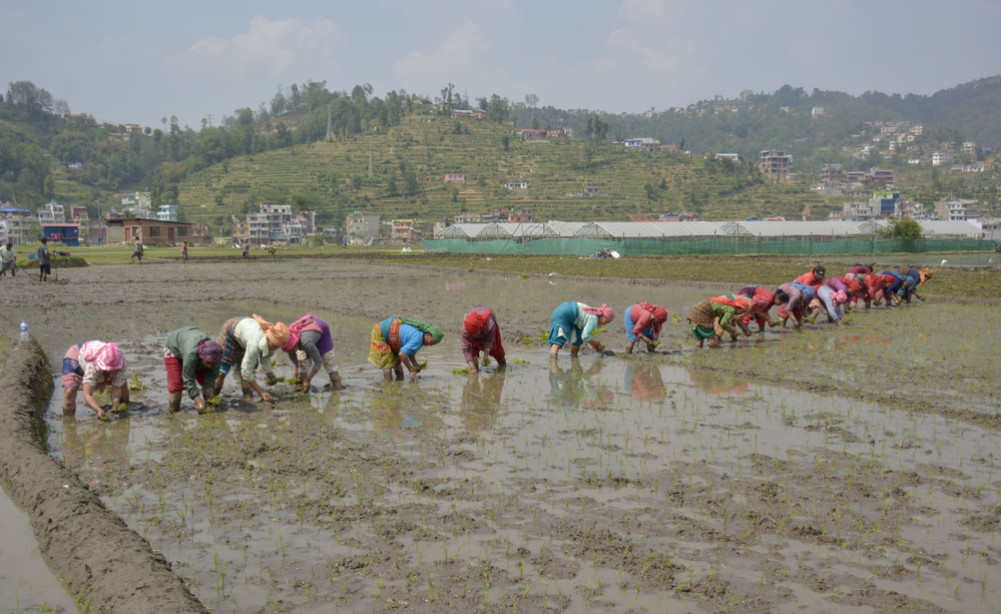
Meteorologists have warned that the effects of El Niño could lead to a lack of rain during planting, affecting crops, and putting food security and the economy at risk.
We use Google Cloud Translation Services. Google requires we provide the following disclaimer relating to use of this service:
This service may contain translations powered by Google. Google disclaims all warranties related to the translations, expressed or implied, including any warranties of accuracy, reliability, and any implied warranties of merchantability, fitness for a particular purpose, and noninfringement.
The effect of El Nino in the Pacific Ocean is expected to increase temperatures in the next six months, with some places experiencing drought and others experiencing heavy rain. Meteorologists have also predicted that there may be no rain during planting and only light rain at the end of the rainy season. Its direct impact is not only linked to the crop cycle and food security, but also to the national economy. On the other hand, experts say that the risk of monsoon-related disasters will also increase due to the El Nino system.
Rice production decreased by about 4 percent during the prolonged Pohar Sal drought. Rajendra Prasad Mishra, Secretary of the Ministry of Agriculture, Forest and Environment, has informed that production has decreased by 5 percent in the Terai. Rice is the main crop of Nepal. The relationship between its production and the country's economy is directly linked. According to the Ministry of Agriculture, rice accounts for only about 7 percent of the gross domestic product. That is, the weather system developed in the Pacific Ocean is likely to have a direct impact on the lives of Nepalis.
On the other hand, when the monsoon cycle is disrupted, farming is affected, causing food shortages and price increases. In addition, the lower and middle classes are currently struggling to cope with the unnaturally high prices due to the fuel crisis.
Under normal circumstances, we have been purchasing rice worth 25 billion rupees from India annually. However, this amount may increase further as the El Niño system can affect not only Nepal but also the South Asian region. There is also a risk that the temperature will increase due to the delay in rains due to the El Niño effect and ultimately create disasters.
The Disaster Risk Reduction Authority has already said that the temperature across the country is likely to be higher than average this year. In such a situation, the authority has mentioned that there is a high possibility of floods and landslides in the coastal areas due to the eruption of glaciers. Although meteorologists have been worried about the possible impact of the El Niño system, the government has focused on natural disaster preparedness. This is good, but if the impact on the crop cycle is not taken into account, it can also lead to disasters in the food system and the economy.
What is El Niño?
There are two main causes of weather systems that affect the balance of temperature and rainfall around the world - El Niño and La Niña. El Niño and La Niña show how warm or cold the water in the Pacific Ocean is. In simple terms, it is a process of abnormally warming or cooling the ocean water.
When the ocean water warms up more than usual, it is called El Niño. The opposite, i.e., the process of abnormally cooling the water in the Pacific Ocean is called La Niña. Under normal conditions, the waters of the Pacific Ocean are cold in the east and warm in the west.
As the winds blow from east to west, the sun's heat warms the water. However, during El Niño, these winds weaken and start spreading in the opposite direction, i.e. from west to east. Both of these are important weather systems, because changes in the temperature of the Pacific Ocean can change the weather thousands of kilometers away.
El Niño, which develops when the sea surface is unusually warm, can usually remain active for 9 months to 1 year. In most cases, it develops from mid-year, becomes stronger towards the end, and then gradually weakens until the beginning or middle of the next year. According to meteorologists, sea temperatures in the Pacific Ocean are now gradually increasing and there are signs that El Niño may become active from mid-2026. Some international weather forecasts have shown that the effects of El Niño could last until the end of 2026, and possibly even until the beginning of 2027.
International organizations including the World Meteorological Organization have said that El Niño is likely to develop between May and July 2026. Current sea temperatures and atmospheric signals will make the weather unpredictable in the coming months. This means that sometimes it can be extremely hot and sometimes it can suddenly rain heavily. The weather itself becomes unstable. Since the economy, agriculture, drinking water, hydropower and people's lives of most countries in South Asia depend on the monsoon, the effects of El Niño are felt directly here.
Especially in Nepal, India, Bangladesh, Pakistan and Sri Lanka, El Niño is seen to cause less than normal rainfall, prolonged drought, extreme heat and a decline in agricultural production. However, the effects of El Niño are not always the same, while low rainfall in some areas can lead to heavy rainfall in others and the risk of floods and landslides can also increase. Therefore, El Niño is not considered to be a condition that only causes drought. It can also make the weather erratic and unbalanced. Sometimes, when there is not much rain, there may be a sudden increase in rain. When there is a sudden heavy rain after a long drought, the risk of floods and landslides increases. It can also increase the risk of glaciers breaking in the Himalayan region.
Another major concern associated with El Niño is the risk of fires. Meteorologists say that since low rainfall and dry weather make the forests extremely dry, it can increase the possibility of fires in the hilly and mountainous regions of Nepal.
Initial estimates by scientists have shown that El Niño may be active this time. However, it is not yet certain how strong it will be. Some experts have also pointed out the possibility of a very powerful 'Super El Niño'. That is, there is also an estimate that El Niño with a greater impact than usual may develop.
The World Meteorological Organization has not yet confirmed it. The situation is expected to become clearer in the next few months based on where the Pacific Ocean temperatures and atmospheric activity go. This system is a matter of serious interest and concern for countries like Nepal, because - El Niño affects not only the ocean, but also everything from farmland to drinking water.