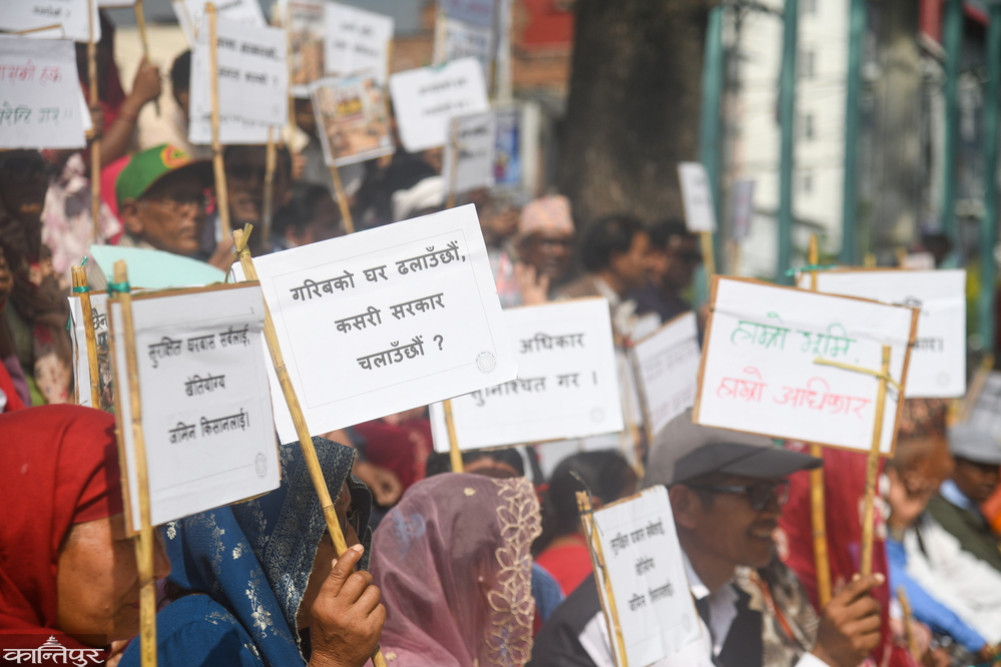
Experts demand that the government prioritize ensuring the land rights of landless people, informal settlers, and small farmers by preparing a land use plan based on a comprehensive land inventory.
We use Google Cloud Translation Services. Google requires we provide the following disclaimer relating to use of this service:
This service may contain translations powered by Google. Google disclaims all warranties related to the translations, expressed or implied, including any warranties of accuracy, reliability, and any implied warranties of merchantability, fitness for a particular purpose, and noninfringement.
In the 100-point policy and program presented by President Ram Chandra Poudel in Parliament, only 4 points related to land issues have been included. The government had presented the policy and program for the fiscal year 2083/084 on 28 Baisakh 2083. And, after a long tug-of-war, the policy and program has also been passed.
The policy and program presented in Parliament on 19 Baisakh last year had 155 points, this year there is a shortage of 55 points. Like the 100 primary agenda issued on 12 Chaitra 2082, the government has presented 100 points for the fiscal year 2083/084. The current government, which has included land issues in two points (points no. 91 and 92) in the 100 agenda, has included land administration and land reform in 4 points in the policy and program.
What will be the impact and impact of the land issue on the policies and programs presented for this fiscal year? What were the government's priorities on land reform priorities included in some important policies and programs in the past and on solving the problems of the landless and land-related people? How is the land issue mentioned in the 100 priority agenda? How will the government's commitment to resolve the land issue within 1,000 days be implemented? And, what is the current RSN government's view on squatters? Let's review these issues.
Experts demand that the government prioritize land rights of landless, informal settlers and small farmers by taking a comprehensive inventory of land and preparing a land use plan. Point 17 of the policy and program states, 'Discouraging the tendency for agricultural land to remain barren, access to barren land for productive purposes through the land bank system will be ensured for youth, women, landless and small and marginalized farmers. Access to subsidized finance and technology will be expanded through farmer registration, identity cards and credit cards. Contract farming, cooperative farming and agroforestry systems will be encouraged.'
These issues have been coming up during the previous government's tenure. For 20 years, these issues have been included in the government's policies and programs - some words and letters may be different, but the meaning is the same. The concept of a land bank was also included in the national land policies prepared after the promulgation of the constitution. However, the land bank has not yet been put into practice. In recent times, due to the increasing urban migration of people, the increasing emigration of youth, the increasing impact of climate change on agricultural crops and land, lack of irrigation, etc., the rate of arable land becoming barren is increasing. Although the government has been listing farmers and distributing identity cards, this work has not been done in a visible and tangible way. Although farmers have been demanding it for a long time, the program to get farmer identity cards and subsidies on the basis of them is in government documents every year, but it is never implemented.
Government policies and programs to increase production through contract farming, cooperative farming and forestry are effective, however, what will be its model? How will the government take this work forward? We need to look at its practical plan. Especially now, providing land to landless and agricultural laborers and small farmers through contract farming will increase production and help them make their livelihood easier. Question to the current government – what will be the results of this in the coming year?
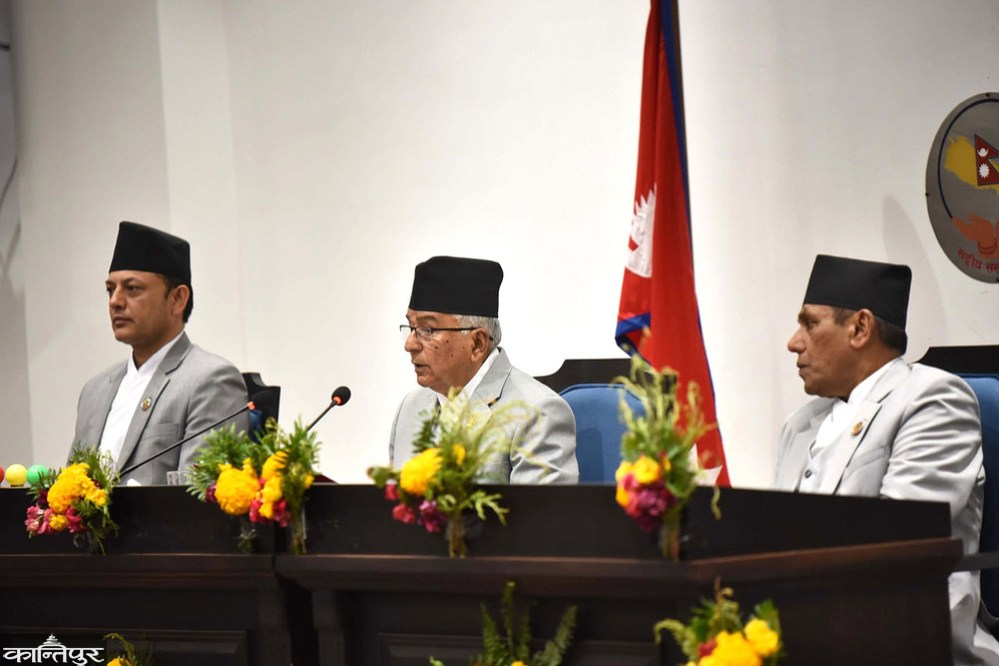 Similarly, point 18 of the policy and program states – ‘Land administration services will be expanded to all local levels in a phased manner by integrating survey and land revenue services. The process of updating records by surveying and mapping land using modern technology will be taken forward.’ Safe and proper settlement will be managed for the long-term solution of the problems of landless Dalits, squatters and unorganized settlers living in unsafe places by maintaining a balance between land ownership and use.'
The National Independent Party has said in its 'pledge letter' made public before the elections, 'The problem of landless Dalits, landless squatters and unorganized settlers will be resolved within 1000 days by forming an authority.' This issue has also been covered in point 91 of the 'Government's 100 Priority Action Agenda' issued on Chaitra 13, 2082, the day after the formation of the Rashtriya Swatantra Party government, which won almost a majority of seats in the House of Representatives. This can also be considered a phase of implementation. The government had also written through the then Land Problem Resolution Commission to collect and verify the data of landless Dalits, landless squatters and unorganized settlers within 60 days and prepare a report.
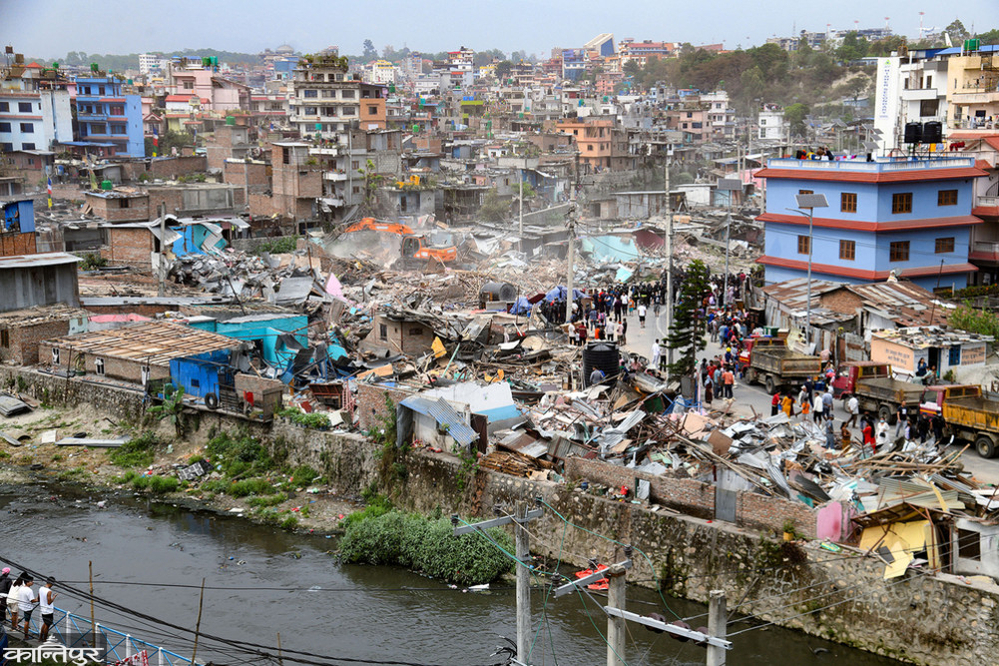
Meanwhile, the government has not yet made public the progress of this work, how many landless squatter families have been registered, and how many have been certified. However, three important issues have changed in the meantime: (1) The government has used dozers on the homes of landless squatters and unorganized settlers living in the Kathmandu Valley. They have been forcibly removed from their places of residence and taken to holding centers. It is said that about 20,000 people have been displaced. In addition, after the district-by-district correspondence to vacate government and public land, notices have been issued in various districts to vacate settlements, and settlements have already been vacated in places such as Kohalpur in Banke and Birgunj in Parsa. (2) The ninth amendment to the Land Act 2021 through an ordinance and (3) the abolition of the Land Problem Resolution Commission.
Similarly, the government has also initiated the process of people availing land administration services (land revenue and survey services) at the local level. After the call was made to the local level through public notice to start land administration services at their respective local levels, 35 municipalities have been allowed to start this service in the first phase. It will gradually increase. In particular, the previous government also used to include this issue in its annual policy and program, but implementation has just begun.
In point no. 69 of the same policy and program, it is written, ‘Affordable and convenient housing schemes will be implemented for the homeless, marginalized, poor and disaster-affected communities. Permanent housing and ownership will be ensured by identifying the real landless.’ This is an issue included in point 91 of the government’s primary agenda issued by the government on Chaitra 13, 2082. It is also an issue included in the Rashtriya Swayamsevak Sangh (RSS) pledge. That is why the government has prioritized these issues and included them in the policy and program for the fiscal year 2083/084. However, on the one hand, the policy and program have been made public, discussions are also underway in the parliament, on the other hand, the government has just a few weeks ago used a 'bull dozer' to evict landless squatters and unorganized settlers. Since the evicted landless squatter families have been kept in holding centers for a long time, their livelihood, food security and children's education have been seriously affected, which is currently being opposed from all sides.
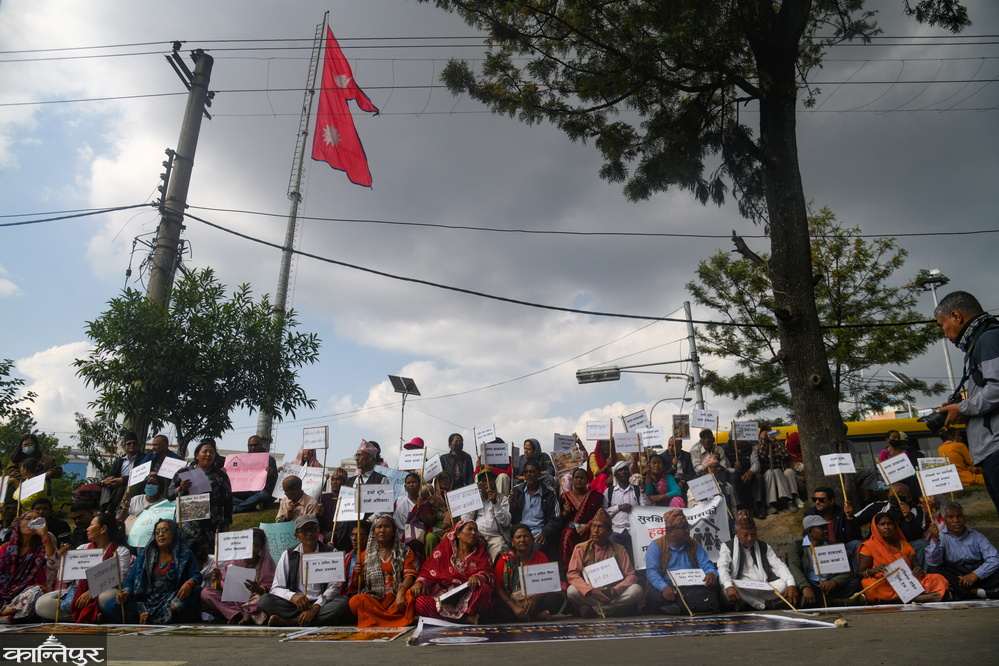 Landless squatters and unorganized settlers across the country have been agitating for the last few weeks. They are in fear, and are taking to the streets and raising slogans, saying that the Balendra Shah government created fear and forced the landless to settle. So, promises and policies and programs are on one side, work is on the other, and the government is trying to give priority only to the middle and upper classes over the lower classes? This suspicion seems to be strong. On the other hand, the United Nations has also shown interest in the issue of housing security for the people who have been forced to live in squatter settlements without proper alternatives.
Point 70 of the policy and program states, ‘An integrated project including land use, infrastructure and community services will be implemented to manage scattered and risky settlements.’ This is also an urgent issue. Even though the government has brought the Land Use Act 2076, it is not being implemented as planned. The number of unorganized settlements is large. Due to integrated settlements, adequate development infrastructure is not being reached. On the other hand, people living in risky areas are at risk of floods and landslides every year, and there are statistics that hundreds of people have lost their lives.
According to the disaster portal, in the last one year, 8031 disaster-related incidents have occurred, resulting in 497 deaths, 37 missing people, and 2000 injuries. Economic losses of more than 2 billion have been caused. If we look at the statistics of the last ten years on this subject, 51,607 disaster-related incidents have occurred in Nepal. 15,073 people have died tragically. 39,210 people have been injured, 849 people have gone missing. Economic losses of 34 billion have been caused. Such incidents are increasing every year.
The policy and program for landless and unorganized settlers is not clear, there is no clear policy to establish the rights of landless and unorganized settlers in relation to the land they have been using for decades – Jagat Deuja, land expert It is appropriate to gradually implement the policy of land administration as stated in the policy and program at the local level. With this, citizens will receive many land-related services from the local government.
‘However, the policy and program for landless and unorganized settlers is not clear . Emphasis has been placed on the management of safe and proper settlement, but there is no clear policy on how to establish the rights of landless and unorganized settlers in relation to the land they have been using for decades,’ says land expert Jagat Deuja, ‘The current government seems to have prioritized agriculture as a whole . The land ownership situation has a lot of impact on agriculture . Accordingly, the policy has not spoken clearly in the case of agricultural land conservation, Guthi being used by farmers, and tenants of private land .’
The government now needs to give priority to the overall land inventory, land use plan, and ensuring land rights of landless, informal settlers, and small farmers as a whole.
The government had also included land reform issues in the fiscal year 2082/083. The government had said in point 56 of its budget statement, ‘The problems of landless Dalits, landless squatters, and unorganized settlers will be permanently resolved by amending the land law. Within the coming fiscal year, landowner registration certificates will be provided to five lakh families after collecting and verifying the inventory. There will be no shortage of resources and manpower for this.’ Less than 2 months after the start of the fiscal year, this work was overshadowed by the Gen-G movement. The interim government abolished the Land Commission itself. The commission revived by the Supreme Court also did not have an environment to work. After the new government was formed, the commission was again abolished through an ordinance, due to which this issue of government policies and programs and budget plans fell into disrepair.
Point No. 55 of the policy and program for the fiscal year 2081/082 stated, ‘The problems of 500,000 landless, squatters, squatters and unorganized settlers will be resolved within the fiscal year.’ This plan was ambitious. While if we look at the record of the distribution of land titles by the commission formed from 2077 BS to date, only about 9,300 families have received land titles. Looking at the past 5 years, the commission has been continuous under different names, but an average of 1,860 families have registered their land and received land titles annually. The government plan to provide land titles to 500,000 families every year was ambitious. However, in the meantime, 1,24,044 applications have been registered. This application record is a digital record registered with the Land Commission. In this way, landless Dalits, landless squatters and unorganized settlement families have submitted applications for land registration and land title deeds.
Point No. 33 of the policy and program presented by President Bidya Devi Bhandari for the fiscal year 2079/080 on Jestha 10, 2079, stated, ‘The problem of landless, squatters and unorganized settlements will be resolved within the next two years.’ Production, employment and capacity development programs will be implemented in coordination with the three levels of government for the freed Kamaiya, Haliya and Kamlari who are yet to be rehabilitated and the Harwa-Charwa who are yet to be declared free. Landowner registration certificates will be provided to landowners who are exempted from surveying and landowners who are exempted from registration such as Swabasi and Benissa.’
However, these plans could not be fruitful either. The problems of the villagers in most districts of the Terai are still unresolved. Although the survey office has started the work of surveying the land, there are complaints that not all the villagers have been able to get the land title deeds.
After the new constitution was promulgated by the Constituent Assembly on Asoj 3, 2072, the issue of land reform was given priority in the policy and program brought by the government for the fiscal year 2073/074, because the Constitution of Nepal is considered a progressive constitution and the issue of land reform and solving the problems of the landless is guaranteed in the fundamental rights of the constitution - Article 37 includes the 'right to housing', Article 40 the right of Dalits, and Article 51 includes land reform issues in state policies.
Point 32 of the policy and program for the fiscal year 2073/074 stated, 'A system of mandatory self-declaration of land ownership will be implemented.' The government will work towards ensuring access to land for all once and for all by implementing scientific land reform. In addition, the work of rehabilitating freed Kamaiyas and Haliyas will be completed within this fiscal year.' And, in point 95, '20,000 houses will be constructed for Dalits, endangered and disadvantaged groups and handed over to the people.'
Despite this commitment, the seventh amendment to the Land Act was made in 2075 BS and the eighth amendment in 2076 BS to solve the problem of landlessness. Only then was the Land Problem Resolution Commission formed in 2077 BS. Although the registration of landless Dalits, landless squatters and irregularly settled families has started since 2077 BS, this work has not been completed yet.
The then CPN-Maoist-led government, which entered the peace process after a 10-year armed conflict in the country, wrote in point 36 of its policy and program for the fiscal year 2065/66, ‘Access and rights of landless and tilling farmers to land will be ensured by implementing scientific land reform and a comprehensive land use policy.’ Point 37 stated, ‘The government will constitute a high-level scientific land reform commission in accordance with the provisions of the Comprehensive Peace Agreement.’ Point 38 stated, ‘Landless squatters, freed Haliyas and freed Kamaiyas will be provided with barren land owned by the government for collective and cooperative farming.’
It is stated that special attention will be paid to providing skill development, employment and housing facilities by arranging resources and means.’ However, as promised, landless families have not been able to obtain land titles and their problems have not been resolved permanently. And yet, the landless are still struggling to secure their homes.
If we look back a little further, even three decades ago, the issue of solving the problem of landlessness was included in government policies and programs. Even then, the problem of landlessness was complex and it is equally complex now. Point 13 of the policy and program presented on 17 Asad 2051 for the fiscal year 2051/052 states, ‘The government will bring the national housing policy to the public.’ Similarly, point 11 of the policy and program presented to the parliament on 5 Asoj 2052 for the fiscal year 2052/053 states, ‘To solve the problem of landless farmers, landless people and labourers.’
It seems that solving the problem of landlessness and landless people has been given priority in the policies and programs for the past 20 years. Going back a little further, since the establishment of multi-party restoration in Nepal in 2046, the government has formed 19 land commissions, committees and task forces in the name of solving this problem.
When the landless and squatters came to Kathmandu to express their grievances to the government, a team from the National Land Rights Forum Nepal reached the Rashtriya Swayamsevak Party office, Banasthali on April 29. And, they submitted a request letter through party leader and deputy leader of the parliamentary party Ganesh Parajuli to ensure land and housing rights. Forum chairman Lyam Bahadur Darji read out the 12-point demands and handed them over.
 Representatives of landless Dalits, landless squatters and unorganized settlers demanded that the government manage the landless, squatters and unorganized settlements without displacing them and also held discussions and dialogues with the government for facilitation for that. In a discussion with the representatives, Deputy Leader Parajuli had said, ‘The RSVP party is committed to managing landless squatters, the government has also taken forward the process to manage them systematically within a thousand days. We will work as promised and will not deprive anyone of their land rights.’
This promise of Parajuli is the RSVP’s specific view on squatters. Even though the RSVP government says ‘we will not deprive anyone of their land rights,’ there are doubts about it – the landless and squatters who have been evicted from their places.
The issue of land reform is currently in the spotlight. And, within that is the issue of managing the landless and squatters. Especially after the new government was formed, these issues are in the national and international spotlight. However, some of the landless squatters are in government holding centers, while others are in the grip of fear and panic of evictions. And, they are also protesting for the security of their homes.