Nineteen members of the Raute community are participating in the 'Raute Cultural Fair' organized in Miklajung, Morang, and a crowd of people has gathered to learn about them.
We use Google Cloud Translation Services. Google requires we provide the following disclaimer relating to use of this service:
This service may contain translations powered by Google. Google disclaims all warranties related to the translations, expressed or implied, including any warranties of accuracy, reliability, and any implied warranties of merchantability, fitness for a particular purpose, and noninfringement.
The excitement has increased in the Neselung Park in Miklajung-3, Morang. The public has been gathering since morning to see and interact with the nomadic Raute community, known as the 'Kings of the Forest', who have come to the east for the first time. They arrived in Miklajung, northern Morang, on Saturday after traveling about 1,000 kilometers.
19 members of the Raute community, who have been living a nomadic life around the forests of Karnali Province, are currently in the Neselung Park. The park management committee has organized the 'Raute Cultural Fair' and invited them. A tent has also been built for them at the fair site to cook, eat and sleep. Many locals from eastern Nepal have also got the opportunity to observe this nomadic community up close in this cultural fair. ‘I had seen the Rautes on video,’ said Harka Bahadur Maden of Damak, ‘I got to see them live for the first time.’
They were given a grand welcome on Saturday. At the fairgrounds, some visitors are seen looking at the traditional attire of the Rautes, while others are busy buying wooden utensils and household items made by them. Some visitors are busy taking selfies and making TikToks. There were also many people who were curious about their lifestyle and chatting. ‘You also eat monkey meat, what kind of meat did you eat here,’ a Raute youth replied to a visitor’s inquiry, ‘We ate goat meat here. Goat meat is tastier than monkey meat.’
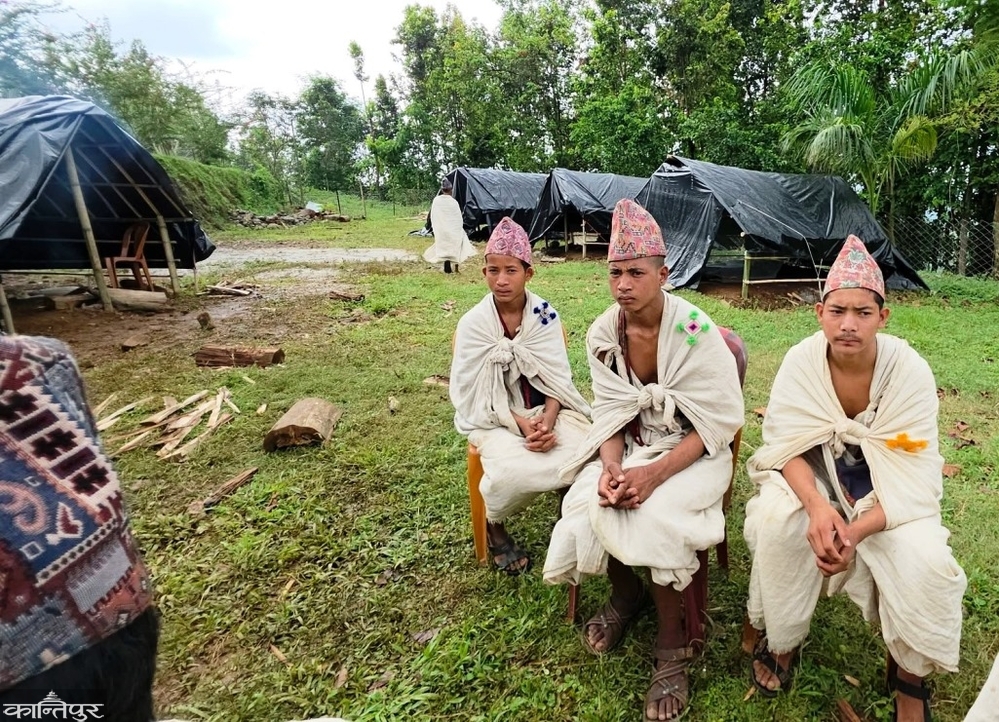
Known as a nomadic community, the Rautes have been living a life closer to the forest and nature than permanent settlements. Their original language, distinct culture and traditional skills are their specialties. The government has also been running conservation programs, saying that their original identity is in danger as the influence of modern lifestyle increases.
The organizers say that the fair was organized in Neselung with the aim of introducing this civilization to the Purveli community. According to Khagendra Maden, chairman of the Neselung Tourism Committee, the fair will be held for a week. 'Many who have only seen the Raute community in books and television have got the opportunity to meet them here in person,' he said. 'We expect this to also help promote cultural tourism.'
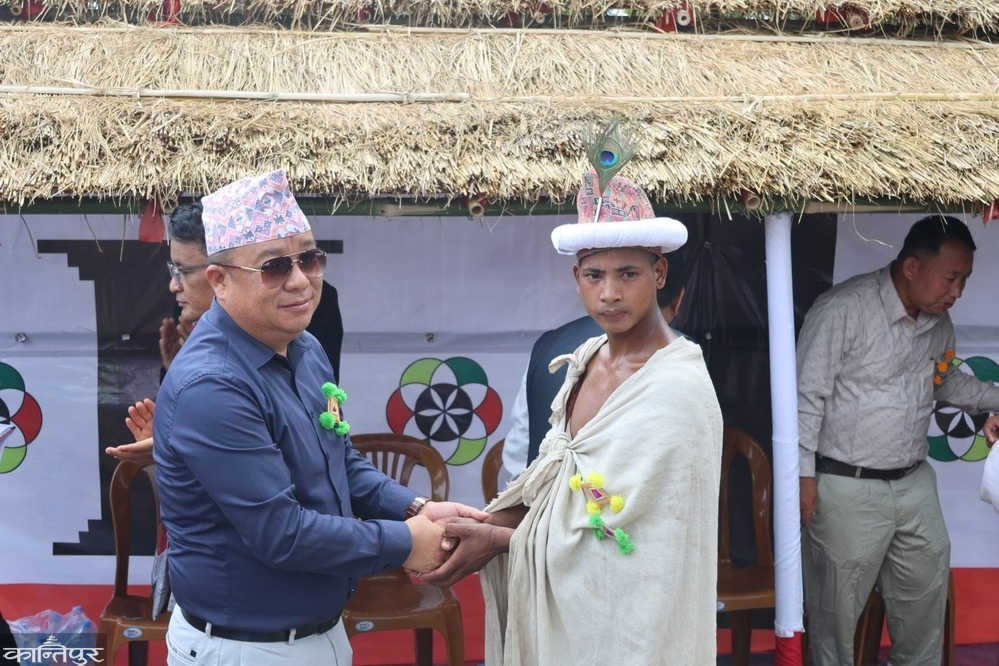
Wooden products made by the Raute community are on display and for sale at the fair. A program to provide information about their lifestyle, food, skills and cultural practices has also been included. Ashok Chemjong, operator of Neselung Fun Park, said that such programs will create an environment for cultural exchange between different communities in Nepal. According to him, presenting the original culture, local dishes and lifestyle of the Limbu community along with the Raute community in one place has added a new attraction to domestic tourism.
According to Kushal Samba, an MP from the eastern province and the initiator of the park construction, Neselung is now being established as a new tourist destination. 'The number of visitors here is increasing due to the upside-down houses, view towers, ethnic dishes and cultural programs,' he said, 'On top of that, the direct participation of the Raute community has added even greater attraction.' The Rautes were brought to the east at the initiative of an NGO called SASEK Nepal. Urlabari social leader Ghanshyam Bhandari, who considers this fair more as a living museum to understand Nepal's endangered original civilization than a place of entertainment, said.

