In this year's SEE, some community schools have achieved excellent results, while others have achieved zero results. People's representatives, who joined years later and took the exam with their grandchildren, have also passed.
We use Google Cloud Translation Services. Google requires we provide the following disclaimer relating to use of this service:
This service may contain translations powered by Google. Google disclaims all warranties related to the translations, expressed or implied, including any warranties of accuracy, reliability, and any implied warranties of merchantability, fitness for a particular purpose, and noninfringement.
The results released by the National Examination Board on Monday night show that 65.98 percent of students have passed. Out of 430,667 candidates who participated in the regular examination, 284,000 students passed while 146,507 failed.
This time, the number of students who scored GPA 3.60 to 4 is 48,392. There are 80,372 students who scored GPA 3.20 to 3.60. Similarly, 94,222 students scored GPA 2.80 to 3.20. There are 55,977 students who scored GPA 2.40 to 2.80. There are 5,190 students who scored GPA below 2.40 to 2.0. There are only 7 students who scored GPA 2.0 to 1.60.
According to Kantipur correspondents, some community schools have achieved excellent results in this year's SEE, while some schools have achieved zero results. People's representatives, who joined after a year and took the exam with their grandchildren, have also passed.
37 out of 73 students from the same school who scored 4 GPA in Chitwan
According to Chitwan correspondent Ramesh Kumar Poudel, 37 students from Bharatpur's Narayani Model Secondary School have scored 4 GPA in this year's SEE. According to the Education Development and Coordination Unit, a total of 73 students have scored 4 GPA across the district. More than half of them are students from the same school, Narayani Secondary School. 380 students from Narayani Secondary School participated in the SEE. ‘Out of which 19 boys and 18 girls have achieved a GPA of four,’ said the school’s principal (Principal) Ram Sharan Duwadi. He said that only one student failed. According to the Education Development and Coordination Unit, Chitwan, 10,413 students participated in the SEE in Chitwan in the general stream. Of these, 6,871 students succeeded in obtaining standardized marks, i.e. passed, the office said.
Last year, 7 students at Narayani Secondary School achieved a GPA of four. The school has achieved its best results so far this time, said Principal Duwadi. Narayani Secondary School is a school that is over 60 years old. It started its studies as a night secondary school on 2020 Jestha 6. In the past, this school had reached zero.
When 54 students of the school gave their SLC exams in 2038, none passed. After that, concerns began about the future of the school. From 2041, the school started operating from 10 am to 4 pm. Former Principal Purna Prasad Dawadi says that a collective effort was started to advance the school systematically from 2049. The impact of this effort was finally seen in the SLC exams of 2057. That year, the school ranked first among community schools in Chitwan in SLC results. After that, Dawadi says that confidence in the school family has been growing.
The SLC results have exceeded 90 percent for 5 consecutive years, the teacher-to-student ratio is adequate, the classrooms are adequate, and the use of information technology in teaching has been fulfilled. The then Hetauda Regional Education Directorate under the Education Department declared Narayani Secondary School a model school in 2070.
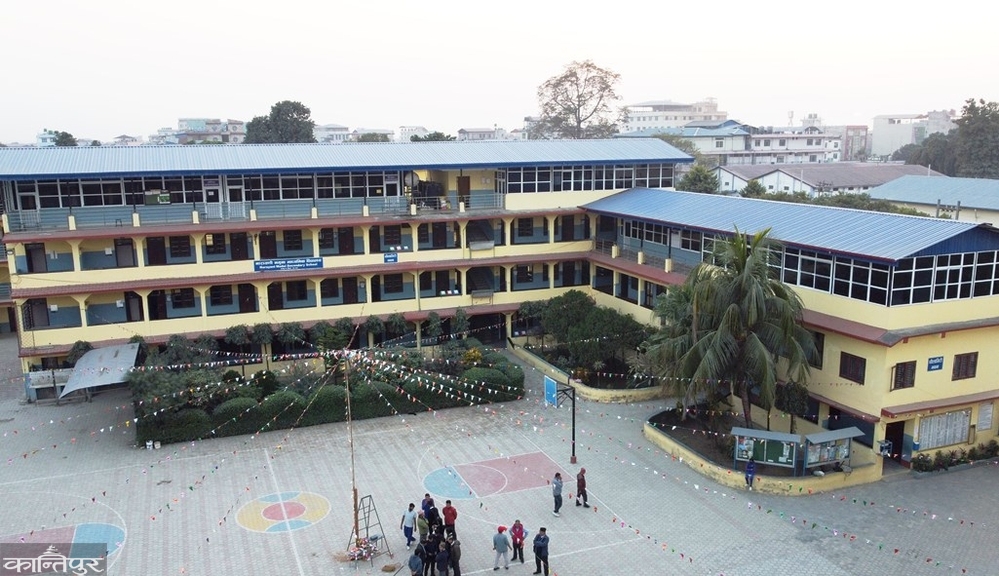
A year ago, the school started teaching in English medium. ‘The locals, not liking the government school education, started choosing private boarding schools to educate their children.’ We also planned to teach English. We called on the parents to cooperate,’ said Tek Bahadur Thapa, the former principal of the school and current chairman of the school management committee.
Thapa says that this was possible after the parents were ready to help cover the cost of private resources even though there were no government posts to arrange sufficient teachers. The school currently offers education from kindergarten to 12. The total number of students last year was 3,334. The school has 6 bighas, 4 kattas, and 14 dhurs of land with a red certificate in its name provided by the government. The 1 bigha of land where the Saptagandaki Campus will be operated and the 2 bighas of land used by CTEVT for operating the training center are also among the 6 bighas of land of Narayani Secondary School.
Khanikhola-5 Ward Chairman Syangtan passes SEE at the age of 44
According to Kavre correspondent Jyoti Shrestha, Ward Chairman of Khanikhola Rural Municipality-5, Buddhi Bahadur Syangtan, has passed SEE at the age of 44. Syangtan, who participated in the SEE in 2082, passed with a GPA of 2.55. He is taking on the responsibility of a public representative and has achieved success by continuing his studies after a long gap.
He was interested in studies since childhood. Due to various reasons, he could not continue his studies. When he was about to enroll in the 9th grade after completing grade 8 in 2056 BS, he could not continue his studies due to the complex situation of the then conflict period. ‘I had to stop my studies in the middle due to the country’s situation and personal reasons,’ he said. ‘After a long struggle, I got time again and decided to continue my studies.’
He said that even though he tried to re-enroll in school in between, he was missing opportunities due to social work and personal responsibilities. Even after being elected as the ward president in 2079 BS, his busy schedule increased. In 2080 BS, he decided to continue his studies. He re-enrolled in Janvikas Secondary School in Khanikhola-5, where he had been studying since childhood.
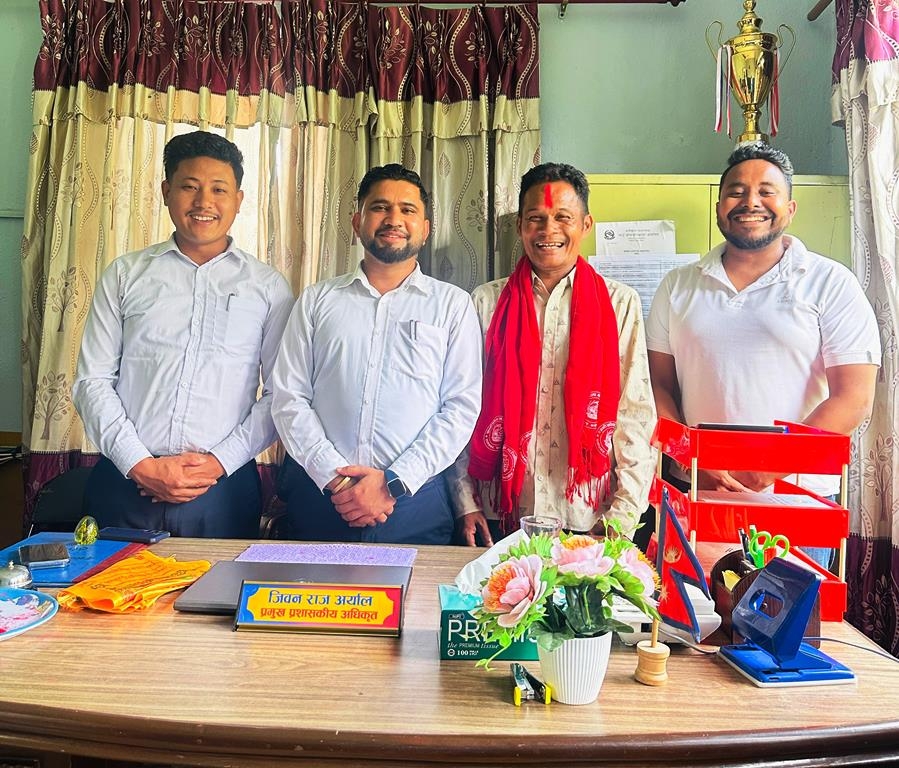
He passed grade 9 in 2081 and passed by participating in the SEE of 2082. Now he is preparing to enroll in grade 11 and further his studies. ‘Now I plan to enroll in grade 11 and further my studies,’ he said, ‘I am taking suggestions on whether to choose technical education or other subjects.’
He has also faced many struggles in his family. Syangtan, who lost his mother in childhood, said that he also lost his father later. He says that he has come this far with the support of his sisters, relatives and family. His eldest daughter passed the SEE last year. His youngest daughter is studying in class 10. He said that his children are also encouraging him to study.
Syangtan said that since he is a public representative, he has been prioritizing education campaigns. He has been spreading awareness about the importance of regular education among children by visiting schools. He said, "When I pass the SEE at this age, I want to send a message to the new generation about the importance of education." Syangtan, who dreamed of becoming a teacher or a forest employee in his childhood, is now in the role of a public representative. He said that he wants to lead society more effectively by acquiring education.
Sansar Bahadur, who lost 8 family members at the age of one, passed the SEE.
According to Chitwan correspondent Ramesh Kumar Paudel, Sansar Bahadur Chepang, a resident of Kandama, a hilly village in Chitwan, who lost all his family members after eating poisonous mushrooms in 2067, has passed the SEE. Sansar Bahadur, who was studying at the SOS Children's Village in Bharatpur after eight members of his family died after eating mushrooms, passed with a GPA of 2.69.
Eight people from the same family died after eating wild mushrooms in Kandama, a hilly village in the northern part of Chitwan, on 2067, on 2067, Sansar Bahadur, who was young and did not eat mushrooms, was the only one who survived. Sansar Bahadur has passed the SEE this time.
Currently, it is still necessary to walk all day to reach Kanda village, which is located in Rapti Municipality-13. There is no motorable road to the village. In Kandama, a highly marginalized community dominated by the indigenous Chepangs, it took almost two days to bring the sick person to the hospital in Bharatpur when this incident happened 16 years ago.
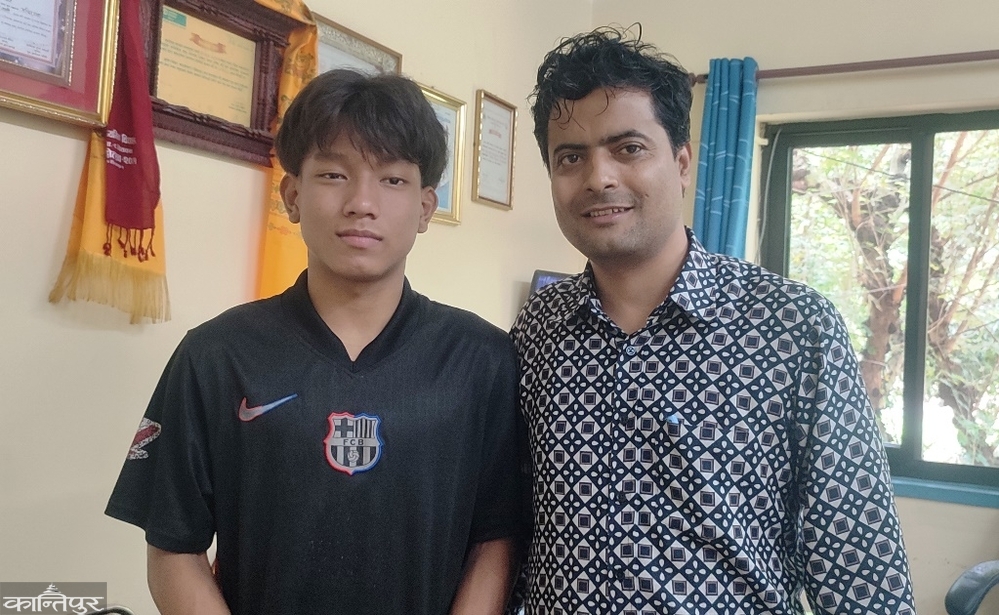
On the evening of Jestha 14, 2067, Baburam Chepang of Kandama cooked mushrooms brought from the forest. Baburam is Sansar Bahadur's grandfather. After rumors spread that all eight people who had eaten mushrooms in the village had fallen ill, the next day, Balkrishna Thapaliya, the principal of the local Kandeshwari School, went to Baburam's house. The neighbors were trying to make them vomit by feeding them animal feces. The principal Thapaliya told them not to do this and to "take them to the hospital as soon as possible." Baburam died as the villagers gathered. Baburam's wife, Sansar Bahadur's grandmother, also died soon after. “Among the sick, Baburam, his wife and one of Baburam’s granddaughters (Sansar Bahadur’s sister) died in the village,” recalled Principal Thapaliya. Thapaliya brought the remaining five to Bharatpur Hospital with the help of villagers.
Sansar Bahadur’s father Purna Bahadur, mother Chandramaya, one of Sansar Bahadur’s sisters, uncle Jeet Bahadur and Jeet Bahadur’s wife died in the beds of Bharatpur Hospital. After Jeet Bahadur, who was taken to Kathmandu for treatment, also died on Jestha 20, there was no one left in Sansar Bahadur’s family.
What to do with all the children in the family? After Principal Thapaliya settled down in Sanchi, Bharatpur’s SOS Children’s Village took over the responsibility of keeping Sansar Bahadur. This incident took Sansar Bahadur to another world.
Sansar Bahadur grew up in the arms of Balgram's mother 'Kanti'. Sansar Bahadur's school life began. 'He has been very interested in football since he was a child. He has gone to different places to play football after school,' said Rajendra Lamsal, director of SOS Balgram.
Three years ago, he went to Kathmandu to play in the selection of the under-16 group, but he could not be selected. SOS takes responsibility until those who come to live in Balgram are 23 years old. 'We help them in everything from studies until then. We have science in grade 11. We also help them to study other subjects,' said director Lamsal.
Along with football, he said that he is also interested in basketball and volleyball. He also likes to dance. 'Sometimes I even sing songs,' said Sansar Bahadur. He says that he could not progress in his studies because he could not write well. Although all his grandparents in the village have passed away, there are other relatives. He has visited the village twice in between. ‘The village is very far. Even farther than Kathmandu. You have to walk all day,’ he said.
The situation in Kanda has changed now, says Principal Thapaliya. Ekal Silwal, one of the journalists who went to collect news of the incident on the spot, started the ‘Miteri Abhiyan’ with his friend, artist and filmmaker Rabindra Singh Baniya, to transform Kanda. Lakshmi Pratishthan was later added to the campaign. The Pratishthan started a hostel in the village in 2072 BS.
The children started studying in the hostel free of cost at Kandeshwari School. In 2067 BS, the school, which was only offering classes up to grade 4, now offers classes up to grade 8. Since there was no school nearby for higher classes, the students of Kanda were taken to a hostel run by Lakshmi Pratishthan in Kavre and taught up to SEE.
‘Kanda children have started taking SEE from Kavre since 2078 BS. Hundreds of SEEs have been given so far. 40/45 people have passed grade 12. They are also studying for graduation. After the incident, a good campaign was launched in the education sector in the village,’ said Thapaliya. Thapaliya said that he was very happy with the news that the child, who was left alone after losing eight parents at that time, has now passed SEE.
66-year-old Karbir passes SEE 56 years after passing grade 7
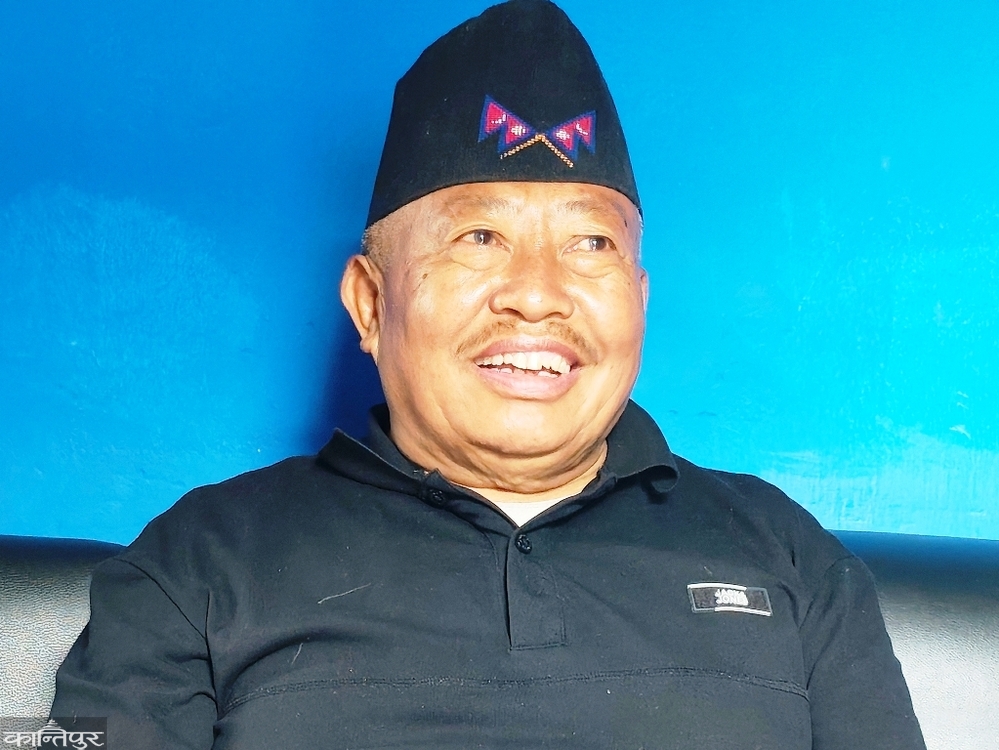
According to Dhankuta correspondent Binod Ghimire, 66-year-old Karbir Rai of Pakhribas Municipality-7 Muga has taken SEE almost 56 years after passing grade 7. Rai, who was born in the then Muga Gaun Panchayat-1, Gaeritol in 2017, had passed grade 7 from the local Ram Middle School in 2027.
The then principal of the school, Achyut Ghimire, and teachers Madhav Ghimire, Urmila Shrestha, and Gol Dewan, seeing his potential, admitted him directly from grade 3 to grade 5. Rai recalls, 'At that time, it was customary to promote good students to grade 5, but I got admitted to grade 4 without completing grade 4.'
Even though he studied up to grade 7 in the village, he had to go to the Dhankuta district headquarters for higher studies. Since there was no environment for higher education in the village, his studies were stopped there. He thought that he had completed his studies, saying, 'Now no one in the village can fool his son.' He still remembers that time and says, 'Let's go and study Anand Lahari, Preeti Lahari, let's go. "I'm going to sing the song of Naurangi Danfe," Karbir remembered what his parents had said at that time. But his passion for education did not end. In 2040 BS, he planned to take the private test exam from Bharati Secondary School in Chungmang VDC. At that time, there was a system in place to pass the test exam before taking the SLC.
Although he passed the test exam, he could not pass the SLC. He took the exam from the designated examination center at Dhankuta Multiple Campus, and although he succeeded in English, Nepali, history and education, he failed in geography, science and mathematics. After that, he dropped out of school again. When his friends from the village went to the coal mines in India for employment, he also went there. A few years later, he returned to the village and got married.
After the political changes of 2046 BS, in 2049 BS, he was elected vice-president of the then Muga VDC on behalf of the CPN-UML. At that time, Indra Bahadur Rai was the VDC president. Then, when he became active in public representatives, party politics and social services, his studies were again neglected.
In 2080, he suddenly felt the urge to study again. 'I can't even work anymore, how long will I sit and watch ludo being played in the village? Now I thought I would pass SEE and study 11-12,' he said.
In 2080, he enrolled in the open learning system. He applied from Sagarmatha Dolphin College in Dharan, Sunsari, and went to Rajbiraj, Saptari, to take the exam. While going to and from the exam center, other students would tease him, saying, 'Sit down, old man,' and give him a seat on the bus. In his first attempt, he passed five subjects but failed in two. In 2081, he took the grade enhancement exam in mathematics and economics. Although he succeeded in economics, mathematics stopped him again. After that, he came to the Dhankuta district headquarters to learn mathematics. Gopal Rai, a mathematics teacher from Tallo Gokundeshwor, gave him free tuition for two months. Chandra Guragain, a teacher from Upper Gokundeshwor, also helped.
For the SEE conducted in Chaitra 2082, he applied again from Sagarmatha Dolphin College in Dharan and took the exam at KE Secondary School in Rajbiraj. In the results published on Monday night, he passed the SEE with a 'C' grade.
However, he could not do the work of checking the results himself. 'I can't search on the internet. I found out from my daughter-in-law,' he said with a laugh, 'I passed with a C grade, now I will study 11-12.' Now he plans to enroll in class 11 with a management subject. He is preparing to stay in Dhankuta and study till class 12. He has also planned to bring his wife Karuna Dewan from Muga to Dhankuta. 'The old people cook food, I go to study,' he said.
Rai is also concerned about the new generation. He understands that today's youth are more involved in having fun than studying. 'The new generation needs to learn and study more. It's not just like us. You have to study well, you shouldn't give up. I also passed SEE in three years. Continuity gives people achievements, takes them to the right destination,' he said.
He is also excited about his family's educational achievements. His eldest daughter-in-law, Jashujanam Rai, has a master's degree in Nepali and law, while his younger daughter-in-law, Laxmi Limbu, has a master's degree in commerce and political science. His eldest son, Kiran, has been running the Sansara Hotel in the tourist destination of Bhedetar, while his younger son, Sochan, is working in the Nepali Army. 'My family also has a professional background,' he said, 'Now I too will study commerce and study 11-12.'
11 students from Dahu Secondary School, where students from 30 districts study, score 4 GPA in SEE
According to Ramechhap correspondent Nawaraj Shrestha, with the publication of the SEE 2082 results, a school in a rural area of Ramechhap has once again come into the national spotlight. Dahu Secondary School in Sunapati Rural Municipality-4 Bethan of the district has achieved 4 GPA in this year's SEE.
According to the results released by the National Examination Board on Monday, 11 out of a total of 66 students of the school have achieved 4 GPA. According to the school, 9 students studying in the technical stream of computer engineering and 2 students studying in the general stream have achieved 4 GPA. Similarly, 38 students in the technical stream have achieved 3.60 to 3.96 GPA and one student has achieved 3.59 GPA. 9 students in the general stream have achieved 3.60 to 3.96 GPA, 5 students have achieved 3.20 to 3.60 GPA and 2 students have achieved 2.80 to 3.20 GPA.
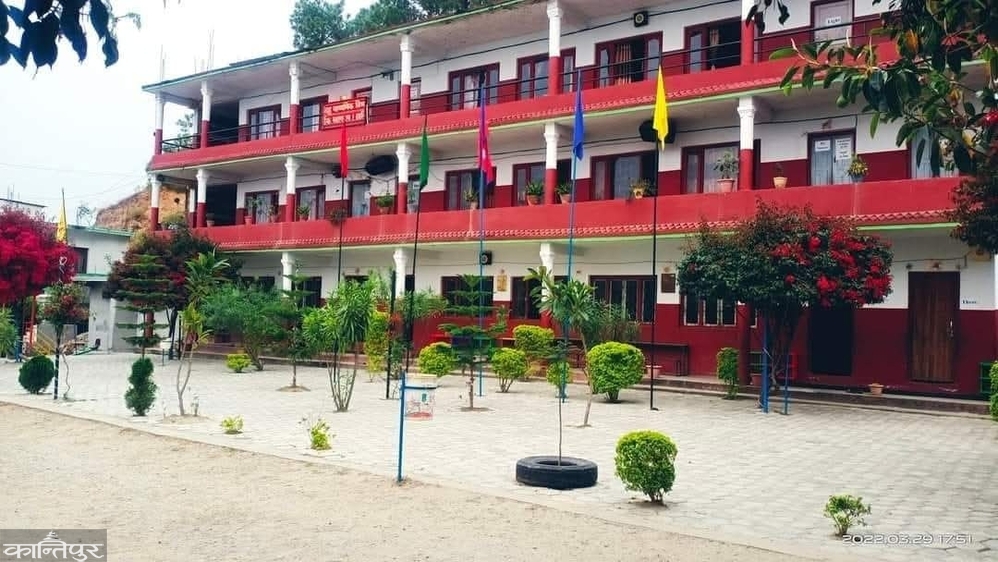
The achievement achieved by Dahu Secondary School in the year when 65.98 percent of students passed the national SEE results is the result of collective dedication, discipline and continuous struggle, said the school's principal Dal Bahadur Bal. He said, 'I am grateful to my fellow teachers, hardworking students and faithful parents who are continuously dedicated to creating new history in the field of education even while putting aside many joys in their personal lives.' He said that it is a historic achievement that 16.66 percent of students have achieved a 4 GPA.
Dahu Secondary School is a school that has been in the news due to its excellent management and the results it has been achieving in examinations. Despite limited resources, rural surroundings and lack of opportunities, the school has been continuously achieving excellent academic achievements. Local parents seem excited about the school's success.
At a time when trust in community schools is weakening, parents say that Dahu Secondary School has set an example that government schools can also give excellent results with hard work, discipline, competent management and cooperation between teachers and parents.
Impressed by the school's educational environment, discipline and management, Prem Bahadur Shrestha of Manthali Municipality-9 said that he got his daughter, who was studying in a private school in the district headquarters Manthali, admitted to Dahu Secondary School three years ago. He said, 'The school's education, discipline and results have won the trust of us parents.'
According to Rina Tamang, a teacher at the school, teaching is currently being done in English medium from nursery to grade 12. The school conducts regular classes every day from 6:30 am to 4:30 pm, and students are involved in sports, dance and other extracurricular activities after that. 'The school has achieved its greatest success so far as a result of the hard work and collective efforts of all teachers, students and parents,' Tamang said, 'We are happy with this. But our goal has not yet been achieved.' We expected 25 students to get 4 GPA in SEE 2082, but only 11 achieved that achievement. That is why we need to work harder.'
Students from 30 districts
Dahu Secondary School is now becoming the school of choice for students and parents not only in Ramechhap but also in various districts of the country. While most parents in the village are increasingly sending their children to the district headquarters and cities in search of better education, Dahu Secondary School, located in a remote settlement of Sunapati Rural Municipality, is attracting students from the cities to the village.
Amidst the declining trust in community schools, Dahu Secondary School has established itself as a model school in the country through academic quality, discipline and residential management. Recently, many parents, teachers and representatives of various local levels have been visiting the school.
According to the Principal, a total of 600 students are currently studying in the school. Of these, 360 students are studying with residential facilities from 30 districts. 'Despite the desire to educate all the students who have come from far away, it is difficult to manage,' said Principal Bal, 'That is why we have been selecting students only by taking an entrance exam. We have had to determine the quota of students living in the hostel and take admission.' According to the school, students from districts including Kavre, Dolakha, Okhaldhunga, Sindhuli, Sindhupalchowk, Bhaktapur, Lalitpur, Rautahat, Mahottari and Jhapa are currently studying here. Similarly, students from districts including Kathmandu, Makawanpur, Bajhang, Myagdi, Doti, Nawalparasi, Baitadi, Salyan, Saptari, Arghakhanchi, Siraha, Chitwan, Surkhet, Sarlahi and Sunsari are also studying residentially at Dahu Secondary School.
19 students from Nawalpur scored 4 GPA
According to our Nawalpur correspondent Nabin Poudel, 19 students from East Nawalparasi scored 4 GPA in this year's SEE. In the SEE of 2081 BS, only 10 students in the district scored 4 GPA .
This year, 9 students from community schools and 10 students from institutional schools scored 4 GPA, said Dipendra Shrestha, head of the Education Development and Coordination Unit, Kawasoti.
Among the schools that scored 4 GPA this year, 2 students from Shiva Secondary School, Kawasoti, Nepal Secondary School, Devchuli, Janata Secondary School, Shivanagar, Gyanoday Secondary School, Kawasoti, Barachuli Secondary School, Sakaladevi Secondary School, and Ratna Rajya Secondary School have scored 4 GPA .
On the institutional side, 2 students from Vijay Community Education House, one each from Continental, Saraswati Niketan, Wine Vision, Suryodaya Vidya Mandir, Nawalpur Academy, Gaidakot Academy, Amar Boarding and Small Heart Academy have achieved 4 GPA. 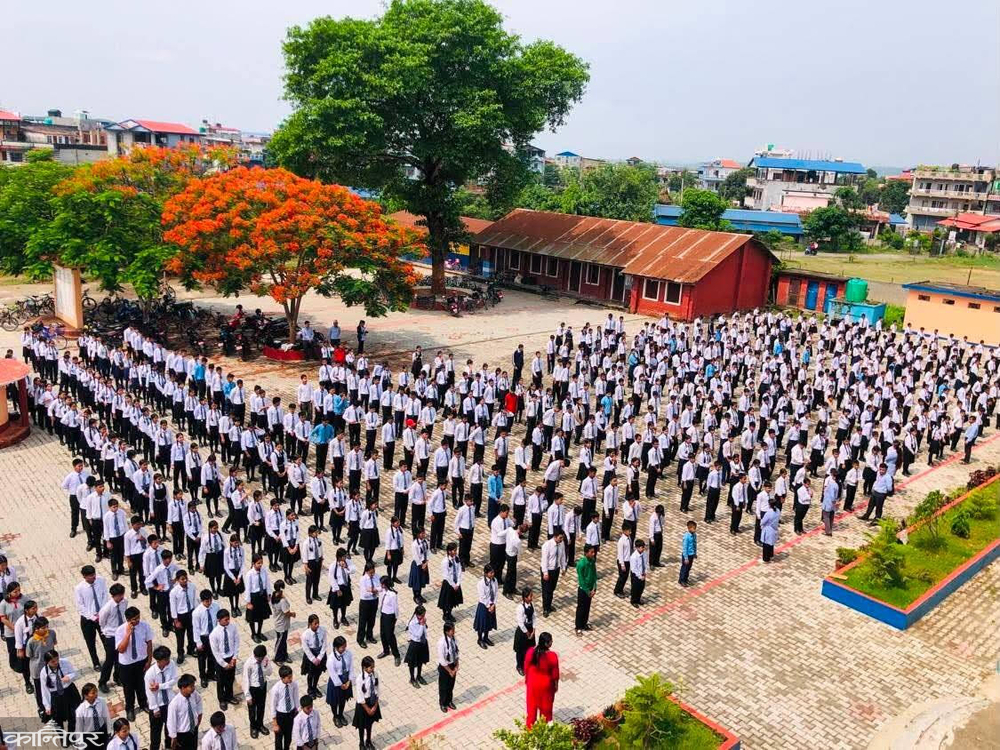
In the district, 72.49 percent of students have passed the SEE 2082 BS.

