Revenue collection of 41.7 million rupees from wildlife poaching
We use Google Cloud Translation Services. Google requires we provide the following disclaimer relating to use of this service:
This service may contain translations powered by Google. Google disclaims all warranties related to the translations, expressed or implied, including any warranties of accuracy, reliability, and any implied warranties of merchantability, fitness for a particular purpose, and noninfringement.
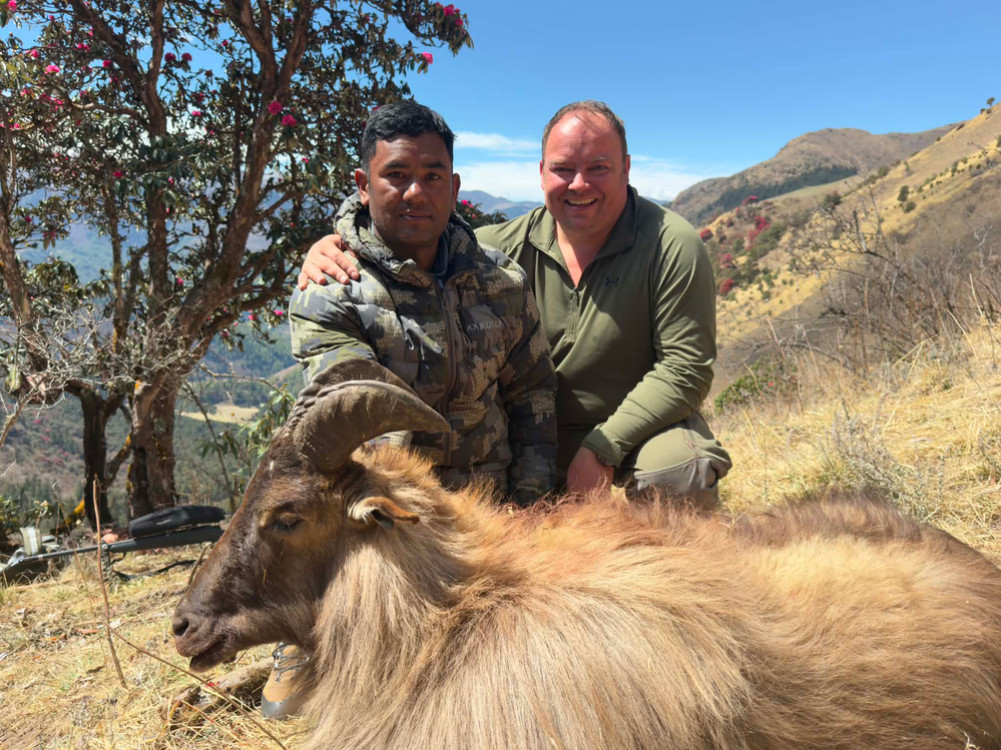
In the second season of the current fiscal year, 23 wild animals, including 13 naur and 10 jharal, have been hunted in the Dhorpatan Hunting Reserve. The National Parks and Wildlife Conservation Department had granted permission to hunt 14 naur, 10 jharal and 13 wild boars for this season. Of these, 13 naur and 10 jharal have been hunted. Despite the quota being set, no wild boars were hunted. In the first season this year, 19 wild animals, including 11 naur and 8 jharal, were hunted.
Every year, hunting is held here in the first season in Kartik and the second season in Baishakh. Ranger Sagar Subedi, the reserve's information officer, said that despite receiving permission to hunt wild boars this year, hunters did not kill any. According to Subedi, Rs 41.779 crore has been collected in the reserve from hunting alone. This amount is almost double that of last year.
Last year, 27.66 million 400 thousand revenue was collected from hunting. American hunters hunted Naur and Jharal through Global Safari Pvt. Ltd. Apart from that, American, Russian, French and Danish hunters come to the reserve through Himalayan Safari, Himalayan Wildlife Aun Fitter, Global Safaris, Travel Expeditions. Permissions are granted on a competitive basis.
Hunters come to the reserve by helicopter. They stay here for two weeks and reach blocks such as Falgune, Dhustung, Dogadi, Warse, Surtiwang, Seng and others to hunt. Although the 7 blocks of the reserve cover Baglung, Myagdi and Rukum districts, the army's security is limited to a limited area. The reserve has stated that the hunters returned after hunting easily due to good weather in both seasons this year. Last year, some hunters were stranded due to bad weather. The reserve rescued them.
The reserve has been collecting revenue from various other sources besides hunting. By the end of Chaitra this year, it has collected 4.68 million rupees in revenue from tourist registration, sand gravel extraction and fines. If there are more poachers, the fines in the reserve are also increased. Recently, after the establishment of the Nepali Army, poachers have been decreasing. From time to time, the reserve has been arresting and fineing those who are involved in poaching and smuggling of eyewear and other items. The reserve imposes fines if sand and stones are smuggled in the Uttar Ganga flowing through the reserve. Apart from that, it has been collecting revenue by excavating and selling necessary materials.
The reserve collects revenue from tourists through entry fees. According to Subedi, 19,881 Nepalis, 14 SAARC countries, and 141 tourists from third countries including Europe and America have visited the reserve since Shrawan. The months of Jestha, Asar, and Shrawan are the most attractive months for tourists in Dhorpatan. Locals coming from Dhorpatan Municipality, Nisikhola, and Tamankhola rural municipalities and the adjoining municipalities of Myagdi and Rukum do not have to pay entry fees.
Although the hunting revenue figure is closed with hunting, other revenues will continue to increase, Subedi said. Two years ago, only about 7,000 tourists visited Dhorpatan, but this number has increased since last year. With the increase in tourists in recent times, the hustle and bustle in Dhorpatan has also increased. Local hoteliers also said that they have been able to increase their business. Domestic tourists travel by motorbike to reach Dhorpatan Hunting Reserve via Burtiwang in Baglung. Apart from the valley where the main reserve office is located, they also visit places like Jaljala, Niseldhor, Buki Patan and others.