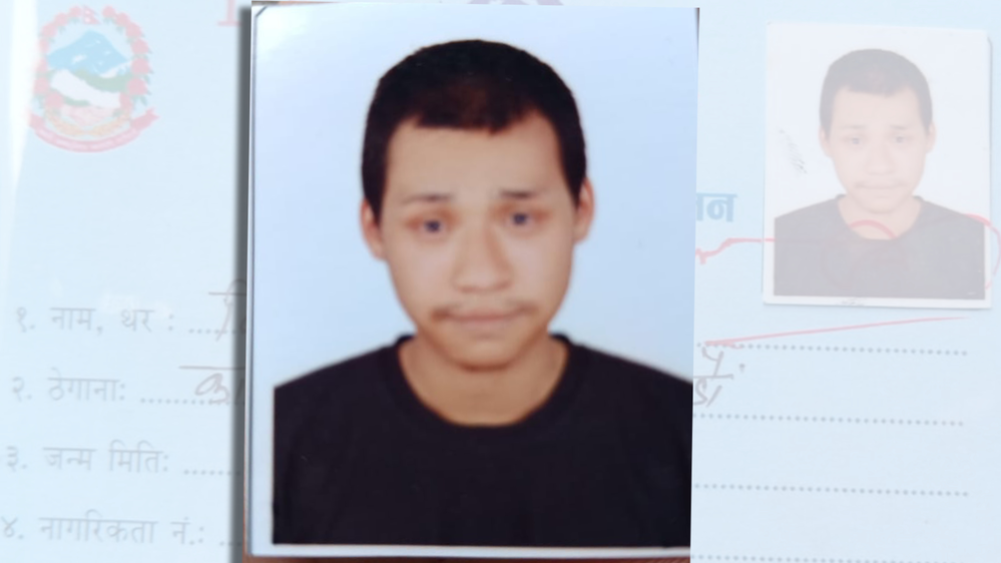
Nischal, a victim of the Gen-G movement, says, ”We went to many places to look for a room, but they said there were no rooms available. Some even turn their backs on learning that they are squatters. Now, where should I take my mother with this sick body?”
We use Google Cloud Translation Services. Google requires we provide the following disclaimer relating to use of this service:
This service may contain translations powered by Google. Google disclaims all warranties related to the translations, expressed or implied, including any warranties of accuracy, reliability, and any implied warranties of merchantability, fitness for a particular purpose, and noninfringement.
The slums located just behind the Tribhuvan University Teaching Hospital in Maharajgunj are not only silent, but also filled with fear and confusion. After the Kathmandu Metropolitan City issued a call to evacuate the slums, the two-decade-old huts here are currently in a state of mourning and running. Some are packing their old utensils, while others are wandering around in search of a place to sleep.
The story of 24-year-old Nischal Thapa, who is in this crowd, is different from the others. Nischal is a product of the same slums, where he spent his childhood and youth. Growing up in that soil, he had a dream that his situation would also change if corruption ended in the country. The urgency of that dream brought him to the forefront of the Gen-G movement on 23 and 24 Bhadra. 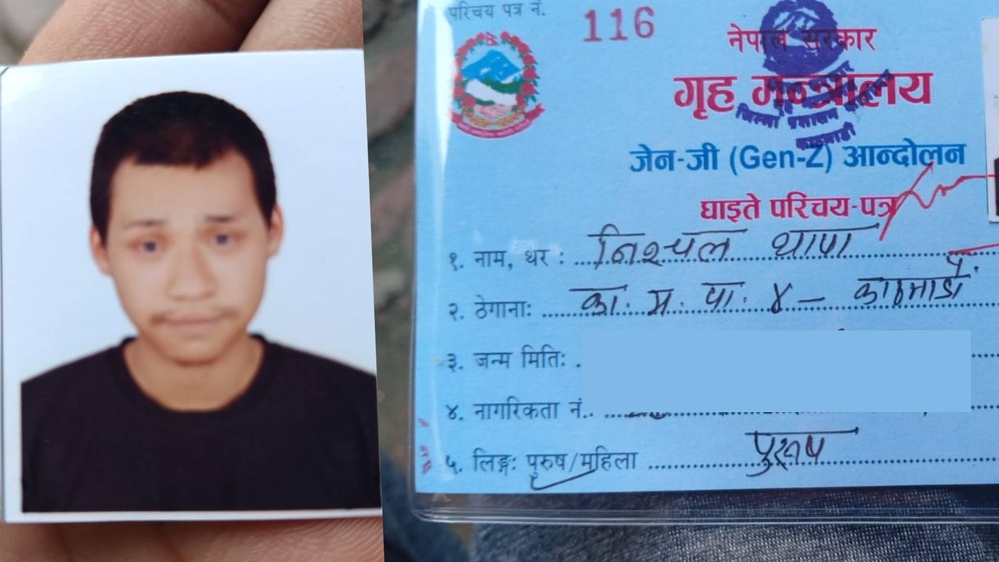
Nischal also joined the sea of people who had gathered on the roundabout in favor of change. That day on 24 Bhadra became the 'turning point' of his life. Nischal was shot in the waist during a clash between protesters and security personnel. He was taken to the hospital covered in blood. The state accepted him as a 'wounded person of the movement' and gave him an identity card.
'For whom and under whose leadership we risked our lives on the streets, today the same power is chasing us away from the place where we were born,' Nischal lamented. One of his legs, which was shot, has not fully recovered. He continues to suffer from the pain and numbness in his legs while walking. Due to his physical disability, he is currently unable to do any work.
Nischal's family background is even more heartbreaking. His father has been dead for 8 years. His mother is responsible for running the house and taking care of Nischal. The money his mother earns from working as a daily wage earner makes it difficult to even make ends meet. When he goes to a government hospital for treatment, he sometimes doesn't get a turn or doesn't have enough facilities, so they took out a loan and got Nischal treated at a private hospital.
After the city government miked the slum on 16 Baisakh, Nischal and his mother packed up their small belongings and piled them in a corner. However, they have no idea where to take them with that stuff. Nischal says, 'We have gone to many places to look for a room, but they say there is no room. Some people turn away immediately after learning that he is a squatter. Now where should I take my mother with this sick body?'