Some children were jumping in front of the residence. A boy came out of the residence in his school uniform. ‘What grade do we study in?’ I asked. He said, ‘LKG.’ I asked again, ‘Did you come here wearing your school uniform?’ His mother, who was sitting nearby, replied, ‘The bully came at the school bell. He must have been wearing this uniform.’
We use Google Cloud Translation Services. Google requires we provide the following disclaimer relating to use of this service:
This service may contain translations powered by Google. Google disclaims all warranties related to the translations, expressed or implied, including any warranties of accuracy, reliability, and any implied warranties of merchantability, fitness for a particular purpose, and noninfringement.
Nepal Electricity Authority Engineering Service Directorate Training Management Department in Kharipati. Time 12 noon. A young man came in front of House No. 3 in a panic and said, ‘He has a stroke. How can I take him on a wheelchair?’
The security personnel nearby were sitting silently. The patient who was sleeping in the ambulance was taken down and placed on a wheelchair.
The path to reach the room was not easy. There was no path for the wheelchair to move. One, two, or five people lifted the patient along with the wheelchair to the room.
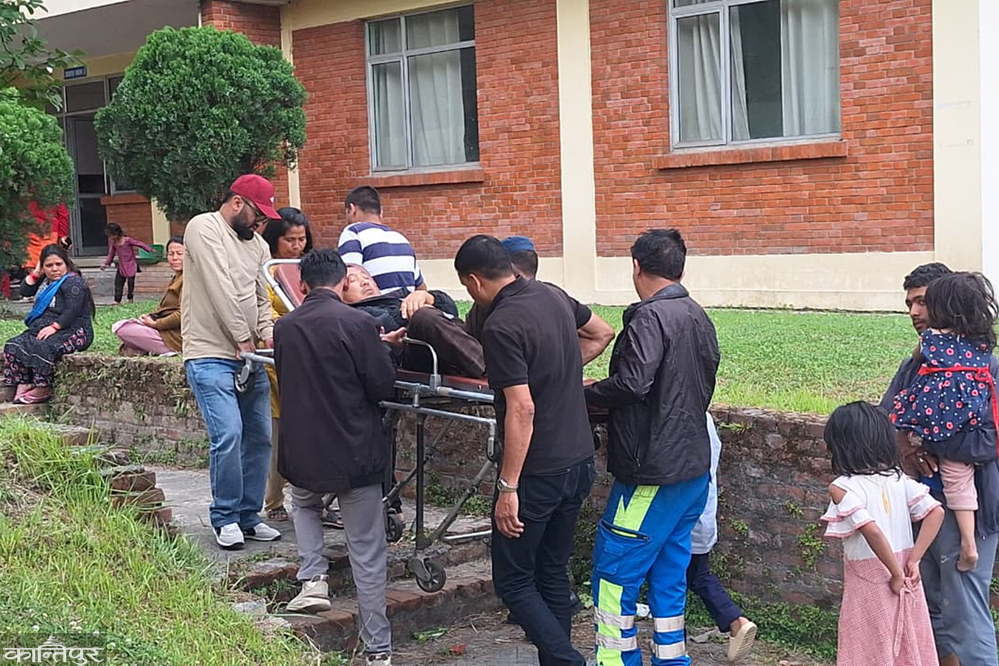
The department staff who were watching this scene were saying, ‘Such a patient should be kept in a hospital or a comfortable place, what did they do by sending him here?’ We also followed him, but the staff said, ‘We are not allowed to talk or take pictures. Please don’t make us uncomfortable.’ We took his picture from outside. The dependents who were there were also told, ‘You also don’t have to give interviews.’ Even after saying this, they seemed eager to tell their stories and sorrows.
Some children were jumping in front of the residence. A child came out of the residence in school uniform. ‘What grade do we study in?’ I asked. He said, ‘LKG’. I asked again, ‘Did you come here wearing your school uniform?’ His mother, Nain Kumari Safi, who was sitting nearby, replied, ‘The bulldozer came at the school bell, he must have been wearing this.’
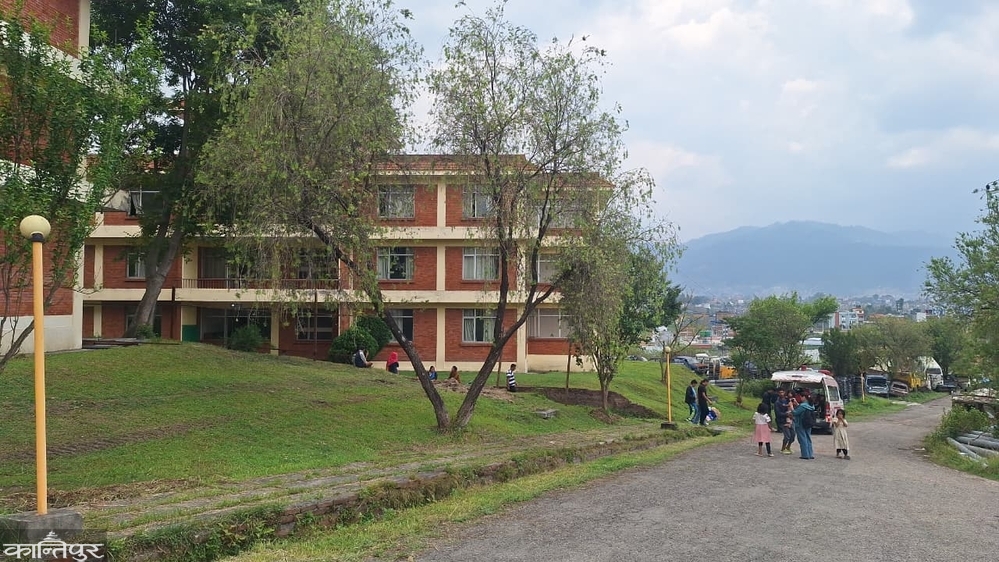
She could not see what her son was wearing. He is completely blind. She said that she had nothing except the clothes she was wearing. She said, clutching the small bag she was carrying, ‘Here is the citizenship, we have nothing else now.’ It was getting colder due to the rain. She said that it was starting to get cold in the morning and evening. She complained that there were good arrangements for food and accommodation, but there was no warm clothing.
Khushbu Khatun was surrounded by children in the department. Her four children, aged between 8 and 2, were found in the courtyard. Some had only one shirt, and some had no slippers on their feet. The 2-year-old daughter was saying, ‘My slippers were left in the car.’ She was also worried that the child would feel cold, but she did not have warm clothes for the children. She was saying, ‘It is raining, it is cold, neither she nor the child has any clothes.’
Rajkumar Bik, displaced from Tripureshwor Bansighat. He has also reached the department. Rajkumar has fluid in his lungs. He has to take medicine three times a day. After the house collapsed, he has not been able to take medicine. He does not know what the medicine was or where it was. He said, ‘It was always at home, when it ran out, I would buy it, where can I get it now? The house was gone, but I thought that I would survive by taking medicine, but now there is no hope!’
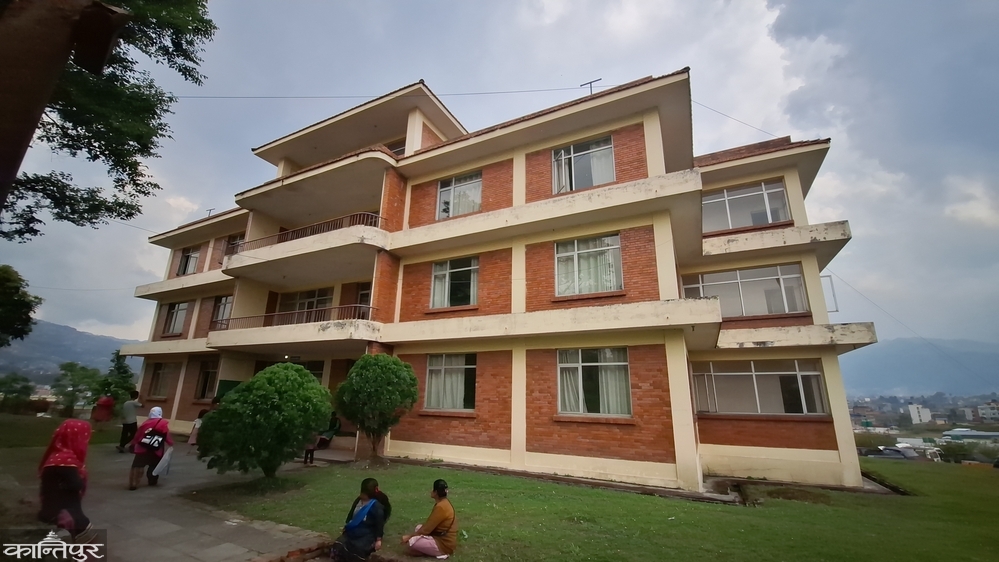
Rita Khadka was chatting with her friend about what her children would do now. She has two children. She was worried about where her children who were working in other people's houses would go. She was worried about when her children who came calling her mother and asking for a house would find her. Now she has no belongings. She had packed a lot of belongings. She even had to spend money to buy tin to build a house. She said, 'I have no home or belongings left after packing them with sorrow, not even a single piece of clothing now.' Her belongings were left at the stadium. Saying that she had nothing left, she said, 'No house, no belongings, it feels like I have truly become a squatter.'
She panicked after the vehicle drove off while miking to evacuate the settlement. She did not want to reveal her name. Her daughter cannot walk properly because one of her legs is weak. Where should she keep her daughter? What should she do? Her worries increased. She was in a dilemma whether to move the belongings or the daughter. She called her relatives, and they took care of her daughter. She started managing her belongings. Her husband had left her a long time ago. Her home, where she is single-handedly taking care of her two children, is now deserted. Her son has now gone abroad. She said, ‘My son has sent a lot of debt abroad, how will I pay it now? What should I do?’
She had her own business before the Corona pandemic. She used to run a cosmetic shop and do sewing. Her business, which collapsed due to the lockdown, has not been able to recover. She said that she was displaced and had a pair of clothes with her. She said, ‘Where should I take them? I had brought them because I would have to change my clothes, but I don’t know where the rest of my belongings are.’
Maiya Karki, who has been living in Bansighat for 35 years, has nothing in her bag except her citizenship and some documents. She could not take out her belongings. She was living alone in the slum. After her two daughters got married, she was living alone. She had come to the slum because she was raising her daughters alone. She had come to live there. Her house had a tin roof and thatched roof. She said, "That place gave me a lot of support during my time of sorrow, but now that I am old, I am homeless." The number of people like them who have come to seek shelter in the department has now reached 135.

