The situation in the Asia-Pacific region is even more 'serious'
We use Google Cloud Translation Services. Google requires we provide the following disclaimer relating to use of this service:
This service may contain translations powered by Google. Google disclaims all warranties related to the translations, expressed or implied, including any warranties of accuracy, reliability, and any implied warranties of merchantability, fitness for a particular purpose, and noninfringement.
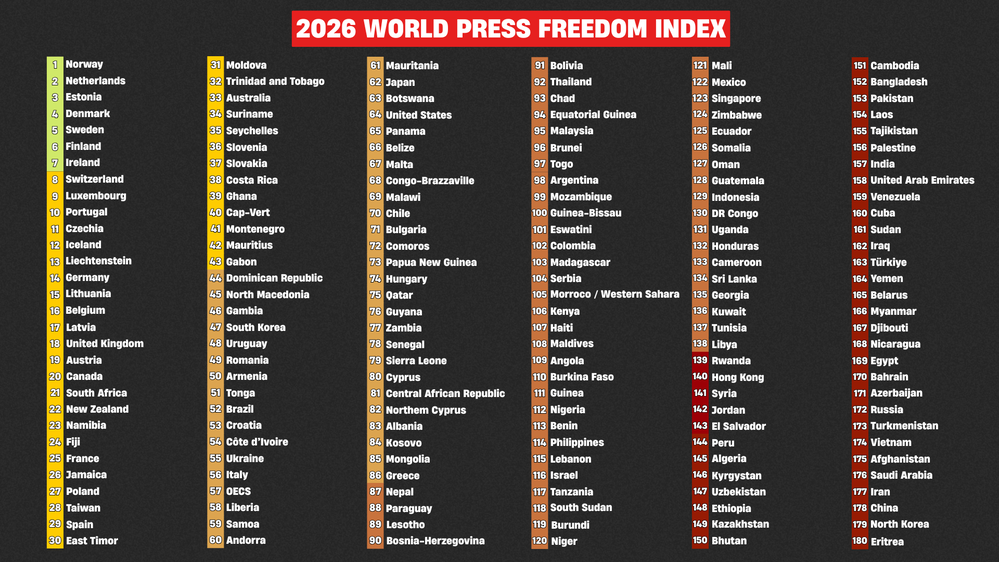
Nepal has been ranked 87th in the 2026 World Press Freedom Index released by Reporters Without Borders (RSF). The situation in other South Asian countries is very pathetic. India is ranked 157th, while Pakistan is 153rd, Bangladesh is 152nd, Bhutan is 150th, and Sri Lanka is 134th.
Afghanistan, which has been continuously restricting the press since the Taliban returned to power in August 2021, has reached 175th place. This data indicates that while Nepal's press freedom is relatively safe in South Asia, it is not completely free from the effects of censorship and repression prevalent in the region.
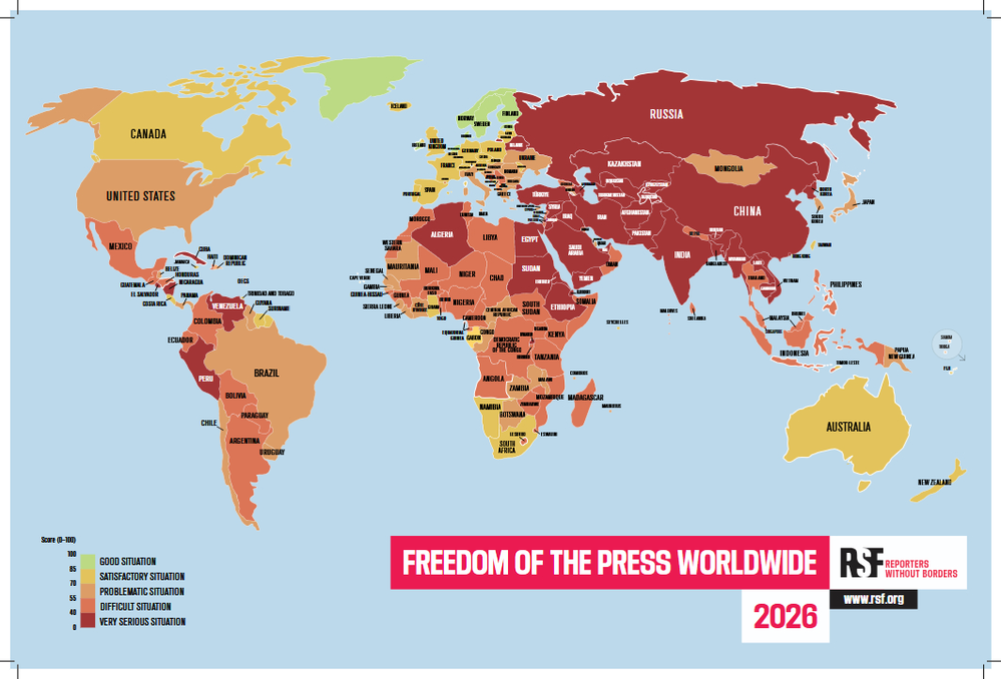
While Nepal's situation in the list of 180 countries appears satisfactory compared to its South Asian neighbors, the RSF report points out that the situation of press freedom in the Asia-Pacific region as a whole is becoming worrying and oppressive. According to the report, the press freedom situation in 21 out of 32 countries and territories in this region has been classified as 'difficult' or 'very serious'. The Asia-Pacific region has become one of the most repressive regions in the world and the situation is getting worse, the report says.
China, ranked 178th, has been using national security laws to imprison journalists. With 121 journalists currently in prison, it has become the world's largest jailer of journalists.
According to RSF, China's censorship model is now spreading beyond its borders. Countries such as Vietnam, ranked 174th, and Myanmar, ranked 166th, have followed China's lead and made 'cybersecurity' laws a key weapon in online censorship.