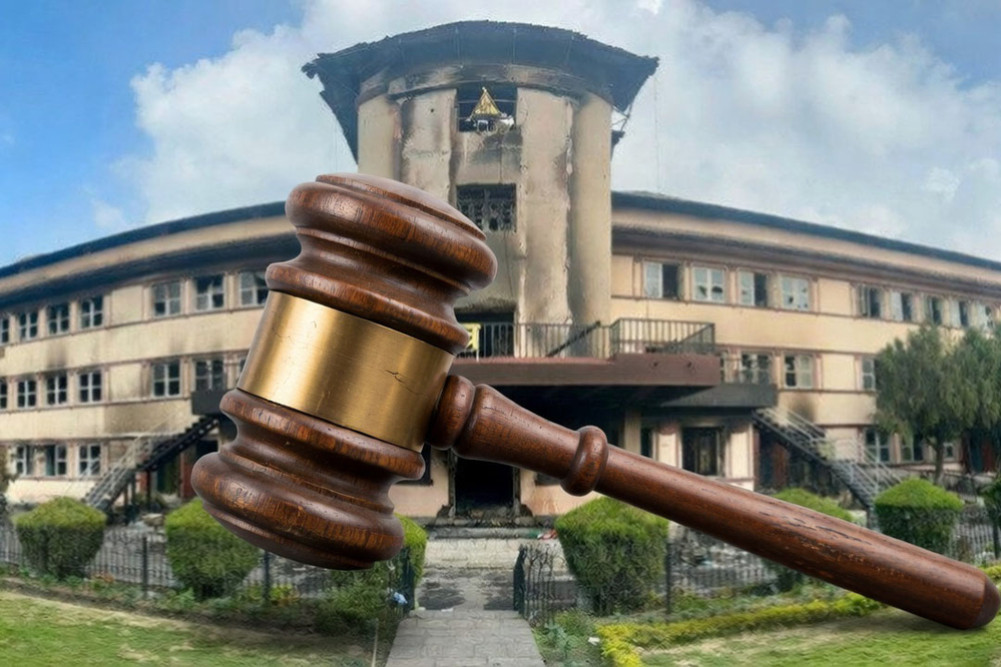
The Supreme Court has issued a mandate in the name of the government to ensure legal certainty and expedite the resolution of such incidents without any amnesty.
We use Google Cloud Translation Services. Google requires we provide the following disclaimer relating to use of this service:
This service may contain translations powered by Google. Google disclaims all warranties related to the translations, expressed or implied, including any warranties of accuracy, reliability, and any implied warranties of merchantability, fitness for a particular purpose, and noninfringement.
The Supreme Court has issued a mandate in the name of the government to ensure that human rights violations committed during the armed conflict are not pardoned and that they should be resolved quickly.
In a writ petition filed by 49 conflict victims, including Kul Bahadur Limbu, the Supreme Court has issued a mandate to resolve the criminal cases of the conflict, including those filed with the Truth and Reconciliation Commission and the Commission on Disappearances, saying that it should not be kept for a long time.
A constitutional bench of Acting Chief Justice Sapana Pradhan Malla, Justices Manoj Kumar Sharma, Nahakul Subedi, Abdul Aziz Musalman and Tek Prasad Dhungana issued such a mandate.
The Supreme Court on Wednesday said that cases should be filed compulsorily, saying that pardon is not possible in serious cases of human rights violations. The full verdict of the verdict is yet to come. However, the victims have claimed that the Constitutional Court's mandate has ruled that various provisions of the existing Commission for Investigation, Truth and Reconciliation of Enforced Disappearances (Third Amendment), Act 2081 will be null and void.
The writ petition claimed that the government has relaxed the provisions of amnesty, prosecution and investigation through the third amendment to the Commission for Investigation, Truth and Reconciliation of Enforced Disappearances Act and placed the provisions of amnesty, prosecution and investigation at the discretion of the Commission and the government.
They had been claiming before the Supreme Court that the latest amendment to the Act had obstructed the path to peace process through conflict management.
Victim and advocate Gyanendra Raj Aran, who argued the case, said that the Supreme Court had given a good verdict on the issue of transitional justice and had asked not to interfere for years. He said that now not only both commissions but also the government have paved the way to work towards finalizing this process.
At a time when a commission is being formed in the transitional justice process and complaints are being filed but nothing is being done, the latest Supreme Court ruling will put pressure on the government, said Suman Adhikari, former president of the conflict victims' common association. The son of Mukti Prasad Adhikari, a teacher who was murdered during the conflict, he said that the government should start the process of providing justice if the victims are tired of raising the case soon.