The placards in their hands directly ask the passersby, the city, and the government, ”When will the city become civilized? Do you recognize caste or people? Look in the mirror, change the mask of caste! When will you become a person?” But the answer has not come from anywhere.
We use Google Cloud Translation Services. Google requires we provide the following disclaimer relating to use of this service:
This service may contain translations powered by Google. Google disclaims all warranties related to the translations, expressed or implied, including any warranties of accuracy, reliability, and any implied warranties of merchantability, fitness for a particular purpose, and noninfringement.
A group has been protesting continuously for 12 days at the Maitighar Mandal in Kathmandu. The placards in their hands directly ask the passersby, the city and the government, ‘When will the city become civilized? Do you know caste or human? Look in the mirror, change the mask of caste! When will you become human?’ But the answer has not come from anywhere.
This protest is not for overthrowing any political power. It is for the natural right of an ordinary citizen to have a ‘home’ with self-respect, which is being led by Deepa Nepali from Kailali.
This movement has brought the hidden caste and color discrimination reality within the so-called ‘educated and civilized’ society of Kathmandu to the streets. The movement has started against the discrimination faced by Dalits, Madhesis, disabled and students from sexual and gender minority communities who have come to the capital from different parts of the country in search of a future.
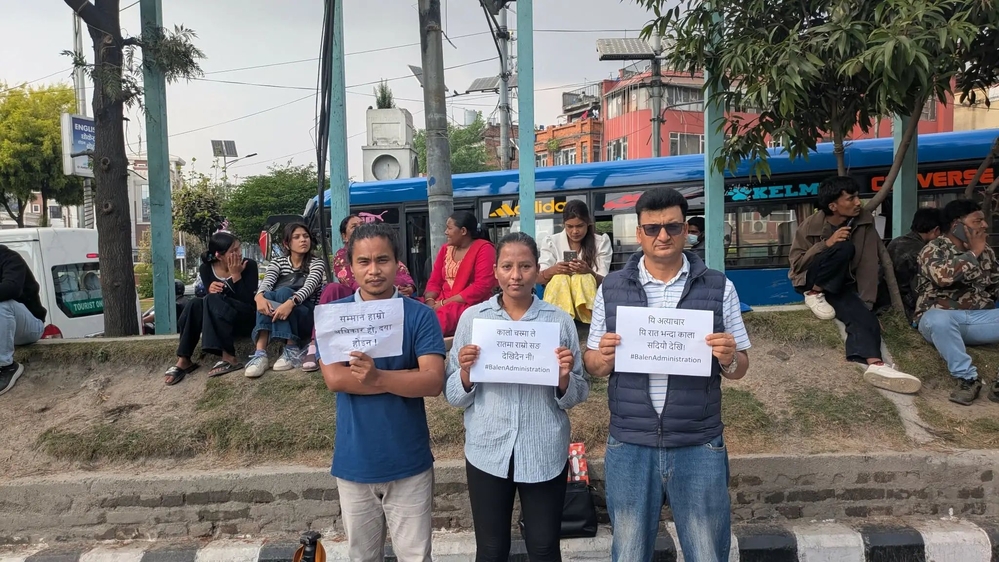
Deepa Nepali herself is a character who has suffered caste discrimination. In 2076 BS, Deepa, who was evicted after her caste was discovered while living in the house of an investigation officer of the Ministry of Home Affairs, has been running to the Supreme Court for justice. However, while the case was pending, she had to move rooms repeatedly and was humiliated by her housekeeper after her caste was discovered.
Recently, when she was living in Kirtipur, after learning about her case, the housekeeper forced her to leave the room, saying that she had earned dollars in the name of Dalits and filed a case against the housekeeper. The anger over the discrimination she has faced in Kathmandu for years has now spilled out onto the streets.
‘This is not just my personal fight. In Kathmandu, it is a common voice against the inhumane treatment of the Madhesi community not getting a room based on their face, the disabled based on their physical condition, and sexual minorities based on their identity,’ says Deepa.
Initially, many people have started supporting her, who dared to protest alone against this discrimination. Non-Dalit youth have also joined the movement and expressed solidarity with it.
Deepa says that the presence of non-Dalit youth like Majid Ansari, Indra Bahadur Shah, Sanjeev Karki, Pawan Thapa, and Pratigya Magar has made this movement stronger.
The National Dalit Commission has expressed solidarity with the movement. Commission Chairman Devraj Bishwakarma and members Sundar Purkuti, Mehal Parki, and Meena Sob have reached Maitighar and expressed support for Deepa's movement.
The government is silent.
Although Kathmandu Metropolitan City has shown activeness in physical waste management, the protesters complain that it has not been able to clean the 'moral and mental' waste of the city. Therefore, Deepa Nepalis ask, ‘If people cannot live around Singha Durbar based on caste, color and identity, how can this city be considered civilized?’
When the current government made public its 100 agenda for governance reforms, it was said that it would acknowledge the injustice and discrimination against Dalits and historically excluded communities by the state, society and policy structures and announce a reform-oriented program within 15 days along with a formal apology from the state.
But this government has not paid attention to the youth who have been protesting for the past 12 days saying ‘Government, the room is empty’. The protesting youth say that even though Rashtriya Swayamsevak Sangh (RSS) President Ravi Lamichhane apologized on behalf of the party, that alone is not enough. ‘We want justice and equal rights, not an apology,’ they say.
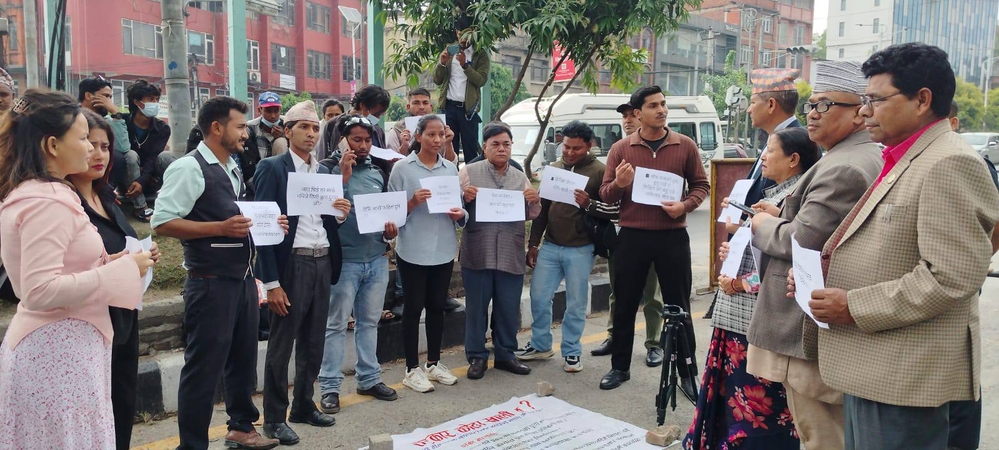
Nepal’s Constitution 2072 BS contains provisions prohibiting caste-based untouchability. The preamble of the constitution itself has expressed a commitment to end all forms of caste-based untouchability. Under the Fundamental Rights, Article 24 guarantees the right against untouchability and discrimination, Article 40 guarantees the right of Dalits, and Article 42 guarantees the right to social justice.
Article 255 of the Constitution provides for the National Dalit Commission as a constitutional commission. Despite this, caste discrimination in social practice is cruel, says activist Sanjeev Karki, who is participating in the movement.
He demands an end to the compulsion of the next generation to hide their surnames or sell their self-respect to find a place in the city. Deepa Nepali, who is leading the movement, says that the movement will continue until the government takes concrete steps against all kinds of discrimination. She says that the government should not only provide assurances, but also ensure concrete legal and practical changes.
The agitating parties have put forward 9 demands to the government.
The demands are as follows:
1. Caste and all types of discrimination in housing should be made completely punishable and strictly implemented.
2. A "zero tolerance" policy against caste discrimination and untouchability should be immediately adopted and implemented in practice.
3. The right to housing without discrimination should be fully ensured for all citizens, including Dalits, Madhesis, persons with disabilities, and sexual and gender minorities, while providing housing.
4. Any form of discrimination and untouchability in all spheres of social life should be completely eliminated.
5. The 'Caste and Other Social Untouchability and Discrimination (Offences and Punishments) Act, 2068' should be amended to provide stricter penalties for caste discrimination and untouchability.
6. The unnatural increase in rent, arbitrariness, brokerage and monopoly should be immediately controlled by organizing the house rental rate and tax system.
7. For the empowerment and overall development of the Dalit community, a unified and clear law should be formulated and implemented effectively.
8. A unified legal framework should be immediately created to cover all rights, including Article 40 of the Constitution of Nepal.
9. Strict action should be taken against landlords who discriminate in room/house rentals in urban areas on the basis of caste.

