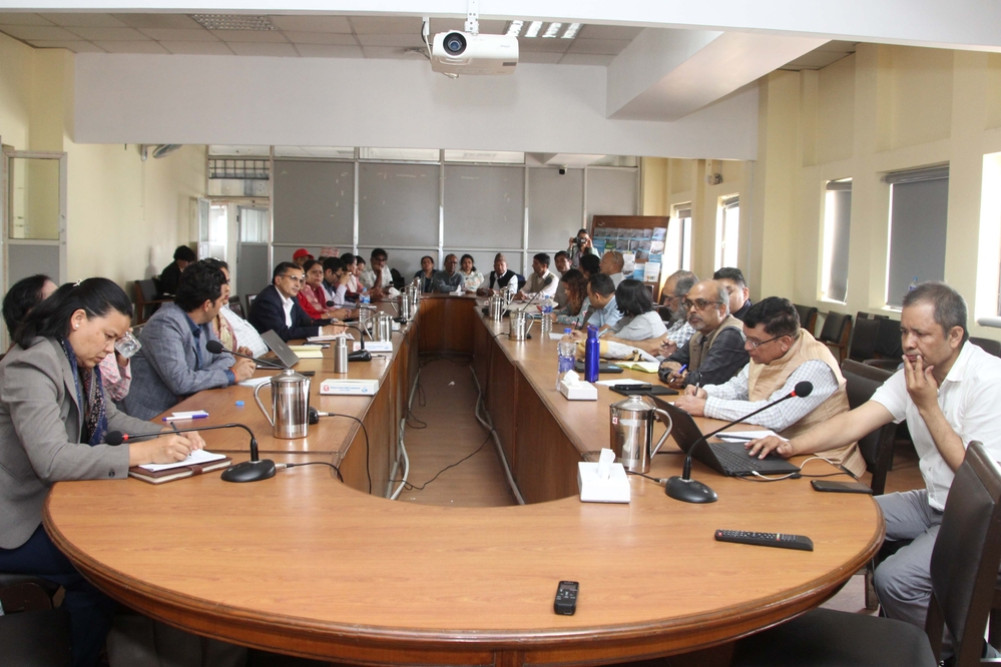
Land rights activists and human rights activists have urged the government to act humanely.
We use Google Cloud Translation Services. Google requires we provide the following disclaimer relating to use of this service:
This service may contain translations powered by Google. Google disclaims all warranties related to the translations, expressed or implied, including any warranties of accuracy, reliability, and any implied warranties of merchantability, fitness for a particular purpose, and noninfringement.
Rights activists have said that the government has committed extreme atrocities against the squatters. They also claimed that they have committed gross injustice by not allowing anyone to speak out under the pressure of power by violating the law.
Human rights activists working in the field of land rights have also urged the government to act humanely.
Participants in an interaction on land reform restructuring and government priorities organized in Kathmandu by the Community Self-reliant Service Center, International Land Network and National Land Rights Forum Nepal said that landless squatters and all Nepali citizens suffering from land problems should be treated humanely and provided with safe housing and livelihood.
Speaking at the program, land researcher Sabin Ninglekhu said that the squatters were forcibly evicted and that this act has created a situation where all Nepalis should be ashamed. 'The recent forced evictions by the government have resulted in serious violations of human rights,' he said. 'The heartbreaking situation seen in the government's forceful attack on the squatter settlements has made all Nepalis very worried.'
National Land Rights Forum, Nepal President Lyam Bahadur Darji expressed his regret that the government did not show good signs at the beginning of its formation by chasing away the landless. He said, 'We expected better things from the new government, but it turned out the opposite. The landless, who have been hoping for a happy life for years, have become even more miserable, and on the contrary, their fear has increased.'
Advocate Kabita Rai mentioned that the government used trucks and weapons used in war to remove the squatter settlements and narrated the sad situation of a woman who gave birth just yesterday, having to beg 10 times even for a cup of tea. She said that even if there is any unwanted work, there are methods and laws to remove it, but for any government not to follow them is an abuse of power.
Another human rights activist, Bhagwati Adhikari, said that the government's atrocities were confirmed by the fact that they came with a dozer at 5 am the next morning to demolish the house after using a mike the previous night. 'The government of the National Independent Party did not follow the policy put forward by itself and committed atrocities on the squatters. The fact that even the Human Rights Commission and the media have not been able to speak out openly against this injustice shows how dangerous the madness of power can be,' she said.
Anu Verma, coordinator of the International Land Network, said that all people have the natural right to a safe residence. She said, 'The issue that the state should pay attention to in terms of housing security by treating the landless and squatters like other people is also a matter of international human rights.'
RSP MP Sujata Tamang admitted that the displacement of squatters was not as peaceful as the government had claimed, and said that the same work could be completed properly by giving some time and exercising discretion. She also informed that she would raise the issue of land reform effectively in the parliament.
Jagat Deuja, Executive Director of the Community Self-Reliance Service Center, made a presentation on the restructuring of land reform in the current context and what the government's priorities should be in this regard, while land rights activist Biswas Nepali facilitated the program.
In the program, rights activists from various sectors expressed the view that it would not be in the interest of the country to continue with land-related issues.