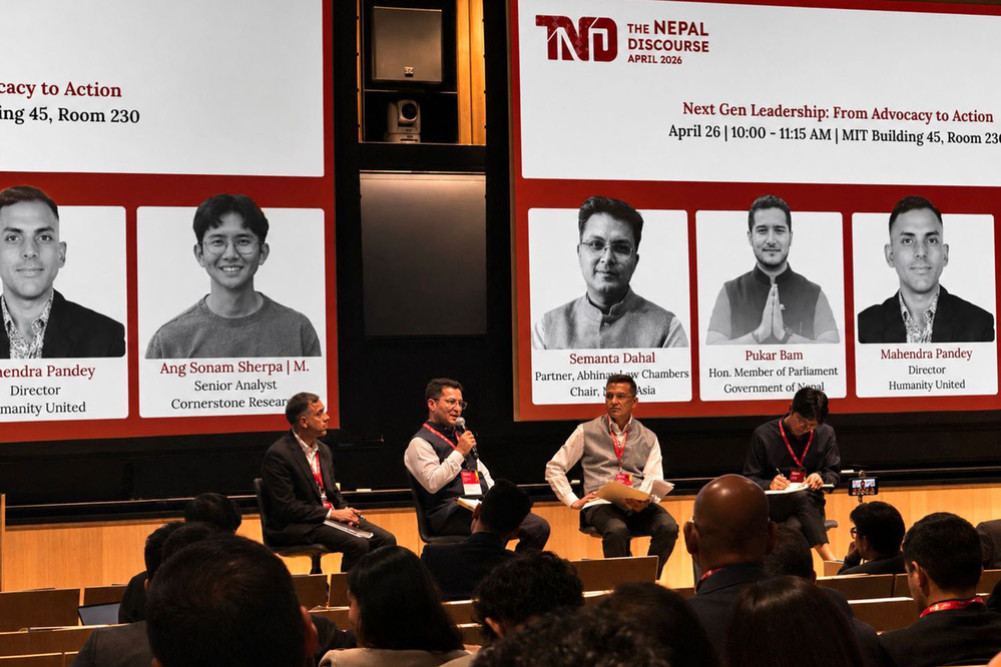
The two-day conference at Harvard and MIT featured more than 50 speakers and nearly 400 attendees. 35 delegates from Nepal participated. The conference focused on topics including artificial intelligence and the future of work, new generation leadership, strong institutions, and the diaspora.
We use Google Cloud Translation Services. Google requires we provide the following disclaimer relating to use of this service:
This service may contain translations powered by Google. Google disclaims all warranties related to the translations, expressed or implied, including any warranties of accuracy, reliability, and any implied warranties of merchantability, fitness for a particular purpose, and noninfringement.
Harvard and MIT students successfully concluded the first edition of The Nepal Discourse this weekend. It brought together Nepali thinkers, policymakers, entrepreneurs, academics, and diaspora stakeholders in one of the most ambitious global gatherings in recent memory.
The two-day conference, held at Harvard University and the Massachusetts Institute of Technology (MIT), featured more than 50 speakers and nearly 400 attendees. The conference included 35 delegates from Nepal. Through 16 plenary sessions and panel discussions, participants engaged in strategic dialogue focused on four key pillars that will shape Nepal’s next decade – artificial intelligence and the future of work, new generation leadership, strong institutions, and the future of the diaspora and Nepalis around the world.
Finance Minister Swarnim Wagle, while inaugurating the conference virtually, said that programs like ‘The Nepal Discourse’ will play an important role in connecting Nepali expertise around the world with Nepal’s long-term development. The conference was attended by eminent personalities from the government, education sector, business and development sectors. Among them were Sameer Maskey, Founder of Fusemachines, Michael Foley, CEO of Ncell, Swastika Shrestha, CEO of ‘Teach for Nepal’, Peter Blair, Professor of Harvard University, David Silsen, Director of the World Bank for Maldives, Nepal and Sri Lanka, Bishnumaya Pariyar, Commissioner of AAPI New Jersey, Pukar Bam, Member of the House of Representatives, Rahul Agrawal, Chairman of Siddhartha Bank, and Karvika Thapa, CEO of Kimbu Tech, among others.
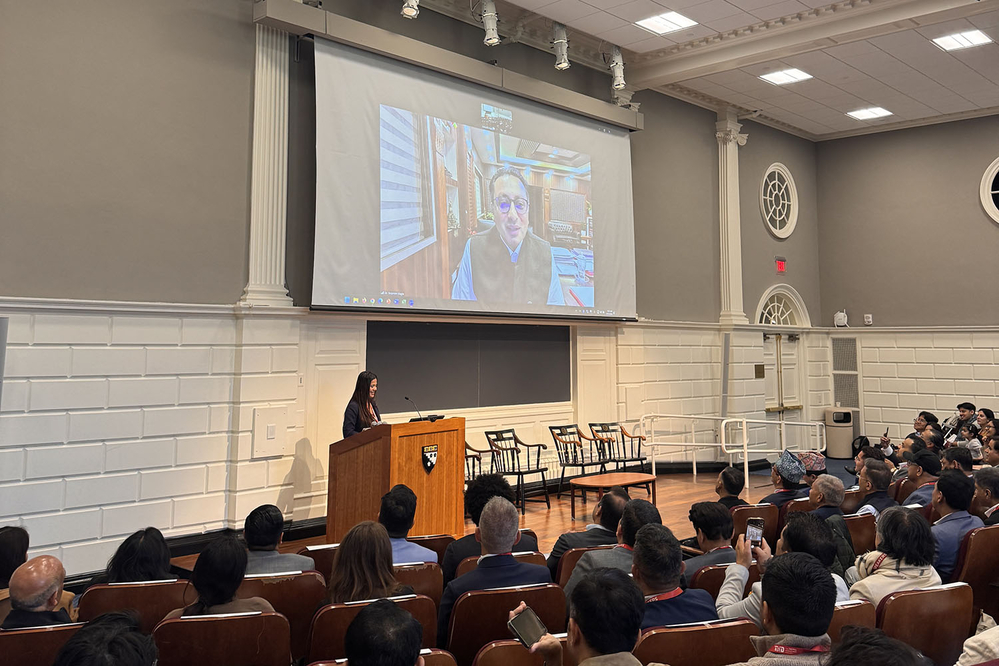
Finally, Dr. Arun Joshi said about the importance of the program, ‘Together with the best leaders of the emerging new generation, we want to create a credible platform where the intellectual and economic power of the diaspora can be utilized for the development of Nepal.’
Designed differently from traditional conferences, the discussions at the event focused on how Nepal can gain a competitive advantage in a world driven by artificial intelligence. There was also an emphasis on strengthening institutional credibility, developing new generation leadership, and utilizing diaspora networks more strategically. The event was organized in collaboration with Leadership Academy Nepal and Kantipur Media Group, which contributed significantly to the conference’s design and stakeholder engagement.
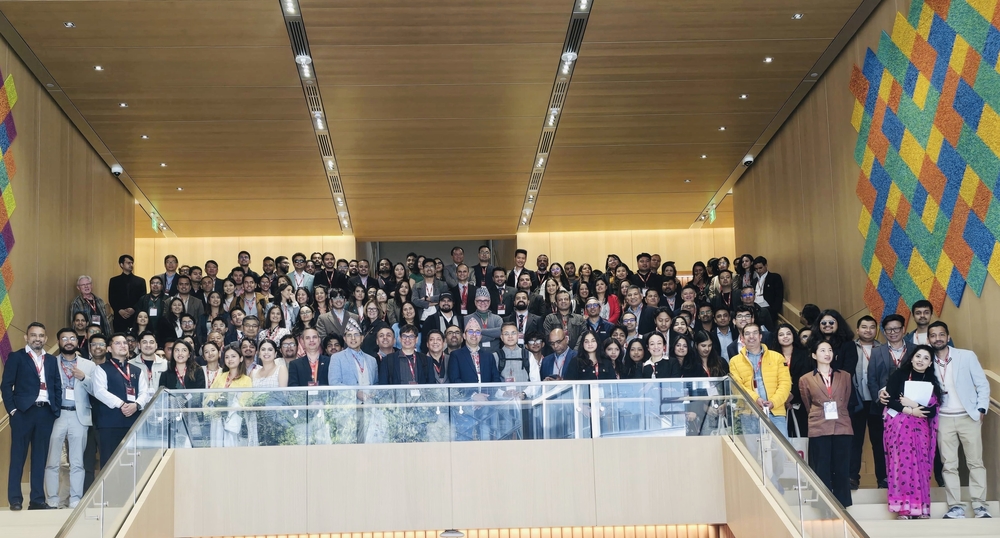
According to the organizers, the discussions held over the weekend will help shape a long-term roadmap called ‘Strategic Foresight 2035’, which aims to put the ideas from the conference into practice.
The first edition of ‘The Nepal Discourse’, which the organizers launched with the goal of organizing it regularly, concluded with a shared commitment to building bridges between ideas, institutions, and generations, and building a stronger and more globally competitive Nepal.