While the ruling party continues to push for digital infrastructure, such as data centers, to transform the economy, local communities in the areas where these structures will be built have no legal basis to oppose their impact.
We use Google Cloud Translation Services. Google requires we provide the following disclaimer relating to use of this service:
This service may contain translations powered by Google. Google disclaims all warranties related to the translations, expressed or implied, including any warranties of accuracy, reliability, and any implied warranties of merchantability, fitness for a particular purpose, and noninfringement.
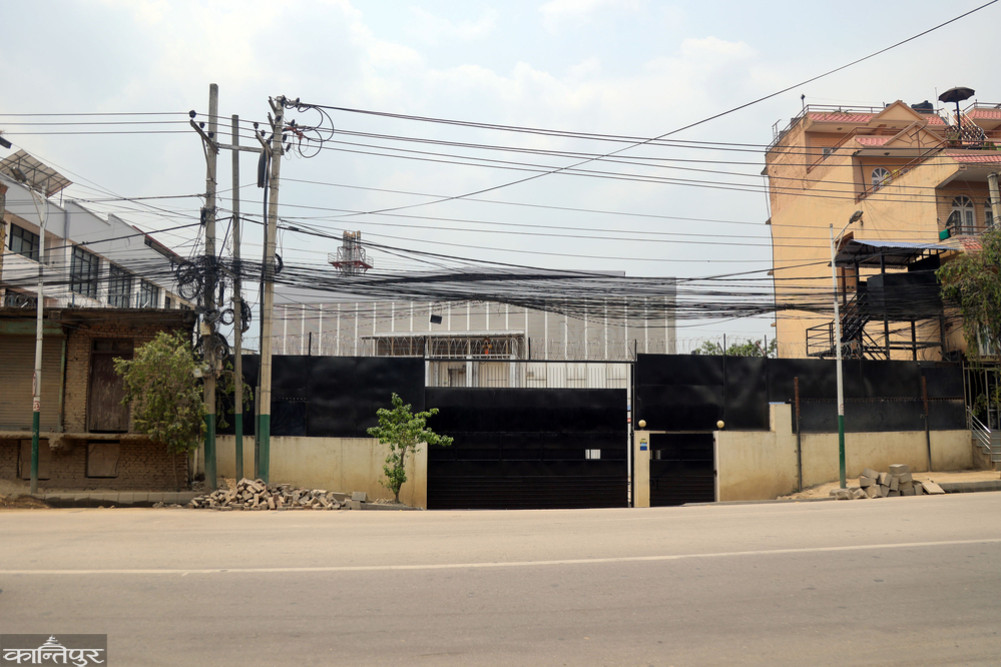
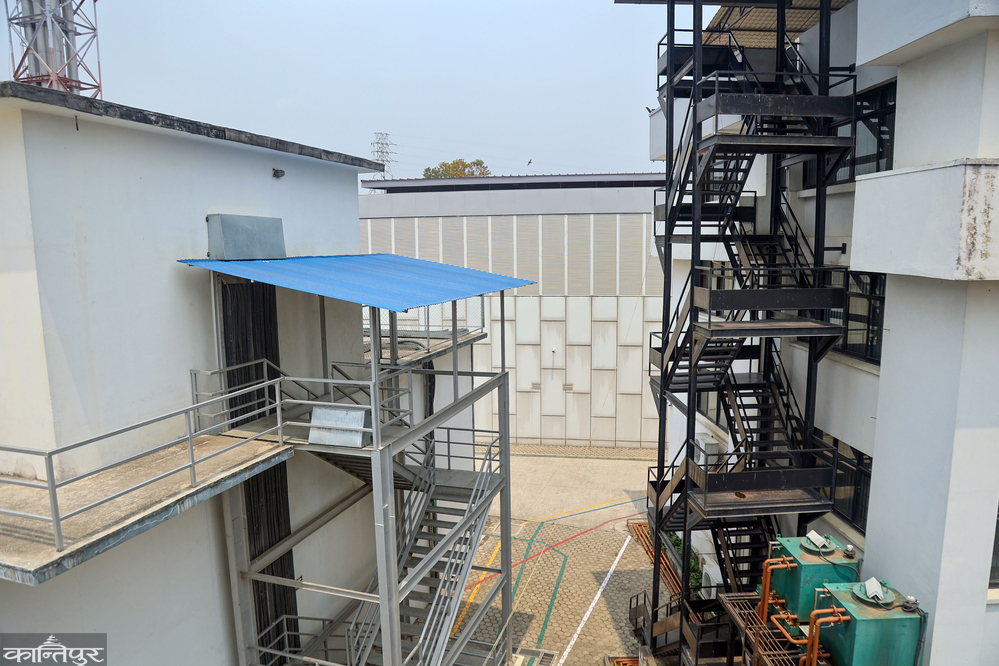
It is difficult to spend time in the streets surrounding Ncell's data center in Nakkhu, Lalitpur. After standing for a few minutes, dust accumulates on clothes, faces, and notebooks. Amid the constant noise of trucks and various types of busy machines, security guards standing by the walls are seen constantly guarding the place.
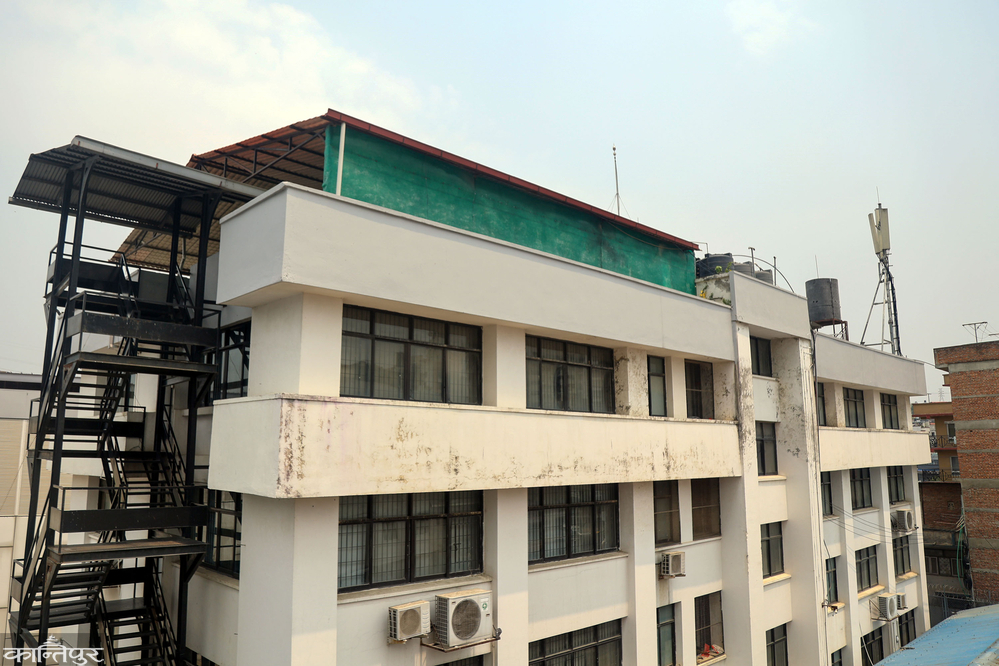
The structure inside the wall houses servers, a cooling system for them, and a long line of diesel generators kept ready to run in case the lights go out. While the structure was being built, residents of Ward No. 4 and the adjoining Ward No. 16 of Lalitpur were unaware that such a center was being built.
'When we signed the land agreement, it was taken to build a warehouse,' said Jyotsana Gupta, chairperson of Ekta Tol Bikas Sanstha in Ward No. 4. 'Later, such a large data center was built here, and none of the ward committees consulted or discussed with us.'
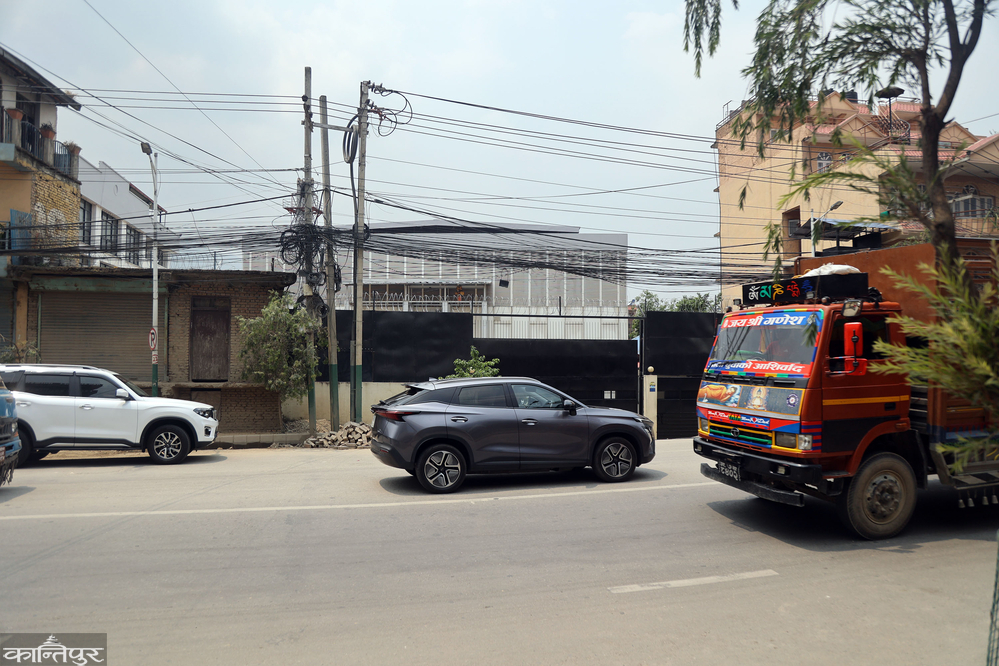
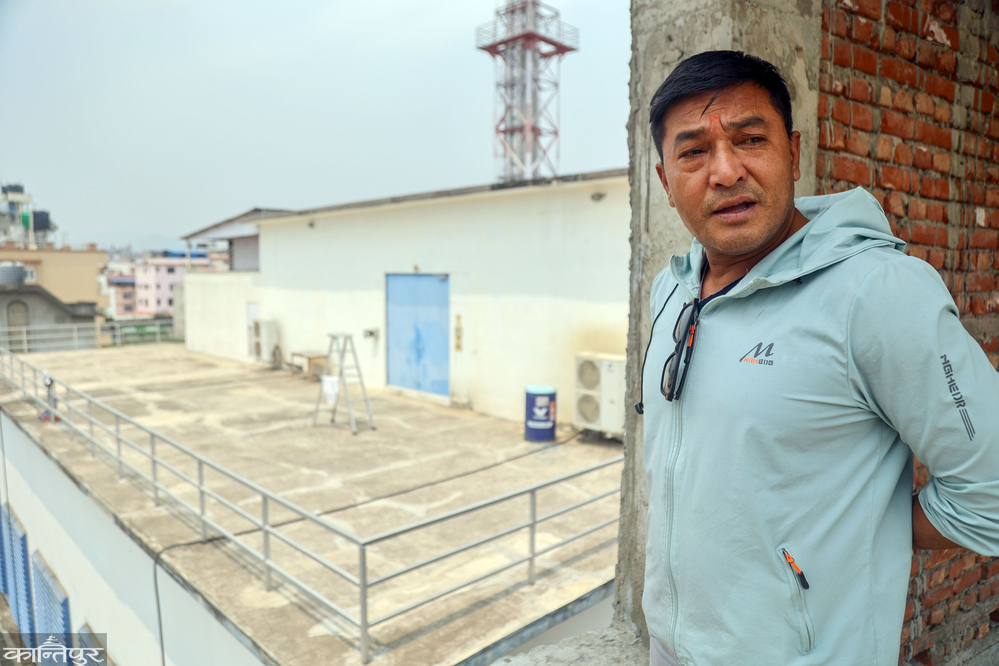
According to Gopal Dangol, a neighbor of the data center in Sandhiyar, even when he was asked for permission, documents were shown to him stating that an additional tent would be built there. ‘They came to me because a map pass and a neighbor’s approval are mandatory for any construction work,’ Dangol said. ‘When I looked at the documents, there was a mention of building a tent. Seeing that, I gave the approval.’ Dangol said that when he talked to the workers after the construction work started, he came to know that a building to house a diesel generator had been built there and that the ‘tent’ was a very big project.
Locals say that after the protests began, Ncell organized a meeting with the residents of Ward 4 and that no agreement could be reached. Dangol complains that he and other neighbors could not be convinced even though they were told that there was no risk of radiation from that place. Dangol said that despite the locals objecting, the Lalitpur Metropolitan City gave the construction approval and that they are still protesting against it to this day.
What was started to be built and what was finally built, not only reflects the disagreement with the locals, but also indicates what kind of ripples and impact the data center issue, which the government has prioritized as an area that can be expanded on a large scale, can create in the coming days. In documents such as the 100-point activities and commitment letter made public by the newly formed Rashtriya Swayamsevak Sangh (RSS) government, AI and data centers have been mentioned as the main pillars of the country's economic transformation and modern infrastructure.
According to Baburaja, who has been operating a steel factory in Lalitpur Ward No. 16 for years, there was strong opposition when Ncell's data center was built. 'The noise coming from those machines at night is so loud that the house shakes,' he said, 'Black smoke comes out of there every day.' Ramkrishna Raut, who lives in front of the center, said, 'It is very disturbing. There is noise around the clock. It would have been better if it was moved somewhere else.'
Not all the locals have the same complaint. Some are more bothered by vehicle exhaust and noise pollution than by data centers. In the experience of Ward 13 resident Amar Shrestha, the constantly running tippers and trucks make a louder noise than cooling fans. He believes that the heat around Nakkhu is higher due to vehicle exhaust. “Those living near the data center are more bothered by noise pollution than heat,” he added. Residents of both wards agree that they were not given the truth/facts when this infrastructure was built.
Gupta’s concern is not just about noise or smoke. “This type of high-risk infrastructure should not be located in the middle of a densely populated urban area,” she said. However, there is no regulatory structure in Nepal to prove with data whether Gupta’s opinion is justified or not.
In response to questions from The Kathmandu Post, Ncell said the facility was built with full approval from the Lalitpur Metropolitan City, internationally certified and formally established by the Department of Information Technology as the country’s first certified data center under the 2025 directive. “The data center does not emit any harmful radiation,” the company said in an official email. However, Ncell did not respond to requests for documents and monitoring data that Dangol and Gupta and locals were allegedly asked to sign before construction began.
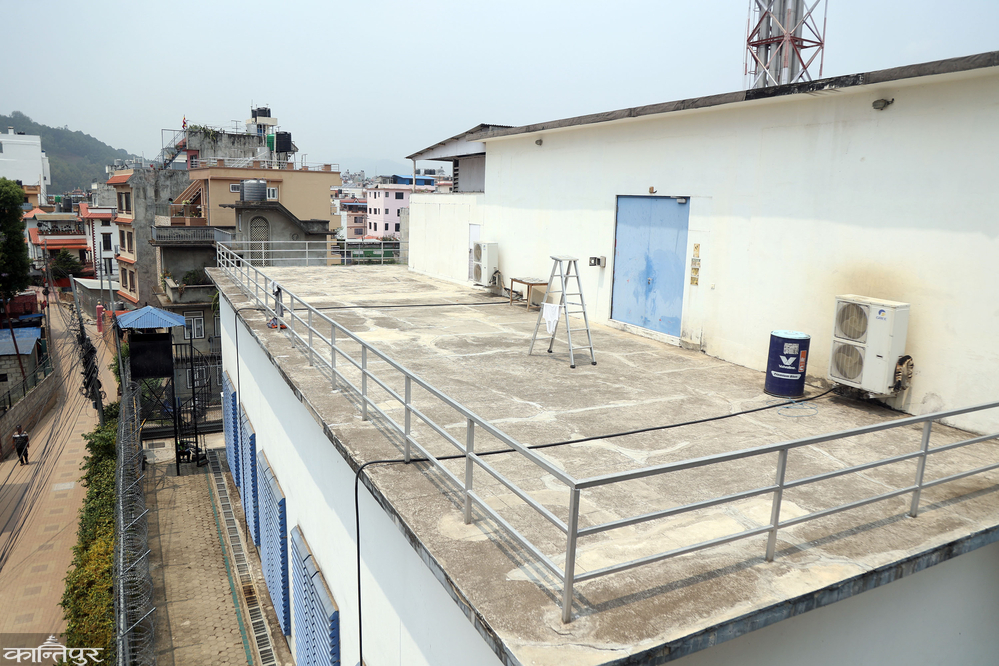
The Department of Information Technology, the agency that lists data centers, has said that community information is outside its mandate. “We are not registering new businesses or issuing licenses to them,” said Prakash Dawadi, the department’s information officer. “We are only a body that monitors whether the businesses concerned meet the standards as per our guidelines.” The inspection covers infrastructure reliability, fire safety, network stability and data security, but consultation with the community is not our remit.’ Dawadi said the department has no role in the stages such as environmental impact assessments that must be completed before the data center is set up.
The gap between the assurances made by corporate structures of this nature and the results that can be publicly verified is not limited to Nepal. The results of a 2025 study examining data centers in Chile and Mexico showed signs that water resources were being consumed faster than communities could understand or protest, putting pressure on the local environment. In Chile, the government initially quietly allowed developers to bypass environmental assessments, and when questions were raised later, the environment ministry there acknowledged the issue and responded that new regulations were needed. First, the infrastructure was built and only after questions were raised did the regulations come into being. Although the community was consulted, it was done after it had already begun. This is almost the same history being repeated in Nakkhu.
The newly elected government that recently took power in Nepal has proposed to do such work on a large scale. The National Independent Party (NIP) has put digital infrastructure at the heart of its economic vision, with a vision to transform Nepal into a global hub for data centers, artificial intelligence, and computational power powered by the country’s hydroelectric power. Within five years, the NIP has unveiled plans to transform Nepal from a hydropower exporter to an exporter of AI and server processing time. ‘Crypto mining pilot’ projects are set to be launched within the first year, according to the NIP.
Former DishHome CEO Sudeep Acharya argues that Nepal’s cheap electricity can be a meaningful competitive advantage over India or Singapore, and that locally hosted data can reduce the country’s dependence on foreign servers. However, he admits that the environment is not yet ready for that, with Nepal having only one electricity utility and relying on India and China for connectivity, and the policy environment very volatile. “The government needs to act quickly and those policies should be stable and predictable,” he said.
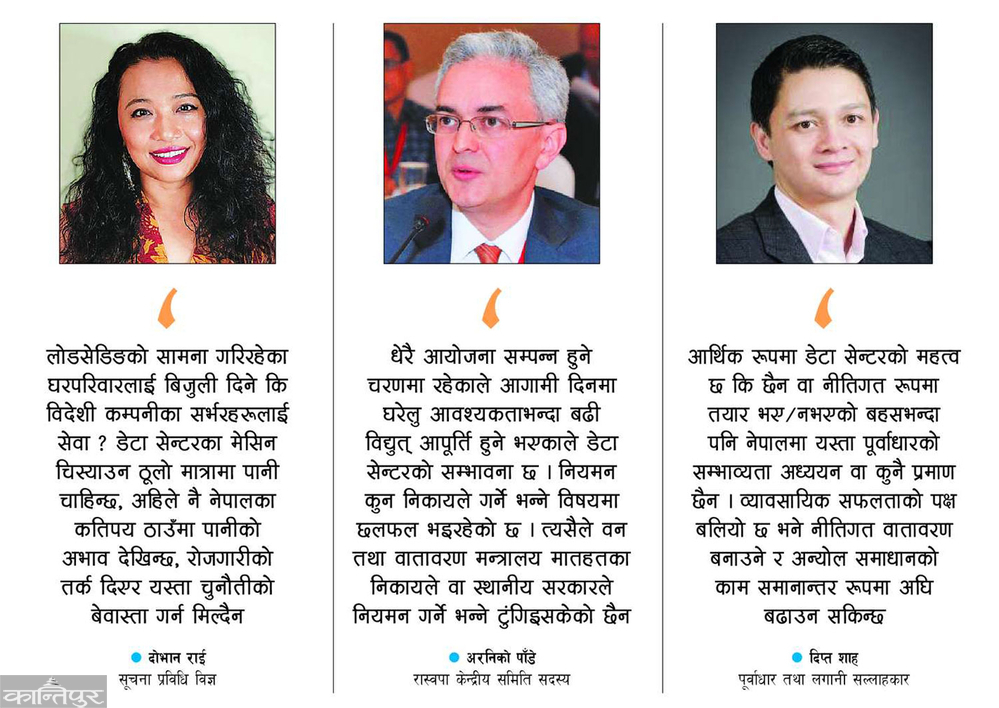
Information technology expert Dobhan Rai is less convinced. “Clean energy sources do not necessarily mean clean industry,” she says. “Nepal’s electricity generation is still limited, so should we provide electricity to households facing load shedding or to serve servers of foreign companies?” She is also concerned about the excessive water consumption of such centers. Data centers require large amounts of potable water to cool their machines. There is already a water shortage in some parts of Nepal. Rai believes that such challenges cannot be ignored on the grounds of employment.
“They are data warehouses, apart from some security and maintenance roles, they provide very limited employment opportunities,” Rai says. “Still, when it comes to cryptocurrencies, our institutions and cybersecurity infrastructure are not strong enough to handle the fraud, risk and volatile nature that they can pose.”
Nepal Rastra Bank also has its own concerns and concerns about crypto. Bank spokesperson Guruprasad Poudel noted that the current legal framework does not recognize cryptocurrencies. The Nepal Rastra Bank Act, 2058 BS, defines only physical currency, including currency notes, postal orders, postal notes, checks, drafts, credit cards, bills of exchange, and other forms of money, as ‘currency.’ Poudel defined crypto as a decentralized and private sector system that is not connected to the formal financial system in any way. ‘Since there is no record or central body in it, it is not known who is responsible,’ he said.
Since foreign currency is spent while mining crypto, Poudel argued that it looks more like a part of foreign investment than the creation of local currency. If the newly formed RSVP government wants to take any initiative on crypto, it should be given legal recognition and start working. Cryptocurrency is currently banned in Nepal.
Araniko Pande, a central committee member of the party involved in the preparation of the RSVP’s manifesto, says that data centers will be placed in appropriate locations to avoid water shortages after assessing the environmental impact. He believes that since various hydroelectric projects are in the process of being completed, there is a possibility of such centers as there will be significant excess or surplus electricity over domestic needs in the coming days. However, his answer was not clear on the implementation aspect. ‘We are also committed to electronic waste management, but we have yet to prepare a blueprint on how exactly to do it,’ Pandey said. When asked which body will regulate foreign-invested data centers, he responded that discussions are underway. ‘It has not been determined which body under the Ministry of Forest and Environment will regulate the data center and which local government will do it,’ he said.
Officials from the Ministry of Forest and Environment also responded that there is confusion on this issue. Although Schedules 2 and 3 of the Environment Protection Regulations, 2077 mention that environmental impact assessment should be carried out while constructing medium-scale, large and sensitive projects, ‘data centers’ are not included in the list. This means that currently, there is no legal obligation for data centers to undergo environmental impact assessment. “Our existing laws do not even contemplate the pollution, electronic waste, water and energy consumption generated by infrastructure like data centers,” said Deepak Gyawali, joint secretary of the Environment and Biodiversity Division of the Ministry of Forests. “The ministry plans to include such issues in future policies and regulations.”
Infrastructure and Investment Advisor Dipta Shah sees the question differently. Rather than debating whether it is economically significant or whether it is policy-ready, he points out that there is no feasibility study or evidence for such infrastructure in Nepal. “We do not have experience connecting hydropower to data centers, especially at hyperscale,” he says. He argues that Nepal needs a framework to test the concepts currently being put forward before foreign investment is allowed. Shah emphasizes that the cost savings from cooling systems and clean energy must be proven to be greater than the additional capital cost required to build a quality data center in an earthquake-prone area.
Shah also has his own view on regulatory uncertainty. ‘नीतिगत अस्थिरता जोखिम त हो तर लगानीकर्ताहरू अन्ततः व्यावसायिक प्रतिफल चाहन्छन्,’ उनले भने, ‘व्यावसायिक सफलताको पक्ष बलियो छ भने नीतिगत वातावरण बनाउने र अन्योल समाधानको काम समानान्तर रूपमा पनि अघि बढाउन सकिन्छ ।’
नक्खुमा रहेको एनसेल डेटा सेन्टरमा छुट्टै पावर फिडर छ । त्यसले गर्दा आसपासका क्षेत्रमा लोडसेडिङको समस्या भने छैन । यसले नियामक स्वीकृति प्राप्त गरेको छ र अन्तर्राष्ट्रिय प्रमाणपत्रहरू पनि हासिल गरेको छ । तर, गुप्ताले वर्णन गरेका समस्यालाई तीमध्ये कुनैले पनि सम्बोधन गर्दैनन् । सो क्षेत्रमा उक्त संरचनाको दीर्घकालीन प्रभाव र निम्त्याउन सक्ने हानि निर्धारण हुने गरी अध्ययन हालसम्म गरिएको छैन ।
रास्वपाले हालैको निर्वाचनमा नेपाली राजनीतिक इतिहासमा कुनै पनि दलले नपाएको जनादेश पाएको छ । नवीकरणीय ऊर्जा, उच्च मूल्यको निर्यात, श्रमको सट्टा सूचना प्रविधि बेच्ने देशका रूपमा नेपाललाई चिनाउने सपनाका बलिया समर्थकहरू प्रशस्तै छन् । तर धेरैले सोध्ने प्रश्न भनेको डेटा सेन्टरहरू नेपालको भविष्यको हिस्सा हुनुपर्छ कि पर्दैन भन्ने होइन । लगानी आउनु र पूर्वाधार बन्ने क्षेत्रहरू किटान गरिनुअघि नै त्यसबारे नीतिगत र व्यावहारिक ढाँचा कस्तो बन्छ भन्नेमा अहिले धेरैको जिज्ञासा रहेको पाइन्छ ।
शाहसँग यसको पनि सरल जवाफ छ, ‘रास्वपाका लक्ष्यहरू महत्त्वाकांक्षा बढाउने दिशामा राम्रा देखिन्छन् । तर, काम नगरी सपना पूरा हुँदैनन् । त्यसैले
गर्न सक्ने काम थालेर हामी यथार्थपरक समाज बन्नु उपयुक्त हुन्छ ।’