If you join a political party, you will be dismissed from your job and disqualified in the future.
We use Google Cloud Translation Services. Google requires we provide the following disclaimer relating to use of this service:
This service may contain translations powered by Google. Google disclaims all warranties related to the translations, expressed or implied, including any warranties of accuracy, reliability, and any implied warranties of merchantability, fitness for a particular purpose, and noninfringement.
The government has prepared a draft of the Federal Civil Service Bill, increasing the retirement age in the civil service to 60 years and reducing the age limit for competing in the public service to 32 for men and 35 for women. The current retirement age is 58 years, while the age limit for competing for the civil service has been set at 35 for men and 40 for women.
The draft bill was made public on Friday as the Civil Service Act has been awaited for a long time for the meaningful implementation of federalism. Although the bill was presented in both the 2074 and 2079 terms of the House of Representatives, it could not be enacted into law.
In a meeting called by Prime Minister Balendra Shah on April 3, the Chief Ministers had urged the early introduction of a civil service law. In a meeting called by Prime Minister Balendra Shah on April 3, the Chief Ministers had urged the early introduction of a civil service law. There is a constitutional provision for provinces to have their own employees. However, since there is no federal law, the provinces have not been able to have their own employees.
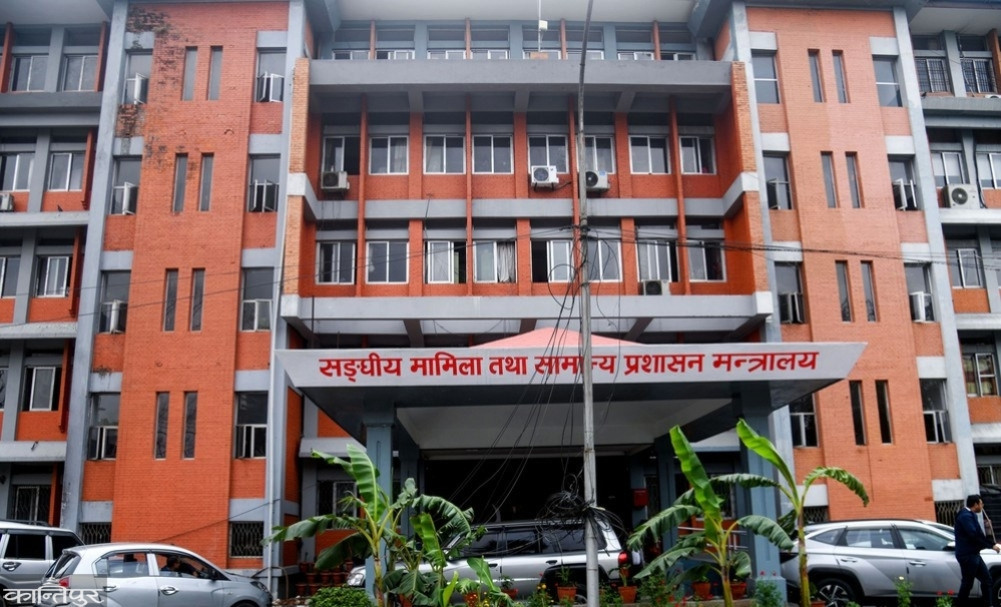
The Ministry of Federal Affairs and General Administration has prepared a draft bill to make provisions regarding the formation, operation and conditions of service of the federal civil service. The government's action plan, which Shah brought on the day he became Prime Minister on Chaitra 13, stated that the federal civil service would be formulated within 45 days. The ministry has prepared the draft bill within a month.
The bill includes provisions to make the administrative structure compatible with federalism. Minister Pratibha Rawal said that in order to develop the civil service as a capacity-based institution, the appointment of department heads, office heads or administrative leadership should be made mandatory by giving importance to the issue of making it mandatory based on indicators of competency criteria and evaluation.
Chapter 12 contains provisions on administrative interrelationships. There are provisions on the civil service in each province, the Chief Secretary of the provincial government, provincial secretary, local services, local level chief administrative officers, and administrative interrelationships between the three levels. In addition, there are provisions for standards to be followed while drafting laws related to provincial and local services, special arrangements for employees who have been adjusted or deployed, which will help implement federalism in the administrative structure.
Earlier, on 21 Falgun 080, the then government had presented the Civil Service Bill to the House of Representatives. After a long discussion on the bill in the State Affairs and Good Governance Committee, the House of Representatives passed it on 15 Ashad 082 and sent it to the National Assembly.
The National Assembly passed it on 17 Bhadra and sent it back to the House of Representatives. It had to be passed again by the House of Representatives. However, the Gen-G movement on 23 and 24 Bhadra led to the dissolution of the House of Representatives. And, along with the bill, 30 bills under consideration in the House of Representatives became inactive.
The National Assembly had passed it on 17 Bhadra and sent it back to the House of Representatives. It had to be passed again by the House of Representatives. But the Gen-G movement on 23 and 24 Bhadra led to the dissolution of the House of Representatives. After the promulgation of the constitution, the provincial governments formed after the elections in Mangsir 074 had been demanding the bill from the beginning. The government had also registered the bill. However, after the government and the parliament could not reach an agreement on some issues, the government had to withdraw the bill. The government had re-submitted the bill. However, the parliament was dissolved while it was still under consideration in the committee. This is the fourth time since the promulgation of the constitution that the Civil Service Bill has been presented in the parliament.
The draft prepared by the ministry states that there will be posts up to the 12th level in the provincial civil service. The 12th level is the post of senior joint secretary. The draft places the 12th and 11th levels in the gazetted first class. The federal government will deploy employees up to the 12th level in the provinces only for the next five years. After that, the provinces themselves will manage the employees of those posts. The secretaries of the provincial ministries will be 12th level employees.
The chief secretary of the provincial government will be a 13th level gazetted special employee of the federal civil service. The transfer of the provincial chief secretary will not be done before the completion of a period of one year without the consent of the provincial government. The provincial chief secretary will be responsible to the provincial government.
There will be a local service in each province. The employees in the local service will be considered to be in the local service position. There will be employees up to the 11th level in metropolitan and sub-metropolitan cities, 10th level in municipalities, and a maximum of 9th level in rural municipalities.
The federal government will send local level chief administrative officers for five years after the commencement of the act. The chief administrative officers will be sent to the Office of the Chief Minister and the Council of Ministers in one go. It is said that their posting will be done by the Chief Minister's Office. Currently, the federal government has been sending administrative officers directly to the municipalities. Stating that clear authority, responsibility and coordination are necessary for the implementation of the federal governance system, Minister Rawal said that after the act as per the proposed draft comes, she will play an important role in employee management, solving problems seen after adjustment, and ensuring inter-level coordination and service delivery.
A joint secretary said that the provision was removed with the advice and consent of Minister Rawal, the secretary, joint secretary and employees. According to him, other provisions have been made to raise the voice of the rights and interests of employees. The draft states that the tenure of the secretary and chief secretary will be 2 and a half years. According to the draft, the system of employee trade unions, which has been in practice for almost three and a half decades, has been abolished. The provision was removed from the draft saying that trade unions support party interests. Minister Rawal said that efforts were made to make the administration commercially neutral and free it from politics or trade unions.
Joint secretary Ekdev Adhikari, who was involved in the preparation of the draft, informed that even though the trade union provision was removed, other provisions have been included for the welfare of employees. According to him, it was agreed to remove the trade union after analyzing the distortions that have emerged based on long-term practice. A joint secretary said that the provision was removed with the advice and consent of Minister Rawal, the secretary, joint secretary and employees. According to him, other provisions have been made to raise the voice of the rights and interests of employees.
According to the draft, a provision has also been made to openly enter the executive position like secretary in the civil service from outside after checking the efficiency. The draft states, 'The government may make special arrangements for open or random entry into any executive or specialist post of the civil service by conducting a performance-based or functional experimental test.' According to the draft, there is a provision for both levels and ranks of employees.
The tenure of employees at the thirteenth (secretary) and fourteenth (chief secretary) levels will be 2½ years. The government may extend the tenure of the thirteenth level by a maximum of one year based on performance, the provision states. Based on that, the government will have the discretion to extend the tenure of the secretary by one year. Under reservation, a person will be able to avail the facility only once in a non-gazetted post and once in a gazetted post.
The public service will not be able to proceed with the provision for filling the post without confirming it from the central records under reservation. According to the draft, employees at the gazetted third class officer level will not be transferred or initially reinstated without completing the minimum one-year period and given the responsibility of the head of the office.
The draft states that a Civil Service Board will be formed to make the transfer, posting or career management of employees up to the rank of Gazetted Second Class (Deputy Secretary) accountable. Provision has been made that civil servants will not be allowed to teach in preparatory classes for public services. An employee who resigns or retires from a Gazetted Special or First Class post of the Federal Civil Service or other government service will not be appointed to any constitutional, diplomatic or other government post until a period of two years has elapsed from the date of acceptance of the resignation or retirement from service.
In the past, the Civil Service Bill was stalled in the final stages of the Parliament due to the controversy over whether or not to have a 'cooling period'. This time too, a 'cooling period' has been proposed. The draft states that the government can manage employees in a mixed manner in level-level bodies to promote cooperation between the federal, provincial and local levels. Chief Administrative Officers will be sent to the Chief Minister's Office on a provincial basis and will be posted at the local level. This provision was also mentioned in the previous Civil Service Bill.
The draft states that employees should not engage in any activity that conflicts or may conflict with their personal, family, professional or financial interests while exercising their position, authority or responsibilities. This is said to be a conflict of interest.
The draft states that employees should not engage in any activity that conflicts or may conflict with their personal, family, professional or financial interests while exercising their positions, powers or responsibilities. This is said to be a conflict of interest. Emphasis has been placed on employee performance and evaluation. Performance evaluation will be based on indicators. The draft also mentions that institutional results and achievements will be considered. While evaluating employees working in service delivery agencies, scores for service recipients' feedback have also been made mandatory. Scores will be given based on the recommendation of the Ethics Review Unit in employee evaluation. The unit will 'profil' the employees and 'grade' them based on the evaluation scores. Earlier, evaluation was conducted at 3 levels including the supervisor and reviewer, but now it will be at two levels based on a performance agreement between the supervisor and the employee.
A maximum of three-member evaluation committee will be formed, with the most senior officer. It has been provided that those who do not go to remote geographical areas and places where the post of Chief Administrative Officer is located will not be considered as potential candidates for promotion. Ministry employees have said that this provision will help prevent the trend of Chief Administrative Officers not being appointed at the local level.
Performance agreements will be signed annually with the special category of secretaries, joint secretaries, departmental heads, office heads and project heads. Qualification criteria including key performance indicators will have to be prepared to appoint qualified employees for the appointment of joint secretaries, departmental heads, office heads and project heads. Review and evaluation of performance agreements will be done quarterly and the results will be published publicly.
Membership of a political party, a fraternal organization of a political party, a mass organization or an organization affiliated with a political party will result in dismissal from employment. The draft states, ‘If you engage in political activities or become a candidate in an election for a political position, you will be dismissed and disqualified from government service in the future.’ The bill previously submitted to the parliament also had a provision for dismissal from employment if you become a member of a political party. However, the current draft has added the provision of disqualification in the future as well.
A Civil Service Board will be established to make the transfer, posting and career management of civil servants up to the second class gazetted civil service accountable. The minimum period of stay after transfer will be implemented mandatorily.
If both husband and wife are working in the civil service to take care of an elderly father, mother, mother-in-law, father-in-law or any family member who is disabled, disabled or suffering from a complex, chronic disease, one of them may be transferred or posted to a place where care is needed. The transferred employee will have to report to the assigned office within seven days. All work related to transfer, posting or posting will be done through an information technology-based system.
Gazetted civil servants of the second and third classes will not be transferred inter-ministerially before completing three years, and assistant-level employees will not be transferred before completing four years. Minimum and maximum periods will be specified while transferring. No employee will be allowed to stay in the same post and same responsibility in the same office for more than a maximum of four years.
Employees will be transferred or posted on a cyclical basis for a minimum period so that they gain experience in service flow, policy implementation and policy formulation offices or bodies. एक आर्थिक वर्षमा बढीमा तीस प्रतिशतभन्दा बढी अन्तरमन्त्रालय सरुवा गरिनेछैन । प्रतिष्ठित विश्वविद्यालय वा अनुसन्धान केन्द्रबाट विशिष्टीकृत विषयमा उच्च शैक्षिक उपलब्धि हासिल गरेका निजामती कर्मचारीले आफ्नो विज्ञता क्षेत्रमा काम गर्न प्राथमिकतामा राखिनेछ ।