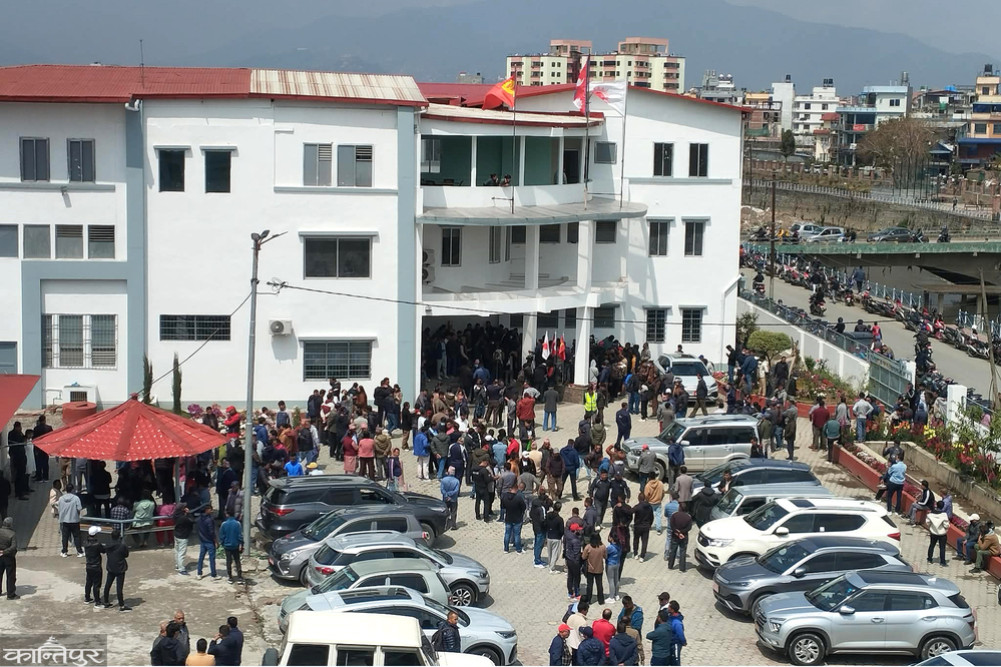
The UML has urged the government to find a long-term and just solution while protecting the human and fundamental rights of the squatters.
We use Google Cloud Translation Services. Google requires we provide the following disclaimer relating to use of this service:
This service may contain translations powered by Google. Google disclaims all warranties related to the translations, expressed or implied, including any warranties of accuracy, reliability, and any implied warranties of merchantability, fitness for a particular purpose, and noninfringement.
UML has said that the forcible removal of squatter settlements is unjustified. It has demanded that the government make reliable alternative arrangements. It has also urged that the fundamental rights and human rights of squatters be taken seriously.
‘The government’s move to forcibly and forcefully remove squatter settlements has directly violated the fundamental rights guaranteed by the Constitution of Nepal, the basic values of humanity, the principles of social justice and the basic standards of international human rights,’ UML Publicity Department Coordinator Min Bahadu Shahi said in a statement. ‘Our party expresses strong objection and condemns the inhuman and insensitive treatment meted out to the poor, disadvantaged and squatter communities.’
Since the problem of squatters is a complex issue intertwined with social, economic, cultural and historical backgrounds, UML believes that it is not sustainable and justifiable to try to solve it by forceful removal. The UML has also stated that the use of force, institutional threats by the state and unilateral decisions without dialogue are inappropriate and objectionable from both human and legal perspectives.
The UML has demanded the formation of a National Land Commission for a just and long-term solution, the collection of data on squatters and irregular settlers, measurement and land distribution processes, prior consultation with the affected individuals and families, and assurance of alternative housing.
‘Compensation, rehabilitation and restoration, special protection of children, women, senior citizens and vulnerable communities with disabilities are among the first responsibilities of the government,’ the UML said, ‘We call for respect for the Constitution and legal system of Nepal.’ Therefore, the CPN (UML) demands to stop the use of force to remove squatters, to engage in dialogue with the affected communities, and to implement a scientific land reform and squatter management policy for a long-term solution.'
The UML has urged coordination between the local government, the provincial government, and the federal government to find a humane and just solution.
'We caution against the issue of serious disputes that may arise when the squatter community is displaced by force in this way and not to seriously violate the values and norms of the United Nations regarding human rights and our constitutionally provided fundamental rights,' the UML has said.