They have demanded that the current government have sufficient capacity, will, and moral basis to move the transitional justice process in the right direction, and that millions of conflict victims have the right to truth, justice, and reparations.
We use Google Cloud Translation Services. Google requires we provide the following disclaimer relating to use of this service:
This service may contain translations powered by Google. Google disclaims all warranties related to the translations, expressed or implied, including any warranties of accuracy, reliability, and any implied warranties of merchantability, fitness for a particular purpose, and noninfringement.
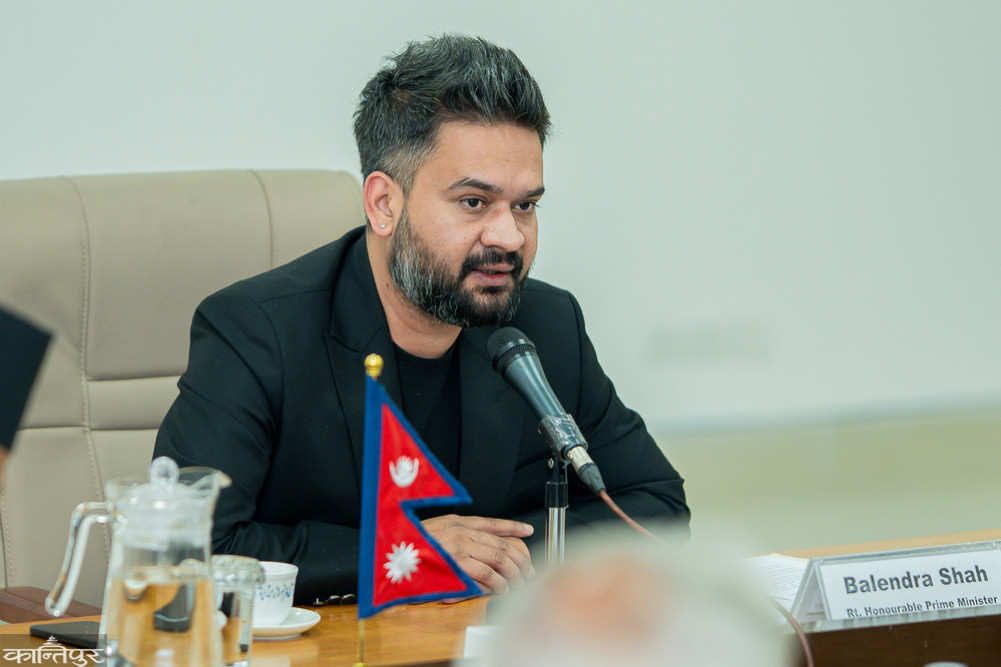
Forty organizations representing victims of armed conflict have drawn the attention of Prime Minister Balendra Shah to finalize the transitional justice process. They have drawn the attention of the Prime Minister through the Ministry of Law, Justice and Parliamentary Affairs.
Stating that the current government has sufficient capacity, willpower and moral basis to move the transitional justice process in the right direction, they have demanded that millions of conflict victims be given the right to truth, justice and reparations. Stating that the transitional justice process has not been included in the draft national commitment and 100-point governance agenda put forward by the government, they have demanded that the current commissioners be removed or removed from their posts and be reappointed through a new, credible process. They have also put forward their demands in 6 points.
They have demanded that transitional justice be included as an important point in the national commitment document, that appropriate procedures, including amending the law, be adopted to resolve the issue of the legitimacy of the current commissions, that the subsequent process of appointing commissioners be made completely transparent, competitive and victim-friendly, that a victim-centered work system be adopted, that impunity-oriented provisions be amended to bring the law into line with international standards and Supreme Court precedents.
They have demanded that consultation, access to information and meaningful participation of victims be ensured throughout the process, and that concrete national policies, plans and programs be formulated and implemented in coordination with the provincial and local levels to address the immediate and long-term reparation needs of victims of human rights violations, including conflict victims and victims of the Gen-G movement, in a rights-oriented manner.