Devi Maya says, 'It also cools down pedestrians during the summer. They say it also brings religion. I don't know exactly what happens.'
We use Google Cloud Translation Services. Google requires we provide the following disclaimer relating to use of this service:
This service may contain translations powered by Google. Google disclaims all warranties related to the translations, expressed or implied, including any warranties of accuracy, reliability, and any implied warranties of merchantability, fitness for a particular purpose, and noninfringement.
Devimaya Ojha of Birendra Chowk, Phungling, feels that Akshaya Tritiya is special. She goes out to the square outside her house in the morning. She keeps a jug of sarbat and satu on the table and chair. She tells those passing by the square, ‘Let’s drink water..., let’s eat satu...’ After eating satu and sarbat, some people try to give money, while others walk away with thanks. She has been distributing satu and sarbat continuously for 32 years.
Devimaya, who was born in 2009 in Mikwakhola-1 Khokling, understood the importance of Akshaya Tritiya when she was young. Her mother also used to distribute satu and water to those who climbed the Khokling hill from Handrung to Liwang Sawa. Devimaya also used to go to help her mother. Back then, cold water was poured into a jug and lemon juice mixed with sugar was served.
Devimaya recalls those days, 'On the upswing of Baisakh, the porters who came carrying dhakars would drink 5/6 glasses of water alone. While walking, they would say, 'Boju, may you find your religion.' Devimaya continued the same tradition even after her marriage.
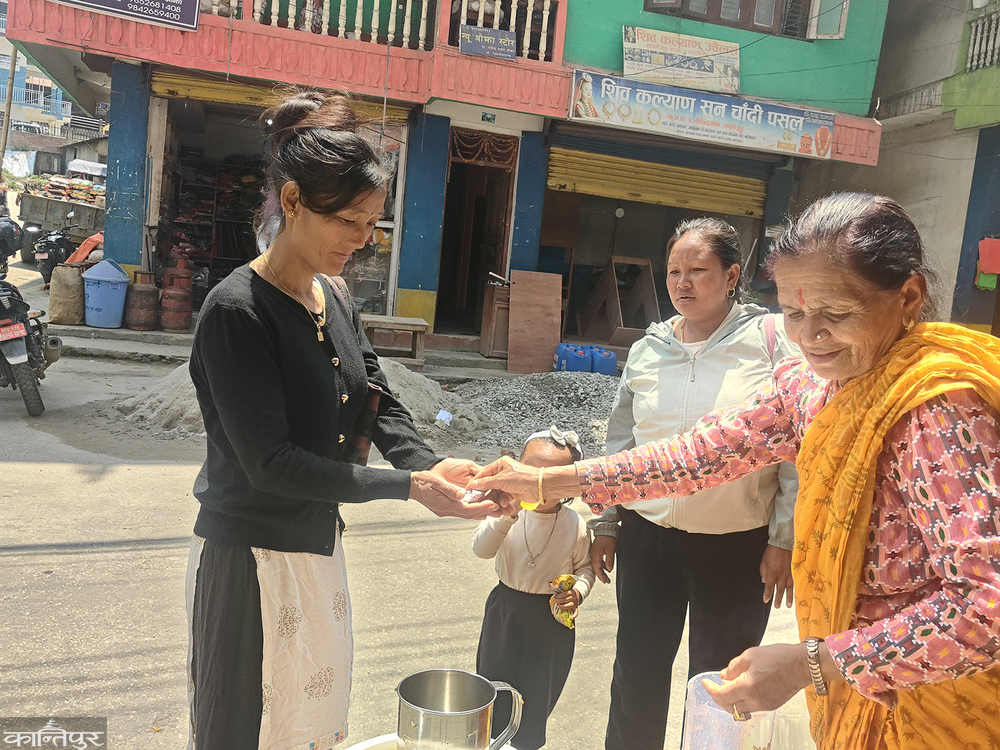
When she was in Khokling, barley was grown in her own garden. They used to grow it in a dhik, throw the chaff and grind it in a mill to make satu. Now she does not have her own production farm. Devimaya orders in advance in the village and takes it to the mill to grind the satu.
This year, she bought three pathis of barley from Bungkulung in Hangdewa, Phungling Municipality-9. The pathi cost 650 rupees. Devimaya thrives in the Okhal of her own house with the help of her grandchildren. Not only in Phungling, but in various parts of Nepal, there is a tradition of distributing satu and sarbat on Akshaya Tritiya. Devimaya says, 'During the summer, it also cools down pedestrians. They say it also brings religion. I don't know exactly what happens.'
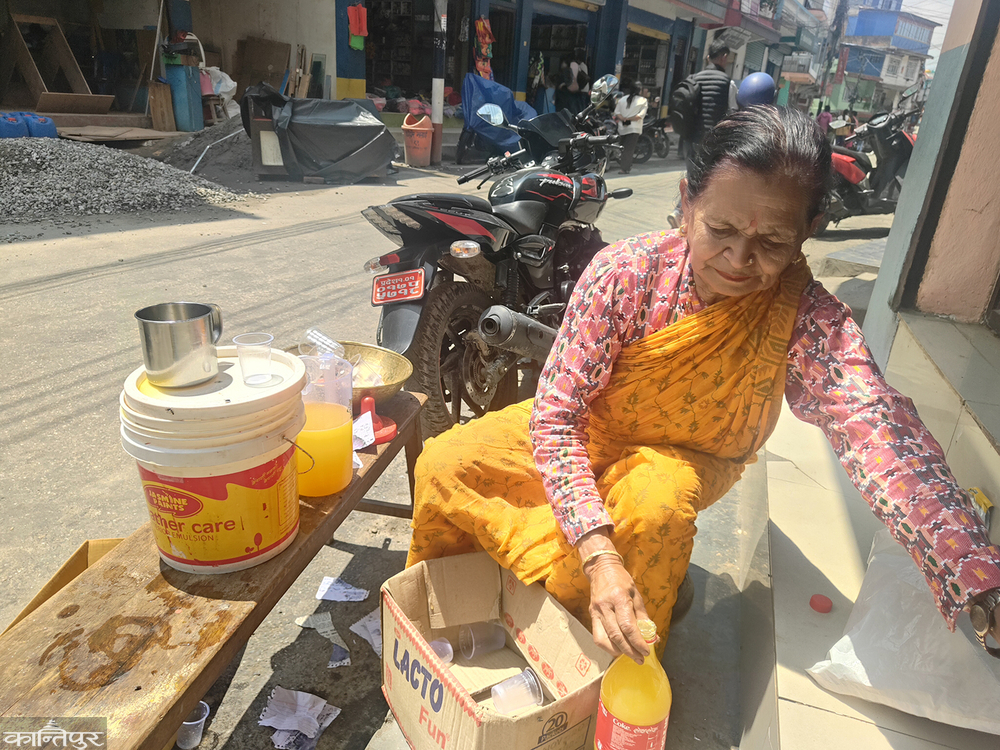
Neighbor Ambar Kumar Shrestha is also aware of Devimaya's work. He says, 'She worries about what the weather will be like on Akshaya Tritiya. She says it will be over if the sun shines.'
If the weather is clear, she leaves the house with satu in a pot and sarbat in a jug and sits in the square. If the weather is not good, she sits in the courtyard of her house and drinks. Ambar and other neighbors also help her distribute satu. Some bring water and some help by making glasses. ‘It is not calculated that this much was distributed,’ says Amber, ‘two or four hundred people will be affected by this.’
Satu is empty . That is why water is given along with Satu, according to the elders. Until there was no road access, the custom of distributing Satu and Sarbat at Dobato or Chautari was still in place . Now many people travel by car . However, the new generation is losing interest in this custom .
According to Pandit Devi Prasad Niraula, the importance of Akshaya Tritiya is also mentioned in the Puranas . Pandit Niraula says that it is believed that good deeds done on this day will never be destroyed, i.e., they will remain Akshaya.

