Armed police deployed for border security are insisting that goods worth more than Rs 100 be imported only after paying customs duty.
We use Google Cloud Translation Services. Google requires we provide the following disclaimer relating to use of this service:
This service may contain translations powered by Google. Google disclaims all warranties related to the translations, expressed or implied, including any warranties of accuracy, reliability, and any implied warranties of merchantability, fitness for a particular purpose, and noninfringement.
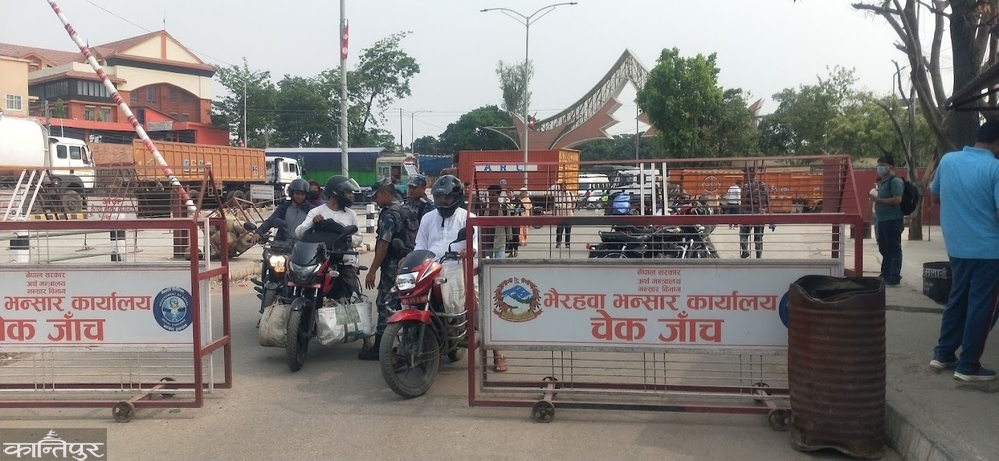
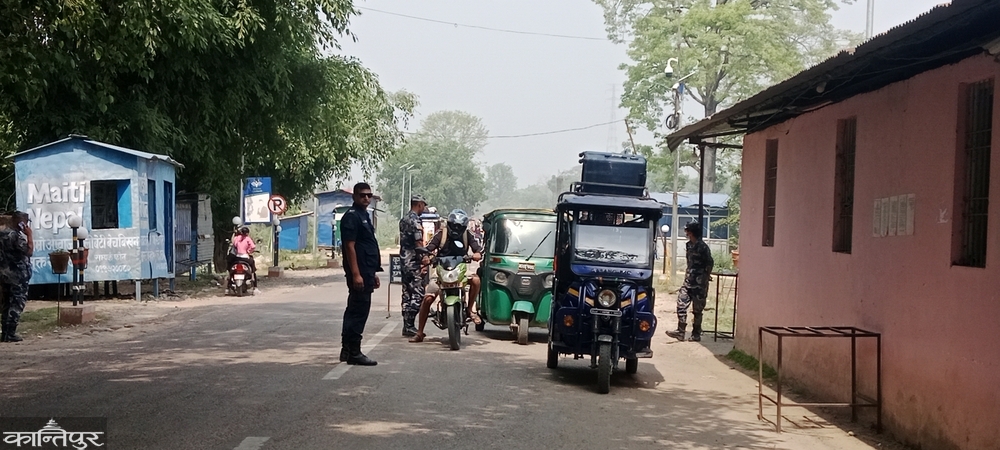
Tension has increased at the border checkpoints after the customs duty on goods purchased from India worth more than Rs 100 was made mandatory. The inspectors deployed at the checkpoints in front of the customs office have intensified the bag searches of the general public. In this process, there has been a tug-of-war over goods, and clashes have also occurred from time to time.
The armed police deployed for border security are using microphones to ensure that goods worth more than Rs 100 are imported only after paying the customs duty. However, at a time when inflation has risen, the general public has become angry that the restrictions on shopping at the border markets have been tightened. The general public has also started complaining about the indecent behavior of the security personnel while searching bags.
After the restrictions at the checkpoints were tightened, the number of people going across the border to shop has started to decrease. The Indian markets along the border have become deserted. Some Nepali traders have called the restrictions at the checkpoints positive, while others are arguing that the limit of Rs 100 is unreasonable.
The Armed Police Force has been informing the general public about the new rules for paying customs duty on goods worth more than Rs 100 in the Nepal-India border area in Birgunj since last Wednesday. From Friday, the general public will be asked to pay customs duty on goods worth more than Rs 100. An Armed Police Force officer said, “We informed the general public by miking for two days, and we have tightened it since Friday.”
The officer said that while the immediate customs clearance of other goods imported from India is easy, there is a problem in the case of rice. He said that although there is a food quarantine at the Birgunj customs, there is a problem due to lack of manpower and the inability of the staff to immediately test the rice. Many Nepalis return from the district’s Jayamangalapur, Bhiswa, Thori, Dhore and other border checkpoints after shopping in the Indian markets every day.
From Thursday, at the Gaddachauki customs barrier in Kanchanpur, information has been provided that those bringing goods worth more than Rs 100 from India will have to declare the mandatory value and pay the revenue. Activist Prakash Tharu says that such rules should be practiced gradually rather than being implemented strictly all at once. "Before implementing any rule at the border, it is best to study its long-term impact seriously and move forward," he said.
Chief Customs Administrator of Birgunj Customs Krishna Prasad Mainali says that the new rule was implemented only after the necessary information was disseminated. "The armed police are constantly miking," he said, "There is no intention to cause trouble to the public, the policy is to first warn, then implement the rule."
From Thursday, at the Gaddachauki customs barrier in Kanchanpur, information has been provided that those bringing goods worth more than Rs 100 from India will have to declare the mandatory value and pay the revenue. Some have taken this as a positive step. Many have commented that it is impractical and unnecessary.
The government had also started deducting customs duty under the summary tax invoice for goods worth more than Rs 100 in the fiscal year 2066/067. ‘It is a belief that all goods should be imported after paying customs duty, and accordingly, this system has been implemented since the past,’ said Chakradev Bhatta, acting chief of Kanchanpur Customs. ‘It will be easier if all passengers cooperate in this.’
He said that starting to pay customs duty on all goods will increase revenue collection and reduce the habit of going to India even for small purchases. ‘The rule has been implemented to develop the habit of paying customs duty when importing any goods,’ said DSP Phapendra KC, chief of the Armed Police Border Security Force, Gaddachauki, ‘Although there are some problems due to some practicalities, we will gradually implement it.’
Jung Bahadur Malla, central problem solver of the Federation of Nepalese Chambers of Commerce and Industry, said that the rule of paying customs duty on goods worth more than Rs 100 is impractical. ‘The practice of buying and importing household goods from India has been around since the past, and it cannot be stopped,’ he said. Other traders also say that the limit of 100 rupees for customs duty is not practical. They say that it will only confuse the citizens. According to traders, customs duty should be made mandatory for goods worth more than 2-3 thousand rupees.
Krishna Prasad Shrestha, a central member of the Federation of Nepalese Chambers of Commerce and Industry, says that imposing customs duty on goods worth more than 100 rupees will not bring about any change in the Nepali market. For that, he says that customs duty on all types of goods should be reduced. ‘Making customs duty mandatory will not boost the Nepali market. Anyone can pay the customs duty paid by businessmen,’ he said, ‘Let’s give concessions to consumers to grow the Nepali market.’
Chiranjivi Oli, the first vice-president of the Nepalgunj Chamber of Commerce and Industry, said that the demand they have been raising for a long time is about to be fulfilled. ‘Now it is necessary to think about giving concessions to consumers,’ he said, ‘Businessmen should aim to sell as many goods as possible from their place at the lowest possible profit in any business. Black marketers should be brought under the purview of legal action. We are ready to cooperate.’
Bhairahawa Customs Chief Harihar Poudel said that strict measures have been taken to control large-scale imports through the border in the name of domestic purposes and to control smuggling. He informed that goods brought in small quantities by the general public for domestic use are being viewed practically. ‘To control revenue leakage and control illegal activities, strict measures have been taken at the main customs and other border points,’ he said. ‘After the strict measures were taken at the border points, there has been a positive impact on controlling revenue leakage.’
Nepali rupees are the main buyers in border markets where Nepali customers are the main buyers. Consumers say that goods are available in those markets at 20 to 45 percent cheaper than in the Nepali market. According to Poudel, strict measures have not been taken against goods brought in by passengers in normal quantities for domestic purposes. Strict measures have been taken against those who bring in large quantities under the guise of domestic purposes. Poudel said that strict measures have been taken against goods brought through customs points and open borders in accordance with the decision of the Central Revenue Leakage Control Committee meeting held on 19 Chaitra under the coordination of Finance Minister Swarnim Wagle.
Armed Police Force No. 27 Gulma Rupandehi Chief SP Nawaraj Bohara said that strict measures have been taken in the border area connected to India. ‘Armed Police have been deployed at the border to control illegal imports and other activities from the border area,’ he said. ‘Locals have been warned by miking at the main customs checkpoint and other border areas not to bring too many goods for household purposes.’
Armed Police Madhesh Province Chief DIG Krishna Dhakal said that work is being done at the checkpoint as per the government’s instructions. ‘There is a government’s instruction to clear customs if you bring goods worth more than Rs 100,’ he said. ‘The armed police are following that instruction.’
Going to Indian markets across the border for shopping is like a daily routine for the residents of the border area. They go to Indian markets to buy every item needed for household chores. The ward office also makes recommendations for shopping in Indian markets during special occasions like weddings, fasts, funerals or other celebrations. A week ago, a group returning from Kunauli Bazaar in Saptari was involved in a scuffle with the Armed Police.
Nepali customers are the main buyers in the border markets, where transactions are conducted in Nepali rupees. Consumers say that goods are available in those markets at prices 20 to 45 percent cheaper than in the Nepali market. Consumers used to get discounts on daily necessities like salt, oil and sugar from the border markets. Now, security personnel seize the goods as soon as they see them and send them to the customs office.
There has been a demand for stricter controls at customs and small checkpoints for years, saying that revenue leakage is being caused by cross-border shopping by the general public and that border trade is being affected. However, consumers are complaining that stricter controls have been imposed on even small household goods brought by the general public in the name of controlling revenue leakage.
Nepali Communist Party leader Rewant Jha said that the problem has arisen when the local administration and customs office ignore the practical aspects. ‘Dissatisfaction has increased at the local level when small traders and goods brought for personal consumption are also included in the revenue scope,’ he said, ‘The government intends to cause trouble to the people in the name of teaching them a lesson in good governance. This is not good.’
Armed Police Battalion 11 Chief SP Ramhari Adhikari informed that stricter measures are being taken as per the above order. ‘We have accepted the above order,’ he said, ‘We will tighten the border as per the order that comes.’
Old rules, now implemented
The government last published a notice in the Gazette on 15 Jestha 2082 regarding the import and export of passengers. The government issues such notice every year. Exercising the authority under Section 13 (3) of the Customs Act, 2081, the government specifies the list of goods that passengers can import and export by air and land.
The system of charging customs duty when passengers bring goods worth more than one hundred rupees is old and is only being implemented now, said Shyam Prasad Bhandari, Director General of the Customs Department. In the latest gazette notification, ‘Any person crossing the border by land will not be given any of the facilities mentioned in this notification, but if they bring or take away personal items worth up to one hundred rupees, the customs chief may, after considering the justification, release them without charging duty.’ According to the notification, the government has now tightened the implementation of the system of paying customs duty on items worth more than one hundred rupees.
Business expert Purushottam Ojha said that implementing customs duty on goods worth more than one hundred rupees is positive for controlling revenue leakage and security. ‘There is an open border, so there is a practice of bringing goods across the border at various times including festivals, weddings, this must be stopped,’ he said, ‘After clearing the main and minor customs, there must be more than one hundred. Even if it is stopped there, there is a high possibility of illegal entry from elsewhere. The government should also pay attention to that.'
Since it is cheaper to buy it across the border, such a stop will cause problems for the residents of the border area, said Ojha. 'Buying in Raxaul will save 2-3 thousand rupees, but buying in Birgunj will not. Therefore, the locals of the border area will face problems,' he said, 'We should also focus on making our products of high quality and making them market-like, so that Indians can also come to Nepal. That will keep economic activities moving. It will also contribute to revenue.' Ojha said that the government has repeatedly discussed and implemented such issues to protect revenue and control revenue leakage, but it has not been implemented.
The system of levying customs duty when passengers bring goods worth more than 100 rupees is old and it is only being implemented now, said Shyam Prasad Bhandari, Director General of the Customs Department. "The customs directive issued by the government on 15th Jestha every year allows people crossing the border by land to bring goods worth up to 100 rupees for personal use. This means that if goods are brought in for more than that, they will be charged duty," he said. "In the past, customs officers had facilitated the passengers by looking at practicality and justification. Now, with the pressure on revenue collection, the system is being fully implemented to promote the domestic market and discourage the practice of bringing goods from abroad." Director General Bhandari informed that the customs administration and security agencies are working jointly on this.
After the new government came to power in the Ministry of Finance, a meeting of the Revenue Leakage Control Committee was held on 19th Chaitra. After that meeting, the Customs Department directed all subordinate bodies to collect customs duty on goods worth more than 100 rupees. The government has also formed two task forces to make suggestions for controlling revenue leakage. 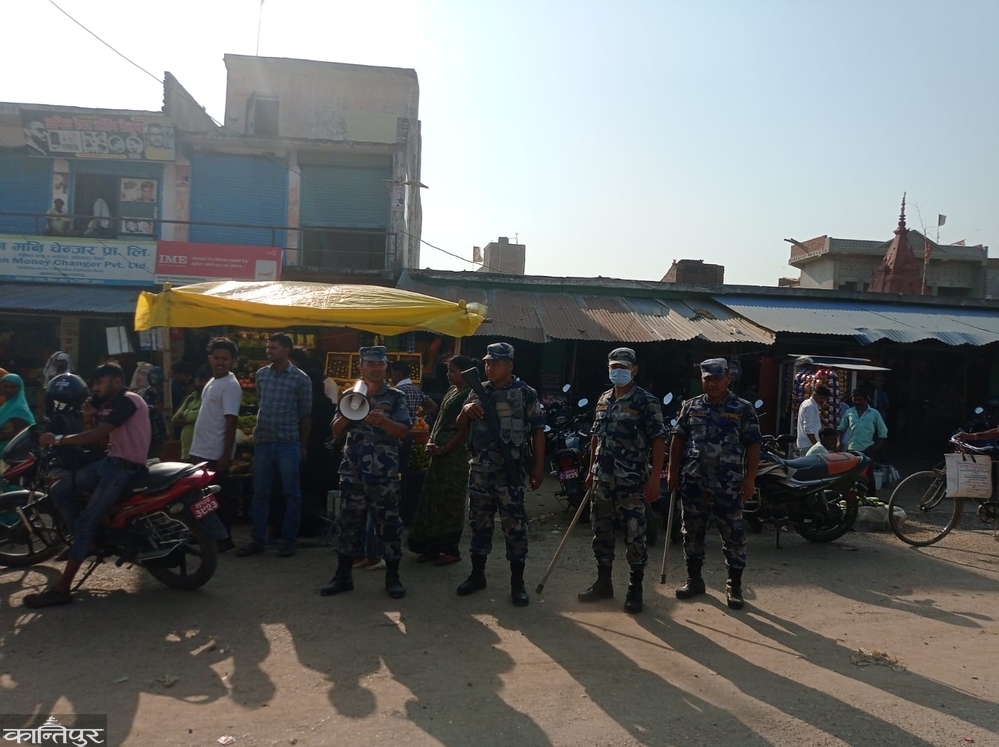
An official of the Customs Department said that the law should be amended to ensure that the residents of the border areas do not suffer when the system of collecting customs duty on goods exceeding 100 rupees is implemented. ‘Even now, a product that costs 100 rupees in the Indian market costs up to 150 rupees in the Nepali market. Why can’t Nepalis living on the border be told not to go to India and buy it cheaply, in Nepal?’ he said, ‘In such a situation, the existing laws and regulations should be amended so that there is not much difference in the prices of goods available in the Indian market and the Nepali market.’
The official claims that the government’s goal should be to discourage the trend of buying goods cheaply from across the border in the name of passengers and selling them at a high price in Nepal, rather than causing suffering to the common man. ‘However, the work has not been done as intended. The black marketers have not been caught as expected,’ he said, ‘The common man has been affected.’
Protest against stricter border controls
Youth from Madhesh Province staged a sit-in in Kathmandu on Saturday against the stricter border controls. Janmat Party spokesperson Chandan Singh has interpreted the strictures imposed by the Balendra Shah-led government at the border as an anti-Madhesh move. ‘The government is committing excesses at the border under the guise of the Armed Police Force and the Nepal Police,’ Singh said in a video message, ‘There is an exemption for carrying goods up to Rs 5,000 in hand. This is an understanding between the two countries. The fee imposed on goods worth more than Rs 100 should be withdrawn.’
The main opposition party, the Congress, has issued a statement, stating that it has drawn attention to the government's move to collect customs duty on goods worth more than 100 rupees in the border area. Madhesh intellectual Rakesh Mishra has urged the federal government to immediately withdraw the fee imposed on purchases worth more than Rs 100. ‘Remove the military-style Armed Police Force at the border. Otherwise, the situation may worsen at any time,’ Mishra wrote on Facebook, ‘mentioning’ Finance Minister Swarnim Wagle and Home Minister Sudhan Gurung. Sanjay Yadav, a resident of Gaur, the headquarters of Rautahat, posted a video showing tension at the border and wrote, ‘Stop harassing the people living along the border. The undeclared blockade on Madhesis should be stopped.'
Bindeshwor Mahato, who lives in Kathmandu, is of the opinion that the tightening of customs should be welcomed by businessmen in the Terai-Madhesh region. In his 'status', the Reuters team from Siraha has responded, 'The border crossing is open in the settings for traders. The restrictions have been imposed only for the general public.'
The main opposition party, the Congress, has issued a statement, stating that it has drawn attention to the government's move to collect customs duty on goods worth more than 100 rupees in the border area. A statement issued by Congress spokesperson Devraj Chalise said, "Such incidents or government actions are not only anti-people, impractical and insensitive, but are another burden on the people amid the current economic crisis."
Stating that due to the open border, citizens of the border areas have been making a living by bringing daily necessities from India at low prices, the statement said that lakhs of common people, wage laborers, small farmers and low-income families, especially in Madhesh Province, have been directly affected by the government's decision. "On the other hand, when the price of diesel has reached a high level of Rs 237 per liter, imposing an additional fee on a small purchase of Rs 200-300 not only weakens the purchasing power of the people, but is a policy step that institutionalizes poverty," said the Congress.
The Congress has urged the immediate withdrawal of the decision to levy customs duty on goods worth more than Rs 100. ‘Customs rates should be reduced or temporary exemptions should be given on daily necessities like food grains, cloth, oil, soap,’ the statement said. ‘A targeted relief package and subsidy should be implemented for agriculture, irrigation, and small industries for Madhesh Province. A pro-poor ‘cross-subsidy’ policy should be adopted by implementing a transparent pricing system to control fuel prices.’
Ajit Tiwari (Janakpur), Shiv Puri (Rautahat), Shankar Acharya (Parsa), Madhav Dhungana (Bhairahawa), Bhawani Bhatta (Kanchanpur) and Rupa Gahatraj (Nepalgunj)
