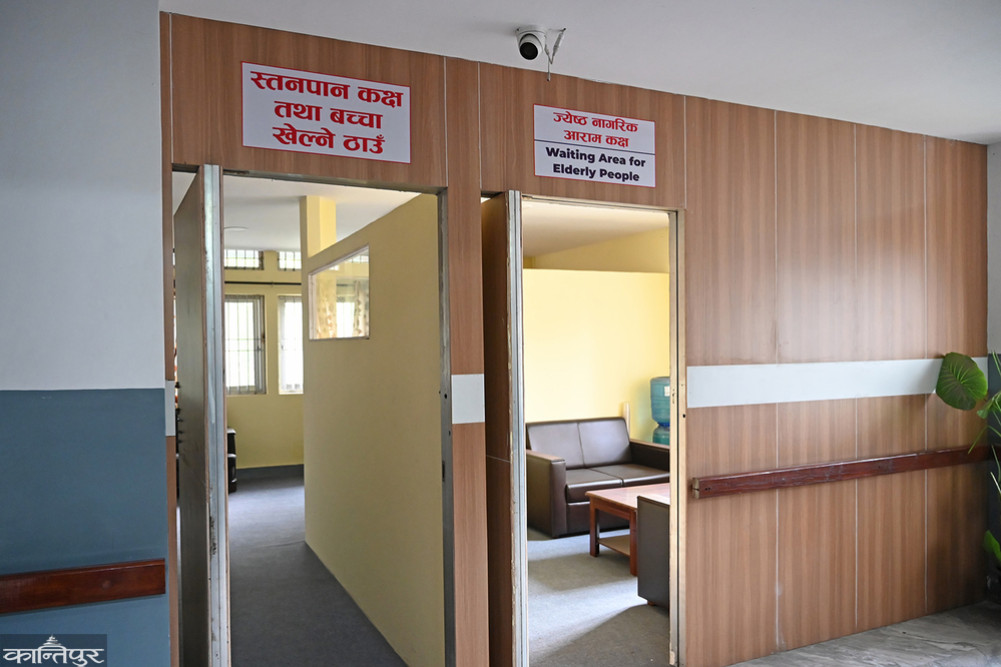
The 'National Gender Equality Policy-2077' has made it mandatory to have breastfeeding rooms, child-friendly toilets, and safe workplaces in public offices. However, the condition of the breastfeeding rooms established under the same provision shows that the government policy is limited to formalities.
We use Google Cloud Translation Services. Google requires we provide the following disclaimer relating to use of this service:
This service may contain translations powered by Google. Google disclaims all warranties related to the translations, expressed or implied, including any warranties of accuracy, reliability, and any implied warranties of merchantability, fitness for a particular purpose, and noninfringement.
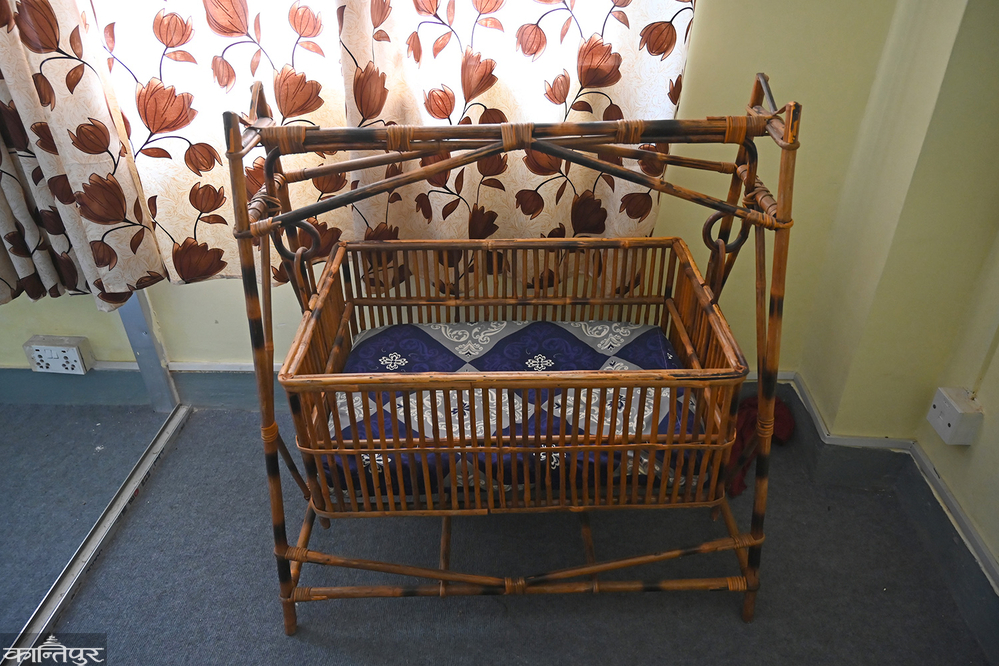
As you enter the Ministry of Women and Children located in the main administrative center, Singha Durbar, you see a board hanging outside a room that says: Breastfeeding room and play area for children. However, there is nothing inside except a cot. Not even a chair to sit on, a sofa to relax on. There are no toys for children, or even materials like milk bottles. The ministry, which is responsible for protecting and promoting the rights of women, children, and senior citizens, has limited basic facilities like breastfeeding rooms to mere formalities due to lack of management. Not much attention seems to have been paid to the upgrading or effective management of this room, which came into operation a year ago.
A little further away, there is a breastfeeding room near the entrance of the Ministry of Education. The room, surrounded by an aluminum fence, contains only a sofa and a cot. There are no materials in the breastfeeding room, which is confined to a narrow room.
‘Breastfeeding Room Establishment and Operation Procedure 2080’ has listed 14 essential items for setting up a breastfeeding room. These include a comfortable chair, clean environment, hand washing facilities, breast pump, safe place to store milk, and safe play equipment for children.’ But most of the breastfeeding rooms built in government offices do not have these facilities.
‘National Gender Equality Policy 2077’ aims to make government offices gender-friendly. The policy states that arrangements such as breastfeeding rooms, child-friendly toilets, and safe workplaces should be mandatory. Breastfeeding rooms have been established in accordance with the same provisions. However, the condition of the rooms shows that the government’s goal is limited to formality.
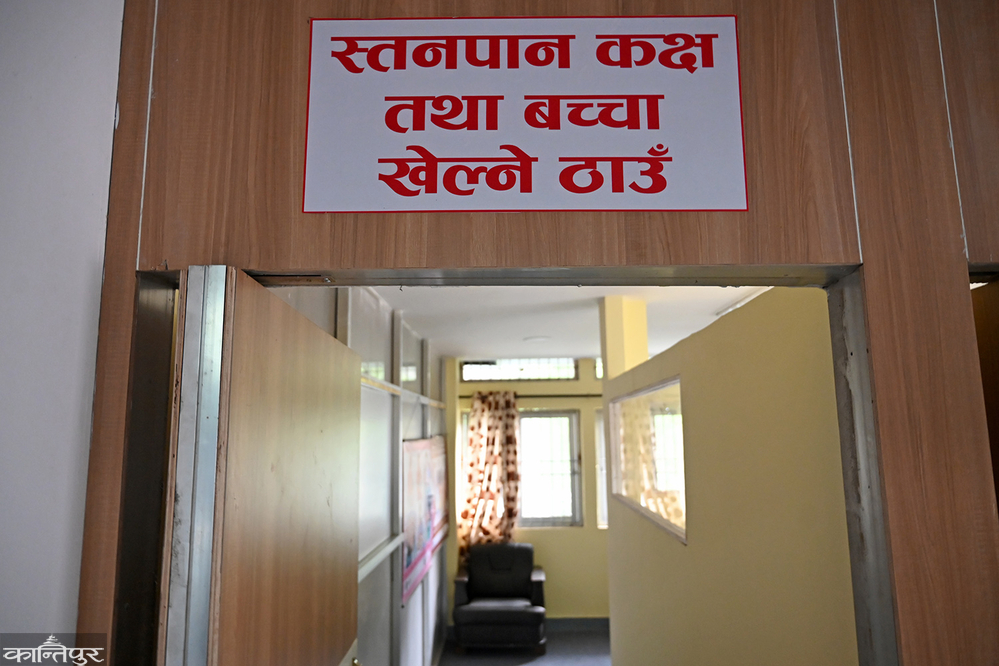
Indira Acharya, head of the Women Development and Gender Mainstreaming Branch under the Ministry of Women, admits that there is a weakness in management as breastfeeding rooms are not used much. ‘It seems to be unorganized because there are not many direct service recipients like in other places,’ she said, ‘Although it is used occasionally, there seems to be less interest in management due to lack of regular use. There is also no effective monitoring system. Sustainable management and monitoring are equally necessary.’
A daycare center is operating within Singha Durbar to take care of the children of employees, and employees keep their children there. According to her, the breastfeeding room was brought into operation because employees often have to take care of their babies between work hours. Acharya said that it is difficult to pay constant attention to such issues because the responsibilities of employees keep changing.
Secretary of the Ministry of Education Chudamani Poudel also admits that the management of the ministry’s breastfeeding room is not a priority because it is underused and utilized. He said, ‘Female employees of Singha Durbar keep their children in daycare. The ministry does not often come to the ministry with children, so the breastfeeding room has not been used.'
According to the Safe Motherhood and Reproductive Health Rights Act, 2075, all types of government, non-government or private organizations must make necessary arrangements for women working in their offices to breastfeed their babies during office hours for two years after the birth of the baby. Accordingly, the ministry and other government offices, like local levels, are also accelerating the construction of breastfeeding rooms.
Kathmandu Metropolitan City has also put a breastfeeding room into operation since last year. Spokesperson Naveen Manandhar said that the room, which was operated with dolls, water bottles, milk jugs and other materials, has not been used much. Stating that the breastfeeding room was built because the office needed it, he also said that he did not know exactly about the standards. He said, ‘There is a need to build a breastfeeding room, but it should not be visible from the outside and from the inside, a table should be made for breastfeeding and a place where the baby can lie down.’
Prakash Budhathoki, spokesperson for the Ministry of Health, said that there are general standards such as a separate workroom for breastfeeding and a chair/bed for breastfeeding. He said, ‘There is a need for breastfeeding in public institutions. That is why we have circulated that there should be a breastfeeding room. It has been implemented in many health institutions. There is still a lack of it in some places.’
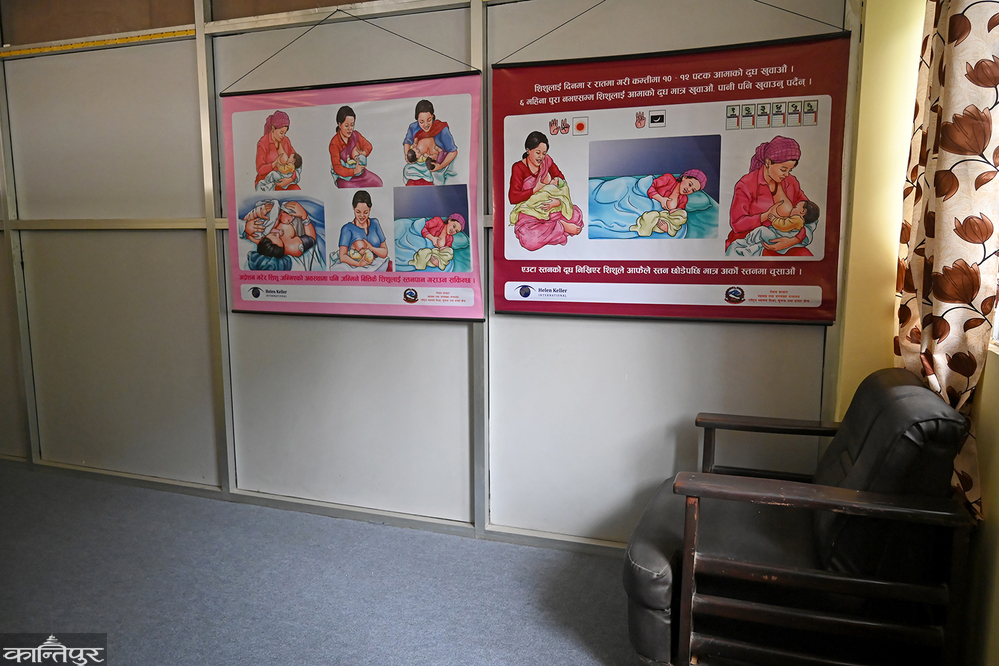
Taking breastfeeding as a major basis for achieving the Sustainable Development Goals, the target has been set to increase the number of Nepali mothers who exclusively breastfeed to 90 percent by 2030. According to the data of the Nepal Demographic and Health Survey (NDHS) 2022, only 56 percent of mothers who breastfeed exclusively for a period of six months.
Women's rights activist Indu Tuladhar says that while the establishment of breastfeeding rooms in public institutions is positive, equal attention should be paid to their management. She says that the need for such structures is increasing in the context of women increasingly entering the public service. Noting that Nepal's breastfeeding law encourages breastfeeding for two years, she said that it is essential to build the necessary infrastructure to breastfeed in a safe and comfortable environment. However, she pointed out that the condition of the breastfeeding rooms that have been built is not satisfactory.
Tuladhar said, "In some places, the rooms seem to be built only for formality, since the rooms are small, it is difficult to stay with the child, and the hygiene conditions are also not good." According to her, although there is enthusiasm for building the structures, the lack of allocation of necessary resources for their sustainable management, maintenance and improvement has hindered the effective use of breastfeeding rooms. She suggests that the relevant bodies should be serious in prioritizing such sensitive infrastructure.