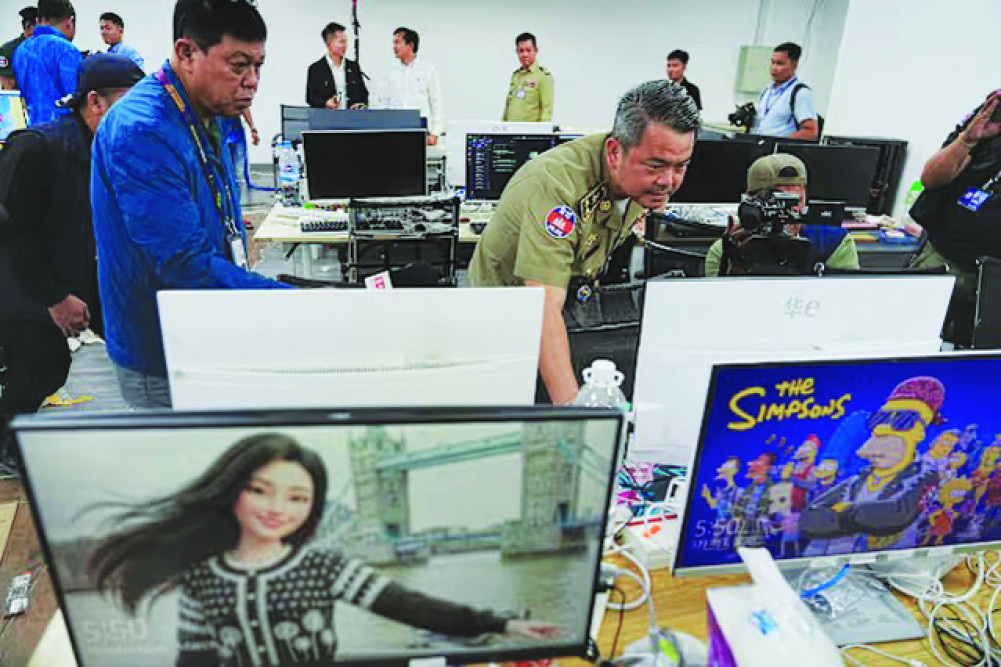
According to the embassy, the Nepalis who were taken to Cambodia after being subjected to various temptations were rescued and repatriated on Chaitra 10 and Baisakh 1 with the help of the Cambodian government.
We use Google Cloud Translation Services. Google requires we provide the following disclaimer relating to use of this service:
This service may contain translations powered by Google. Google disclaims all warranties related to the translations, expressed or implied, including any warranties of accuracy, reliability, and any implied warranties of merchantability, fitness for a particular purpose, and noninfringement.
The Nepali Embassy in Thailand has rescued 46 more Nepalis who were trapped in an illegal online scamming center operating in Cambodia. According to the embassy, the Nepalis who were lured to Cambodia under various temptations were rescued and repatriated with the help of the government there on Chaitra 30 and Baisakh 1. According to the embassy, some Nepalis have been involved in illegal activities including online fraud in Cambodia, while some have been found to be staying without visas or after their validity has expired. The embassy has warned that the Cambodian government has implemented strict laws against those involved in such activities. It is said that such an offense can be punished with a minimum of 2 years of life imprisonment and a large fine. The embassy has also mentioned that the company has also seen problems with confiscating or losing passports while working in scamming centers. It has been informed that there is a provision to provide a one-way travel permit to return to Nepal in such situations. According to the embassy, the number of Nepalis going to Cambodia on tourist visas has increased rapidly in recent years. In the last 5 years, 21,098 people have arrived in Cambodia.
The embassy has urged people to obtain a work permit before going abroad for employment and not to fall into illegal work under the lure of lucrative income by going on a tourist visa. In addition, the media and civil society have been requested to spread awareness about this.