Workers complain that it is very difficult to afford the current inflation with the money they earn by working hard from morning to evening.
We use Google Cloud Translation Services. Google requires we provide the following disclaimer relating to use of this service:
This service may contain translations powered by Google. Google disclaims all warranties related to the translations, expressed or implied, including any warranties of accuracy, reliability, and any implied warranties of merchantability, fitness for a particular purpose, and noninfringement.
Inflation is rising day by day. After the Gulf conflict, the prices of everything from food to petroleum products have been increasing, which has directly affected the common people. On the other hand, as incomes have been decreasing, those who earn their living by doing daily labor have complained that they are being hit harder. They say that it is difficult to sustain the current inflation with the income they earn from morning to evening. What kind of work do they do to support their families? How has the rising inflation affected their daily lives? We have talked to some workers on these and similar topics.
Tempos are parked in a crowded parking lot near the Nepal Airlines Corporation office in Sundhara, Kathmandu. When we reached there, the voice of "Change the glass of a mobile phone for 70..., Change the glass of a mobile phone for 70..." was echoing from the speakers. Kamal Chhetri was sitting in a wheelchair near mobile phone covers, glasses, chargers and other materials. The 26-year-old, who hails from Jumla, said he has been doing this business for the past three years. He does not have both legs. He can only work with the help of a wheelchair. He said that he lost his legs in a car accident on the way to Jumla 8 years ago.
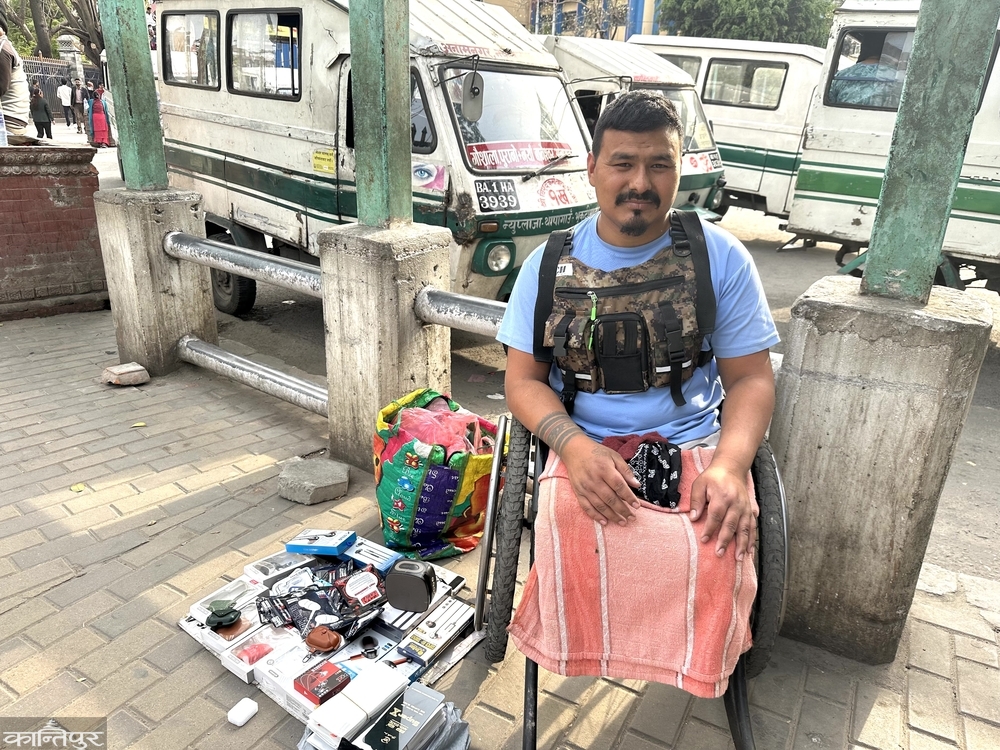
Kamal leaves his room in Balaju every day at 11 am with his belongings and takes a four-wheeled scooter. He always comes to the place where he sells goods, arranges them, sells them throughout the day and returns home around 7 pm. The money he earns covers his household expenses. However, he complains that his business is not like it used to be.
‘Before the Gen-G movement, it used to be up to 5,000. Now, 1,000 is rarely more than 500.’ Kamal, who lives with his family, complains that the cost of living has increased significantly. They say that the prices of the goods they sell have also increased, but they charge more than before, even if it is a little bit,' he said, 'What can we talk about rations? Everything has increased.' He says that at other times, he used to easily save money with his earnings, but now it is difficult to meet his expenses. He said that it is very difficult not to get gas.
The price has increased due to the Gulf War, and he is optimistic that it will gradually decrease. He also says that he has great hopes for the new government. 'This government should create an environment where everyone can work and eat in the same country. In addition, work should be arranged for people with disabilities,' he said, 'The government should also come up with various programs and encourage those who want to do business.'
000
Binod Ram, a resident of Chakraghatta-5, Sarlahi, has been sewing shoes in Kathmandu for 13 years. Vinod's family is supported by the money he earns. He says that every item is expensive.
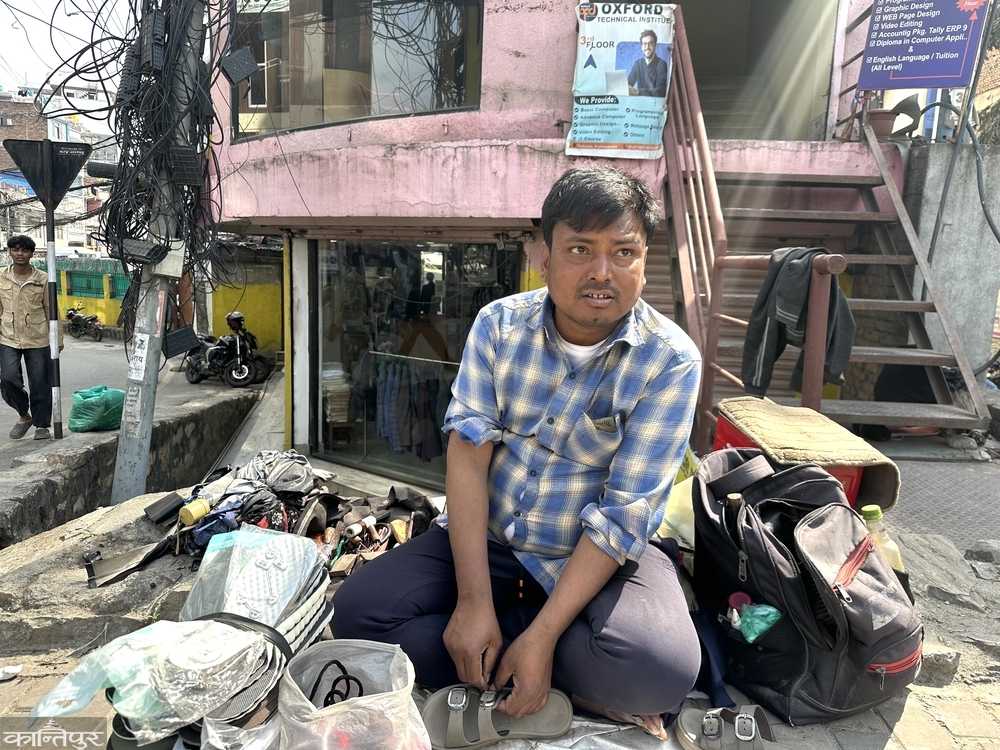
'When we buy shoe-making materials, they increase the price by 5 to 10 rupees. Everything from shoe polish has increased,' he said. 'However, we have not increased the price of some items. If the shoes are sewn for 100 rupees, the customer says he will pay 60 rupees. If we increase it even more, it will not be the same.'
He has experienced that people are wearing less leather shoes now, and their income is decreasing. 'Nowadays, people wear cloth shoes. They have stopped wearing leather shoes. That is probably why it is not like before,' he said. 'Earlier, it used to be up to 1500.' Now, the most is 700, the price has increased, and the income is barely this much.'
Binod has been living with a friend in Kathmandu. He said that it would be expensive if he lived alone, so he lived with two people. He says that he knows that the price has been increasing continuously since he has to buy ration every day.
He said that it is difficult for his family as his income is not good. 'We have to send money to the village every month. We don't have land, so what can we do to cultivate it? We have to send it home. Since I don't have any income, it is difficult on both sides,' he said, 'We don't buy things all at once in the room. We buy rice and vegetables by the kilo every day. That's why I feel that it has increased a lot.'
000
Rajan Prajapati has been living in Kathmandu for 25 years. He worked as a driver for 15 years and now makes a living by selling water. He is from Nuwakot and now lives in Gokarna. From Gokarna, he comes to New Road every morning to sell water.
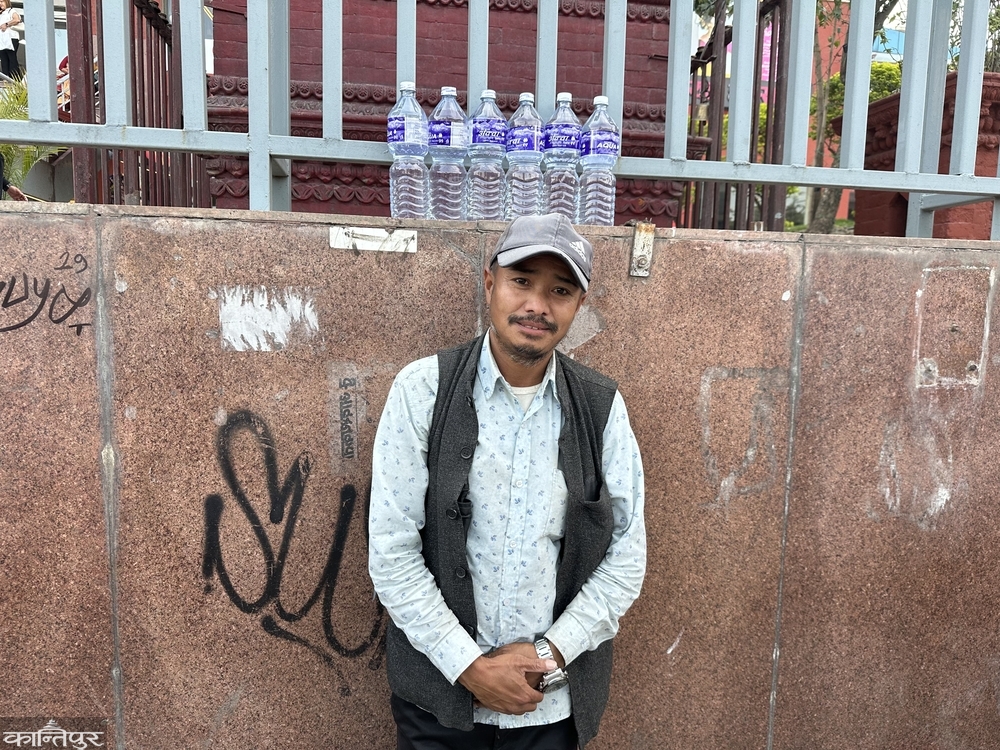
He also said that the price has increased. ‘Earlier, the water packet I used to sell cost Rs. 140. Now it has increased to Rs. 170. The price of water has increased, what can we talk about others,’ he said.
Living alone in Kathmandu, he said that every shop has different prices. ‘The new government should make arrangements for every shop to give a bill. Otherwise, some people charge different prices for the same item,’ he said.
Saying that he did not know much about the Gulf War, he said that he hopes that the new government of Nepal will do a lot. ‘I have heard that there is a war going on.’ I don't know whose and why. In Nepal, the government should have made allowances for people who have worked in various jobs for a long time,' he said, 'I drove a car for more than 15 years. Now I have neither money nor savings. That's why I want good rules in every field.' He said that even though everyone is suffering due to the Gulf War, he hopes that the price hike will go away in the coming days.
000
A large crowd of people is seen walking on the sidewalk on New Road. People are pushing each other and running towards their destinations at a fast pace. An old woman is seen sitting in a corner selling water in a very calm manner. He is 84-year-old Chetnath Dhakal with gray hair.
He is from Dhading and has been earning a living by working on the sidewalk for the past 13 years. For about 10 years, he used to sell various items like incense and nail cutters on the sidewalk. After that, he has been selling water for the past 3 years. Dhakal, who lost his wife 34 years ago, has four daughters and a son. However, they are all busy with their own lives. That is why he does this business to earn a living.
He, who has made the sidewalk his source of income, also says that the price has increased now. ‘I bought the water I bought in the morning at the same price. When I ran out of it and went to buy it again, it cost 30 rupees more than the morning price,’ he said. ‘I even scolded him for not setting arbitrary prices. The prices vary from shop to shop.’
He said that he comes here from the forest around 8 in the morning and does business until 5 in the evening before going back to his room. ‘I eat breakfast outside. In the evening, I go to my room and cook,’ he said.
000
Drivers are also complaining that their income is drying up lately. One of them is Santosh Budhathoki. Santosh, a resident of Solu Likhu Pike Rural Municipality-3, is a tempo driver. He has been supporting his family by doing this job for the past 3 years. He said that before becoming a tempo driver, he used to work odd jobs. He has been struggling in Kathmandu for 16 years and complains that his business has stopped. ‘Earlier, he used to earn up to 3500 rupees by driving a tempo.’ Now, he does not earn as much as before,’ he said.
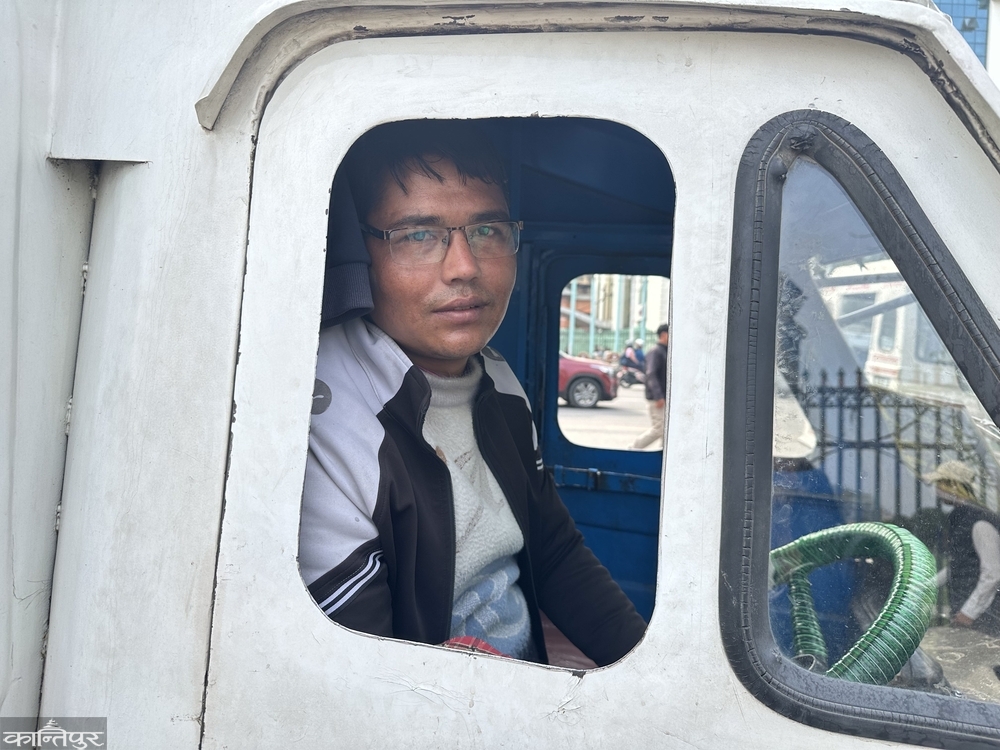
He, who lives in Bhaktapur with his family, starts driving a tempo at 6 am after waiting for his turn. He said that he used to travel on the Anamnagar-Gaushala route every day and is worried about not seeing any business. He complains that despite spending money on everything, such as ration expenses and educating his children, his means of earning money are being cut off. ‘The price of every item has increased. His income has decreased drastically,’ he said. ‘The price of petrol has increased significantly. Some tempos run after charging, and even if they are small, it is a relief. Otherwise, what would have happened if he had to fill up with petrol if he had no income? He has to take one person with him and cannot be stopped on the way. What would he have earned with such a rate?’
000
Ganga Tamang is also a tempo driver. The 33-year-old has been driving a tempo for the past 6 years. She, who lives with her family in New Baneshwor, says that she is not earning as much as she used to. ‘It seems that there are fewer people in Kathmandu now,’ she said. ‘The income used to be so high, now it is so low.’ Until some time ago, I used to earn up to 6,000. Now, it is difficult to earn even 1,500.'
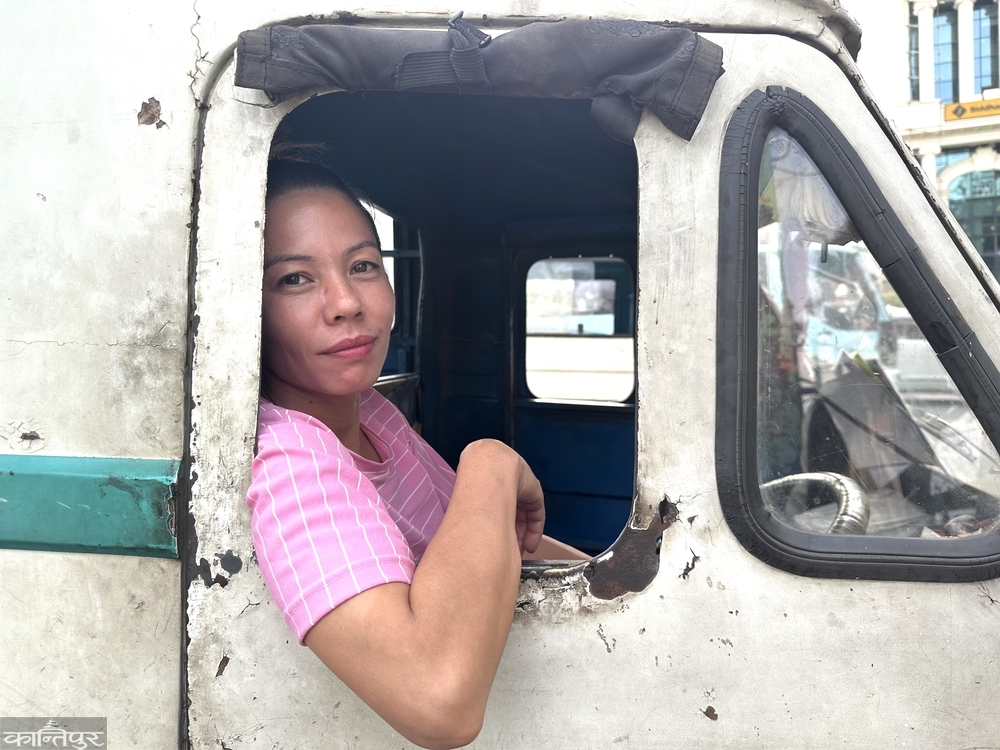
She said that she used to work from 6 am to 8 pm. She said that she used to feel sad when she did not earn as much as she expected even after working from morning to evening. 'Sometimes the tempo is empty.' She said that she did not go when her turn came, 'I did not go,' she said, 'When there are few people, I have to walk thinking that I will not have money to give to the moneylender in the evening.' Ganga said that she wandered a lot without getting gas and found gas after searching for a long time. She said that she used to drive a tempo because of the support and encouragement of her family.

