There has been no 'ONM' of doctor posts in government health institutions since 2048. At that time, when Nepal's population was 18.4 million, there were 1,212 doctor posts. According to the 2078 census, even though the population has increased to 29.1 million, the posts remain the same.
We use Google Cloud Translation Services. Google requires we provide the following disclaimer relating to use of this service:
This service may contain translations powered by Google. Google disclaims all warranties related to the translations, expressed or implied, including any warranties of accuracy, reliability, and any implied warranties of merchantability, fitness for a particular purpose, and noninfringement.
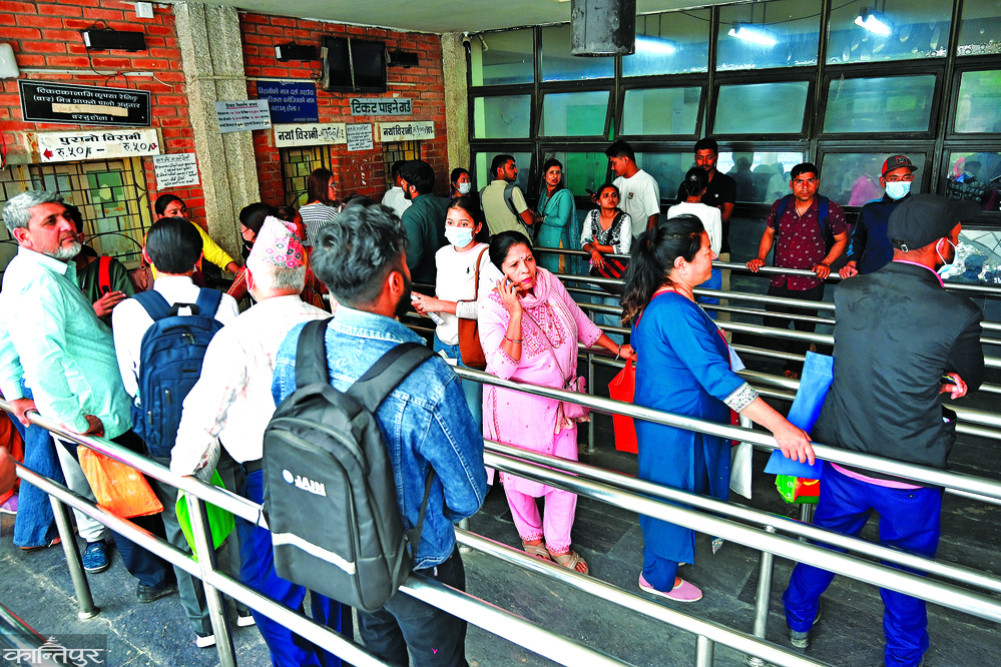
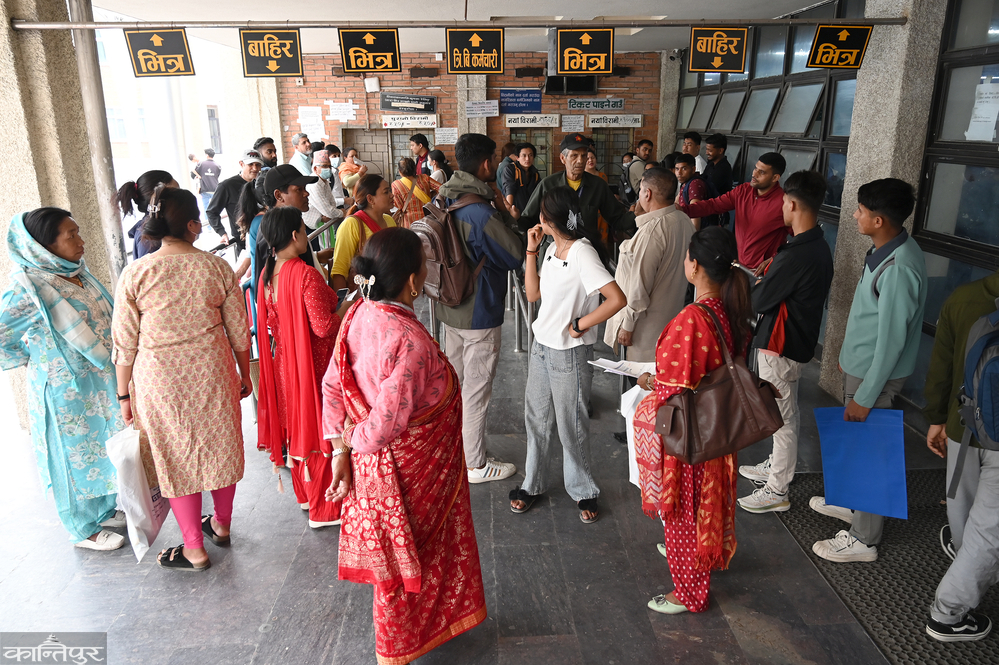
Arun Tamang from Sarlahi went to Bir Hospital in Kathmandu a week ago for his mother's treatment. His mother has liver and heart problems. However, Arun says that the pain he has to endure for the treatment of his 65-year-old mother has led to his own illness. He is frustrated by the system of waiting in line to buy tickets and pay money, and checking the bar.
'You have to wait in line to buy tickets. Medicines are slow to come. Since the liver and heart have to be checked, they are called according to the bar. One week, one test is done, the next week another test is done. This is causing problems with both cost and time,' he said. He visits the hospital every day from his dormitory in Bhaktapur. He complains that this has also affected his studies. A graduate student, he said, 'You have to come according to the bar. Days go by while waiting in line, how many more days do you have to go. 25 thousand rupees have been spent and it has also taken a lot of time.'
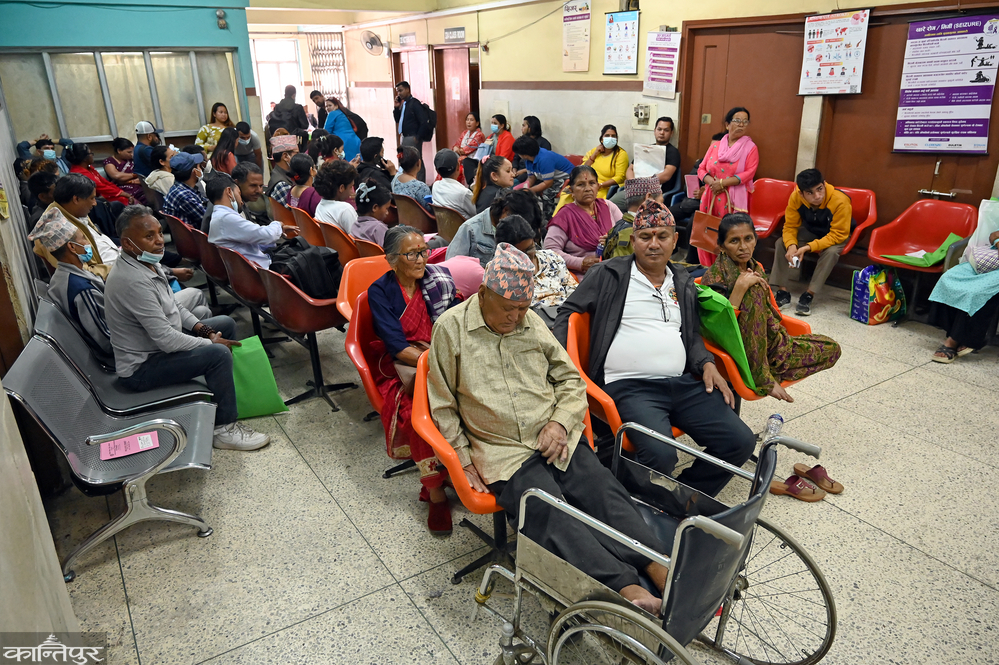
Madhu Magar from Nuwakot shares his pain of not being able to get treatment easily. Having reached Bir Hospital for neurological treatment, he said that he was fed up with the government hospital not being improved. "The lines are getting longer and longer. It takes time from ticketing, paying money to even getting medicine," he said.
Article 35 of the Constitution considers health service as a fundamental right. However, the scene of citizens suffering for treatment is visible in hospitals. Although plans for hospital upgrading, new buildings and service expansion have been taken forward in the health sector, the hospitals are operating solely on contract employees as permanent posts have not been added accordingly.
The 'Organization and Management' (ONM) of posts in the Ministry of Health has not been updated since 2048. In 2048, the number of doctors was 1,212. In 2048, the population of Nepal was 18.4 million. According to the 2078 census, the population has increased to 29.1 million, but the number of posts remains the same. Although the vacant posts have been filled, no new ones have been opened.
While according to the Economic Survey 2081/82, 366,505 health workers have been registered till Falgun 2081. During that period, 11,616 doctors have been registered with the Medical Council. According to the theoretical concept of ‘Status and Projection of Health Manpower in Nepal’ and the Manpower Development Plan, the health manpower has been projected till 2030. In the projection published by the Medical Service Commission in 2079, it is estimated that 318,950 health manpower will be required in Nepal by the upcoming fiscal year 2087/88. The Commission has mentioned that there is a gap of 63,226 manpower between manpower production and requirement.
There are no health workers in the hospital as per the posts
There are 687 government posts of health workers in Bir Hospital, but only 487 are working. There is a shortage of 200 employees as per the posts. The number of employees in this hospital other than posts is 1,414. There are also no doctors as per the posts in hospitals outside the valley. There are 56 vacancies in Dadeldhura Hospital, 99 in Koshi Hospital and 53 in Bheri Hospital.
Dr. Rajiv Jha, neurosurgeon and department head of Bir Hospital, has been working in this health system for 25 years. ‘Our department is short of about 50 percent of the required manpower,’ he says. There is a neurosurgery operation unit in the neuro ward, where at least 25-30 nurses are required, but currently only 12 are manning it. Jha says that there is a shortage of manpower in all places, including the ICU ward and cabin. According to Jha, an average of 8 people are admitted to the neurosurgery department every day.
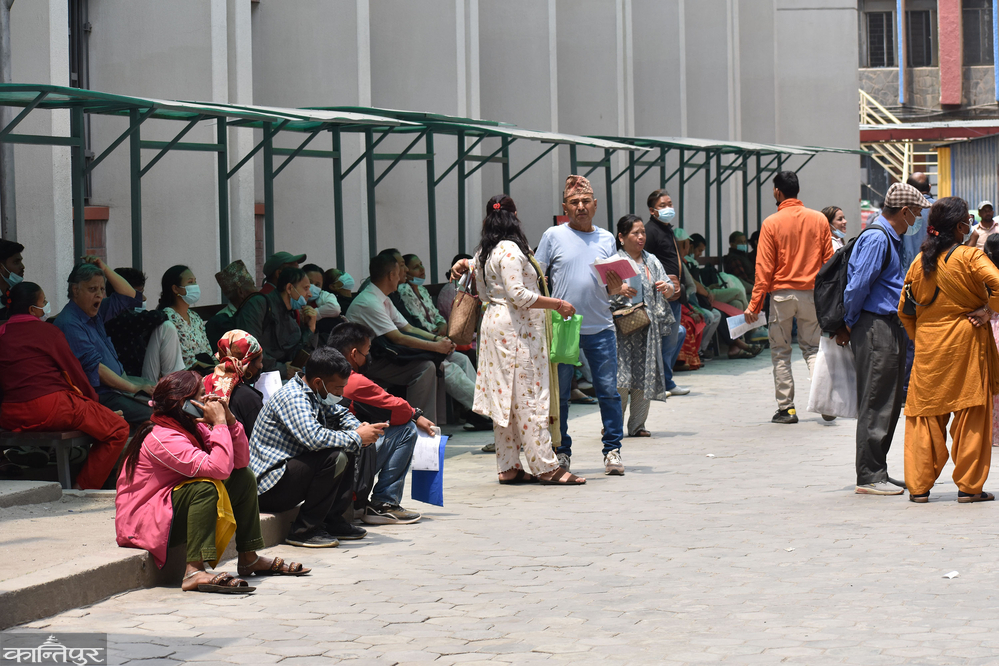 Due to the shortage of manpower, patients have not been able to get services easily. ‘There are 5-6 surgeries daily, but there are only 4 government doctors. One of them is also on contract. There are 45 nurses in three wards. When divided into three shifts, the number is very insufficient,’ he said.
The issue of increasing the number of posts is limited to the plan
Although according to the World Health Organization standards, there should be at least 4.45 doctors, nurses and midwives (providing pregnancy and maternity services) per 1,000 population, this ratio is only 1.49 in Nepal. According to the Medical Services Commission's projection, this ratio is 4.97 by 2030, but it seems difficult to achieve.
The main reason for this is budget management. It is not that the Ministry of Health has not made efforts to increase the number of posts. In 2081, the then Health Minister Pradeep Poudel put forward a plan to increase the health workforce. The ministry prepared an ONM proposal to add about 15,000 posts. However, the proposal was withdrawn after the Ministry of Finance, Law and General Administration did not agree.
In the third attempt, the number was reduced to 12,102 posts. This included 600 doctors, 1,200 nurses, midwives, dieticians, hospital managers, and other human resources related to the expansion of new services. Despite receiving in-principle approval from the Council of Ministers, the process of filling the vacancies was stalled when the budget was not approved by the Ministry of Finance.
According to former President of the Nepal Medical Association, Prof. Dr. Lochan Karki, the main reason why Nepal's health system is in crisis is the government's failure to prioritize adding vacancies. 'The average life expectancy of Nepalis has increased, the nature of diseases has changed, the number of chronically ill patients has increased, but it seems that the health sector is in crisis because the manpower is stuck in the same old pattern,' he said. He said that due to the lack of manpower, timely treatment is not available, specialist services are not available, hospitals are overcrowded, and patients cannot be given the necessary attention. Karki says that the situation in remote areas is even more painful. 'There are buildings and equipment in remote areas, but there is no manpower to provide services,' he said. According to him, the government's priority is still focused on infrastructure. 'Budget is allocated to build buildings and buy equipment, but there is no budget for doctors, nurses, and technicians to operate them, this is a policy error,' he said.
8 to 9 months for appointment from public service
The delay in the Public Service Commission has made human resource management more complicated. It seems that it took 9 months for the recommendation for the post of medical officer in advertisement no. 1073/079-080. Similarly, it took 8 months for the recommendation for the post of staff nurse in advertisement no. 17350/079-080.
Khemraj Bayak of Achham has been preparing for the HA public service for two years. He has already given the Koshi Province exam and is waiting for the Bagmati one. Last year, he was not successful in the second paper even though he had mentioned his name in the first paper. But his journey to enter the government service has not stopped. He feels that it would have been effective if the results had come in 1-2 months. ‘The quota for public service is small. It takes 6 months to get recommended. The quota is limited, the process is long. It would have been much easier for the students if the exam and recommendation were done on time,’ he says.
Surkhet, Birendranagar-6's Sirjana Budhathoki has been preparing for the civil service after completing her PCL nursing a year ago. Her attempt was unsuccessful last year. This year, she has applied for Bagmati, Gandaki and Koshi provinces. She said that she prepared for the civil service with the desire to serve in Nepal. 'I started preparing for the civil service with the intention of not going abroad. I hope that I will succeed as I keep trying. But the delay in the civil service may cause a delay as it takes a long time for the examination and recommendation,' she says. Budhathoki says that students are confused about their future due to the limited quota and the long examination time.
Public Service Commission spokesperson Purushottam Sharma clarified that the commission has been making the examination public as per the annual schedule. He said that the examination will be conducted based on the availability of the examination hall, required manpower and management capacity. 'In some cases, two to three examinations have to be conducted in a day. "The schedule management becomes challenging as the same candidate may appear for two or three different posts," he said. Sharma said that if a candidate files a case or faces legal problems after the examination, they are forced to proceed as per the court order. He also informed that the commission is trying to expedite the examination and recommendation process.
Manpower going abroad
The trend of health manpower going abroad due to lack of opportunities in the country is also increasing. According to the Nepal Nursing Council, 52,000 nurses have gone abroad in the 30 years since 2052. According to the Medical Council, the number of health workers obtaining a good standing certificate from the council to go abroad is also increasing. In the fiscal year 2077/78, 1,087 doctors obtained this certificate, while in 2081/82, the number of those obtaining the certificate reached 2,681.
Although the state has mentioned health as a fundamental right of citizens, in practice the health sector has not received priority, says public health expert Sharad Vanta. ‘Many policies have been legally formulated, manpower plans and staffing plans have also been prepared. But the implementation aspect is weak. The inability to open posts in the health sector is seen as a big challenge,’ he says, ‘The next government needs to take the initiative to emphasize the proper implementation of plans, laws and policies. It seems essential to focus on manpower management, clear implementation strategies and effective monitoring by prioritizing the health sector.’