Gender minorities, people with disabilities, and women face significant difficulties when using public infrastructure, including drinking water taps, toilets, sidewalks, and more.
We use Google Cloud Translation Services. Google requires we provide the following disclaimer relating to use of this service:
This service may contain translations powered by Google. Google disclaims all warranties related to the translations, expressed or implied, including any warranties of accuracy, reliability, and any implied warranties of merchantability, fitness for a particular purpose, and noninfringement.
20-year-old Anu Shahi Thakuri is a ‘transman’. He always faces difficulties when using public toilets. He used to use men’s toilets before, but the same toilet does not work during his period.
‘If I have to use a public women’s toilet during my period, it is uncomfortable for other women, and when I go to the men’s toilet, there is no place to put pads, nor is it clean,’ he said.
There is no toilet that is convenient for him in schools, campuses, government offices or any public place. There are only women’s and men’s toilets everywhere.
An undergraduate at Kathmandu’s Ratna Rajya Campus remembers an incident when he was studying Plus Two at another college. In the early days of Plus Two, he had not revealed that he was a transman. ‘One day, I was just entering the women’s toilet when the women inside started shouting that a man had entered our toilet,’ he said. ‘There was a commotion.’ The teachers came, I hid my identity and said that I was a woman, and from that day on, I stopped going to the toilet. To stop urinating, she started drinking very little water, which led to a urinary tract infection.
Not only toilets, but also sexual minorities, people with disabilities and women face problems when using public infrastructure. This community is facing a lot of difficulties in public roads, sidewalks, drinking water taps, and places where they go to get government facilities.
Shahi says that solutions to the problems they are facing should now be found at the policy-making level.
‘Until now, there has been insufficient knowledge about the sexual and gender minority community, so infrastructure has not been built, but now it is time to be inclusive,’ he said.
000
24-year-old Reena Panta walks with the help of a ‘walking frame.’ Both her legs are weak from birth, so she does not stand well. That is why the ‘walking frame’ became a support since childhood. Even that is not enough support on the road where you have to walk a lot.
Panta is currently studying for a degree at Padmakanya Multiple Campus in Bagbazar. She lives in the campus hostel so that it is easy to come and go. From campus to hostel, hostel to campus. Her daily routine is mostly like this. Due to the lack of disabled-friendly roads, there is a problem in commuting, so the disabled do not go out.
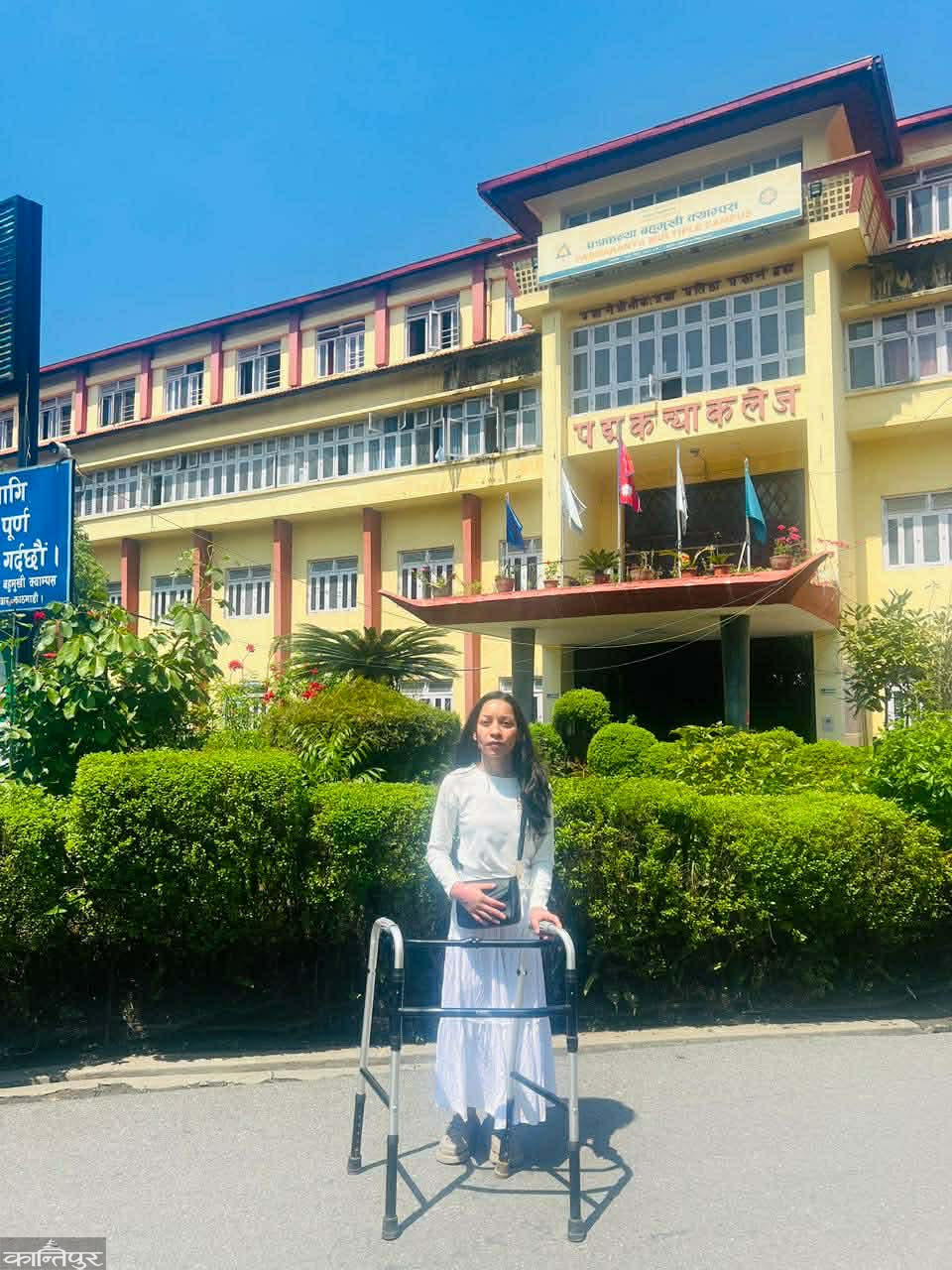
‘There are so many potholes on the road, it is impossible to walk. In many places, the frame has stuck and fallen,’ says Panta, ‘That is why I do not walk alone, I do not always have friends.’ Not only the movement on the road, but other structures are also not disabled-friendly, so her daily life is difficult.
Many government and private office buildings, schools, and campuses do not have easy and wide stairs. In many places, disabled-friendly toilets are not found. This is her experience that ordinary life is uncomfortable. ‘I have lost many opportunities due to such inconvenience,’ she complained.
000
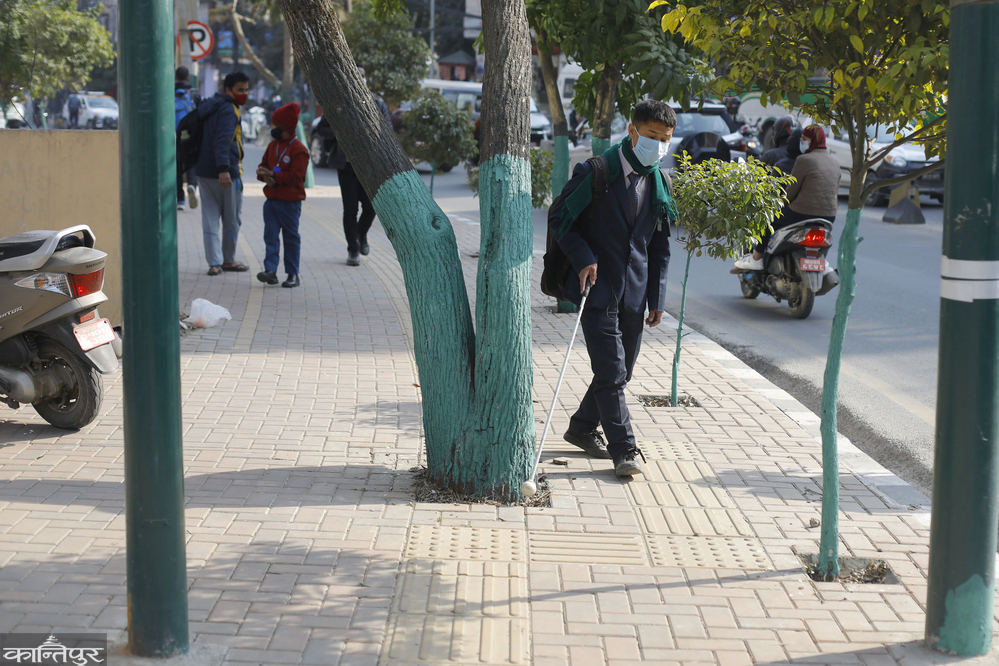
Sangeeta Parajuli of Bharatpur-27, Chitwan is blind from birth. She had to keep playing with awkward and unwieldy structures while walking. She fell many times, got injured many times. But, she did not lose courage. After studying with the help of Braille script, she got her name in the lower secondary level through the Teacher Service Commission in 2079. After that, she had to go to teach in Khandadevi Rural Municipality-9 of Ramechhap.
‘The stay in Ramechhap was very painful, I fell in the school premises while teaching and broke my right hand,’ she says, ‘This happened due to the lack of disability-friendly structures and geographical remoteness. It is very difficult to send a disabled person to the mountains, I myself am an example of this.’
She has now been transferred to Manjushree Secondary School in Nilakantha Municipality-11, Dhading. She suggests that the government should pay attention to building a disability-friendly structure where the visually impaired can walk without the help of others.
000
Breastfeeding is a problem that most women face in their own offices or places where they go to get services in public. There are 753 local levels across the country, but only a few local levels have built separate breastfeeding rooms in their office premises.
Whether they work in a public body or go to get services, most women have difficulty breastfeeding. Not only that, they do not have a comfortable environment in public transport, public roads, toilets, and hospitals when they are pregnant.
Road safety expert Bhagwati Sedhai has seen that even female employees working in places like banks are deprived of breastfeeding facilities. ‘It would be a huge expense to build such infrastructure,’ she says, ‘It is not enough to just reserve a few seats in public buses, but it is necessary to create an environment where everyone can travel comfortably.’ She said that unless the leadership assimilates everyone’s problems from a gender perspective, there will be challenges in creating a gender-friendly environment.
What do experts/employees say?
Stakeholders and experts say that lack of knowledge among stakeholders is the main reason for the lack of inclusive infrastructure for gender and sexual minority communities and women in Nepal.
Nepal’s roads and public transport are not friendly to pregnant women, children, and senior citizens. Due to which they are forced to travel at the risk of their lives.
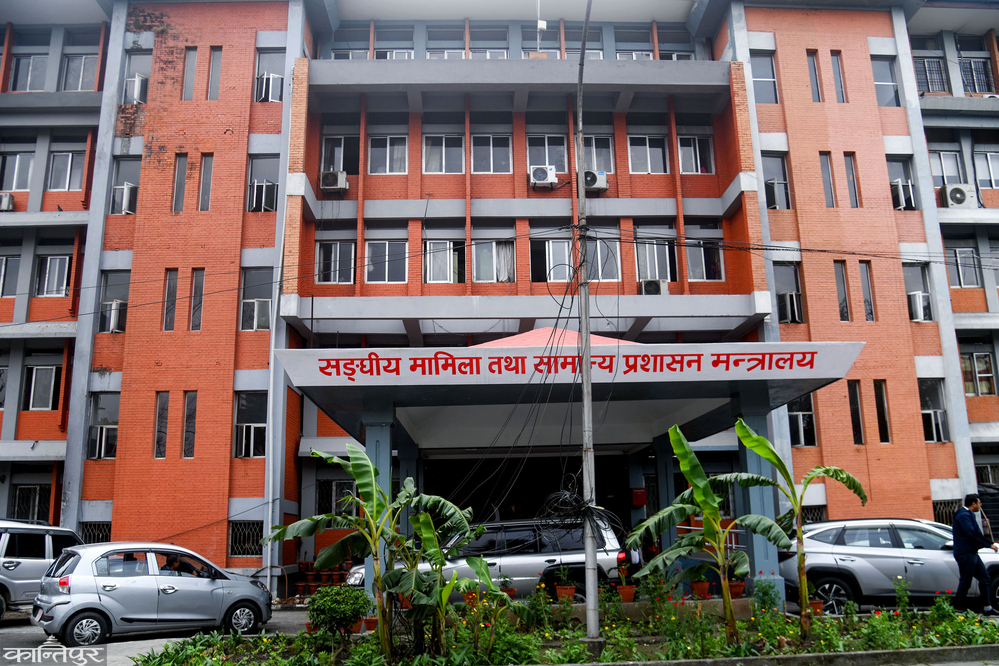
Joint Secretary of the Ministry of Federal Affairs and General Administration, Nita Pokharel Aryal, says that various model policies, standards and evaluation indicators have been prepared to make infrastructure at the local level child-friendly, disability-friendly and women-friendly and have been placed on the ministry's website. 'A policy has been made to develop women-friendly, disability-friendly and child-friendly infrastructure,' she said, who is also the spokesperson for the ministry.
She says that when evaluating the local level, it is checked whether or not inclusive infrastructure has been created.
Deputy Secretary Bishnukumari Bhusal, Head of the Social Inclusion Branch under the ministry, says that during monitoring, she suggests adding the necessary number. 'We do not have the number of local levels to build inclusive infrastructure, it has not been prepared yet,' she said, 'We have not even looked into how many there are, if necessary, we should write to all local levels and request it.'
But she has also seen the inconvenience faced by women inside Singha Durbar. ‘Some buildings do not have separate toilets for women, and when there is no separate toilet in the room where you are staying, you are forced to go to another room or floor,’ she said. ‘The physical structure of the office where the flow of services is high should be in line with that. The infrastructure to be built now should be women-friendly, disabled-friendly, and child-friendly.’ 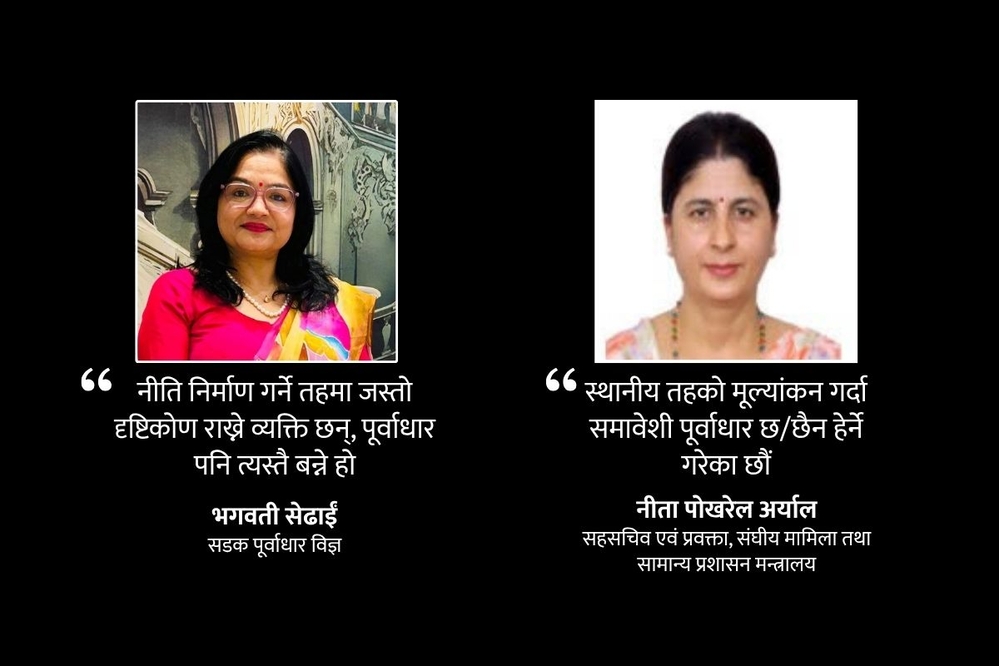
Bhagwati Sedhai, head of the Department of Population and Gender Studies at Padmakanya Campus and road safety expert, says that the leadership perspective is of great importance. ‘The same perspective is held by the person at the policy-making level, the infrastructure will also be built in the same way,’ she said. ‘The main reason why the infrastructure built now is not inclusive is the lack of representation of the concerned community at the policy-making and implementation levels.’
She also gave examples from some developed countries. ‘In developed countries, when people carrying children or pregnant women board public transport, they do not have to climb a large staircase like in our country. The bus comes on the ground and can be boarded,’ she says. ‘Even in the 21st century, we have not been able to build infrastructure according to gender needs.’
A 2025 study showed that there is a serious gap in the access and safety of people with disabilities, said Patricia Fernandez-Pacheco, UN Women’s representative for Nepal. ‘The lack of disability-friendly and safety infrastructure such as RAM is reducing the self-esteem and independence of people with disabilities. It is a positive initiative for some local levels to include our suggestions for developing such infrastructure in their action plans and annual budgets,’ she said. ‘Through the Empowered Women, Prosperous Nepal, we are supporting the development of policies and programs for disability-friendly facilities in some municipalities in Madhesh, Karnali and the Far West.’
Exemplary municipality
An example of how inclusive structures can be created if the leadership thinks from a gender perspective is Diktel Rupakot Majhuwagadhi Municipality.
Until two years ago, it was very difficult for women to breastfeed when they came to receive services with small children. They would cover themselves with a blanket and go under a tree to breastfeed.
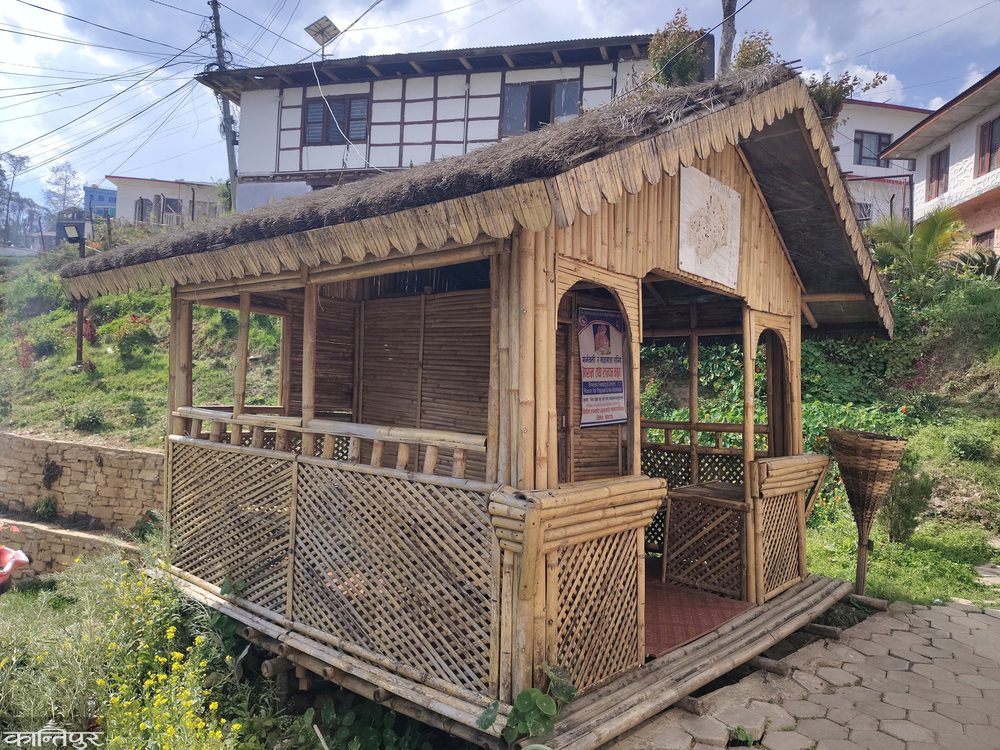
After seeing this problem faced by female service recipients with children and their own colleagues, Mayor Tirtharaj Bhattarai planned to build a separate breastfeeding room. Immediately after being elected, he decided to build a cottage surrounded by bamboo and thatched with thatch. ‘We have built a waiting room outside and a separate breastfeeding room inside,’ he said.
He said that the new building has also been made to be comfortable for people with disabilities.
When will it be implemented?
It has been 12 years since the Ministry of Urban Development formulated the Gender Equality and Social Inclusion (GES) Guidelines to make public infrastructure and structures accessible to all types of service recipients. It has been said that the GES Guidelines will be implemented under the ministry to increase the access of women, poor and disadvantaged groups (VAGs) to the resources mobilized in programs and projects and the benefits derived from them. The same ministry will also monitor whether their access has increased.

Although it is mentioned in the standards to properly address GES issues in all programs and projects and to ensure institutionalization at every stage of the project, it has not been implemented yet. It is said that the Department of Urban Development and Building Construction will implement it.
Director General of the department, Ravindra Bohara, says that it is in the implementation phase. ‘When constructing new buildings, they are made women-friendly and disabled-friendly, and they are being built accordingly,’ he said, ‘It may not have been fully implemented, but we will gradually implement it.’
Recently, the Department of Urban Development and Building Construction has started building buildings that include all aspects, says Himal KC, an engineer. ‘A directive has also been issued, ‘According to the National Building Code-2060, disabled-friendly and women-friendly buildings have been started,’ he said. ‘According to the Building Code, engineers involved in construction are being trained from time to time and infrastructure is being built to cover all sectors.’ He claimed that although the old buildings built before the implementation of the Building Code were not comfortable for everyone, there is no such problem now.
‘Nowadays, before starting the construction of any building, it is mandatory to present the design, to do that, the building is disabled-friendly/not, women-friendly/not, we look at everything, we ask for the missing things, we only approve the design after everything is completed,’ he said.
Despite the government’s claim that it is formulating and implementing policies, public infrastructure and structures are not comfortable for gender minorities, women and people with disabilities. Women's rights activist Indu Tuladhar says that new infrastructure is not built to make it easier, but to show off. She said that the infrastructure could not be built as expected because the relevant bodies did not understand the essence of the guidelines and implement them.
'The new school building has been built to be disabled-friendly and child-friendly,' she said, 'There is no road to the school, the school has been built on a hill, wheelchairs cannot be brought in, it was not made to be wheelchair-friendly only inside the school,' she said.

