A major revolution took place in this genre, which had been scorned as a 'women's only field' for decades, in 1971. Female employees of 'Newsweek' filed a complaint against gender discrimination, alleging that they were always limited to 'research/fact checkers' and not allowed to become reporters.
We use Google Cloud Translation Services. Google requires we provide the following disclaimer relating to use of this service:
This service may contain translations powered by Google. Google disclaims all warranties related to the translations, expressed or implied, including any warranties of accuracy, reliability, and any implied warranties of merchantability, fitness for a particular purpose, and noninfringement.
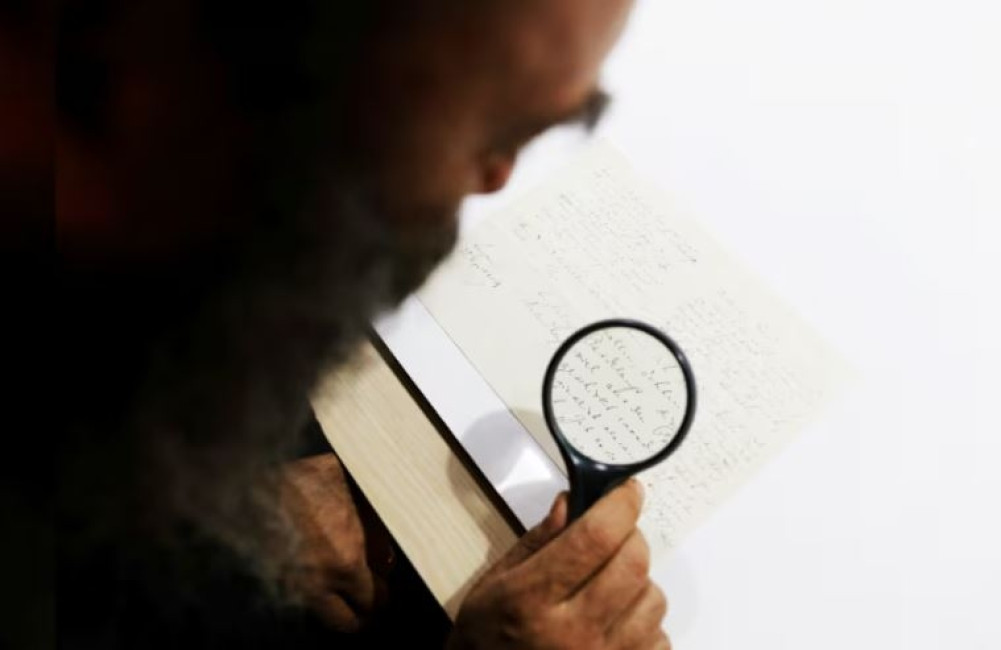
April 1 is celebrated all over the world as ' April Fool's Day ' i.e. a day to deceive and joke about people. But , immediately after that day of jokes and lies, the next day, i.e. April 2, is celebrated as ' International Fact-Checking Day ' . Fact-checkers around the world have taken this day as a special campaign to stop the misleading and false information that spreads with the increasing use of social media and the rapid flow of information.
' April Fool's Day ' has a symbolic meaning of celebrating this day the day after . To expose the misconceptions that were spread by teasing or lying the previous day and restore the truth.
Although the beginning and concept of fact-checking may seem modern, its roots are as old and interesting as the history of journalism. From the work of women who turn dusty books in libraries to today's cutting-edge digital forensics, its background is interesting. According to an article in the Columbia Journalism Review (CJR) published on December 6, 2019, in the early stages, newspapers focused more on the personal opinions and emotions of editors and publishers than on objectivity. Telling the news was like advocating for one side. But in 1854, Daniel H. Craig, then head of the Associated Press (AP), took a historic initiative. He sent a circular to his colleagues saying- ' Do not mix your emotions and urges in the news , ' Give priority only to material facts
' ( fact)'.' This was not just a small directive , It was the first institutional effort to take journalism out of the vortex of emotions and stand on the ground of truth. Only then did newspapers start printing pure information and facts. According to CJR's own article , Although oriented towards facts, mistakes were common in the news due to the rush of work. In 1913, ' New York World
' Ralph Pulitzer, publisher of the magazine, expressed concern about the mistakes printed in his newspaper. To atone for giving readers false information, he founded the Bureau of Accuracy and Fair Play ' . This is considered the first brick in the institutional history of fact-checking. However, the work of this bureau was limited to correcting mistakes after publication, apologizing, and listening to readers' complaints. The credit for the modern and professional method of checking news before publication rather than regretting it after publication goes to ' Time ' magazine. According to Time magazine's archives, in 1923, Time appointed Nancy Ford as a researcher ' (researcher ) when it published its issue. She is also known as the world's first full-time '
fact checker ' . At that time, Nancy Ford and her female colleagues would go to the library to check the dates , names , and events written in the news. They would check the veracity of the news words by flipping through thick reference books and encyclopedias. What was the thinking of society and media houses at that time? Reporting , going out and making a name for themselves is the job of men. But , patience requires , sitting inside and meticulously finding mistakes , and this tedious work behind the scenes
' is the domain of women ' As CJR notes, fact-checking was often described as a job for college-educated women until the 1970s. But it wasn't always the same. In 1927, ' The New Yorker ' also started fact-checking. In 1938, the term fact-checker was first officially used in an advertisement in Collier's ' magazine. For decades, the genre, which was considered a women's job, underwent a major revolution in 1971. ' Newsweek ' female employees filed a gender discrimination lawsuit, alleging that they were always restricted to being researchers/fact checkers
' and not being allowed to become reporters . The revolt shook the very fabric of the newsroom. Eventually, , in 1973 ' Time magazine also hired four men as fact checkers. The development of the Internet and the challenge of misinformation The Internet emerged in the 1990s. As information became easier , ' misinformation ' became more dangerous. Online platforms such as Snopes ' , launched in 1994, and factcheck.org ' , established in 2003, are considered to have laid the foundation for modern fact-checking. Today, almost every major international media outlet has its own fact-checking desk. The Poynter Institute of Media Studies, which has been working in the field of journalism for a long time, founded the International Fact-Checking Network ' (IFCN) in 2015 to bring these fact-checkers scattered around the world under one umbrella. Currently, IFCN has more than 170 fact-checking organizations
affiliated with it. In this global network, Nepal Fact Check ' Nepal Fact Check ' is also an official member , which is working to dispel the misconceptions spreading in the Nepali online space . ' The official launch of World Fact Checking Day ' was also initiated by IFCN . After its announcement in 2016, , has been celebrated as this campaign every year on April 2 since 2017 .