251 monks from 30 different districts collectively became 'shramners', short-term monks, after taking the Prabajya. They returned after 23 days of 10 precepts, meditation, spiritual practice, and Dhamma teachings.
We use Google Cloud Translation Services. Google requires we provide the following disclaimer relating to use of this service:
This service may contain translations powered by Google. Google disclaims all warranties related to the translations, expressed or implied, including any warranties of accuracy, reliability, and any implied warranties of merchantability, fitness for a particular purpose, and noninfringement.
Lumbini, a symbol of world peace, has now become a place of monks. Everywhere you look, you can see monks wearing yellow robes. An atmosphere dedicated to peace and harmony has been created. The resounding melody of 'Buddha, Sharanam Gachchami' has spread joy.
In the evening, the monks' peace recitation creates a sense of immense peace and Lumbini is seen glowing. 251 monks from 30 different districts of the country collectively became 'Shramner' after taking the 10 precepts, meditation, sadhana and Dhamma teachings for 23 days. They have returned.
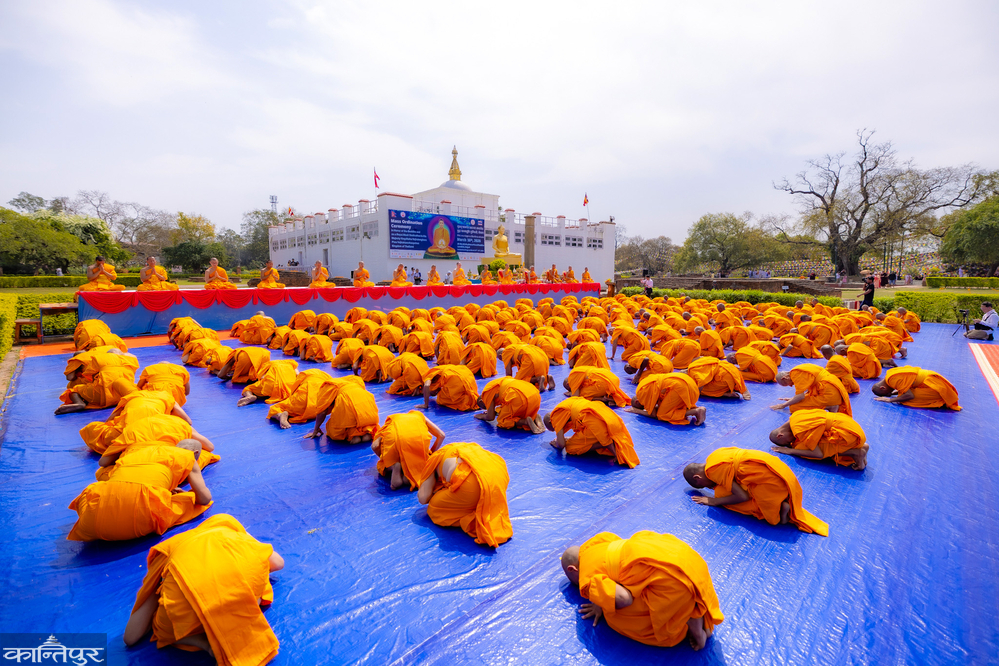
The monks were presented with the robes by Phra Than Bodhiong, President of the India-Nepal Thai Dhammadoot Association, Vice President Phra Rajbodhi Vajirasuddhi, Monk From Senabadi from Thailand, Dhamma Shobhan Mahasthabir, President of the All Nepal Monk Federation, and Monk Siri Vajira, Associate Professor of Lumbini Buddhist University. After receiving the robes, they become monks, or short-term monks. Shivaram Khyaju, who came from Bhaktapur, said that he became a monk because Buddhism is the way to be free from the cycle of worldly suffering and make life meaningful through the four ghatupas.
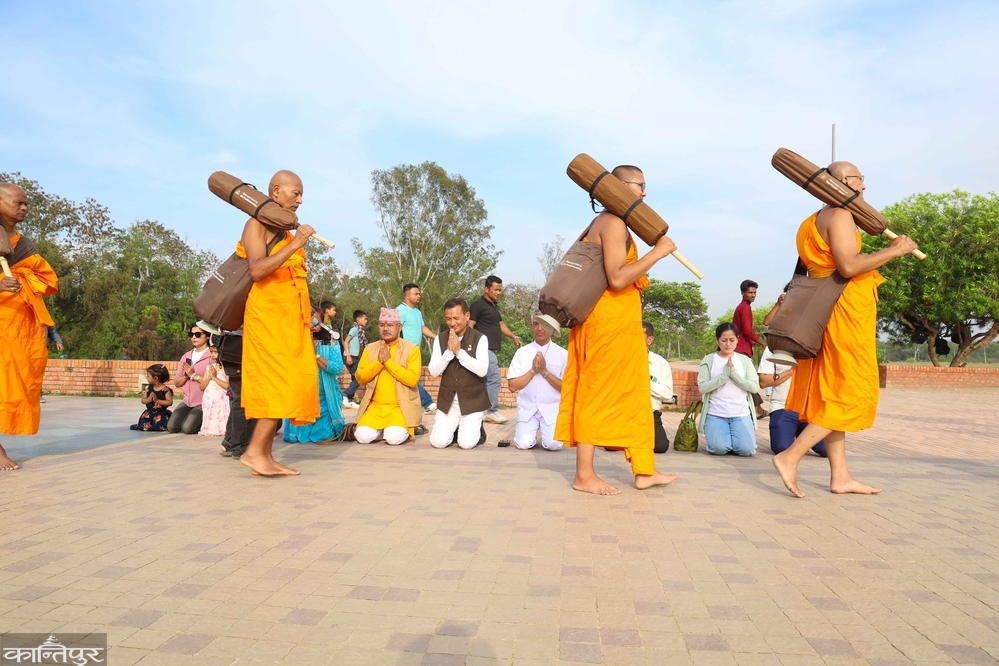
They became monks, the first step towards entering the monkhood. In the Theravada tradition, becoming a monk is the beginning of the monkhood. Upon entering the monkhood, they cut their hair and took the Buddhist teachings, the robe, and the robe. They became monks for 23 days. They were kept away from family comforts. Pom Narayan Poudel of Kapilvastu said that he became a monk because it helps to make human life meaningful by removing people's hatred, work and greed and bringing compassion, harmony, love and kindness. &
75 precepts, Vinaya, and 10 precepts were taught. The five-fold meditation was also taught. Information was given about the life of Buddha, the history of Lumbini, the importance of Buddhist education, and the sufferings and pains that Siddhartha Gautama experienced when he attained enlightenment. Similarly, knowledge was given about monk life, compassion, friendship, harmony, and brotherhood.
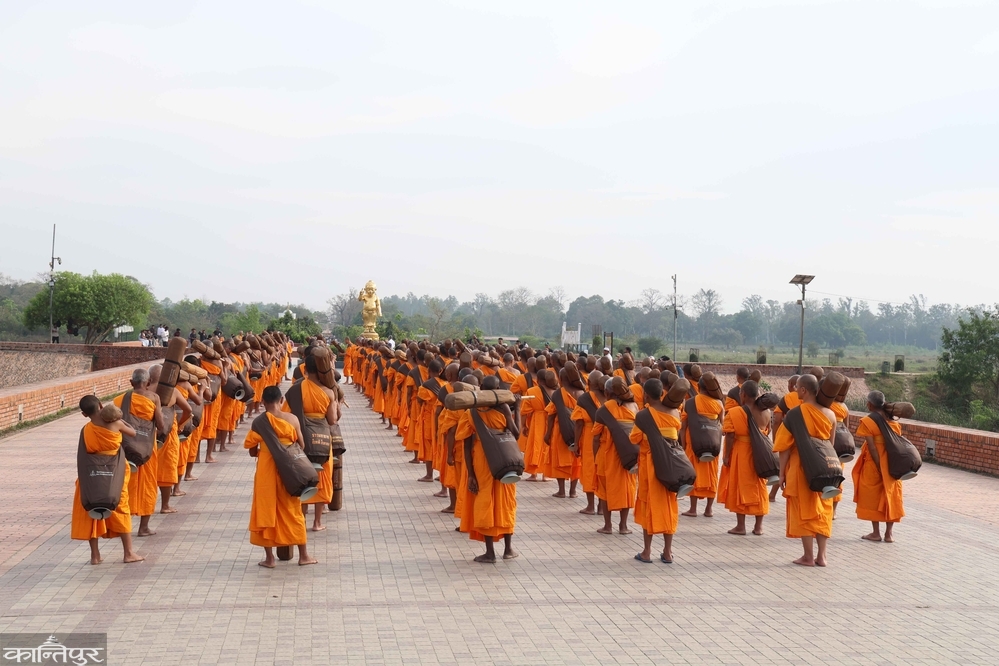
Samir Alemagar, who came from Palpa, said that he felt real happiness from the ordination and Dhamma teachings he followed while he was a monk. 'I became happy from the very soul when I practiced meditation more,' he said, 'its energy has motivated me to become a full-fledged monk.'
In Thailand, there is a Thai custom of becoming a monk, even for a day. There is a rule that the Thai king must become a monk for three months. 'Taking the ordination means being bound by discipline,' he said, 'this makes human life better.'
The Pravajya Camp was organized in Lumbini by the Thai India-Nepal Dhammadoot Association and the All Nepal Monks Federation. Participants ranged in age from 10 to 72. Farmers, teachers, businessmen, painters, lawyers, media workers and health workers had also become monks. The program, which teaches people to improve their lives and lead them on the path of positive change, is effective, said the executive director of the program, Rajesh Shakya.
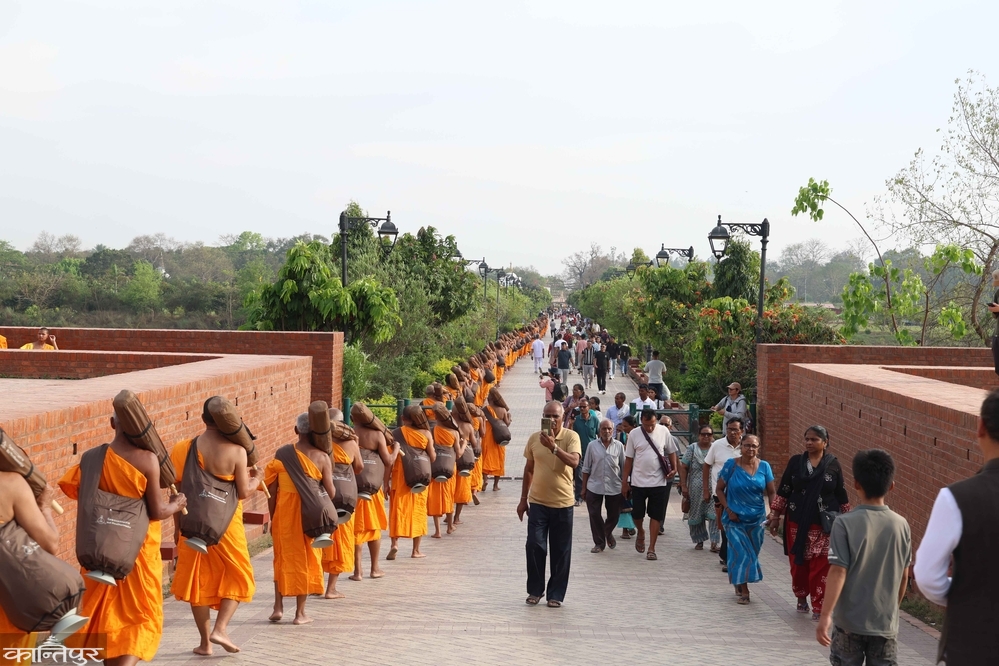
The monks were taken on a Dhamma Yatra to Lumbini, Bhairahawa, Devdaha and Ramgram. There, they were taught to meditate, beg and recite the Paritran. The Dhamma Yatra was organized in memory of the historic trek that Siddhartha Gautama made from Rajgir to Kapilvastu, the capital of the Shakya dynasty, along with 20,000 monks. The trek is also considered the world's first inner peace trek.
Dhamma Yatra, which is a combination of the words 'Dhamma' and 'Yatra', means 'a journey oriented towards skillful action'. The yatra is expected to increase religious and spiritual awareness and spread the message of tolerance, equality, discipline and peace in the society. The program, which began on Falgun 26, ended on Chaitra 17.

