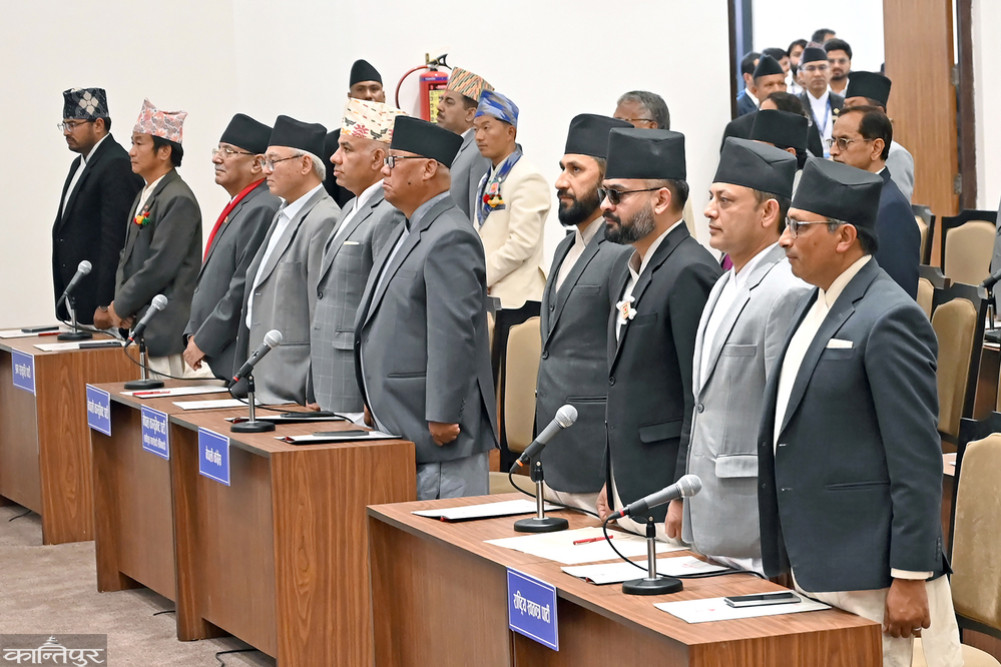
With the National Independent Party winning a mere two-thirds majority in the House of Representatives elections, the opposition in parliament has become very weak. Where the opposition is weak, there is a risk that democratic institutions will be in danger. Who will hold a strong government accountable in the current situation where civil society has also been shattered?
We use Google Cloud Translation Services. Google requires we provide the following disclaimer relating to use of this service:
This service may contain translations powered by Google. Google disclaims all warranties related to the translations, expressed or implied, including any warranties of accuracy, reliability, and any implied warranties of merchantability, fitness for a particular purpose, and noninfringement.
In the 21 Falgun elections, the National Independent Party (NIP) won 182 seats in the 275-member House of Representatives. This victory of the NIP is almost the same as the two-thirds majority won by the Congress in 2015. At that time, the Congress had won 74 seats in the 109-member assembly. In the seven elections held since the restoration of democracy in 2047, no party had achieved such a great success. With a huge majority in parliament, the government was formed under the leadership of senior NIP leader Balendra Shah without relying on any other party.
While the NIP is getting such a historic mandate, the opposition in parliament has become equally weak. The Congress has shrunk to 38 seats. UML 25, CPN 17, Shram Sanskriti 7 and RPP 5 seats are limited. Apart from the Congress, other parties could not even win 10 percent of the seats in parliament. In other words, if the Speaker decides on a proposal based on a voice vote, parties other than the Congress have lost the status of expressing disagreement and demanding a vote in the House. The question has arisen as to how such a weak presence of the opposition in the House will make a strong government accountable. At the same time, a debate has also begun on whether a strong government is an opportunity or a risk for democracy.
Opportunity and test of majority
Even after 30 governments were formed in the 34 years since the restoration of democracy, stability, political accountability and the rule of law have not been established. Recently, a 'musical chair' for power has been going on between the main leaders of the Congress, UML and Maoists. They kept sharing power and becoming the Prime Minister, and then changing. A strong and stable government had become a mirage for Nepalis. Not only in public institutions, but also in constitutional appointments were divided. At one time, the Cabinet itself even allocated a portion for the Chief Justice of the Supreme Court. After the 2079 elections, when the then Maoist Center Chairman Pushpa Kamal Dahal became the Prime Minister with the support of the UML, the Congress also supported him, making the parliament without an opposition. Even after the power-sharing agreement between the two major parties in the parliament, the Congress and the UML, began in Asad last year, the presence of the opposition in the parliament had become very weak. Due to the weakness of the opposition, the Congress and UML ruling coalition started taking arbitrary decisions, ignoring the aspirations of the citizens. Despite opposition from the citizen level, social media was suddenly banned. The youth, who were upset by such a political vicious circle and increasing unemployment, corruption, and the ban on social media, protested in the third week of last Bhadra. 76 people died in two days. The Oli government fell, and an interim government was formed under the leadership of Sushila Karki. While South Asian and other countries that have faced similar movements have not been able to hold elections for a long time, the elections were held in Nepal on time. And, the Rashtriya Swayamsevak Sangh (RSS) has taken the lead in the government with a huge majority in parliament. Along with this, the question has also arisen – how and who will keep such a strong executive in check?
The statement that the opposition is weak is not correct. Since 2064, the opposition had been systematically weakened by the politics of alliances and consensus. Instead, we are moving out of that and entering a political process where each party will test its own status: Bhaskar Gautam, political scientist Political scientist Bhaskar Gautam says that even if the government looks strong in terms of numbers, its work will determine how strong or weak it is. ‘This government is strong in terms of numbers. However, how strong or weak any government is is determined by what work it does and how it does it.’ He said that the first test of this government will be from within the party. ‘The first question of accountability arises from within the party,’ he said. ‘In the past, governments that reached a majority or two-thirds majority had fallen due to internal conflicts within the party rather than external factors.’
Similarly, constitutional expert Bipin Adhikari says that stability will come only if values are stable rather than the number of houses. ‘The number of houses alone does not provide stability and it is timeless. Stability will come only if our values reach a stable point. Only then, even if two or four people do wrong, the system will stop them,’ says Adhikari.
000
In a democracy, a majority or two-thirds majority in elections, no matter how many seats it wins, does not give the government unlimited power. The main foundations of democracy, such as balance of power and separation of powers, are also linked to the limited power of the government and accountability in its use. According to political scientists, the responsibility to listen to and address dissenting voices lies with the government, no matter how powerful it is. That is why the main concern now is whether Prime Minister Shah will show readiness to fulfill such a responsibility.
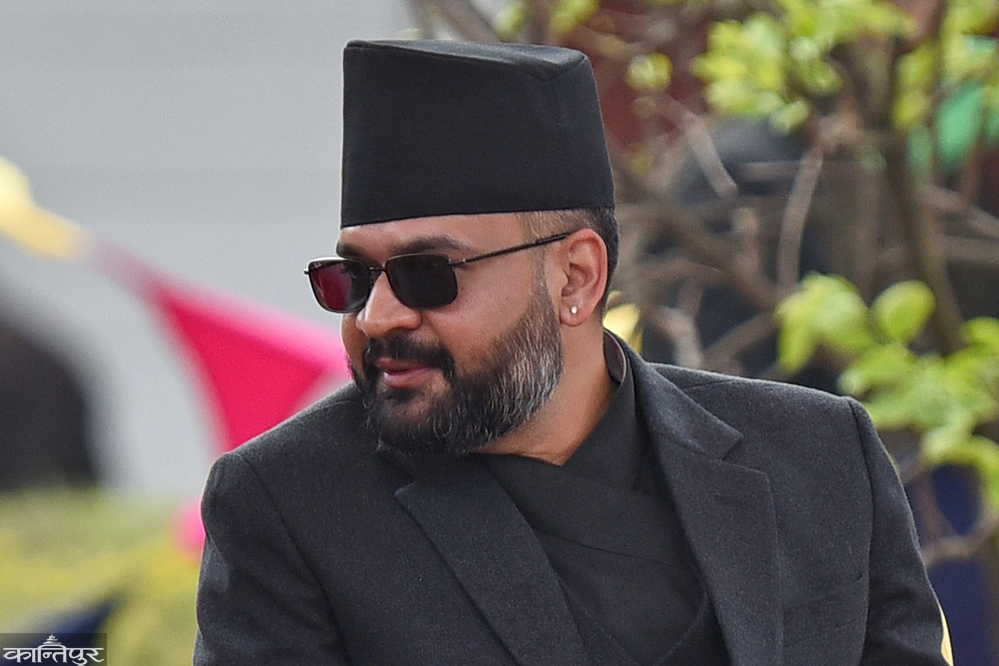
If Shah tries to walk alone without talking to anyone like he did when he was mayor, and that is his strategy of not being accountable, it will be a big problem. Whoever has a majority in parliament should show a democratic character. That is his responsibility: Sanken Rai, Indigenous Gen-G Collective/Gen-G Movement Alliance Those who have closely observed Shah's tenure as mayor of Kathmandu Metropolitan City are worried that the decision-making process is based on momentary personal impulses rather than institutional ones. Those who saw the mayor's insensitivity in the incident where the city police used unnecessary force on a sidewalk vendor are worried that Shah will move in the same way as prime minister. ‘If he tries to walk alone without communicating with anyone like he did when he was mayor and that is his strategy of not being accountable, it will be a big problem,’ says Sanken Rai of the Indigenous Gen-G Collective and Gen-G Movement Alliance, ‘The one who has the majority in parliament should show democratic character. That is his responsibility.’
The majority government considers itself the only true representative of the people. It always suppresses the voices of the marginalized, minorities and the opposition. That first weakens democratic institutions: Chandra Kishore, political analyst Political analyst Chandra Kishore says that the first blow of a numerically strong government is on democratic institutions around the world. ‘This government has come on the boat of populism. It risks ignoring the process in the name of focusing on results. We must not forget that in a democracy, method and process are as important as the result,’ he said. ‘The majority government considers itself the only true representative of the people.’ It amplifies the voices of the marginalized, minorities, and the opposition. Such a trend has been seen all over the world. They believe only what they see is true and first of all, they weaken democratic institutions.'
Stating that the opposition is currently weak in terms of both quality and number in the parliament and that it does not have the moral strength to go to the streets, analyst Chandra Kishore pointed out that in such a situation, there is a danger of democratic decay in Nepal as well.
It is not only Nepali political analysts who have seen such a danger. Scholars who have studied the decay of democracy around the world have drawn a common conclusion from years of comparative studies - nowadays, democracy is slowly dying not from the barrel of a gun, but from the hands of elected leaders. Harvard University political scientists Steven Levitsky and Daniel Ziblatt have written in their book 'How Democracies Die', 'Since the Cold War, many countries have lost democracy not through military intervention but through elected governments.' The constitution remains in place, and periodic elections are held. Many steps to undermine democracy appear formally legal, because they are approved by parliament or the courts. Such steps are often taken in the name of judicial reform, corruption control, or electoral reform. According to the authors, who describe the erosion of democracy as a gradual and often invisible process, this situation has created the illusion for many people that they are living in a democratic system for a long time.
Similarly, a recent study on Asian democracies by the international democracy and electoral support organization International Idea says, “Governments with a two-thirds majority or closer in parliament make major structural changes and then make those changes as difficult as possible to reverse.”
Political scientists call this ‘democratic backsliding.’ Democracy does not end all at once. It is eroded gradually. And, that process usually starts from where the opposition is very weak in the House. Outside the House, the media, civil society, and universities also become soft towards the government.
I am not very worried that all democratic institutions will collapse because of the strong government, our society is a 'vibrant democratic' society. Even if someone tries to encroach on civil rights, it will not succeed: Political scientist Uddhav Pyakurel According to the 2026 report of the V-Dem (Varieties of Democracy) organization, the presence of democracy in the world is weakening. The report states that the experience of democracy for a common person has reached the level of 1978. Political scientist Uddhav Pyakurel says that the Rashtriya Swayamsevak Sangh (RSS) that has taken the leadership of the government should remember important facts related to the election that are not visible on the surface. 'The votes received by the Rashtriya Swayamsevak Sangh (RSS) are 48 percent. That is, even among those who lined up to vote, the majority did not trust him,' Pyakurel said. 'If we look at this fact among all Nepalis, we should not forget the fact that even if we win two-thirds of the seats in parliament, there are just as many people outside who do not trust him. If we arrogantly believe that we have an absolute majority, there will be a problem.'
Pyakurel says that the Rashtriya Swayamsevak Sangh (RSS) emerged with the slogan that the old parties or leaders were not transparent and democratic, and that he should not repeat the same trend. 'After the 2074 elections, the UML and the Maoists were also close to two-thirds. A government that does not fulfill its promises but comes to play tricks with the people will fail, just as they failed,' he said.
Experts say that Prime Minister Shah's public statements about the judiciary as mayor have also raised concerns and interest.
The opposition is not only in the parliament. When the ruling party is big, the power to oppose is also big. BP was not removed by the number of seats in the parliament. The number of Congress and UML was not small either. Even when the Maoists and UML merged, they were big. Therefore, it should not be forgotten that the opposition forces are also outside the parliament: Bipin Adhikari, constitutional expert Shah had two direct confrontations with the court when he was the mayor of Kathmandu Metropolitan City. In Bhadra 2079, after the Supreme Court ordered not to demolish the structure of Norvic Hospital, Shah had said, "Now I will let the Supreme Court do the work of approving the map." Similarly, in Asad 2080, after the Patan High Court ordered against the metropolis's decision to ban the performance of an "objectionable dialogue" of the Indian film Adipurush, he had said, "Where the issue of the sovereignty and independence of the country comes, I will not obey any law or court." Contempt cases filed against him in both cases are still pending.
According to analysts, the question of how he deals with the judiciary as a strong executive will test Prime Minister Shah's accountability and commitment to the rule of law. Analyst Chandra Kishore says that judges should not live in a fearful mentality. Giving examples of neighboring countries where judges have started to fear a strong government, he says, 'They did not live in invisible fear. If judges do not speak their inner voice, the court becomes the porter of power. It appears as a puppet of the government.'
Congress President Gagan Thapa says that the responsibility and role of the opposition in a democracy is no less than that of the government. 'Moreover, when the government has more power, the opposition has more responsibility,' Thapa said while addressing the central committee on 10 Chaitra, 'We want immediate results. But not by compromising on the fundamentals of democracy.' नागरिकको स्वतन्त्रता, समानता, प्रेसको स्वतन्त्रता, अदालतको स्वतन्त्रता कुनै पनि चलाइनुहुन्न । थप विस्तार गर्नुपर्छ । त्यसमा कहींकतै सम्झौता नहोस् भनेर हामी झन् चनाखो भएर जिम्मेवारी पूरा गर्नुपर्ने छ ।’
स्थिर सरकार नभएर समस्या आयो भनेर जनताले रास्वपालाई भोट दिए । तर, प्रतिपक्ष कमजोर भएकाले सरकार जवाफदेही नहुने हो कि, अधिनायकवादी प्रवृत्ति देखिने हो कि: खुश्बु ओली, सांसद, राप्रपा राप्रपाकी सांसद खुश्बु ओली पनि यस्तै चिन्ता व्यक्त गर्छिन् । ‘स्थिर सरकार नभएर समस्या आयो भनेर जनताले रास्वपालाई भोट दिए,’ उनी भन्छिन्, ‘तर, प्रतिपक्ष कमजोर भएकाले सरकार जवाफदेही नहुने हो कि, अधिनायकवादी प्रवृत्ति देखिने हो कि भन्ने चिन्ता भने बढेको छ ।’ उनले एउटै व्यक्तिमा शक्तिकेन्द्रित हुने र फरक मतलाई बेवास्ता गर्ने अवस्था आएमा सानो संख्यामा भएका विपक्षी दलले पनि एक भएर सशक्त आवाज उठाउने बताइन् । ‘मिडिया छ, नागरिक समाज छ, सार्वजनिक मञ्चहरू छन्, न्यायपालिका स्वतन्त्र छ,’ उनले भनिन्, ‘परेका बेला कानुनी लडाइँ लड्न सकिन्छ । हामी संख्यामा सानो भए पनि आवाज उठाउन कमजोर छैनौं ।’
एमाले नेता सुहाङ नेम्वाङ भने सुरुमा रास्वपा र प्रधानमन्त्री शाहलाई शंकाको लाभ दिने पक्षमा रहेको बताउँछन् । भन्छन्, ‘उहाँहरूले देश र जनताको हितमा काम गर्छु भनेर आउनुभएको छ । कमजोरी गरेमा रचनात्मक खबरदारी त गरी नै हाल्छौं ।’
तर, नेम्वाङले भनेजस्तो ‘रचनात्मक खबरदारी’ गर्न पनि संस्थागत र संख्यात्मक बल चाहिन्छ । अहिले सदनमा विपक्षी दलहरूसँग त्यो बल थोरै मात्र छ । सबै विपक्षी एक ठाउँमा आउँदा पनि संसद्को केवल एकतिहाइ मात्र पुग्छन् । र, त्यो सानो बलले सरकारलाई जवाफदेही बनाउन सक्छ कि सक्दैन भन्ने सायद आउँदा केही महिनाभित्र नै देखिनेछ ।
०००
हंगेरी, भारत, अमेरिका र एल साल्भाडोर
कमजोर प्रतिपक्ष र बलियो सरकार भएको देशमा लोकतन्त्र कस्तो हुन्छ भन्ने प्रश्न अब सैद्धान्तिक विमर्शमा मात्रै सीमित रहेन । दक्षिण एसिया, युरोप, संयुक्त राज्य अमेरिका र दक्षिण अमेरिकाका चार देशको अनुभवमा यो प्रश्नको साझा उत्तर भेटिन्छ । हंगेरीमा सन् २०१० मा भिक्टर ओर्बानको फिडेज पार्टीले ५० प्रतिशतभन्दा बढी मतसहित संसद्मा दुईतिहाइ सिट ल्याएको थियो । त्यति ठूलो जनादेश लिएर प्रधानमन्त्री बनेका ओर्बानले एक हप्ताभित्र ८८ वटा कानुन पास गरे । संसद् सरकारले चाहेअनुसारका कानुन तुरुन्तै पास गर्ने औजार बन्यो । त्यसपछि ओर्बानले संविधान पुनर्लेखन गरे, न्यायाधीश प्रतिस्थापन गरे, स्वतन्त्र मिडियामाथि बजार र विज्ञापनको दबाब थोपरे । निर्वाचन क्षेत्रको पुनर्निर्धारण त्यसरी गरे, जसबाट विपक्षीले कम सिट प्राप्त गरुन् । सन् २०२२ मा युरोपेली संसद्ले हंगेरीलाई ‘इलेक्टोरल अटोक्र्यासी’ घोषणा गर्यो, अर्थात् त्यहाँ चुनाव त हुन्छ तर वास्तविक प्रतिस्पर्धा छैन र निर्वाचित अधिनायकवाद छ ।
विश्वकै सबैभन्दा ठूलो लोकतन्त्र भनिने भारतमा पनि नरेन्द्र मोदीले सन् २०१४ मा बहुमत ल्याएपछिका एक दशकमा त्यहाँको लोकतन्त्रको स्तर धेरै नै खस्किएको छ । विश्व प्रेस स्वतन्त्रता सूचकांकमा १८० देशमध्ये भारत १६१औं स्थानमा झरेको थियो । २०१४ पछिका ९ वर्षमा वित्तीय अनुसन्धान गर्ने निकाय ‘ईडी’ ले अनुसन्धान गरेका १२१ राजनीतिज्ञमध्ये ११५ जना विपक्षी दलका थिए । इन्डियन एक्सप्रेसको एक रिपोर्टका अनुसार भ्रष्टाचार अनुसन्धानको सामना गरिरहेका विपक्षी दलका नेताहरूमा २५ जना सत्ताधारी भारतीय जनता पार्टी (भाजपा) प्रवेश गर्दा २३ जनाले मुद्दाबाट छुटकारा पाए ।
त्यस्तै सन् २०२४ को आमनिर्वाचन नजिकिँदै जाँदा दिल्लीका मुख्यमन्त्री अरविन्द केजरीवाल पनि वित्तीय कारोबार अनुसन्धान गर्ने प्रमुख निकाय प्रवर्तन निर्देशनालय (ईडी) को फन्दामा परे । विपक्षी दल कांग्रेसको बैंक खाता फ्रिज गरियो । मोदी गुजरातको मुख्यमन्त्री छँदा भड्किएको दंगामा हजारौं मुस्लिमको ज्यान जाने घटनामा केन्द्रित डकुमेन्ट्री सार्वजनिक गरेको केही समयपछि नै बीबीसीको कार्यालयमा छापा मारियो, साथै बीबीसीलाई उक्त डकुमेन्ट्री हटाउन बाध्य पारियो । त्यसको समय पछि बीबीसीले भारत शाखा बन्द गरेर ‘कलेक्टिभ न्युज’ सँगको साझेदारीमा समाचार सामग्री प्रकाशन र प्रसारण गर्दै आएको छ । त्यसअघि दिल्ली दंगा र जम्मुकश्मीरमा सरकारबाट भएका मानवअधिकार उल्लंघनका घटनामा आधारित प्रतिवेदन प्रकाशित गरेको भन्दै मोदी सरकारले ३० सेप्टेम्बर २०२० मा एम्नेस्टी इन्टरनेसनललाई भारतमा प्रतिबन्ध नै लगायो ।
मोदी सरकारले लोकतन्त्रका प्रमुख आधारहरूलाई कमजोर बनाउन चालेका यस्तै कदमहरूकै कारण फ्रिडम हाउसले २०२१ मा पहिलो पटक भारतको लोकतन्त्रलाई ‘स्वतन्त्र’ बाट ‘आंशिक रूपमा स्वतन्त्र’ श्रेणीमा झारेको थियो । अध्येताहरूका अनुसार मोदीले सत्तामा आएको सुरुआती वर्षमा संस्थाहरू एकैचोटि भत्काएनन्, बरु बिस्तारै एक–एक गरेर केन्द्रीकरण गर्दै गए अनि एजेन्सीहरूलाई विपक्षमाथि हतियारका रूपमा प्रयोग गरे ।
अमेरिकी राष्ट्रपति डोनाल्ड ट्रम्पको दोस्रो कार्यकाल पनि अर्को उदाहरण हो । सन् २०२५ मा अमेरिका द्रुत गतिमा नागरिक स्वतन्त्रता खस्किएका देशहरूको सूचीमा परेको छ । संसद्ले पारित गरेका कानुन र बजेटहरूलाई समेत बेवास्ता गर्दै ट्रम्पले तीव्र गतिमा संघीय एजेन्सीहरू खारेज गरेका छन् । न्यायाधीशहरूलाई राजनीतिक धम्की दिने कुरा सामान्य भइसकेको छ । सार्वजनिक प्रदर्शनहरू रिपोर्टिङ गर्न पुगेका पत्रकारलाई पक्राउ गर्ने तथा घरमा छापा मार्ने र ल्यापटपजस्ता निजी उपकरण जफत गर्ने घटना दोहोरिन थालेका छन् । ट्यारिफ (भन्सार) वृद्धि वा युद्धको घोषणामा कंग्रेस (प्रतिनिधिसभा) को समर्थन लिने नियम र परम्परा तोडिसकेका छन् ।
यस्तै, दक्षिण अमेरिकी मुलुक एल साल्भाडोरका राष्ट्रपति नायिब बुकेलेको पार्टीले सन् २०२१ मा व्यवस्थापिकामा दुईतिहाइ बहुमत पाएको थियो । त्यही दिन बुकेलेका सहयोगीहरूले सर्वोच्च अदालतका सबै पाँच न्यायाधीश र महान्यायाधिवक्तालाई हटाएर आफ्नै मान्छे भर्ती गरे । सन् २०१९ देखि २०२५ सम्ममा आइपुग्दा एल साल्भाडोर विश्व प्रेस स्वतन्त्रता सूचकांकमा ६१ स्थानमा ओर्लियो । तर, देशभित्र बुकेलेको लोकप्रियता अझै पनि ९० प्रतिशतभन्दा माथि छ । त्यहाँका जनताले उनलाई अपराधविरोधी नेताका रूपमा हेर्छन् तर लोकतान्त्रिक संस्थाहरू एक–एक गरेर खिइँदै गएका छन् ।
राजनीतिशास्त्री प्याकुरेल भने नेपालमा यी मुलुकहरू जस्तो खराब अवस्था नआउला भन्नेमा आशावादी छन् । ‘बलियो सरकार आएकाले सबै प्रजातान्त्रिक संस्थाहरू धराशायी होलान् भनेर म धेरै चिन्तित छैन,’ उनले भने, हाम्रो समाज भाइब्रेन्ट डेमोक्रेटिक समाज हो । नागरिक अधिकार अतिक्रमण गर्न कसैले प्रयास मात्र गर्यो भने पनि त्यो सफल हुँदैन ।’
संविधानविद् अधिकारी पनि नेपालमा त्यति खराब अवस्था नआइहाल्नेमा आशावादी सुनिन्छन् । ‘यो वा कुनै पनि सरकारले मिडियामाथि वा नागरिकका अधिकारमाथि अतिक्रमण गर्नै सक्दैन,’ उनले भने, ‘हाम्रो इतिहासले देखाएको छ, त्यस्तो भएमा हुने जनताको विरोधलाई सत्ताले थेग्न सक्दैन ।’
०००
लोकतन्त्रको नयाँ अध्याय कि दुर्घटना ?
नेपालको संविधानभित्र केही त्यस्ता प्रावधान छन्, जसलाई दुईतिहाइको सांसद भएको दलले ‘उपयोग’ गरेमा सत्तालाई सन्तुलनमा राख्ने निकायहरूमाथि हस्तक्षेप गर्न सक्छ । संविधानको धारा १०१ (२) अनुसार, सर्वोच्च अदालतका प्रधानन्यायाधीश र न्यायाधीशहरू, न्याय परिषद्का सदस्य तथा संवैधानिक निकायका प्रमुख र पदाधिकारीहरूलाई प्रतिनिधिसभाका दुईतिहाइ सदस्यले बर्खास्त गर्न सक्छन् । रास्वपासँग अहिले प्रतिनिधिसभामा १८२ सिट छ । अर्थात् २७५ सदस्यीय सभामा थप दुई सांसद जुटाउन सकेमा रास्वपाले प्रधानन्यायाधीशलगायत जुनसुकै संवैधानिक पदाधिकारीलाई पदमुक्त गर्ने सामर्थ्य राख्नेछ ।
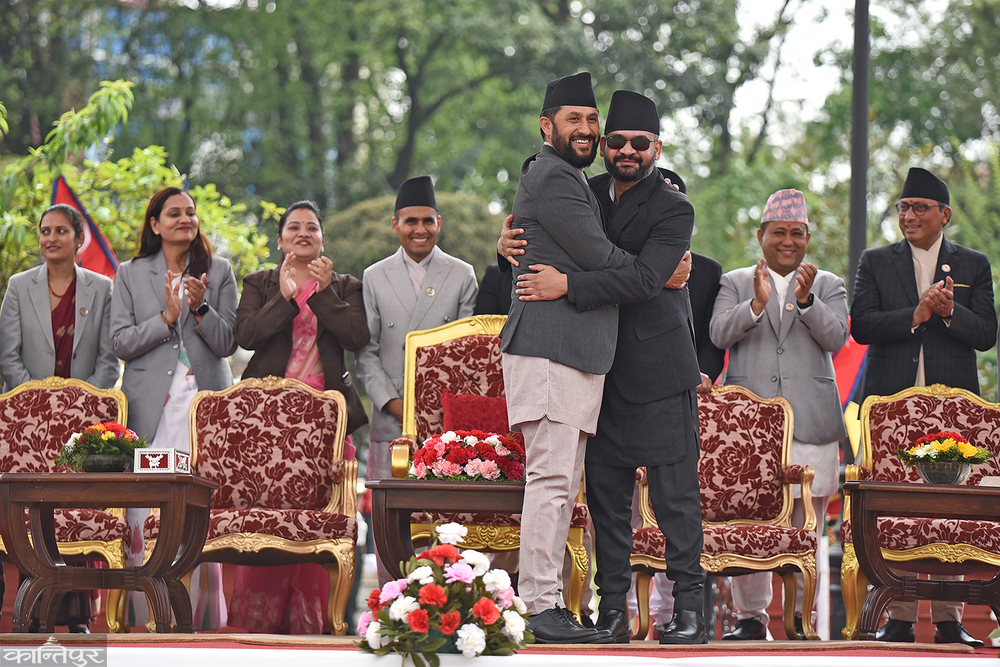
रास्वपा संसद्मा यस्तो शक्तिशाली अस्त्र लिएर उपस्थित हुँदा उसको कार्यकारी शक्तिलाई सन्तुलनमा राख्ने दायित्व अदालतले कसरी निर्वाह गर्ला भन्ने प्रश्न अहिले खडा भएको छ । यसअघि सांसदमा दुईतिहाइ बहुमत नहुँदा पनि कांग्रेस र माओवादीका सांसदले तत्कालीन प्रधानन्यायाधीश सुशीला कार्कीविरुद्ध महाभियोग प्रस्ताव दर्ता गरेर उनलाई निलम्बन गरेका थिए । पछि चोलेन्द्रशमशेर जबराविरुद्ध संसद्मा दर्ता गरिएको महाभियोग प्रस्ताव पनि जबरा सेवानिवृत्त नहुँदासम्म टुंगोमा पुर्याइएन । त्यस्तो संवैधानिक व्यवस्था न्यायपालिकामाथि दबाबको हतियार बन्न सक्ने सम्भावनाबारे न्यायिक संस्थाहरूले समेत चिन्ता व्यक्त गर्दै आएका छन् ।
इकोनोमिस्ट इन्टेलिजेन्स युनिटको ‘लोकतन्त्र सूचकांक– २०२४’ मा १६७ मुलुकमध्ये नेपाल ९६ औं स्थानमा छ, जसलाई ‘हाइब्रिड रिजिम’ का रूपमा वर्गीकरण गरिएको छ । जसको अर्थ हुन्छ– मुलुकमा पूर्ण लोकतान्त्रिक व्यवस्था छैन, चुनाव त हुन्छन् तर वास्तविक लोकतान्त्रिक प्रतिस्पर्धा र संस्थागत स्वतन्त्रता गम्भीर रूपमा कमजोर छ । संवैधानिक आयोगहरूप्रति जनविश्वास खस्किएकाले कार्यकारी शक्तिलाई उच्च मनोबलका साथ निगरानी गर्ने आत्मविश्वास छैन । न्यायपालिका लामो समयदेखि अनेक प्रयोग, भ्रष्टाचार, राजनीतिक हस्तक्षेप र संक्रमणबाट गुज्रिरहेको छ । फ्रिडम हाउसको सन् २०२५ को प्रतिवेदनले नेपालको राजनीति, सरकार र न्यायपालिका व्यापक भ्रष्टाचारबाट आक्रान्त बनेको लेखेको छ । साथै राज्यले कहिलेकाहीँ सर्वोच्च अदालतका फैसला र राष्ट्रिय मानवअधिकार आयोगका सिफारिसलाई समेत बेवास्ता गर्ने गरेको समेत प्रतिवेदनले औंल्याएको छ ।
त्यस्तै सरकारको जवाफदेहिता सुनिश्चित गर्ने मुख्य संयन्त्रहरूमा संसदीय समितिहरू पनि एक हुन् । ती समितिहरूमा सदस्य संख्या प्रतिनिधिसभामा दलहरूको हैसियतको अनुपातमा हुन्छ । अर्थात्, अधिकांश समितिहरूमा रास्वपाकै बहुमत हुनेछ । महाभियोग सिफारिस समितिले प्रधानन्यायाधीश वा संवैधानिक निकायका प्रमुखविरुद्धको महाभियोग प्रस्तावमा छानबिन गरी सिफारिस गर्छ, त्यही समितिमा पनि रास्वपाको बहुमत हुनेछ । यसले कार्यपालिका, व्यवस्थापिका र न्यायपालिकाबीचको सन्तुलन कायम राख्ने संयन्त्रलाई नै कार्यपालिकाको अनुकूलमा राख्ने जोखिम छ ।
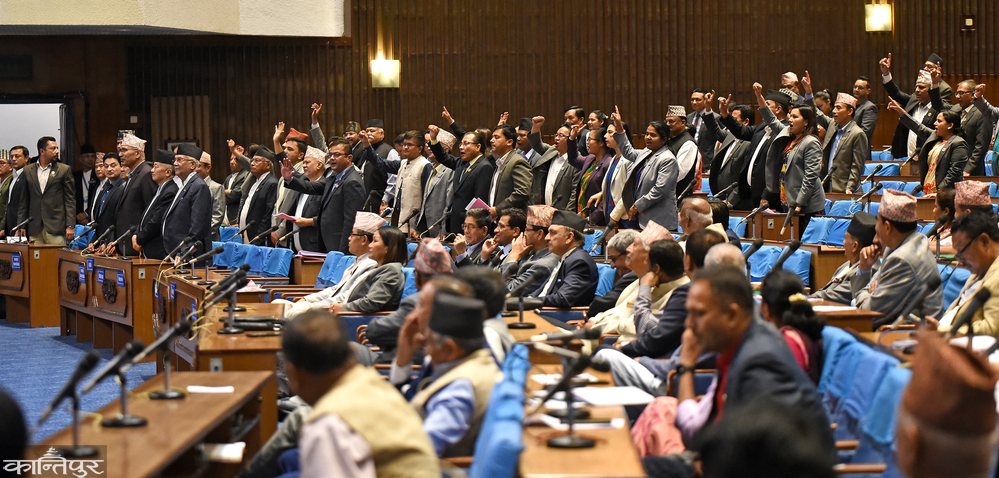
जनमतसंग्रहको निर्णय, संविधान संशोधन वा राष्ट्रपति तथा उपराष्ट्रपतिमाथि महाभियोग लगाउन भने प्रतिनिधिसभाको मात्र दुईतिहाइले पुग्ने छैन । त्यसका लागि संघीय संसद्का दुवै सदनमा दुईतिहाइ चाहिन्छ । राष्ट्रिय सभामा रास्वपाको प्रतिनिधित्व छैन । तर न्यायपालिका र संवैधानिक निकायहरूको स्वायत्तता र मनोबलमा प्रत्यक्ष प्रभाव पार्न सक्ने संयन्त्रहरू भने उक्त बहुमतको दबाबमा रहनेछन् ।
रिपोर्टर्स विदाउट बोडर्सको सन् २०२५ को विश्व प्रेस स्वतन्त्रता सूचकांकमा नेपाल ९० औं स्थानमा छ, अघिल्लो वर्षको ७४ औंबाट एक वर्षमै १६ स्थान तल झरेको छ । पत्रकारको सुरक्षाको मामिलामा नेपाल १८० मुलुकहरूमध्ये १२० औं स्थानमा छ । यसरी एकातर्फ स्वतन्त्र मिडियाको अवस्था कमजोर बनेको छ भने अर्कोतर्फ सरकार आफैंसँग मिडियाको ठूलो स्वामित्व छ । रेडियो नेपाल, नेपाल टीभी, गोरखापत्र, रासस जस्ता सञ्चारमाध्यम उसको स्वामित्वमा छन् भने स्वतन्त्र मिडियाहरूले छाप्ने विज्ञापनको मुख्य हिस्सा पनि सरकारकै नियन्त्रण छ ।
नेपालमा यस पटकको निर्वाचनमार्फत सदनमा प्रतिपक्षको उपस्थिति मात्र कमजोर नभएर प्रेस, नागरिक समाज र पेसागत संस्थाहरूको स्वायत्तता पनि ‘जोखिम’ मा परेको छ । तर, राजनीतिशास्त्री गौतम यो सन्दर्भलाई फरक कोणबाट हेर्छन् । उनी ‘प्रतिपक्ष कमजोर भएको हो’ भन्ने भाष्यसँग सहमत छैनन् । ‘२०६४ यता नै प्रतिपक्षलाई नियोजित रूपमा गठबन्धनको र सहमतिको राजनीतिले कमजोर बनाएको थियो । बरु त्यसबाट हामीलाई अलिकति ठाउँ खुलेको छ,’ उनी भन्छन्, ‘पहिलो पटक सहमतिको राजनीतिबाट बाहिर निस्केर प्रत्येक दलको आआफ्नो हैसियत परीक्षण हुने राजनीतिक प्रक्रियामा प्रवेश गर्दै छौं । प्रतिपक्षले संसद्भित्र कसरी काम गर्छ भन्ने आउँदो तीन–चार महिनामै देखिन थाल्नेछ ।’
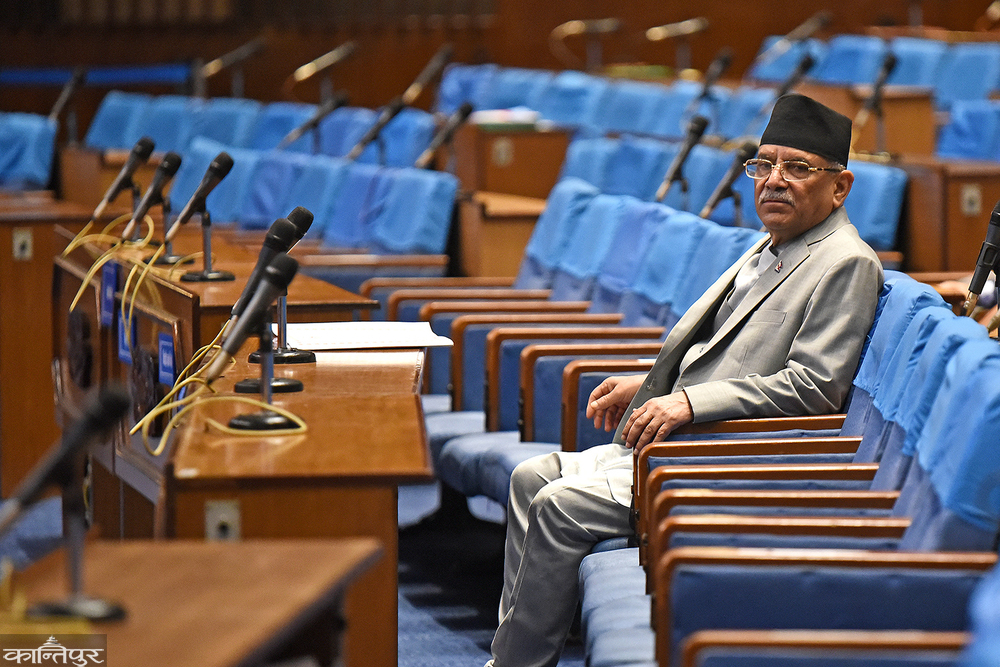
राजनीतिशास्त्री प्याकुरेल भने लोकतन्त्र संख्याको खेल मात्र नभएर संवाद, छलफल, पारदर्शिता र निर्णय प्रक्रियामा सबैको अनुहार देखिने प्रक्रिया भएको बताउँदै रास्वपालाई उसको वाचा नबिर्सन सम्झाउँछन् । भन्छन्, ‘मूल्य मान्यताका आधारमा पुरानो राजनीतिलाई चुनौती दिएर रास्वपाको उदय भयो । अब उसले ती कुरा आफैंमा लागू गर्नुपर्छ ।’ संविधानविद् अधिकारी सुरुमा विवादास्पद विषयहरूमा अल्झिँदा ठूलो जनमत भाँडिन सक्ने बताउँदै सरकारलाई कानुनको शासन, समानता र न्याय प्रवाहमा केन्द्रित हुन सुझाउँछन् । ‘प्रतिपक्ष संसद्मा मात्रै हुन्छ भन्ने होइन । सत्ता पक्ष ठूलो हुँदा विरोध गर्ने शक्ति पनि ठूलै हुन्छ,’ उनले भने, ‘बीपीलाई संसद्को संख्याले हटाएको होइन । कांग्रेस र एमालेको संख्या पनि कम थिएन । माओवादी र एमाले मिल्दा पनि ठूलै थिए । त्यसैले विपक्षी शक्तिहरू संसद् बाहिर पनि हुन्छन् भन्ने बिर्सन भएन ।’
मुलुकले लामो समयपछि बलियो सरकार पाएको छ । अब सरकारलाई शक्ति सन्तुलनमा राख्ने संयन्त्रहरूलाई पनि शक्तिशाली बनाइन्छ कि कमजोर पारिन्छ भन्ने चासो सर्वत्र छ । सरकारले आफ्नो कामबाट यसको जवाफ दिनेछ । त्यसले नै देखाउनेछ– यस पटकको निर्वाचनको नतिजा देशमा लोकतन्त्रको नयाँ अध्यायका रूपमा आएको थियो वा एक जोखिमपूर्ण दुर्घटनाका रूपमा ।