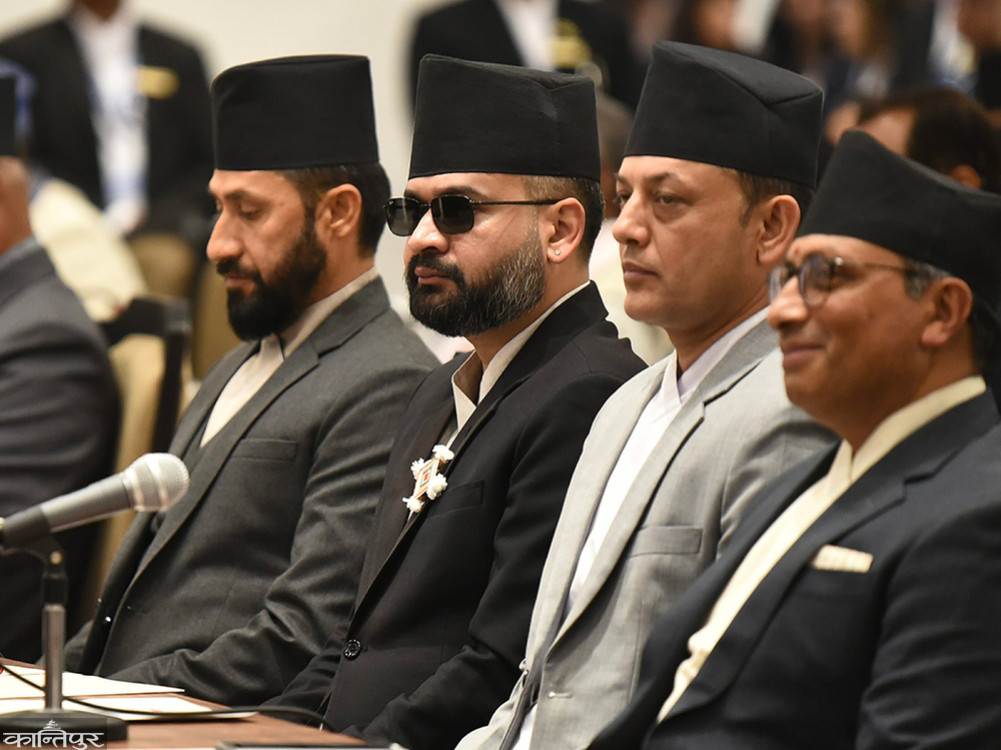
It is believed that wearing a Silam Sakma amulet will prevent premature death, and keeping its statue in the home will protect against natural disasters.
We use Google Cloud Translation Services. Google requires we provide the following disclaimer relating to use of this service:
This service may contain translations powered by Google. Google disclaims all warranties related to the translations, expressed or implied, including any warranties of accuracy, reliability, and any implied warranties of merchantability, fitness for a particular purpose, and noninfringement.
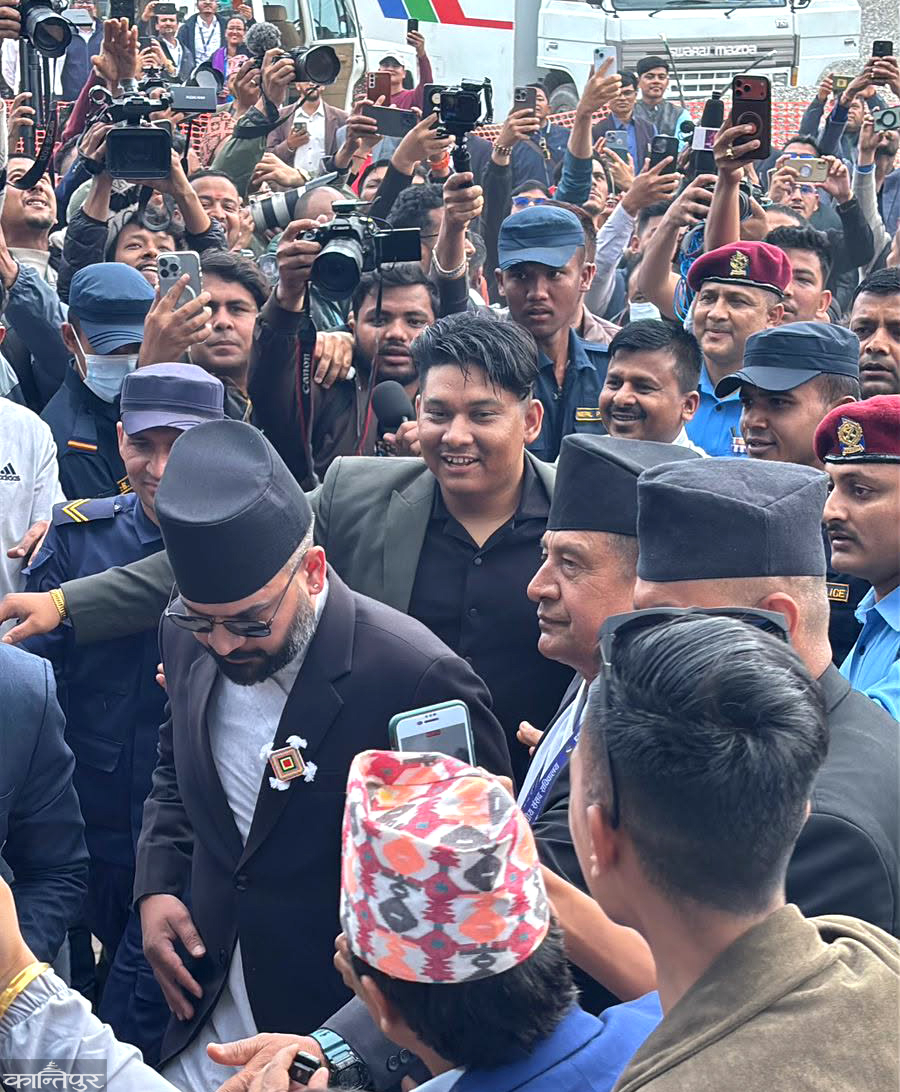
Balendra Shah (Balen), who was nominated as the Prime Minister by the National Independent Party, arrived at the oath-taking ceremony of the MP wearing a daura-suruwal, a black cap, and a coat. He also wore a Silam Sakma on his left chest.
Silam Sakma is a traditional and cultural symbol of the Limbu community. This community considers Silam Sakma as a protective shield. The history of Silam Sakma is linked to a myth that it saved from a great disaster.
In the Limbu language, ‘Si’ means death, ‘Lam’ means path, and ‘Sakma’ means to block. Overall, Silam Sakma means to block the path of death.
Earlier, ghungring was made from the trunk of a bamboo species. Recently, Silam Sakma has been made using thread. Apart from black, blue, gray, white, red, yellow, and green colors are used in it.
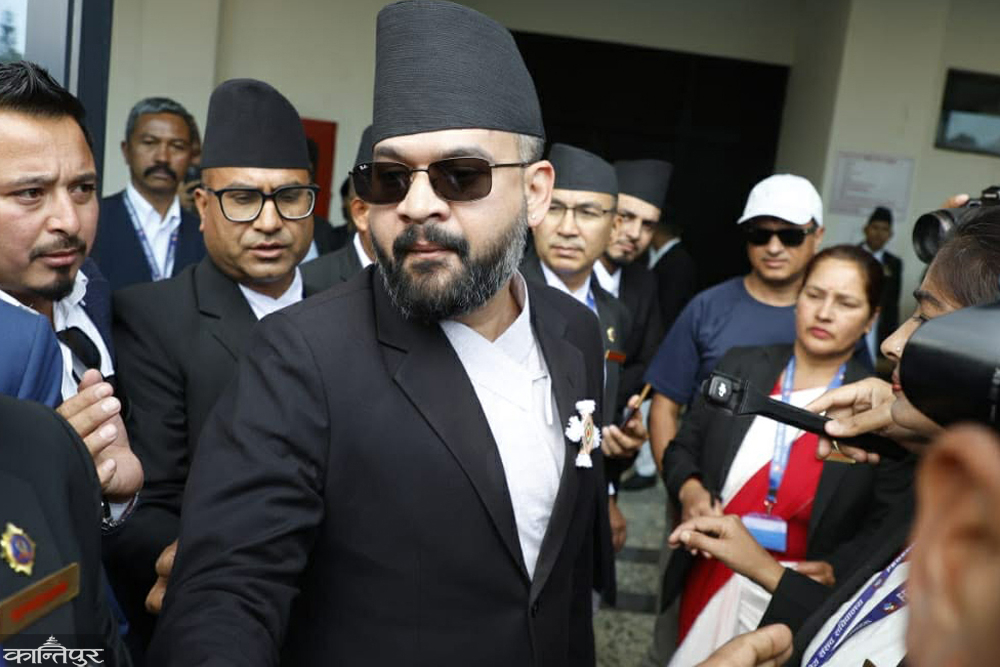
Mundhum expert Hark Kerung says that all eight colors are used to weave Silam Sakma as symbols of the eight planets in the solar system: Mercury, Venus, Earth, Mars, Jupiter, Saturn, Arun, and Varun. Silam Sakma, which was previously used as a Mundhum, has now also started being used as a fashion item. Especially in the Koshi region, guests have recently started being welcomed at public events by wearing Silam Sakma instead of Khada and Batch.
Silam Sakma is widely used in Panchthar, Taplejung, Ilam, Morang, Sunsari, and Dhankuta of the Limbu-dominated Koshi region.
Silam Sakma is worn on the left chest. It is believed that wearing Silam Sakma on the chest prevents premature death, and keeping a statue of Silam Sakma at home protects against natural disasters.
The heart itself indicates whether a person is alive or not. That is why Silam Sakma is worn on the left chest as a protective shield for the heart. It is believed that it prevents death and protects against epidemics.
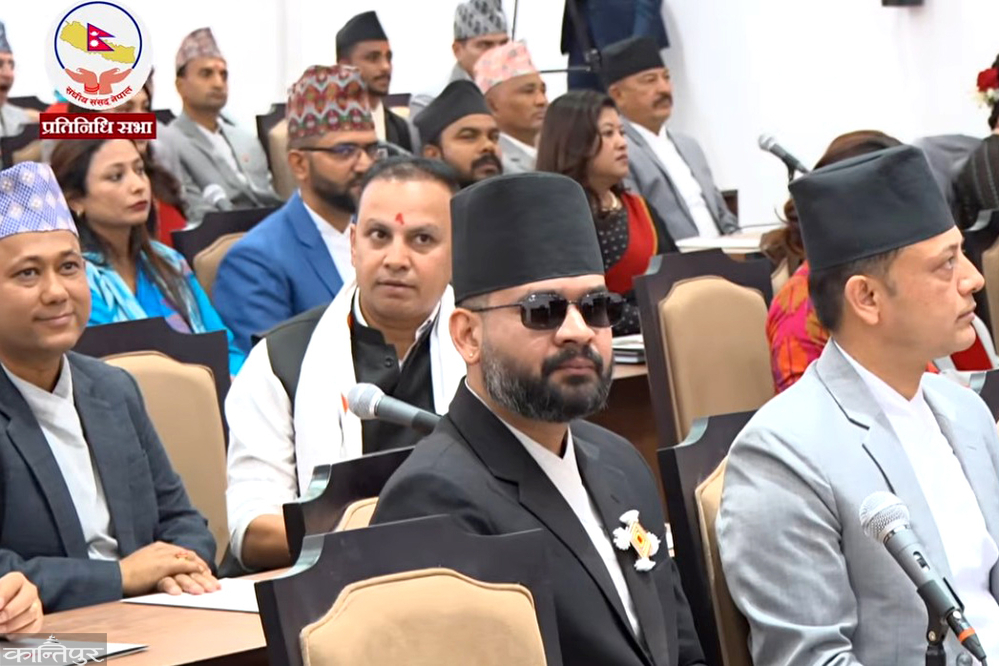
Now, Silam Sakma has traveled not only in Koshi but all over the world. It has spread from the Kathmandu Valley, where the Limbu community lives, to countries such as Britain, Hong Kong, Singapore, and America. It is used in public programs.
The image of Silam Sakma has been decorated in a frame as a token of love given to guests at public programs organized by various organizations including Kirant Yakthung Chumlung and Limbu.
Silam Sakma sign with Balen
Harak Sampang, who was elected as the mayor of Dharan Sub-metropolitan City after contesting the independent election, met the then mayor of Kathmandu Metropolitan City Balen (also an independent) for the first time on Chaitra 15, 2079 in Kathmandu. At that time, he exchanged intimacy by putting on Silam Sakma.
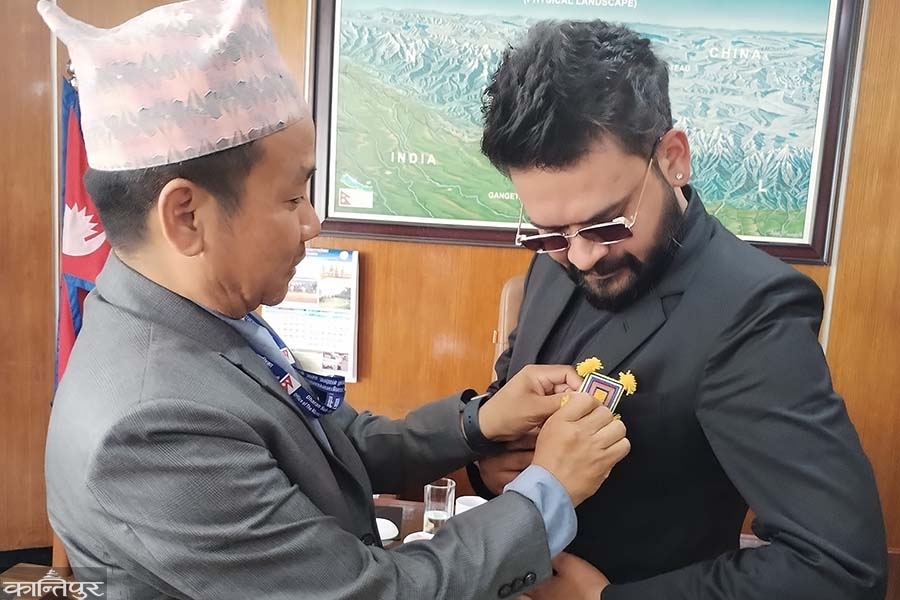
According to sources close to Balen, he first put on Silam Sakma from Harak's hand. This intimacy initially turned into a deep friendship between the two. But recently, that cordiality has decreased. There has been a lot of bickering between them on social media. Coincidentally, both of them have been elected MPs from different parties this time. Balen from the Rashtriya Swayamsevak Sansthan Party, Hark from the Shram Sanskriti Party.
Hark and some MPs also wore the Silam Sakma during today's oath-taking ceremony.
The myth of Silam Sakma
According to historian and Chancellor of Yakthung Pragya Pratishthan Rajendra Kumar Jabegu, the beginning of the use of Silam Sakma is linked to a legend. In the sixth century BC, an epidemic spread in the village of Sawa Yethang (Eight Kings). Despite trying many methods, it could not be controlled. Many people died due to the epidemic. Among them, many children died in Ketinhangba and Ketinhang.
The couple felt sorry for their lineage. They went to Sodhungen Lepmuhang with the hope of finding a way to avoid the epidemic. They asked for a way to avoid and save from the epidemic. After listening to their request, Lepmuhang promised to send Fenjiri Fendsamba and his disciple Fendsamba back home on an auspicious day.
After a few days, Fendsamba and his disciple Fendsamba came to Ketinhangba and Ketinhangma. They scratched the stick and made holes on both sides and connected the two sticks and tied 9 knots with merihembang khi? (thread) to create the Silam Sakma. They buried the Silam Sakma on the stove (kallang) chanting the Mundhum mantra.
Then they came to the stove and chanted the Mundhum mantra and buried the Silam Sakma. Then the epidemic stopped. People stopped dying.
Since then, the instrument has been used in rituals (tangsing) by chanting the mantra Silam Sakma, which means blocking the path of death.