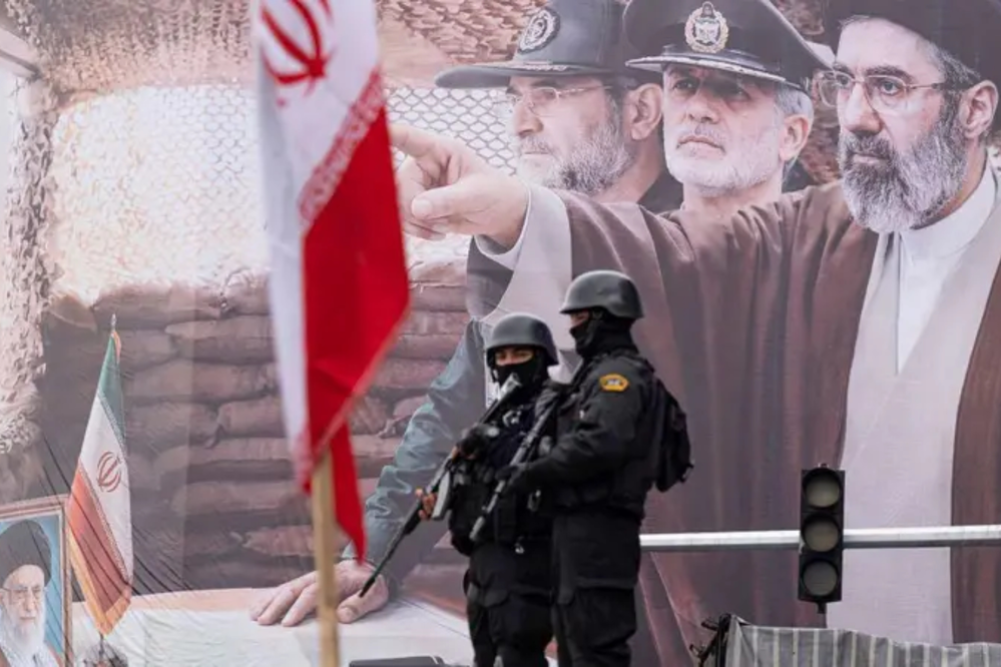
US President Trump gave Iran 48 hours to fully reopen the Strait of Hormuz, starting on February 28, the start of the war on Iran.
We use Google Cloud Translation Services. Google requires we provide the following disclaimer relating to use of this service:
This service may contain translations powered by Google. Google disclaims all warranties related to the translations, expressed or implied, including any warranties of accuracy, reliability, and any implied warranties of merchantability, fitness for a particular purpose, and noninfringement.
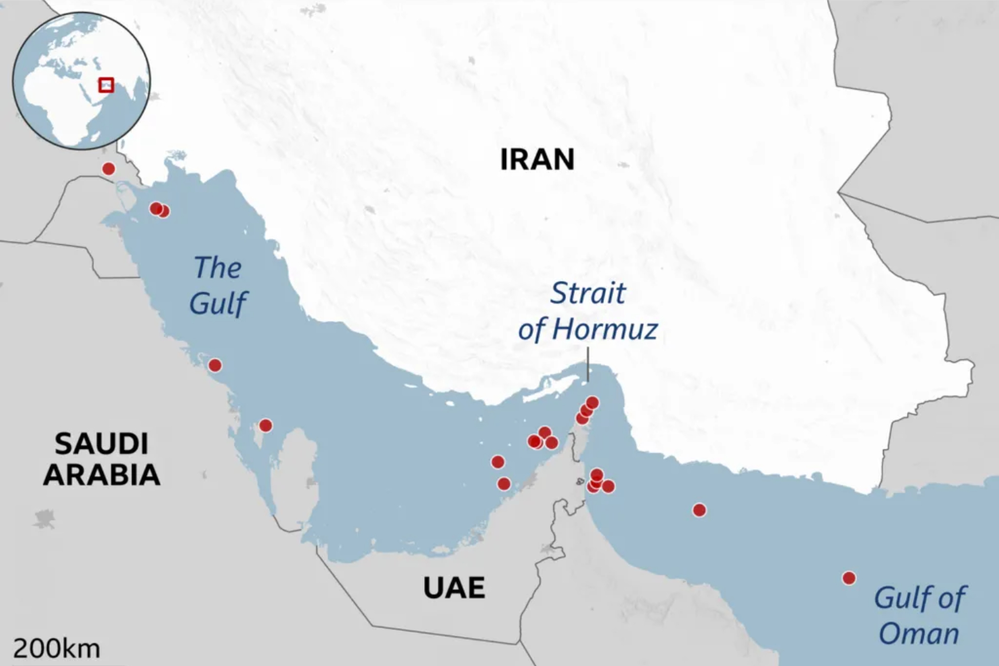
Iran's military warned on Sunday that it would completely close the strategically important Strait of Hormuz if US President Donald Trump targeted the country's power plants.
US President Trump gave Iran a 48-hour deadline to fully reopen the Strait of Hormuz since the start of the war on Iran on February 28. The war has since spread to the Middle East, with Iran responding with drone and missile attacks on Israel and US interests in the region.
'If the United States threatens Iran's power plants, the Strait of Hormuz will be completely closed, and it will not reopen until our destroyed power plants are rebuilt,' the military's operational command, Khatam al-Anbiya, said in a statement.
The Iranian military said, ‘Other measures will be taken to protect the interests of our country and our nation.’
Since the start of the war, traffic through the waterway, which carries 20 percent of the world’s crude oil and liquefied natural gas, has been almost completely halted.
According to analytics firm Kepler, relatively few ships have been able to supply it. This is about five percent of the number before the war.
The Iranian military has attacked many ships and said it is impossible for ships to heed ‘warnings’ not to pass through the waterway.
In recent days, Iran has allowed some ships from countries it considers friendly to pass through, while threatening to block ships from countries that have joined in “aggression” against it.
Iran’s parliament said it was planning to impose a tax on ships passing through the central part of the strait, after parliament speaker Mohammad Bagher Ghalibaf said maritime traffic would not return to “pre-war conditions.”