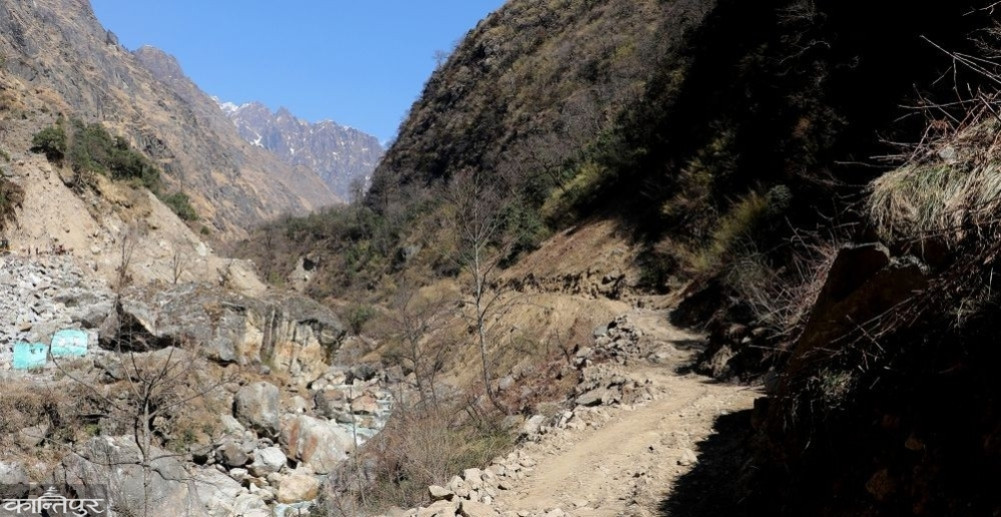
Following the directives of the Indian Ministry of External Affairs, the Pithoragarh administration has made necessary preparations, planning to operate business from June to September.
We use Google Cloud Translation Services. Google requires we provide the following disclaimer relating to use of this service:
This service may contain translations powered by Google. Google disclaims all warranties related to the translations, expressed or implied, including any warranties of accuracy, reliability, and any implied warranties of merchantability, fitness for a particular purpose, and noninfringement.
Despite Nepal's opposition, India has prepared for trade with China through the Lipulekh Pass. Lipulekh Pass is a land within 56 kilometers of Nepal's western border, Limpiyadhura. The Indian news agency PTI reported that the Ministry of External Affairs of India has already given permission for trade through this land.
'The process of resuming border trade has moved forward after the Ministry of External Affairs issued a no-objection letter,' PTI reported. 'Foreign Secretary Vikram Misri has written a letter to Uttarakhand Chief Secretary Anand Bardhan asking him to restore trade through the Lipulekh Pass.' The report quoted Pithoragarh District Magistrate Ashish Bhatgain as saying that preparations for trade have begun following the Center's directive. The season for trade through the Lipulekh Pass is generally considered to be from June to September.
Nepal has included Limpiyadhura, Lipulekh and Kalapani east of the Mahakali River in its official map. However, ignoring this, the two neighboring countries to the north and south have been making agreements on when to trade through Nepali territory and when to open the Kailash Mansarovar pilgrimage. During the visit of Chinese Foreign Minister Wang Yi to India on 2 and 3 Bhadra, an agreement was reached between the two countries to open border trade in talks with his Indian counterpart S. Jaishankar.
The Nepalese government had immediately objected to the agreement between India and China. The Ministry of Foreign Affairs had reiterated that Limpiyadhura, Lipulekh and Kalapani east of the Mahakali River are integral territory of Nepal. Nepal has repeatedly urged the Indian government not to carry out any activities such as road construction/expansion, border trade in the area. Nepal has already made its case by sending diplomatic notes to both India and China on this issue.
After China and India agreed to trade through the Lipulekh Pass, the Ministry of Foreign Affairs issued a press note on 4 Bhadra, urging them to resolve the border issue through diplomatic means. The press note stated that the Nepal government is committed to resolving the border issue between the two countries through diplomatic means, based on historical treaties and agreements, facts, maps and evidence, in line with the spirit and spirit of the close and friendly relations between Nepal and India.
India has ignored Nepal's opposition and request to resolve the issue through diplomatic means. As soon as the Indian Ministry of External Affairs issued permission to reopen trade through the Himalayan route, the Ministry of Home Affairs and the Ministry of Commerce and Industry have also given permission to their subordinate bodies. Following the Center's directive, the state government has directed the Customs Department and the Dharchula administration to designate an officer to issue permits for trade and a bank for currency exchange, and to prepare an action plan for bilateral trade.
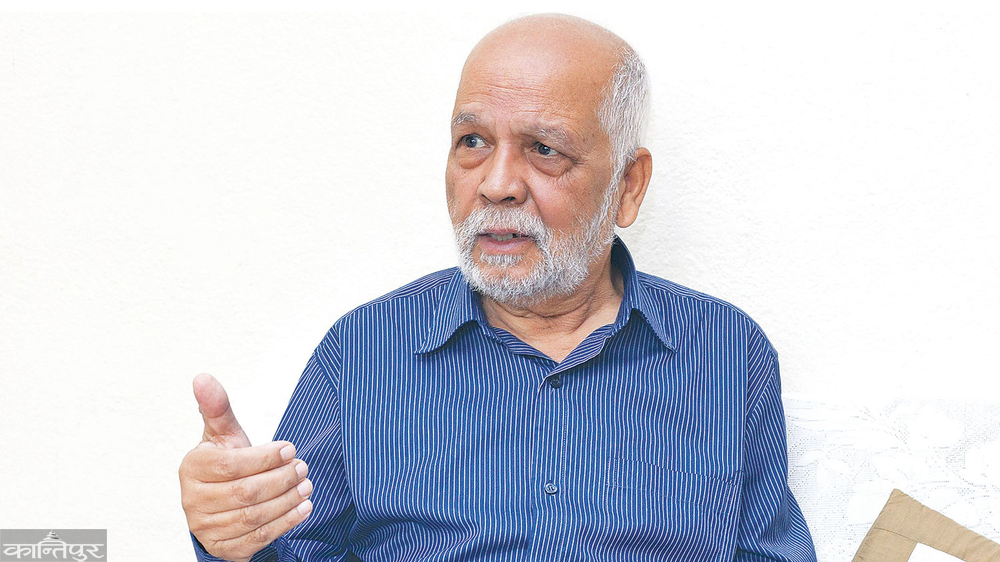
Trade cannot be done through our land without our consent, the Nepal government should speak out on this issue: Nilambar Acharya, former ambassador According to PTI, the action plan will include accommodation, transit camps, banking services, communication, security and medical facilities for traders. Coordination and contact with local counterparts on the Chinese side are also included in the action plan.
Following the central government's directive, the local administration started working on opening trade between India and China via Lipulekh two days ago, says Pithoragarh journalist Prem Punetha. In an interview with Kantipur, he said, "Looking at the weather in the Himalayan region, there are preparations to operate trade for four months from June 1 to September 30. If the weather cooperates, that period may be extended." According to journalist Punetha, the District Officer has instructed all agencies to complete all necessary preparations for border trade operations by June. The District Officer has also instructed BSNL communication company to improve communication facilities in the border area.
In a press note issued by the Pithoragarh administration on Friday, it is said that a meeting was held under the leadership of the District Officer to open the India-China trade route through the Lipulekh pass. According to the border trade agreement between the two countries, India is allowed to import wool, pashmina, salt, borax, silk, butter, yak hair, leather, etc. from China. Similarly, the district administration's press note mentions that it is allowed to export clothes, blankets, spices, wheat flour, dry fruits, vegetables, copper products, agricultural equipment, stationery, shoes, and vegetable oil.
Former Ambassador Nilambar Acharya says that Nepal's consent should be obtained regarding trade using Nepal's land. 'Without our consent, trade cannot be done through our land. The Nepal government should speak out on this issue, it should have its say,' Acharya said, 'I do not know the exact extent to which the issue of starting trade between India and China through the Lipulekh pass has progressed. However, if India and China try to do something through Nepal's land, the Nepal government cannot just turn a blind eye.'
He mentioned that India should not do anything unilaterally as there is a dispute between Nepal and India over the border in Susta, Kalapani, Lipulekh and Limpiyadhura and both sides have accepted it and said that it will be resolved through talks. 'Nepal has just held elections. A new government is being formed,' Acharya said, 'India knows Nepal's stance. Even if the new government comes, the same stance will remain on the border issue. That is why India should not take steps that will cause inconvenience to Nepal. Let us not conclude that India has already started trade using Nepal's land. Let us see how it moves forward.'
The Ministry of Foreign Affairs has not yet given a formal opinion on India's preparations for trade with China through the Lipulekh pass. A foreign ministry official said that the objections, views and stance expressed by the foreign ministry before or after India and China agreed to open trade through Nepal's territory Lipulekh last Bhadra have remained unchanged. He mentioned that both India and China have been informed about the fact that the Lipulekh region is Nepali territory and that they can only speak about it after understanding it more in the new context.
India has said that it is going to reopen the trade route that was closed due to the Covid pandemic after 6 years. In 2015, when Indian Prime Minister Narendra Modi visited China for the first time, an agreement was reached to 'trade through Lipulekh'. The then Sushil Koirala-led government immediately opposed the agreement. It had also sent a diplomatic 'note' to both countries. Since then, Nepal has repeatedly protested. Nepal has also protested when India built a road in the area.
The dispute between the two countries came to the surface after India, ignoring Nepal's protests and diplomatic 'notes', released a new map in 2019 showing Limpiyadhura, including Kalapani and Lipulekh in the east, within the Indian border. Nepal had objected to the map released by India by sending another diplomatic 'note'. However, after India ignored Nepal's request to resolve the dispute through diplomatic talks, Nepal amended its constitution in Jestha 2077 and released a new map including the territory up to Limpiyadhura.