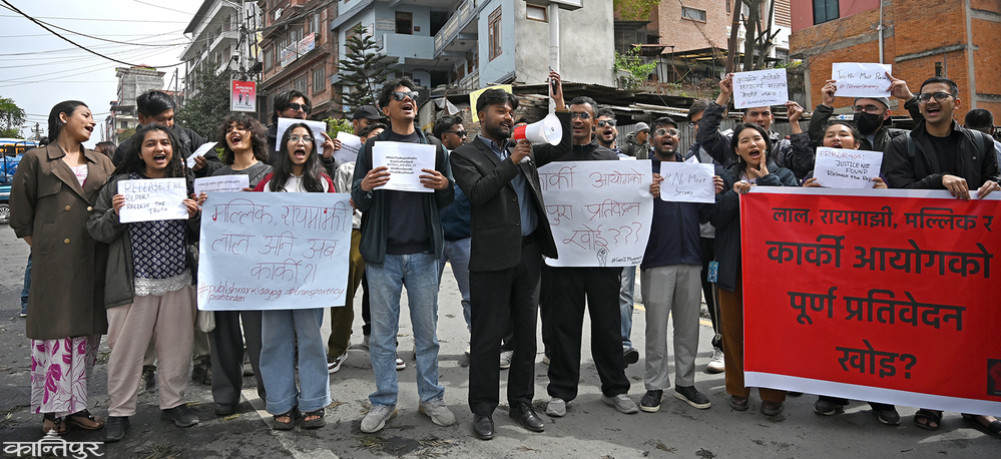
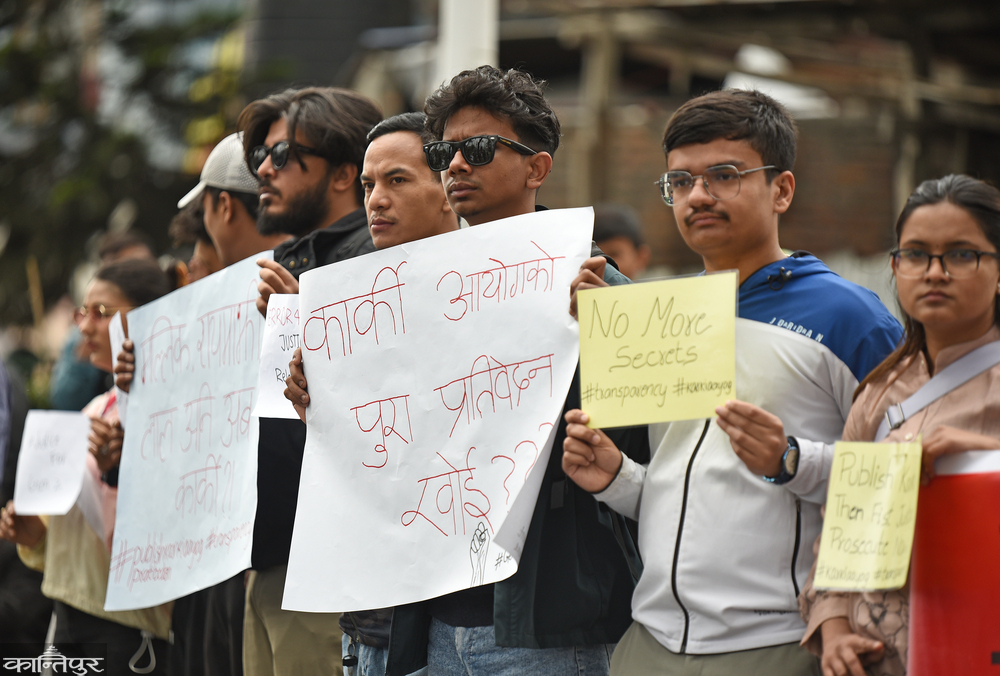
A group of Gen-Gs who participated in the 23 Bhadra protests are still on the streets, demanding that the report of the inquiry commission be made public.
We use Google Cloud Translation Services. Google requires we provide the following disclaimer relating to use of this service:
This service may contain translations powered by Google. Google disclaims all warranties related to the translations, expressed or implied, including any warranties of accuracy, reliability, and any implied warranties of merchantability, fitness for a particular purpose, and noninfringement.
Gen-G took to the streets after the government banned 26 social media platforms on Bhadra 19. The then government fell on the strength of their protest demanding the lifting of social media bans and an end to corruption. After the formation of the interim government, the House of Representatives was dissolved and preparations are underway to form a new government after the elections on Falgun 21. A group of Gen-G who participated in the protest six months ago are still on the streets.
For the Gen-G generation, born between 1997 and 2012, the ‘digital space’ has become a means of expanding public life. The then government had started a confrontation with Gen-G on Bhadra 19 by closing the ‘digital platform’, which is considered the main means of information flow, expression and social interaction. But the dissatisfaction did not start on that day. The ‘Nepo Babies Trend’ (Nepo Kid) had heated up social media for a few weeks. This 'trend' of questioning families with access to power and their children had already brought deep dissatisfaction to the surface among the younger generation.
Amidst the dissatisfaction of the younger generation, after the social media 'platforms' were closed, Gen-G gathered at Maitighar at 8 am on 23 Bhadra. Raksha Bam, Amit Urja, Monika Niraula, Arnab Chaudhary, Bikash Rasaili, Yujan Rajbhandari, Pradeep Gyawali, KP Khanal and others were active in organizing the youth movement. Sudhan Gurung played the role of a volunteer.
The movement, which started peacefully, turned violent on the same day. 22 people were killed and many more were injured when security personnel opened fire. On 24 Bhadra, a larger crowd took to the streets. Government and corporate structures including the Parliament Building and Singha Durbar were set on fire. As the political crisis deepened, the then Prime Minister KP Sharma Oli resigned.
As the country was pushed towards a state of limbo, the group at the forefront of the movement initiated the formation of an interim government. On 27 Bhadra, former Chief Justice Sushila Karki was appointed the Prime Minister of the interim government. On Karki's recommendation, the House of Representatives was dissolved. The new government was given two major 'mandates' - to hold elections to the House of Representatives and to conduct an impartial investigation into the incidents of 23-24 Bhadra.
The government held elections for members of the House of Representatives on 21 Falgun. Sudhan Gurung, who played the role of a volunteer in the movement, and Manish Khanal and KP Khanal, who were leaders, were also elected through the direct system. Purushottam Yadav became an MP through proportional representation.
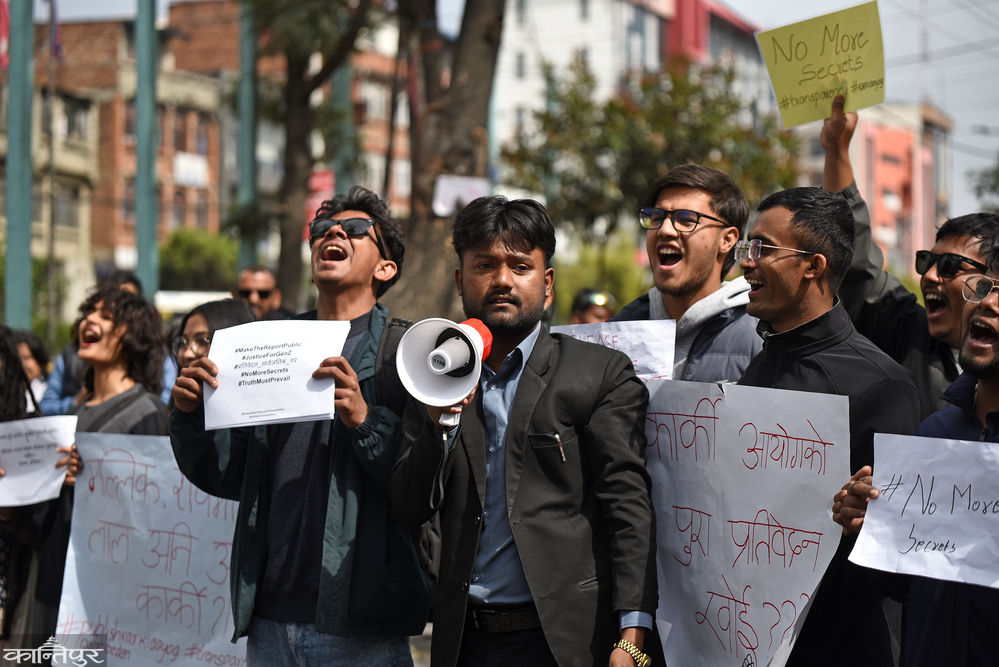
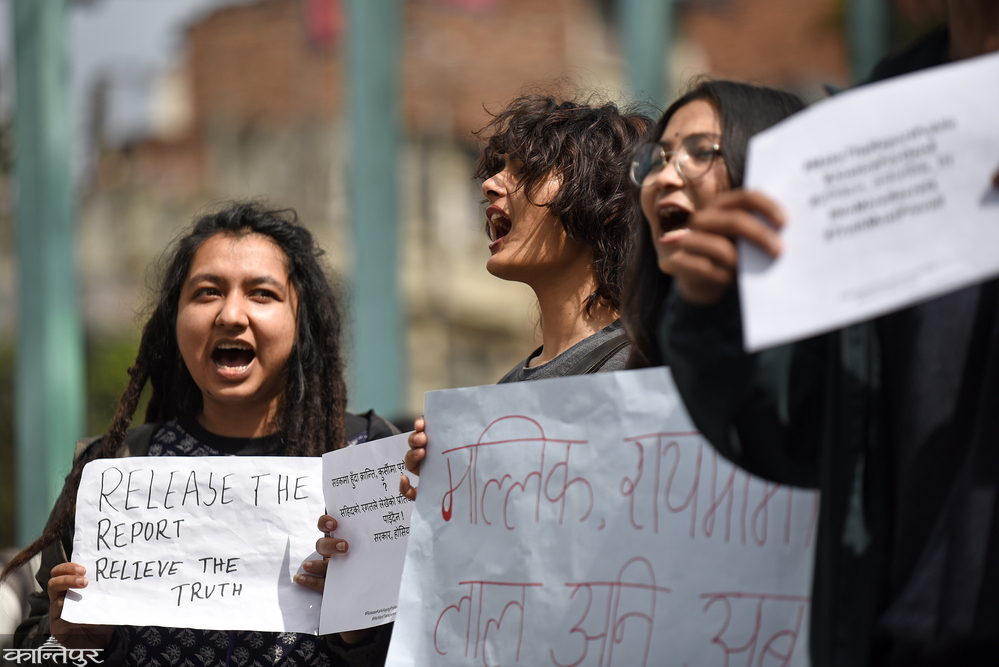
'The transparency and justice we seek have not yet been realized, that is why the movement is continuing' - Arnab Chaudhary The commission formed by the interim government on 5 Asoj to investigate the incidents of 23 and 24 Bhadra has already submitted its report to the government after conducting an investigation. The report submitted to the government on 24 Falgun by the commission led by former judge Gauri Bahadur Karki on 24 Falgun has not been made public. This issue has now become the agenda of the streets again. Gen-G activists are raising the question of 'What is the complete report of the Karki Commission?' through both digital and physical means. A campaign has been launched on social media through profile pictures with a red background. Demonstrations have been taking place at Maitighar since 1 Chaitra.
Activist Arnab Chaudhary says that the movement was started to put pressure on the government after it did not make the commission's report public. 'The transparency and justice we seek have not yet been realized. That is why the movement is still ongoing,' he said.
'No matter who is in power, the work of the road should be questioned, the road should never be without questions' - Raksha Bam Activist Raksha Bam says that citizens have the right to know about the report. 'We have been accused of being terrorists, of being under foreign influence.' All these should be clear from the report. The report should also show how the peaceful movement turned violent,' she says.
After the cabinet meeting held on Sunday, Home Minister Omprakash Aryal had said that the 'detailed version of the report will be made public on Monday.' But on Tuesday, he told Kantipur that the report was still under study. 'I will also have to discuss this issue with the Prime Minister,' he said.
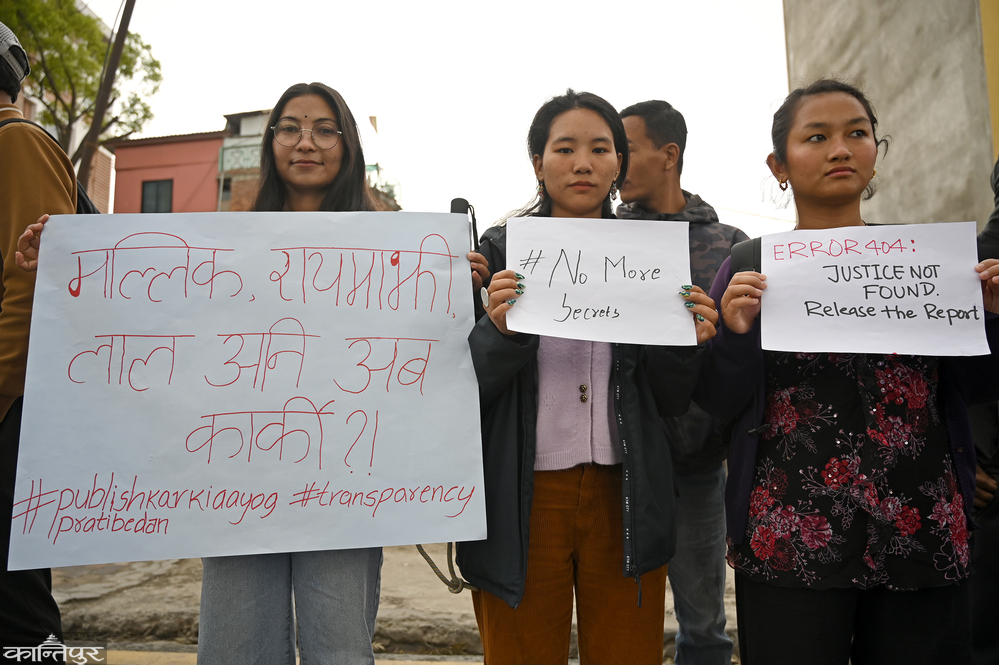
Meanwhile, Gen-G has become more angry due to some appointments made by the government. They also demand that the decision to appoint the Prime Minister's Principal Private Secretary Adarsh Shrestha as the chairman of the National Nature Conservation Fund and the decision to recommend Home Minister Aryal for nomination as a member of the National Assembly be immediately withdrawn. 'We have fought against nepotism and favoritism. It is shameful for the civilian government to continue the same trend,' said Gen-G leader Chaudhary.
'The final work is still to be done as per the 'mandate' given to the government, so there is no way to leave the streets' - Pradeep Gyawali Pradeep Gyawali, who participated in the 23 Bhadra movement, has now become a central member of the Rashtriya Swayamsevak Sangh (RSS). But he is still active on the streets. He believes that when the ruling party is strong, the streets and citizens should be equally powerful to balance it. 'My political seed is the streets. That is why I cannot leave the streets,' he says. He also says that the publicization and implementation of the inquiry commission's report are the main agenda now. ‘The final work is left as per the mandate given by the government. That is why there is no way to leave the streets,’ he says.
‘Elections provide a procedural outlet, but the movement cannot be carried out until the basic demands are met’ – Tanuja Pandey Another leader of the movement, Tanuja Pandey, questions the nature of power. ‘Where power is concentrated, there is an attempt to take ownership of it and along with that, a repressive tendency is also seen,’ she says. According to her, citizens and the media should always be the opposition in a democracy. ‘Elections provide a procedural outlet.’ But the movement cannot be carried out until the basic demands are met,’ she says.
‘Until the government is held accountable, Gen-G will continue to stand on the streets as a strong opposition’ – Majid Ansari Another Gen-G activist, Majid Ansari, says that since there is no effective opposition in the currently elected parliament, the streets and citizens should be the opposition now. ‘In a democracy, the permanent opposition to power is the citizens. When the ruling party is very strong in parliament, the responsibility of the opposition automatically shifts to the citizens,’ he says.
Although the interim government was formed with the trust of the citizens, he comments that that trust has been betrayed by not making the report public. ‘Until the government is held accountable, Gen-G will continue to stand as a strong opposition on the streets,’ he says.
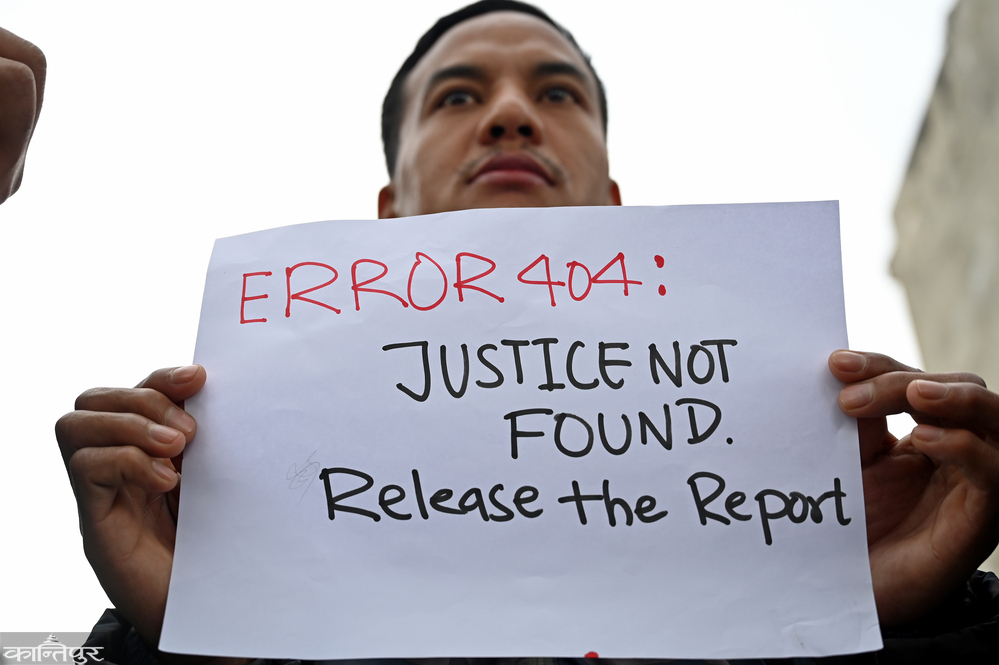
Activist Chaudhary also questions the inequality within the movement. ‘Young people from villages protested on the streets.’ But those close to the urban and powerful took advantage of it,’ he says. He says that even now, the same old power structure is seen around the government.
Activist Bam also argues that the vitality of democracy is linked to the streets. ‘No matter who is in power, the job of the streets is to question. The streets should never be without questions,’ she says. She said that she was in favor of a stable government and warned that the streets would heat up again if a decision was made against the public interest. 'If a decision is made against the public interest with a majority of about two-thirds, the streets will heat up again,' she said.