The number of Nepalis working in the Gulf region alone is about 1.9 million.
We use Google Cloud Translation Services. Google requires we provide the following disclaimer relating to use of this service:
This service may contain translations powered by Google. Google disclaims all warranties related to the translations, expressed or implied, including any warranties of accuracy, reliability, and any implied warranties of merchantability, fitness for a particular purpose, and noninfringement.
Concerns have increased over the security situation in the Gulf region after the start of the attack between Israel and Iran. This has worried Nepali workers along with millions of foreign workers working in the Gulf countries. The number of Nepalis working in the Gulf region alone is about 1.9 million.
Israel and the US attacked Iran on Saturday. In return, Iran has also launched targeted attacks on the US. The US has its military bases in Qatar, Saudi Arabia, Bahrain, Kuwait, the United Arab Emirates (UAE), and Oman in the Gulf.
1.9 million Nepalis are working in these countries. The largest number of Nepalis are working in the United Arab Emirates (UAE) with 900,000, Saudi Arabia with 384,000, Qatar with 360,000, Kuwait with 175,000, Bahrain with 30,000, and Oman with 25,000. There are 25,000 Nepalis in Iraq, 5,000 in Israel, and 1,000 in Lebanon.
Iran has attacked US military camps in Qatar, Saudi Arabia, Bahrain, the UAE and Kuwait. The UAE capital Abu Dhabi and Dubai were attacked. One person was killed in the UAE, the UAE said. One of the dead was an Asian citizen. The identity of the person has not been made public.
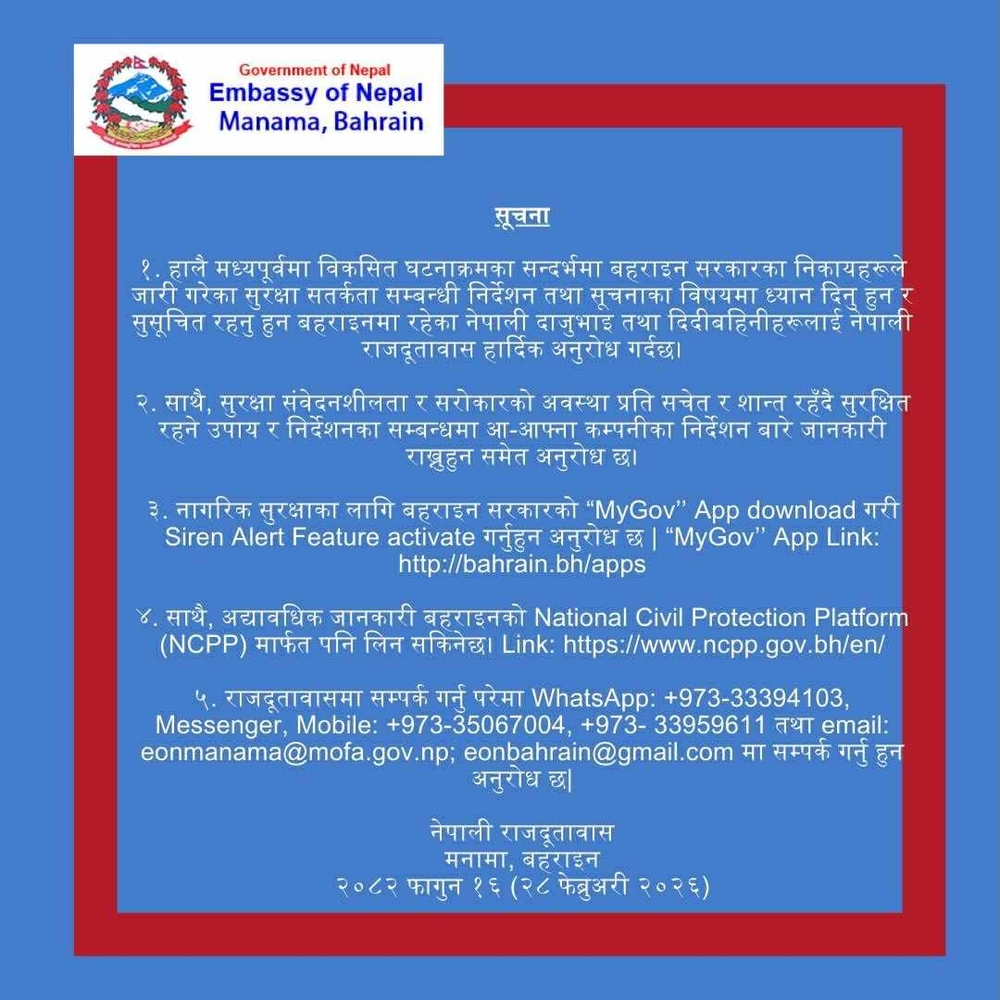
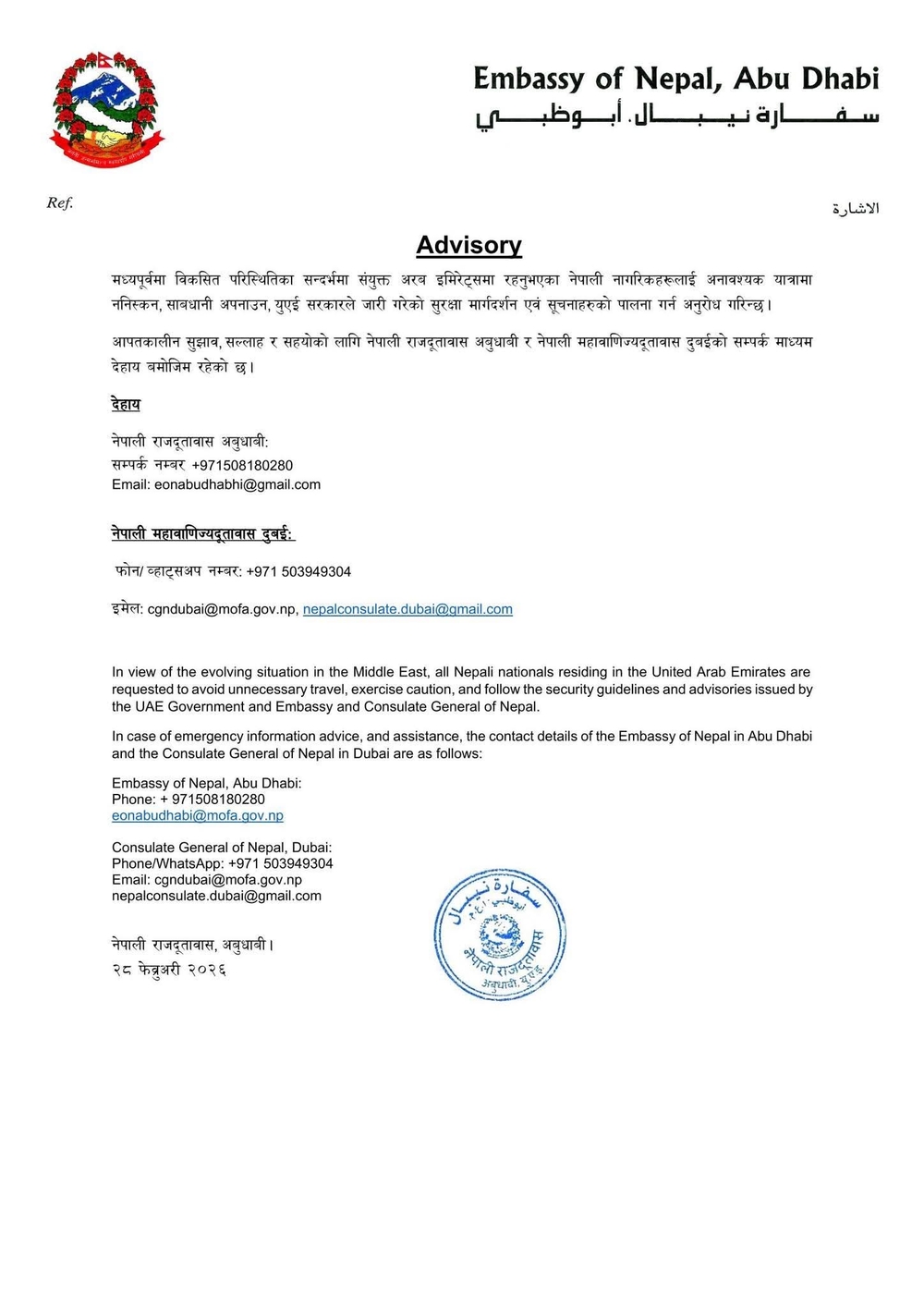
The UAE has strongly condemned the attack, calling it a ‘serious violation of national sovereignty and international law’. The UAE has stated that it places the safety of its citizens and migrants at the highest priority. The Nepali Embassy in the UAE has requested ‘not to travel unnecessarily, to exercise caution, and to follow the security guidance and information issued by the UAE government’.
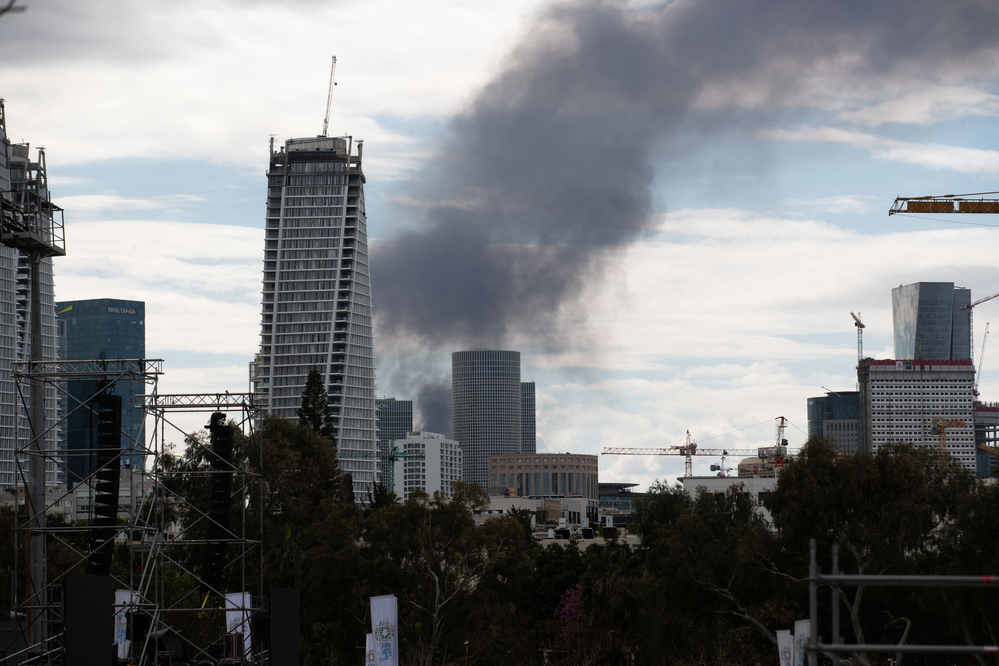
A building in Waruwa City, where Qatari migrant workers live, has exploded. Al Jazeera has reported that there have been no reports of any casualties.
Qatar has responded by saying it ‘reserves the right to respond in accordance with international law’ after the Iranian attack. ‘Firing ballistic missiles targeting Qatari territory is a serious violation of national sovereignty, a direct attack on the country’s security and is unacceptable,’ Qatar’s statement said, ‘It could endanger the security and stability of the entire Gulf region.’
Qatar has requested that people not leave their homes except for essential purposes. Ramesh Bhatt, former president of the Non-Resident Nepali Association working in Qatar, said that they were on high alert, according to a statement issued by Qatar. ‘Friends seem worried about what will happen. As soon as the security alert increases, the information comes,’ he said, ‘Some workplaces are closed. We are staying in our rooms.’
A large explosion has occurred near Manama, the capital of Bahrain. The explosion was inside a US military camp. ‘We are close to the affected area. What happened inside? I don't know,' said Padam Sundar Gurung, who works in Bahrain, 'There were many missile explosions from 11:30 to 12:30 in the morning.'
Gurung said that the Nepalis working in that camp are safe.'
Shri Krishna Bhandari, who works in Israel, said that they are safe. 'There is a fear that there will be a more severe attack than before.' Now, instead of staying in normal bunkers, people are moving to public bunkers,' said Bhandari, 'There are a lot of sirens here.'
He said that the workers who have recently come to Israel are more scared. 'We are working to remind them.' He said that coordination is being done with the Nepali embassy. 'In the first phase, security awareness is the most important thing.'
Ramesh Shrestha, coordinator of the Non-Resident Nepali Association in the Middle East, said that there are signs that the security situation across the Gulf region is becoming more serious. ‘If you have any information, you should contact the contact number of the nearest Nepali embassy. You should stay away from rumors and misleading social media information,’ he said. ‘In such a situation, it is important for us to follow the security instructions given by the embassy or employer and stay away from unnecessary crowds, demonstrations or sensitive places.’
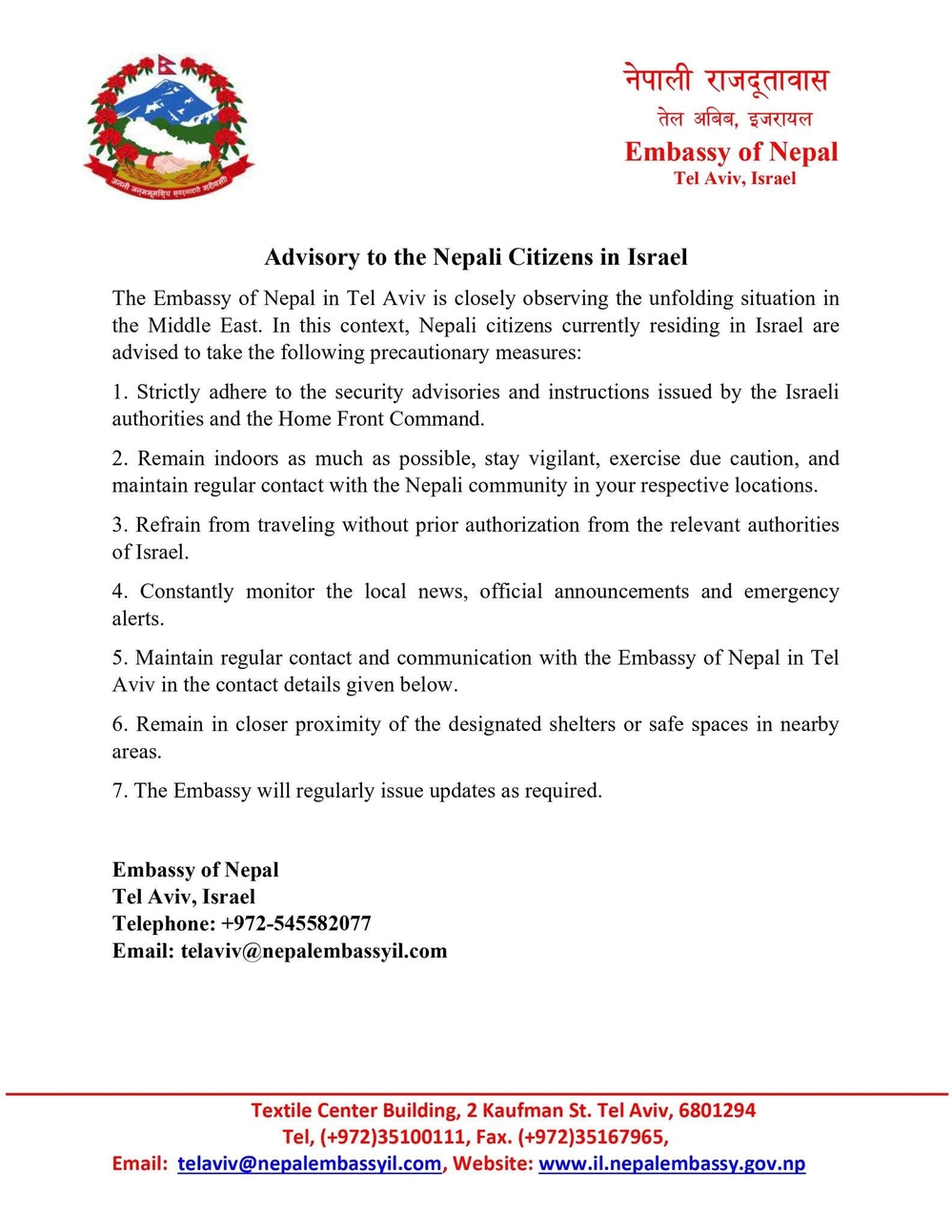
The Ministry of Foreign Affairs has stated that it is closely monitoring the security challenges arising in the Gulf region. It has stated that it is extremely necessary for Nepali citizens living in the Gulf region, including Israel and Iran, to take extra precautions. ‘Follow local security instructions, stay safe indoors and maintain regular contact with the Nepali community in your place,’ the statement issued by the Ministry of Foreign Affairs said, ‘Do not travel unnecessarily.’

