While the voice raised by Gen-G youth is commendable, it is urged to be vigilant to ensure that a similar situation does not repeat itself.
We use Google Cloud Translation Services. Google requires we provide the following disclaimer relating to use of this service:
This service may contain translations powered by Google. Google disclaims all warranties related to the translations, expressed or implied, including any warranties of accuracy, reliability, and any implied warranties of merchantability, fitness for a particular purpose, and noninfringement.
From Iranian Nobel Peace Prize winner Shirin Ebadi, Tunisian singer Emel Mathlouthi, the voice of the Arab Spring, to representatives from Sri Lanka and Bangladesh, where youth uprisings like those in Nepal have taken place, they have warned that protests alone will not bring lasting change.
Since the foundation of democracy is human rights and freedom of expression, they have urged Nepali youth to be aware that while the voice raised by Gen-G youth is commendable, the same situation should not be repeated.
‘Many youth protest, but then retreat, it is not that everything is solved just by raising their voice,’ Ebadi, a renowned Iranian human rights lawyer, former judge and Nobel Peace Prize winner, said at the ‘Kantipur Conclave 2026’, ‘They should enter the system, propose solutions, and be part of the change instead of just standing on the sidelines and shouting.’
In a debate titled ‘The Question of Change’ under the Kantipur Conclave 2026, she mentioned that she had carefully studied the Gen-G movement in Nepal and also expressed respect for the movement. ‘I am deeply saddened to hear the news that some protesters were killed during the unrest in your country. I would like to express my deepest condolences to the families of the victims and to your people, especially the young generation who have risen to make their voices heard,” she said. “Fortunately, the voices of the youth have not been ignored here. There has been political change, the government has resigned, and mid-term elections are expected to be held soon. This shows that the voices of the youth can have an impact.”
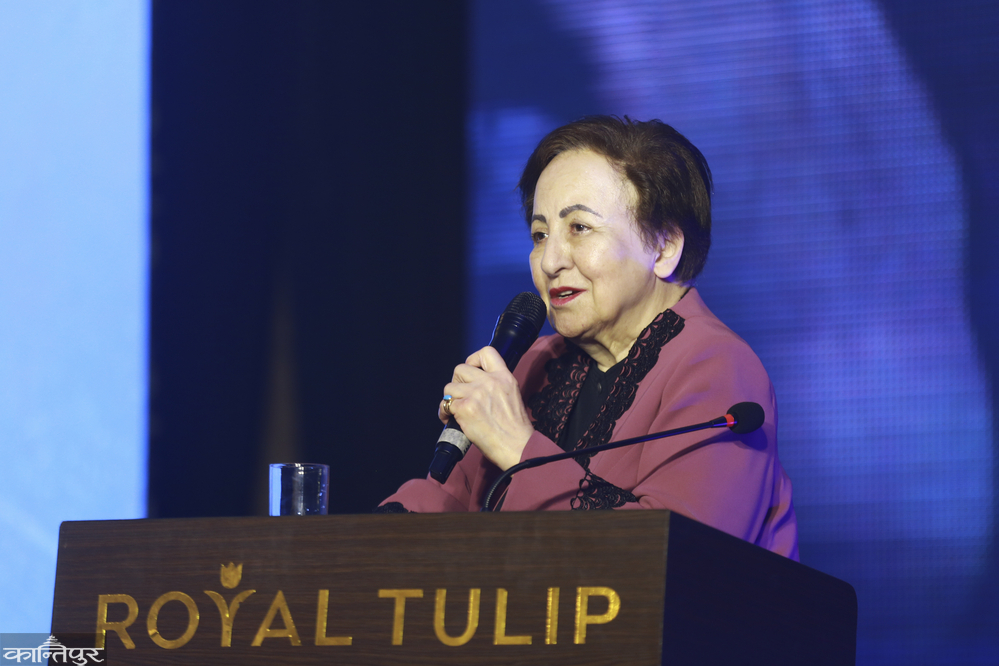
She urged people to contribute to building the future by participating and leading, not by shouting slogans. Emel Mathlouthi, the singer of the famous song “My Word is Free” from the Tunisian revolution, the “Aber Spring,” which began in 2010 and is the largest movement of the 21st century in terms of public participation, gave the example of Tunisia and said that the transition there was relatively peaceful.
“There was a big change in freedom of expression, the media became free, people were able to speak,” she said, “but the situation deteriorated again during the last president’s term. Journalists, lawyers, human rights activists are in prison, there is uncertainty about where the country is going.’
Speaking at a session titled ‘From Movement to Opportunity’, she recalled that she had loved freedom since childhood and did not want to be ruled by a ruler. ‘Gradually, I felt that I had to speak out against that ruling system. And, if I could be a voice for someone, why not, I protested through song. My voice was for the voiceless,’ she said.
Noting that Tunisia had had two presidents since its independence in 1957 until 2011, both of whom were dictators, she said that she grew up in a dictatorship and did not see any other political reality. “In a dictatorship, people themselves start self-censoring, people become silent before the government says anything,” she said. “I used to get frustrated and angry seeing that situation. Young people have dreams, but in a dictatorship, they have no place to create, speak, or be curious.”
She said that it was not appropriate to debate whether it was better before or now, and that they needed a dignified life. “A revolution was necessary. When people live under pressure for a long time, one day it explodes. Colonialism leaves a wound like a dictatorship. It takes time to heal,” she added. “I want to look to the future and believe that better times are yet to come.”
Marjana Mahnaz, a research associate and sociologist at the Center for Covenant Studies in Bangladesh, reminded that elections are also being held in her country and said that there should be no delay in holding elections after a political transition. “Prolonged uncertainty gives extremist groups a place to organize,” she said. “Revolution is always uncertain. You fight for democratic change, but it can create a power vacuum and bring other forces to power.”
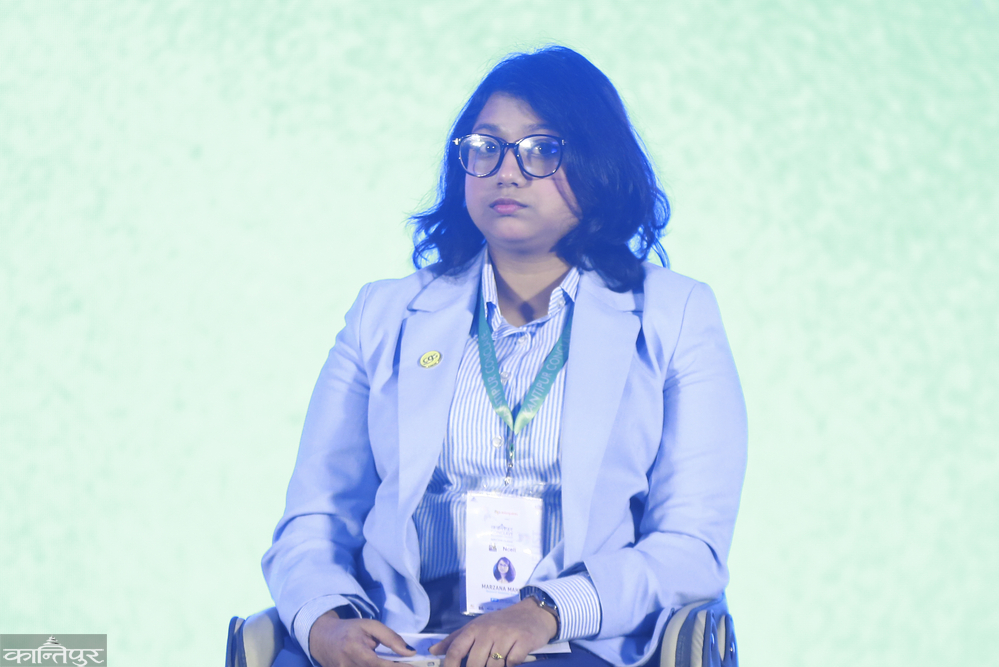
After a month-long protest against the quota system in Bangladesh from July 1, 2025, then Prime Minister Sheikh Hasina resigned and fled to India in a helicopter with military assistance. The protest, which began with the leadership of five students from Dhaka University, turned violent after widespread repression. At least 300 people were killed when protesters surrounded the prime minister’s official residence, Gana Bhawan, before Hasina fled the country. The government led by Professor Mohammad Yunus is now holding elections there.
‘We are heading towards elections soon, the situation in Bangladesh now looks calm on the surface, but as we have seen in past elections, such peace does not last long,’ said Marjana, ‘There is more fear than enthusiasm among the general public, even in my own community, the growth of religious extremism has been alarming in the last one and a half years.’
Recalling the incident of a Hindu man being burnt by a mob some time ago, she said, ‘Later it was found out that he was made to do so because he had said something, he had not said it, it was mob violence based on rumors.’ Recalling that the mob had also attacked and burned the offices of news organizations in Bangladesh, she said, ‘Law enforcement agencies are failing to prevent such incidents.’
She feels that after the July 2024 movement, people have become more politically aware than before. “Now, people have more courage to question their rights and demand accountability, resistance and resilience seem stronger than ever,” she said, suggesting to Nepali Gen-G youth, “Gen-G should also question the leaders of the movement. It is not necessary that they have a long-term democratic vision. Some forces can take advantage of the vacuum. Citizen vigilance is very important. The public should constantly monitor and pressure new leaders to ensure that they do not become authoritarian like the old ones.”
Senior Sri Lankan journalist Kamanthi Wickramasinghe said that she has been writing about society and politics for 23 years. “What happened in Sri Lanka in 2022 is somewhat similar to the youth movements seen around the world now, but the context is different,” she said. “After a long civil war, the country was moving towards peace, but despite the change in political power, corruption, nepotism and poor governance remained the same. After 2019, the government made some decisions that led to a major economic crisis. Issues like prolonged load shedding, fuel shortages and rising food prices brought the middle class and workers to the streets.’
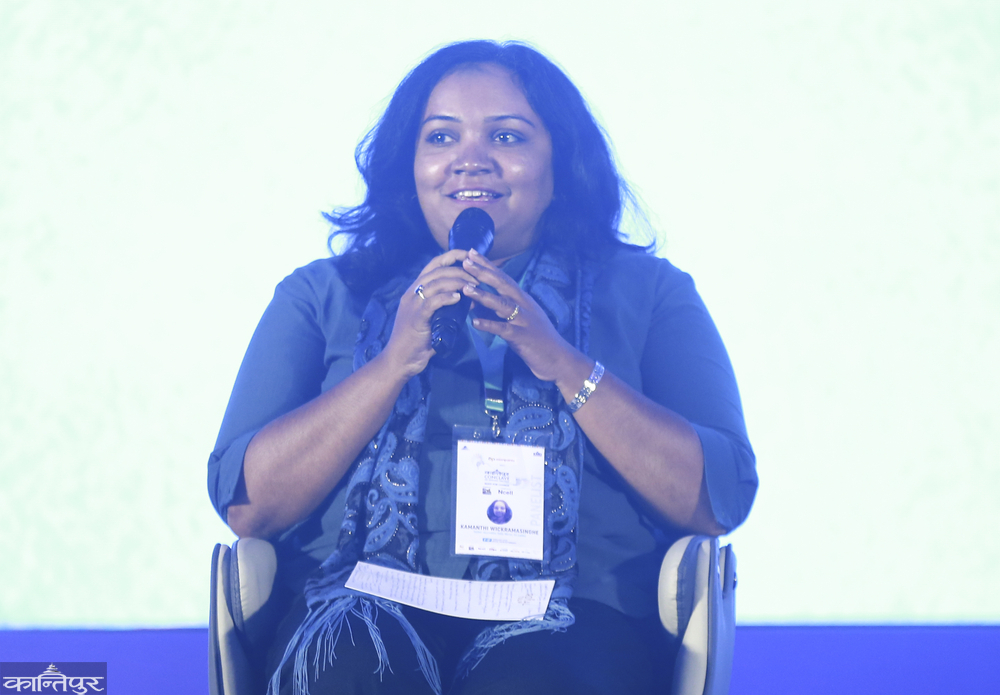
Initially, the demands were linked to economic issues, but later they focused on ending corruption and systemic reforms, she said. On July 9, 2022, after the people occupied government buildings, the president and prime minister resigned and fled the country. Looking at the situation after this, she said that although a movement like the one in Sri Lanka could push the government towards reform, structural changes would take time. ‘The experience of Sri Lanka shows that change is gradual, continuous citizen participation and media monitoring are necessary,’ she said.
Gen-G leader Tanuja Pandey said that Nepal’s Gen-G movement did not copy any other country but started with an agenda based on local realities. “The ban on social media was a trigger, but it was not the only reason,” she said in a session moderated by The Kathmandu Post editor Biswas Baral. “We were forced to take to the streets because of the lack of transparency and accountability in the leadership, the opaqueness of the governance system.”
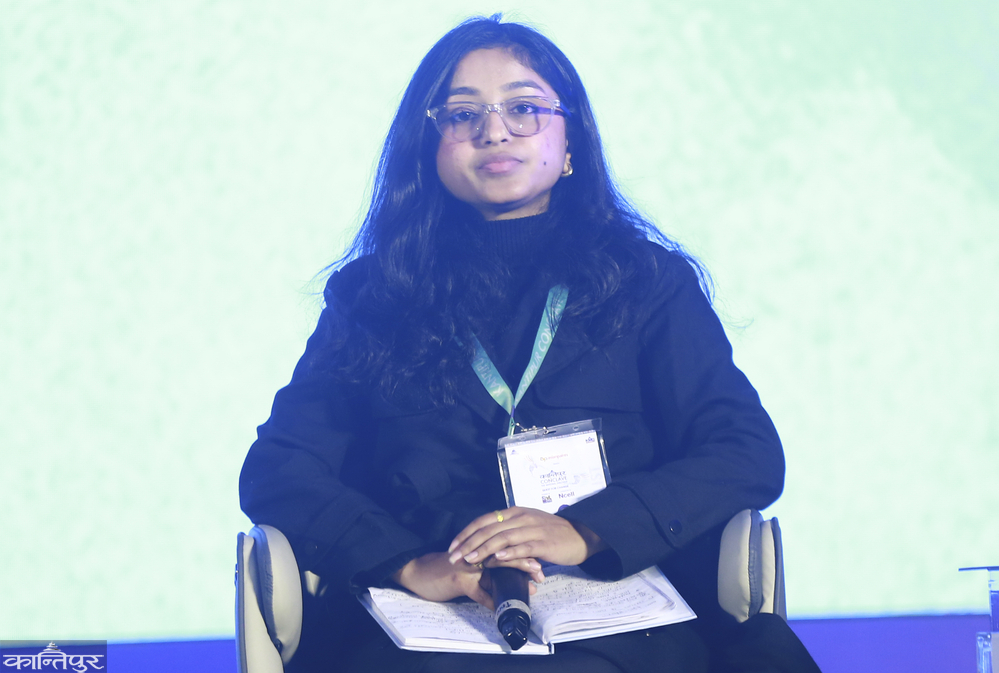
She said that the government had not toppled the government, but because of its own weaknesses due to the repression of young protesters. She said that in the post-Gen-G movement, they would not stop questioning those who come to power. “In South Asia, there is a culture of worshipping leaders like gods. We need to break this mindset. New faces should also be questioned,” she said. “The previous generation made mistakes by not questioning leaders. We should not repeat them.” Admitting that the movement itself would not provide a solution, she said, “But it opens the door to change, and for that, it does not mean that everyone should get involved in politics. I can also contribute through my professional field, as a lawyer, I can also work through legal reforms.’
Political analyst Hari Sharma commented that a system that does not listen to the voice of the citizens cannot be a democracy. ‘The democracy we are currently practicing depends on numbers, whoever gets the votes gets the votes,’ he said. ‘If numbers, numbers, and voices cannot be balanced, democracy will not be sustainable.’
Speaking at the session ‘The End of Ideology?: Retrofitting Nepali Politics’, he said that counting only the number of votes will obscure the issue of justice. ‘Is the priority of politics employment or good governance? It is unclear.’ Sharma said that he still believes in voice. ‘Even though I am from the previous generation, I call my children, they say to text,’ he said. ‘I believe in voice, they believe in text.’ He said that the leap made by digital technology has started the search for autonomy and sovereignty.
Politician Ghanshyam Bhusal said that Nepal's economic and political turmoil is being unleashed in the name of Gen-G. 'Our development, the state of development and the aspirations raised by the constitution, those aspirations seem to be a great power and strength in themselves. Due to the recent political works made after the constitution despite some differences of opinion, those aspirations did not find a way, it brought great disappointment,' Bhusal said, 'The hope and enthusiasm that comes to people, when it is not fulfilled, the same kind of disappointment comes.'
Bhusal said that the constitution guarantees fundamental rights and employment, but it has not been implemented. Stating that the people are demanding what the constitution has ensured, he said, 'If we cannot distinguish between prosperity and equality, this movement came in the name of Gen-G, the next movement will come in another name.'
Similarly, in the session 'Journey of the Nepali Revolution: Reflection on the Past, Assessment of the Future', political analyst CK Lal commented that the Gen-G movement was not about an agenda but about a slogan. Nepalis have been doing brand politics since the past and the Gen-G movement is also a continuation of that, he says.
Political analyst CK Lal commented that the Gen-G movement was not about an agenda but about slogans. Nepalis have been doing brand politics since the past and the Gen-G movement is also a continuation of that. ‘Nepalis love brands very much, even if it is a fake from China, they should wear the brand. They should also take a brand in political matters. Now, what brand has been taken is Gen-G. The Gen-G movement is not Nepal's, but the young people's. It started with a protest. There was no capacity to manage the protest,’ he said, ‘When the protest could not be managed, it exploded. When it exploded, the state and geopolitical powers came together. They managed it well so that it did not turn into a rebellion, movement or revolution.’
He said that since the Gen-G movement started with a slogan, it would be pointless to question what was achieved. ‘The Gen-G movement started with a slogan, not an agenda. So the question of what your agenda was, what you achieved is meaningless,’ he added.
He said that the Gen-G movement in Nepal was due to corruption, Nepo Kids, and the three leaders playing ‘musical chairs’ for 10 years.
‘The dissatisfaction was widespread, it cannot be denied, but if there had been a political party to address the dissatisfaction, it would have come up with an agenda. It would have mobilized the organization, led it visually, could have controlled it, could have controlled the pace, could have made the direction positive, but the dissatisfaction ended with an explosion,’ he added.
Prakash Bohara, who was injured in the Gen-G movement, said that where the country will be taken from now is in the hands of the general public and the young generation. Stating that if everyone votes in the right place, the right leadership will come, he requested to elect a capable person in the upcoming elections. "If we make a mistake again, if the country goes into agitation again, there could be great damage tomorrow," he said.

