”Why is the private sector not involved in productive enterprises? Why is it only involved in trade? The government's policy is a factor in this question. The state should come up with a policy that includes tax exemptions and other facilities for productive industries.”
We use Google Cloud Translation Services. Google requires we provide the following disclaimer relating to use of this service:
This service may contain translations powered by Google. Google disclaims all warranties related to the translations, expressed or implied, including any warranties of accuracy, reliability, and any implied warranties of merchantability, fitness for a particular purpose, and noninfringement.
Stakeholders have pointed out that appropriate and effective government policies are essential for revival while overcoming the challenges faced by the economy. They have emphasized that the state should bring in the right government policies for reform as the economy, which has been sluggish for a long time, has been further affected by the incidents of 23 and 24 Bhadra.
Speakers at the ‘Revival of the Economy, Restoration of Trust’ session of the ‘Kantipur Media Group’s’ ‘Kantipur Conclave-2026’, which began on Monday, said that the state should take the initiative through policy reforms to revive hope in the economy. They said that the economy is currently in a difficult situation and the problem is on the demand side rather than the supply side, so the government should make policy arrangements that will improve it.
The economy has not been revived due to adverse government policies and that entrepreneurs have left productive enterprises and gone into business due to the government’s policies, said Chandra Prasad Dhakal, President of the Federation of Nepalese Chambers of Commerce and Industry.
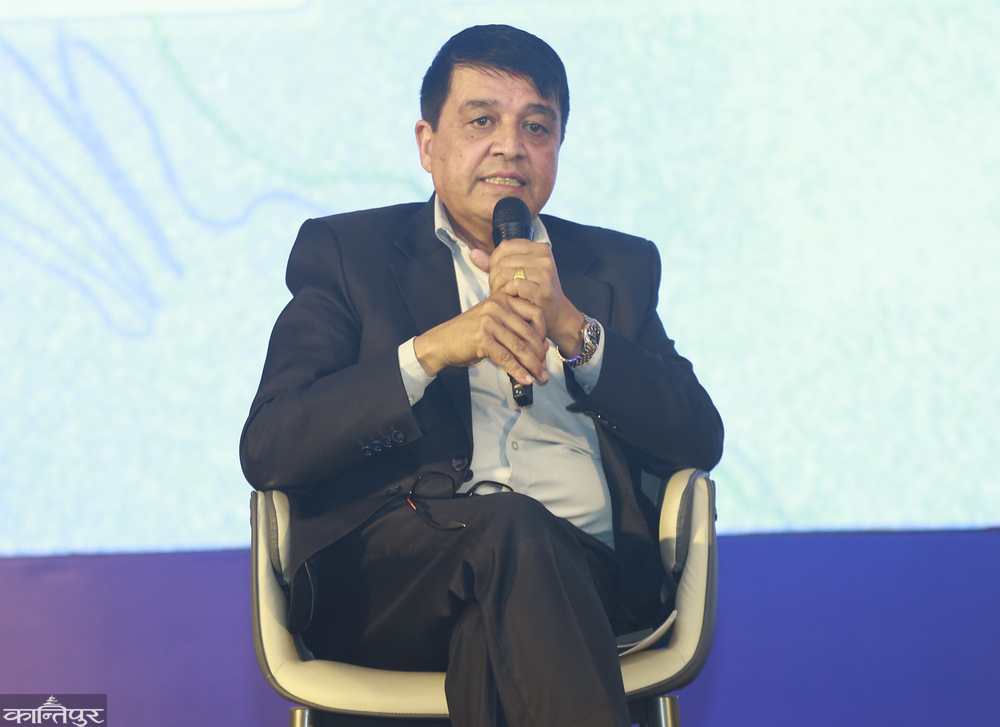 ‘Why is the private sector not involved in productive enterprises? Why is it only involved in business? The government’s policy is a factor in this,’ he said, ‘Every person seeks profit in business. Business cannot be run without profit. Now, the state should come up with a policy with tax exemptions and other facilities for productive industries so that the private sector can leave business and expand investment in the productive sector.’ He said that if the government makes such policy arrangements, the entrepreneurs currently involved in business will also automatically come into the productive sector.
Dhakal says that they are optimistic that the private sector will improve even though its confidence has declined. ‘Not only the private sector, but society’s confidence has decreased,’ he said, ‘However, the private sector is not sitting still because its confidence has decreased.’ Dhakal said that the private sector is working continuously.
‘A lot of property of the government and private sectors was damaged in the incidents of 23 and 24 Bhadra, out of which most of the private sector’s industries and businesses have resumed operations,’ he said, ‘However, some government sectors are still providing services under tents, which also proves the will of the private sector to work.’ He said that not only has the private sector’s confidence decreased, but he is also optimistic about the future.
Dhakal claims that the economy has come to this state due to government policies in the past. ‘In the past, when the government banned the import of 10 types of goods due to a decrease in foreign exchange reserves, the private sector did not accept it. Finally, the government imposed the ban. However, except for cars and motorcycles, all goods came through informal channels,' he said, 'as a result, the government lost revenue, and informal trade in the market gained momentum.'
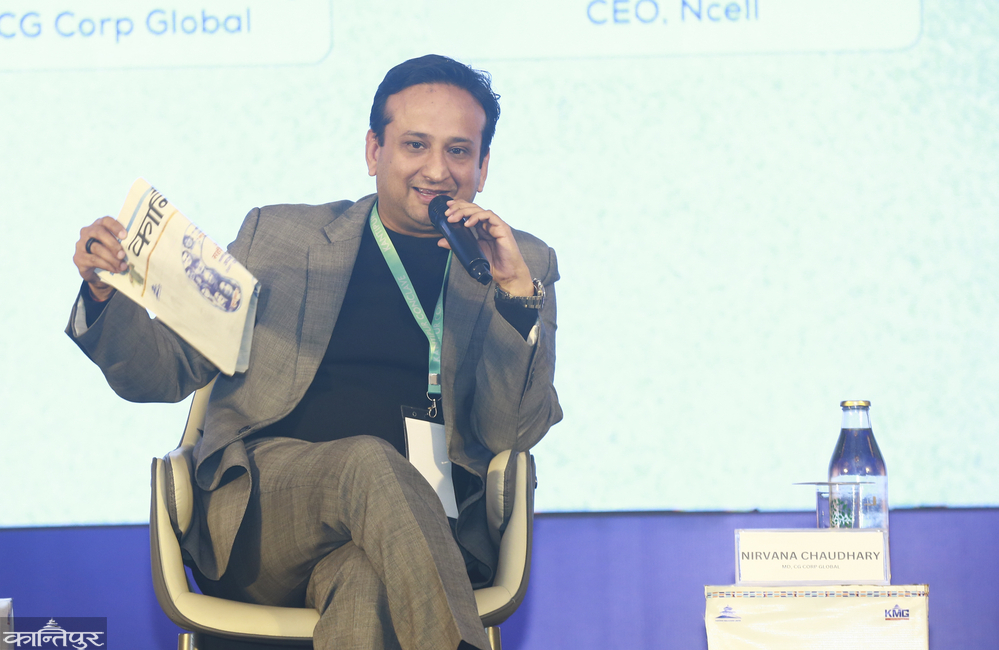 Nirvan Chaudhary, Managing Director of CG Corp, Global, said that political parties should prioritize the economy in the elections. For this reason, the Confederation of Nepalese Industries (CNI) had already suggested that political parties prioritize the economy and private sector issues in their manifestos by holding a formal program a few weeks ago, he said.
He said that the formation of 15 governments in the last 25 years proves how much political instability there is in the country. That is why political parties should now prioritize the economy, he said. He said that Nepal's banks are becoming more positive and open to disbursing loans to businesses. 'Currently, banks have become more positive and open to disbursing loans to new business opportunities. The policy role of the central bank is very important in this process,' he said.
Chaudhary said that for the first time, a major attack on private sector individuals was carried out during the Gen-G protests. He said that the right leadership for the private sector is expected to emerge from the upcoming elections to the House of Representatives. He expressed his expectation that the leadership that comes after the election will provide equal investment opportunities for the private sector. “Which will provide a truly level playing field and transparent and fair opportunities for entrepreneurs, so that the right investment can be made,” he said.
Chaudhary said that there are policy and decision-making problems in bringing the world’s largest companies for foreign investment in Nepal. Chaudhary recalled that he faced problems while trying to bring foreign co-investors in the airport operation, telecom and hydropower sectors. He also said that the private sector has faced personal attacks during the Gen-G protests.
“We have seen everything in the last 25 years. Curfews, arson. This time it has become more personal, because for the first time, the private sector and private property have been directly attacked,” Chaudhary said. “The said attack has created a great deal of trauma and tension personally. Even after that, the private sector is rapidly rebuilding. We transformed that shock into energy and enthusiasm – with a determination to see what can be done, how fast it can be done, and how we can rebuild faster and better,” said Chaudhary.
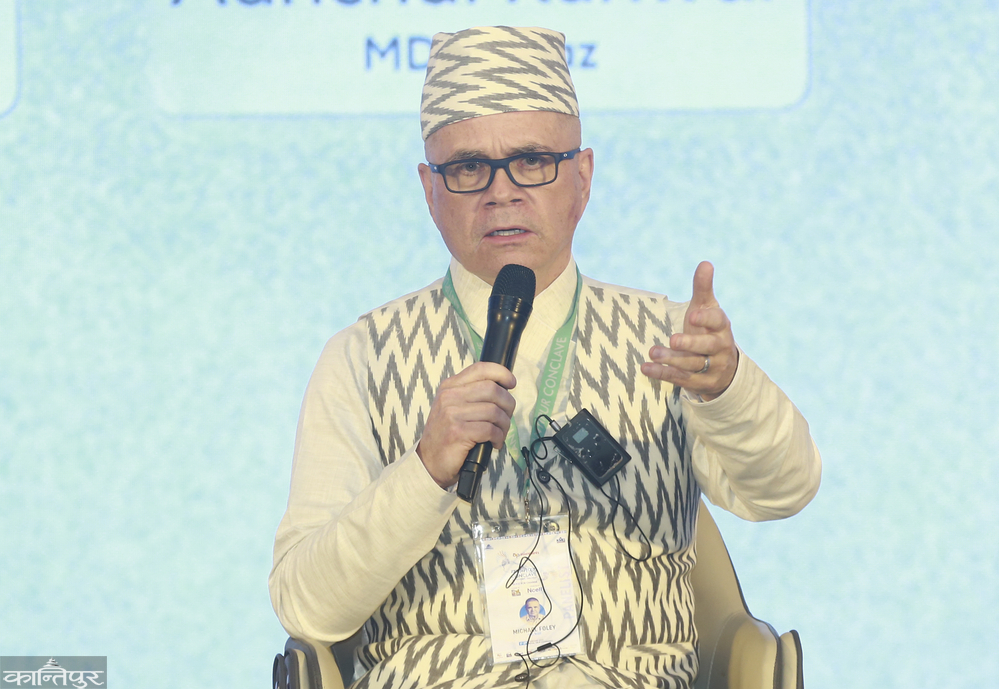 Nepal’s telecommunications infrastructure lags far behind neighboring countries, said Ncell CEO Michael Foley. He said Nepal’s telecommunications technology lags behind neighboring countries by about 5 to 8 years and much further behind the rest of the world. He said that Ncell is ready to invest between US$200 and US$250 million in Nepal’s telecommunications sector in the coming days, provided the government provides the necessary permission and the right environment to operate the service.
“We want to stay in Nepal, we also have a great capacity to invest,” said Foley, “The company has no debt on its balance sheet.” The license of Ncell, a foreign-funded service provider that has been in operation for 22 years, expires in Bhadra, 2086 BS. According to the Telecommunications Act, after the license expires, the infrastructure (such as towers, equipment, etc.) of service providers with more than 50 percent foreign investment will be transferred to the government.
Foley said that Ncell's goal is to build 5G services, high-speed internet at the level of per-gigabyte, and data centers in Nepal. He said that if the telecommunications network can be systematized, it will create new opportunities in the fields of education, health, employment, and entrepreneurship. Foley explained that some of the recent unstable developments will not give Nepal its identity and how the society and the state address these challenges in the coming days will ensure the future of investment.
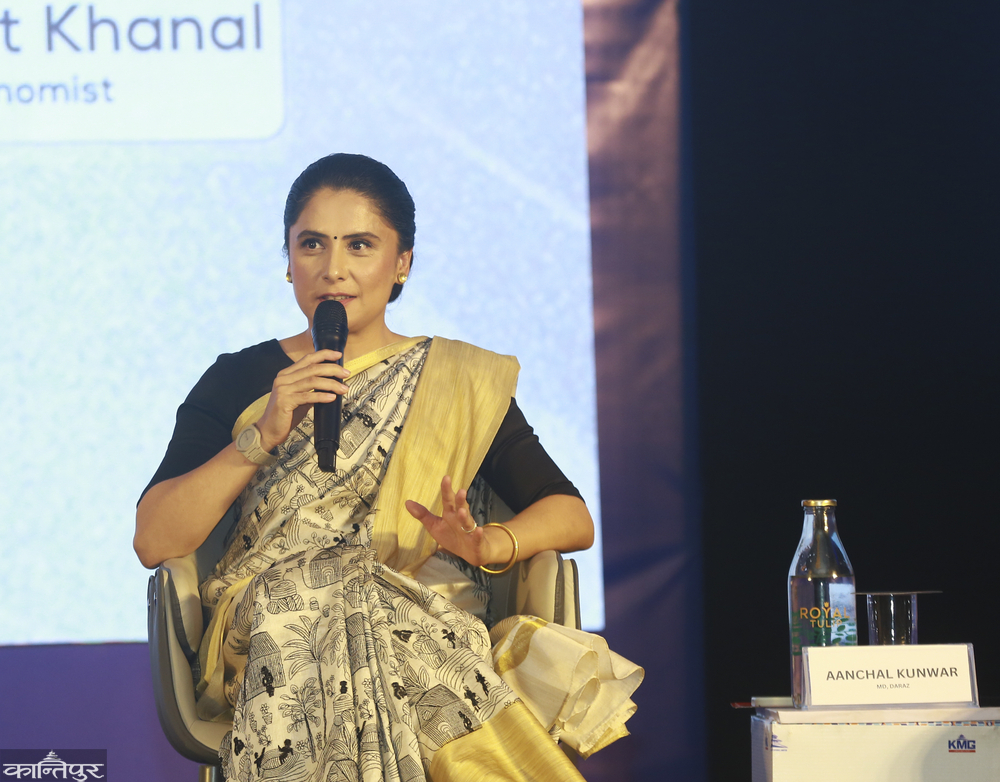 Aanchal Kunwar, Managing Director of online marketplace Daraz, complained that the Gen-G movement has affected business. She said that the movement affected business when the Dashain market was being prepared. "We have 35,000 customers. We were preparing for the Dashain market. The Gen-G movement has also affected the private sector, she said, adding that Daraz has also been affected. She said that after the movement, she has been joining the Rebuilding Nepal campaign and has been promoting her business.
‘Customers order goods from us online. The goods come from department stores and are packed as per the order,’ she said, ‘We deliver them to the customer’s home.’ She said that even though the Gen-G movement has directly affected the business, it is returning to normal.
Guru Prasad Poudel, Executive Director and Spokesperson of the Nepal Rastra Bank, said that they are waiting for a suitable environment for investment. ‘To revive the economy, it is not enough to increase credit flow alone, but a sense of trust and security among investors is necessary,’ Poudel said, ‘The Nepal Rastra Bank is waiting for a suitable investment environment. Currently, the demand for credit has not increased as expected.'
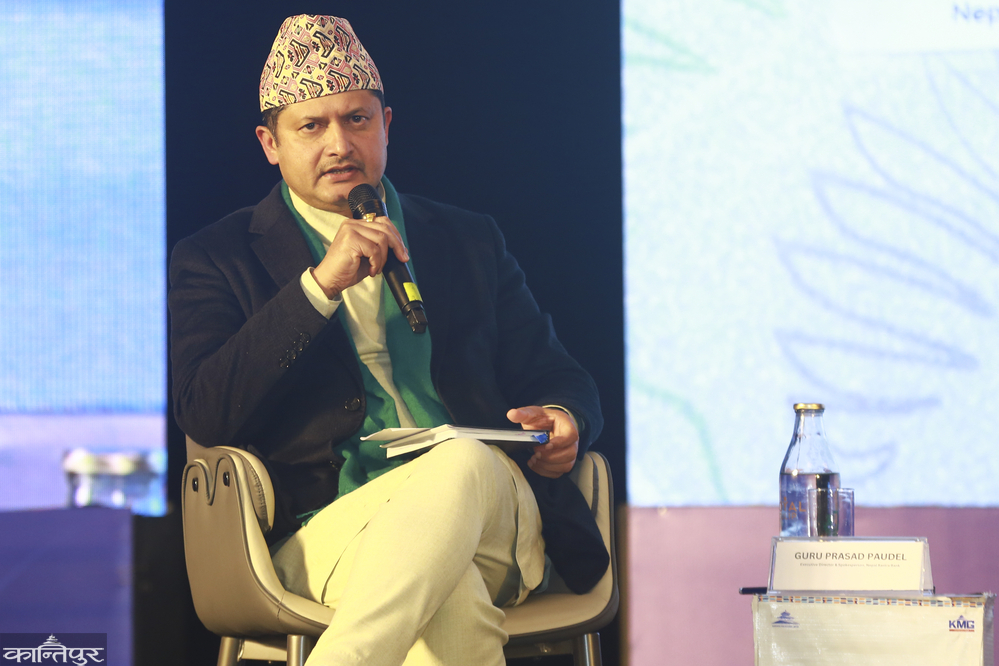 He recalled that a survey on the state of confidence in the private sector published by a media house on Monday indicated that about 70 percent of investors are in a wait-and-see mode and 7 percent intend not to invest anymore. Poudel said that the lack of confidence and security among investors and the perception that there will be no returns from production may have led to the lack of demand for credit.
Poudel said that the main role of the central bank is to maintain economic stability. For this, he said that the Rastra Bank has been continuously studying international practices and experiments in the process of policy formulation. 'Financial stability is the main thing. The central bank is also looking into the increasing bad loans in the banking sector and the potential risks it poses,' Poudel said. 'Facilitative measures have been provided by making some changes in foreign exchange rate management.' He said that the Rastra Bank is currently trying to maintain balance by keeping interest rates within certain limits.

