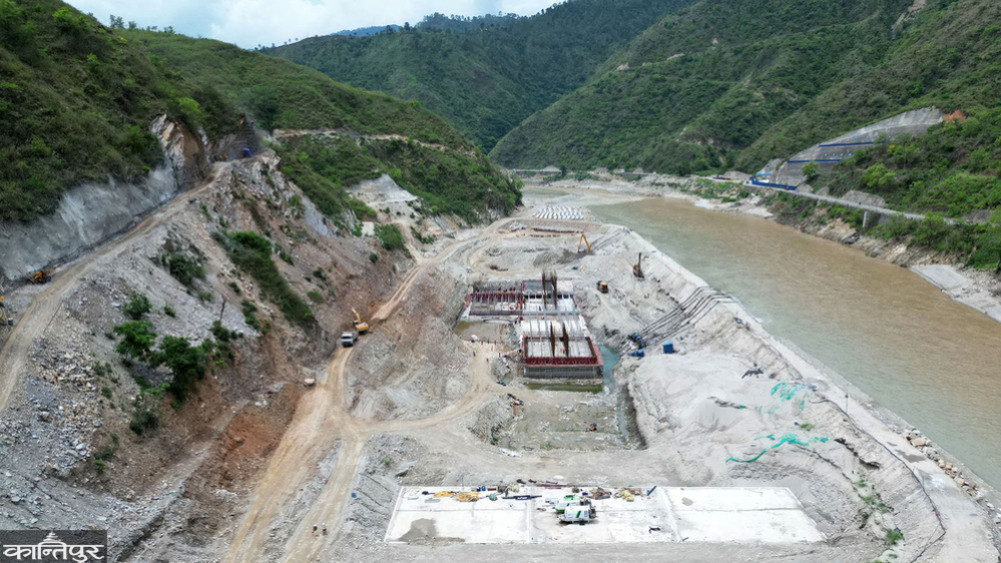
One example is the Sunkoshi-Marine Diversion, which had only 11 percent progress by the time it was 60 percent complete. Even after the contract was terminated, the government has not shown any willingness to move forward with a new process.
We use Google Cloud Translation Services. Google requires we provide the following disclaimer relating to use of this service:
This service may contain translations powered by Google. Google disclaims all warranties related to the translations, expressed or implied, including any warranties of accuracy, reliability, and any implied warranties of merchantability, fitness for a particular purpose, and noninfringement.
Even though 66 contracts that had been ailing for years were terminated, development projects have remained stalled as a new process has not been initiated. The then Minister for Physical Infrastructure and Transport, Energy, Water Resources and Irrigation and Urban Development, Kulman Ghising, had terminated those contracts. However, during his tenure and even after, the government machinery has not shown any willingness to proceed with the new contract process.
After the Gen-G movement, Ghising was appointed as a minister in the Sushila Karki-led government on 30 Bhadra. He resigned from the ministry on 23 Poush, having formed the Ujjaya Nepal Party while he was a minister. He is contesting the election from Kathmandu-3 as a candidate from the Ujjaya Nepal Party.
No new contracts have been awarded for any of the broken projects. As construction entrepreneurs have filed cases against some contracts, it has become difficult to immediately call for new contracts. Out of 227 sick contracts under the Road Department, 41 have been terminated. That is, out of a total of 18 334.2 billion sick contracts, contracts worth 3.86 billion have been terminated.
Most of the contracts are under the Road Division Office, Kathmandu and Postal Highways. The contract for the Kankai Bridge in Jhapa has been terminated after there has been no progress in the work for 14 years under the Postal Highways Directorate. According to the contract agreement signed on 31 Jestha 2068, the bridge should have been completed by 30 Jestha 2072. At that time, the cost was estimated at Rs 349 million. When the deadline was extended for the fifth time, the progress could not be achieved by 60 percent.
The contract was jointly taken by Pappu-Mahadev Khimti. Immediately after the contract agreement was terminated on November 11, the construction company filed a writ petition in the Supreme Court seeking an interim order. But the court did not grant an interim order. 5 contracts have been terminated under the Postal Highways Directorate. The contract was terminated due to lack of work despite repeated time-limits, said Kuber Nepali, Director of the Postal Highways Directorate. ‘There was no interim order from the court on the terminated contracts,’ Nepali said, ‘We will re-contract after evaluating and calculating a new cost estimate.’
Employees say that most of the terminated contracts under the Roads Department are at risk of becoming unclaimed. "We were told to break the contract only after adequate preparation. This means that after breaking the contract, the cost increased, how long it will take to build, and then there is a provision in the law to recover it from the contractor," said an employee of the Road Department. "According to the provisions of the Financial Procedure Act, if the contractor does not recover within 3 years, a letter will be sent to the Kumari Chowk and Central Tehsil Office." The employee said that there was an additional problem because the finance department will give source consent only after completing the legal process. Construction contractors complain that legal complications are causing problems after breaking the contract. They are demanding that it be amended as Sub-section (8) of Section 59 of the Public Procurement Act states that if the contract is broken and the work is left in the middle, the amount spent on the work will be recovered from the contractor. They say that if this provision is implemented, most construction contractors will be on the streets.
‘It takes years to complete such legal processes, so there is still confusion,’ said the Road Department employee. ‘Since the Ministry of Finance has said that the source consent will not be given without completing the legal process, there is a high risk of contracts being abandoned.’ The employee emphasizes that the Ministry of Finance should give consent based on the estimated cost. The Road Department has stated that contracts are terminated as a last resort after no progress is made despite repeated extensions in projects. The employee says that even if contracts are terminated after work is not done by the old construction contractor, more problems arise later and the government should make arrangements for this quickly.
The project and construction contractors concerned are also demanding that Sub-section (8) of Section 59 of the Procurement Act be made practical. Since there is confusion over policy issues in contracts that have been terminated on a large scale, the contracting bodies suggest that this can be resolved only by discussing the issue with the concerned bodies and formulating a policy. "Broken contracts are always problematic," said an employee of the Ministry of Physical Infrastructure and Transport. "Until a decision is made to give mandatory consent to re-do broken contracts on bridges and roads on main highways, there is uncertainty about new contracts."
Shyam Bahadur Khadka, spokesperson for the Road Department, said that preparations are underway to enter into new contracts within the current fiscal year after obtaining source consent for broken contracts. Minister for Physical Infrastructure and Transport Madhav Prasad Chaulagain said that the process of breaking any sick contract will not be moved forward without a proper understanding of it. "Contracts that have not progressed despite multiple extensions will be broken as part of the regular process," he said. "It cannot be said that we have established good governance by breaking many contracts at once." He said that the process of development and construction should not be stopped by sick contracts.
‘We will get the work done from the construction contractor who has already taken the contract, and if they do not work even after giving time, we will proceed with the process of breaking it as a last resort,’ Khadka said, ‘Again, the contracts for bridges to be built on various rivers are more sensitive, we will decide only after considering this.’ He claims that the broken contracts will not be left unattended.
‘Some contracts have become invalid due to government agencies, many have been delayed by the construction contractor,’ Khadka said. He clarified that contracts will not be broken unnecessarily and that they will be broken if there is no progress.
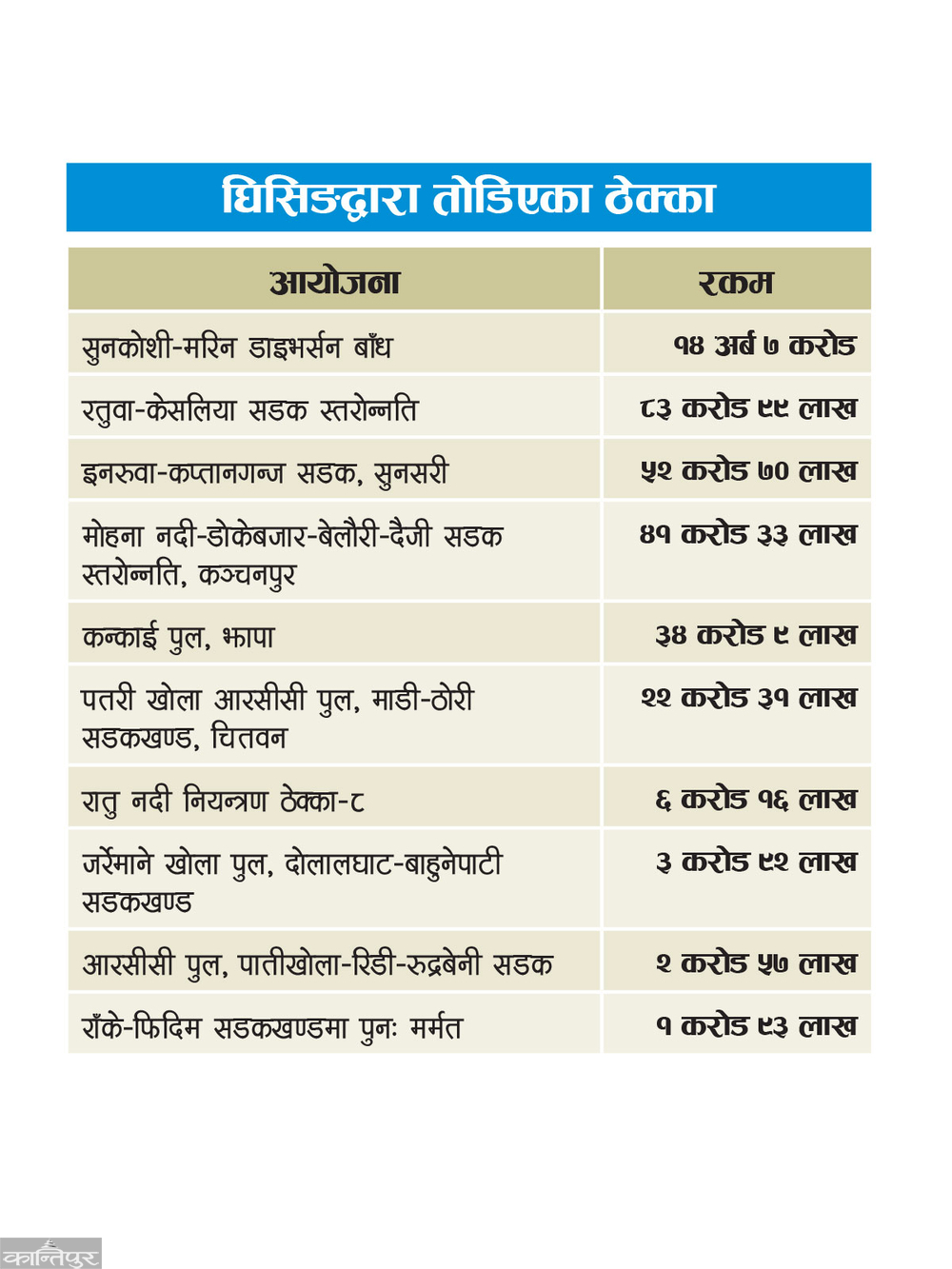
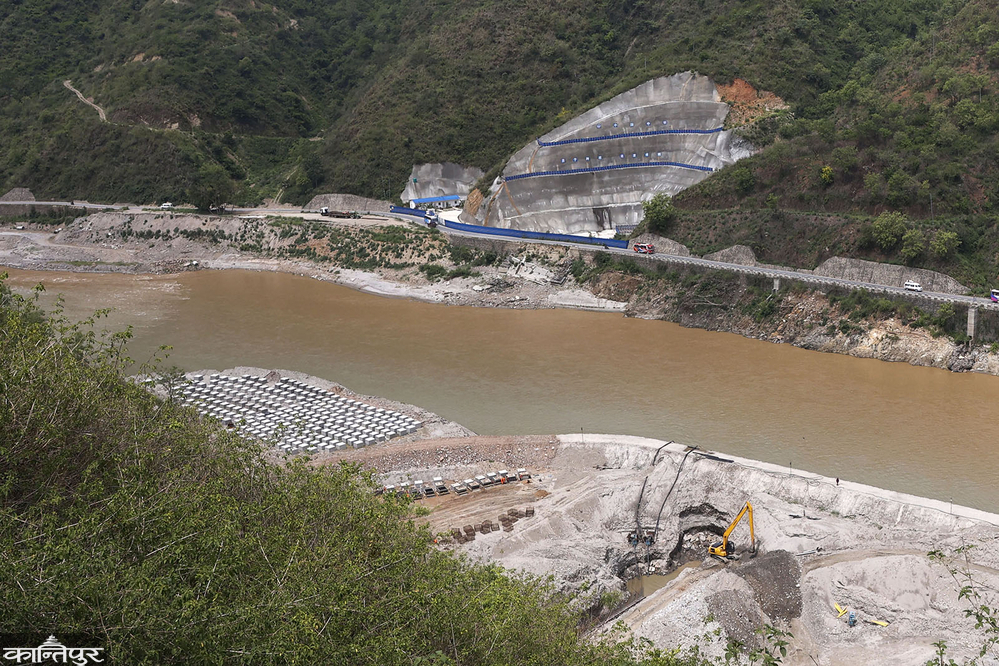
22 irrigation contracts that became invalid due to lack of progress in construction even after a long time has passed since the contract was signed have been broken. The total contract amount of the broken projects is Rs 14.23 billion. Six contracts have been terminated under the Babai Irrigation Project, 15 under the Irrigation and Water Resources Management Project Janakpurdham Dhanusha, and the construction of the Sunkoshi-Marin dam, a national pride.
There are 215 ongoing contracts under the Water Resources and Irrigation Department. Out of these, 33 contracts are problematic. If work is still not done on these contracts, the process of terminating the contract will be taken forward, said Mitra Baral, Director General of the department. 'After the termination of the Sunkoshi-Marin contract, the evaluation work is in the final stage, and work is being done to prepare a cost estimate and seek opinions from the Public Procurement Monitoring Office on how to call for procurement,' said Director General Baral. 'The construction entrepreneurs have gone to the Supreme Court, dissatisfied with the termination of the contract for the construction of the project's dam, and a short-term order has been issued by the Supreme Court and they have been called for discussion.' According to him, the two parties have been called for discussion next Monday. As there has been no decision from the court on this, the contract process has not been able to move forward.
Patel-Raman JV had won the contract for the construction of the dam on the Sunkoshi River in Magh 2079 for Rs 14.759 billion, with a completion time of 4 years and 7 months.
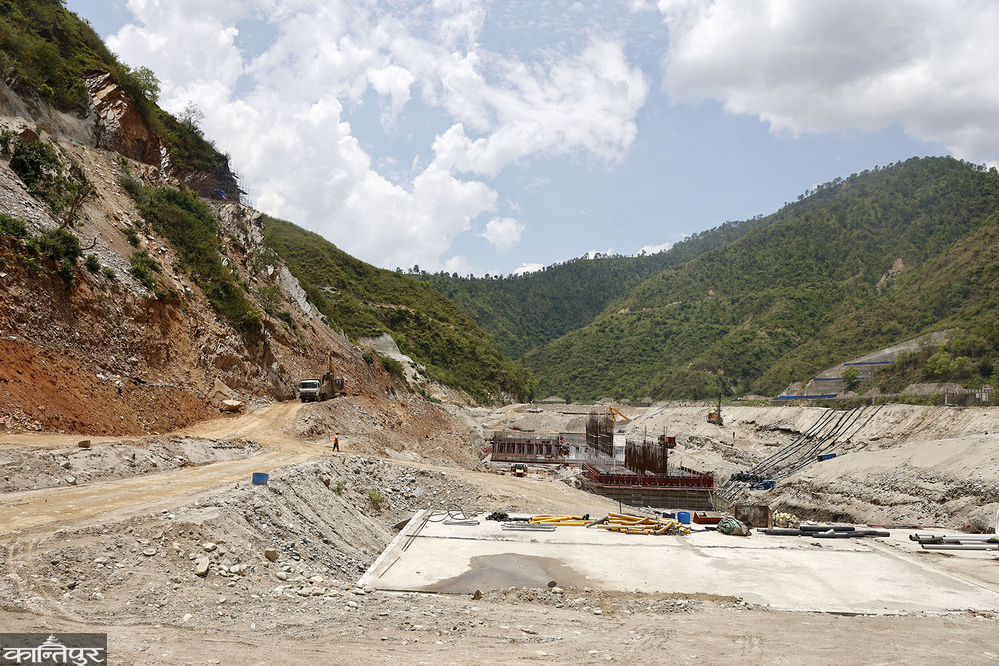
The department has stated that there has been no progress in the contract for the supply and installation of civil structures, gates, hydro-mechanical equipment, and other components of the project. While 60 percent of the contract period has been completed, only 11 percent progress has been made. Along with electricity generation, the main objective of the project is to provide irrigation facilities to 122,000 hectares of Bara, Rautahat, Sarlahi, Mahottari, and Dhanusha. The estimated cost of the overall project is Rs 49 billion. Although the completion time of the project is till 2084, it is estimated that the project will take more time after the dam contract is terminated.
The 'break-through' of the main tunnel was done on 26 Baisakh 2081. The tunnel digging work started on 28 Asoj 2079. Even though the water testing work from the tunnel has been completed and the construction of the dam has not gained momentum.
Since then, the Department of Urban Development and Building Construction has initiated the process of terminating 37 of the 42 contracts that are pending. Of these, 4 contracts have been terminated for the construction of health buildings. The contract amount of the terminated building is Rs 32.5 million.
The process of concluding new contracts for the terminated ones has been initiated, said Rabindra Bohara, Director General of the Department of Urban Development and Building Construction. ‘Construction entrepreneurs have come to work after issuing notices about the pending contracts,’ he said. ‘We are also initiating the process of terminating contracts that have not been completed even after issuing notices.’
Former Minister for Physical Infrastructure, Energy, Water Resources and Irrigation and Urban Development Kulman Ghising said that the process of terminating contracts that have not been completed for a long time was initiated during his tenure.
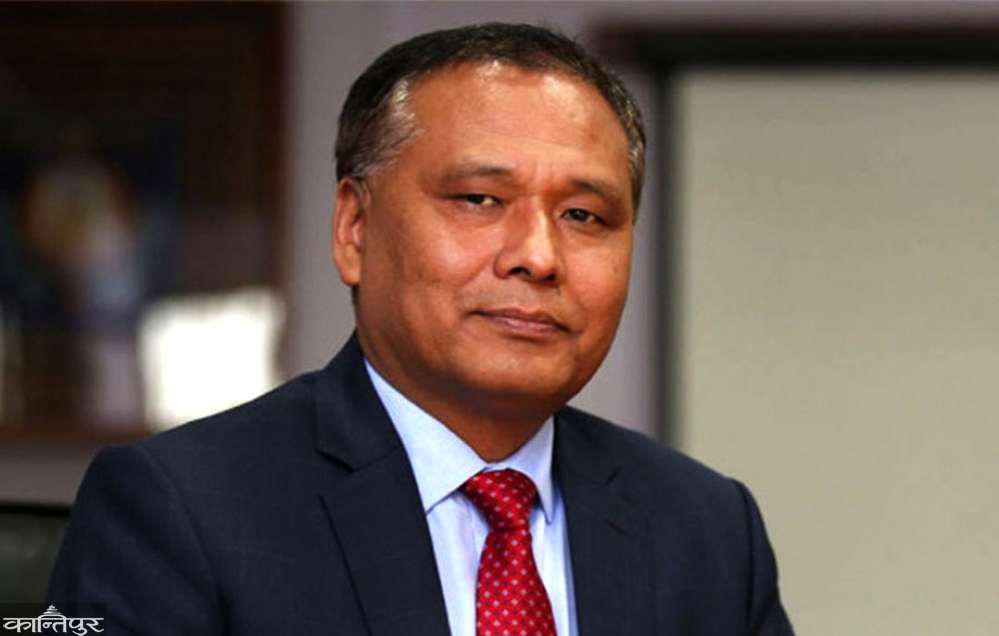 ‘What can be done without breaking the contract of a project that has not been worked on for 14 years?’ He said after being accused of breaking the contract without studying, ‘Can you come now and say that the contract was broken in a hurry?’ He said that a new contract should be signed immediately after breaking it. ‘Where can we find those who do not work, remain silent, and sit around thinking that the broken contract is unclaimed?’ He said, ‘Actions should be taken against the secretaries and employees who do not work quickly in this regard, we cannot sit around saying that the work has not been done, we should work by arranging the budget.’
Joint Secretary and Spokesperson of the Ministry of Finance Tanka Prasad Pandey said that there would be no problem in giving source consent to projects that have completed the legal process. ‘There was no problem in discussing the amount required for the new contract as per the Procurement Act,’ he said, ‘However, if it is in accordance with the law, there is no problem in giving source consent.’
Former Secretary Arjun Jung Thapa says that some contracts were not completed due to the weaknesses of the construction entrepreneurs and that it was natural for them to be broken. ‘In such cases, action should be taken against those who do not work, but the fault of the construction entrepreneurs is not seen only in all the contracts broken by the Road Department,’ he said, ‘Some government agencies have also had shortcomings, lack of sufficient budget and unavailability of sites, so the work has not been completed.’ He suggests that adequate budget should be arranged after the government contracts and gets the work done.
‘Those who do not work should have been taken action now and those who do should have been given a chance,’ Thapa said, ‘But when the former minister decided to break the contract in a hurry to show work, the construction entrepreneurs went to court. There is a high risk of such contracts becoming unclaimed.’ He said that when various political parties were in power, there was a lack of budget in the ongoing projects when the budget was scattered like a random scattering of sand on the small pieces of their houses and courtyards.