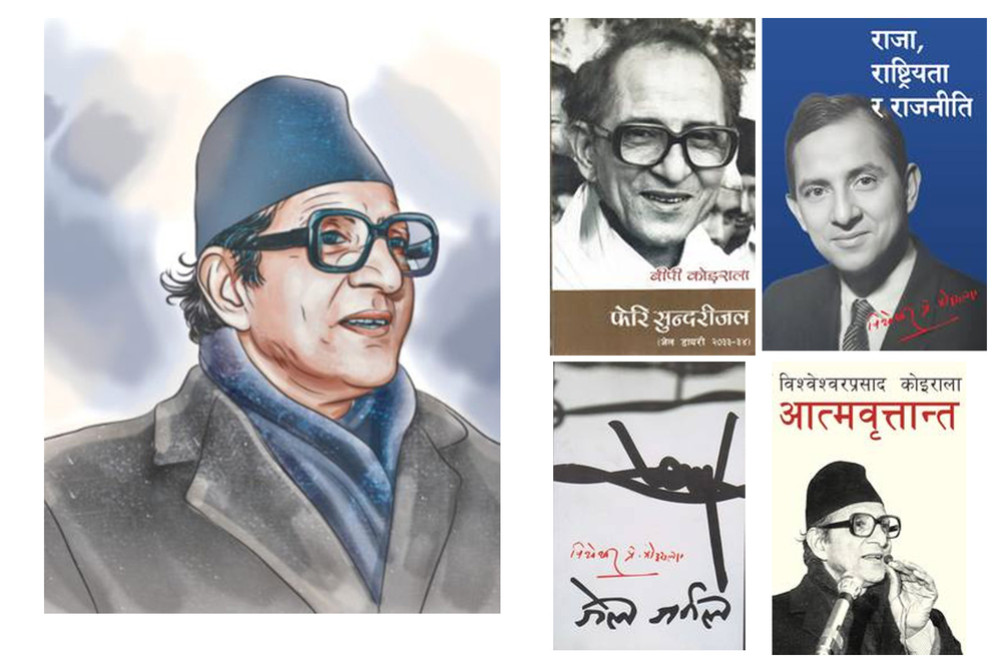
The court has banned the promotion, sale and distribution of 'Jail Journal', 'Autobiography', 'Pheri Sundarijal' and 'King, Nationality and Politics' published by Lipi Books.
We use Google Cloud Translation Services. Google requires we provide the following disclaimer relating to use of this service:
This service may contain translations powered by Google. Google disclaims all warranties related to the translations, expressed or implied, including any warranties of accuracy, reliability, and any implied warranties of merchantability, fitness for a particular purpose, and noninfringement.
Lipi Books is in trouble over the copyright of BP Koirala's books. The Patan High Court has temporarily banned the sale and distribution of BP's four books, 'Jail Journal', 'Autobiography', 'Pheri Sundarijal' and 'Raja, Rastriyata Rajanje', after Jagdamba Prakashan filed a case claiming that it owns the copyright.
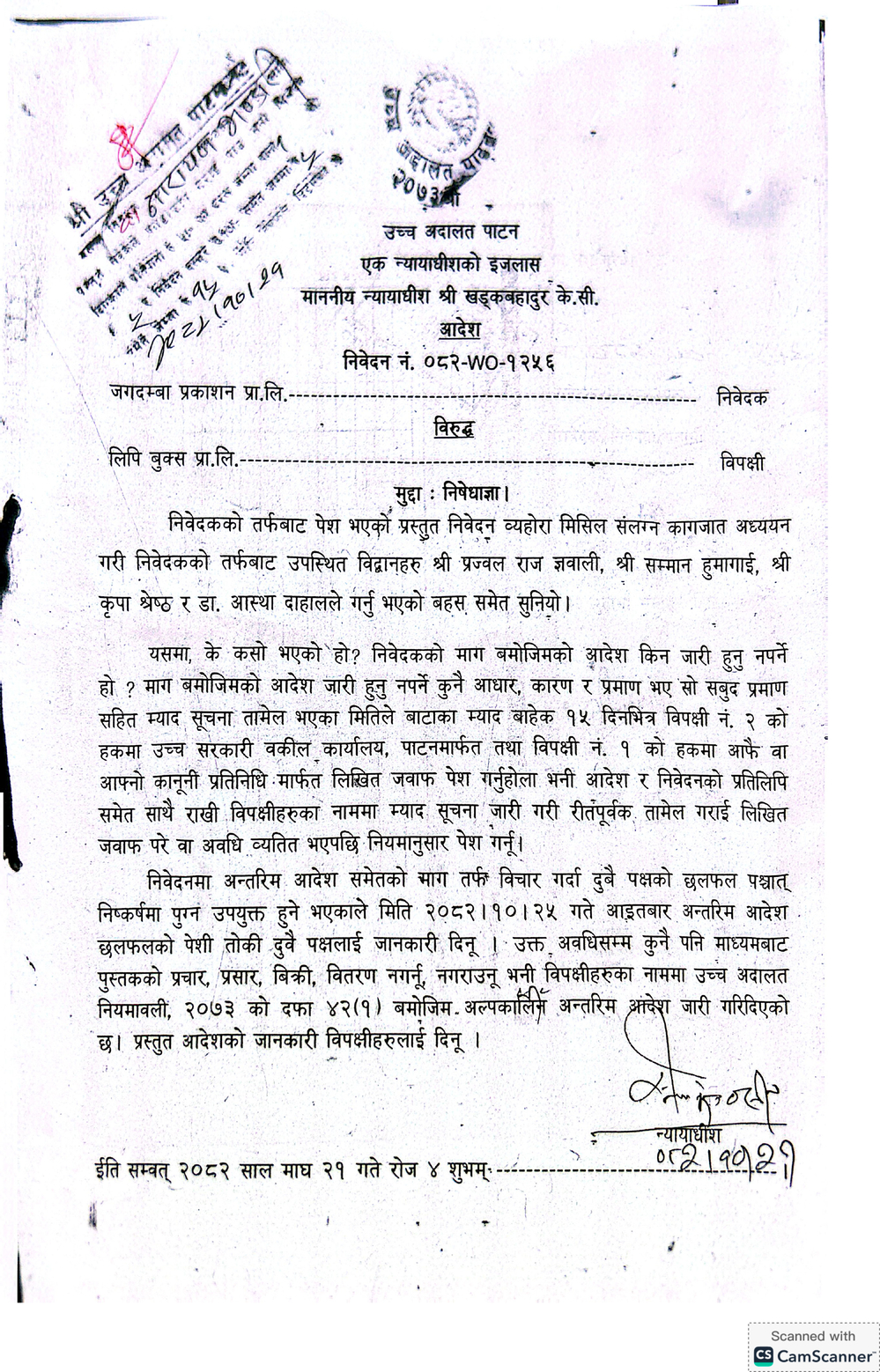
Hearing Jagdamba's writ petition, a single bench of Patan High Court Judge Khadka Bahadur KC issued a short-term interim order. The court also said that a conclusion can be reached on the interim order only after discussions between both parties. The court has scheduled a hearing on Sunday and called both parties for discussions.
'A short-term interim order has been issued in the name of the defendants pursuant to Section 42(1) of the High Court Rules, 2073 BS, prohibiting them from promoting, distributing, selling, or distributing the book through any medium for the said period,' the court order said. The court also asked the defendant Lipi Books to submit a written response within 15 days from the date of service of the notice of deadline, excluding the travel time.'
Following the court's short-term interim order, Jagdamba has issued a statement warning that further legal action will be taken if any illegal activities like buying, selling, distributing, advertising books are carried out in violation of the order.
Jagdamba had published 'Jail Journal' in 2054 BS, 'Autobiography' in 2055 BS and 'Pheri Sundarijal' and 'Raja, Rastriyata Rajanje' in 2063 BS. Jagdamba has stated that Lipi Books Pvt. Ltd. has filed a case alleging that they are publishing, selling and distributing books in violation of Nepal's copyright law.
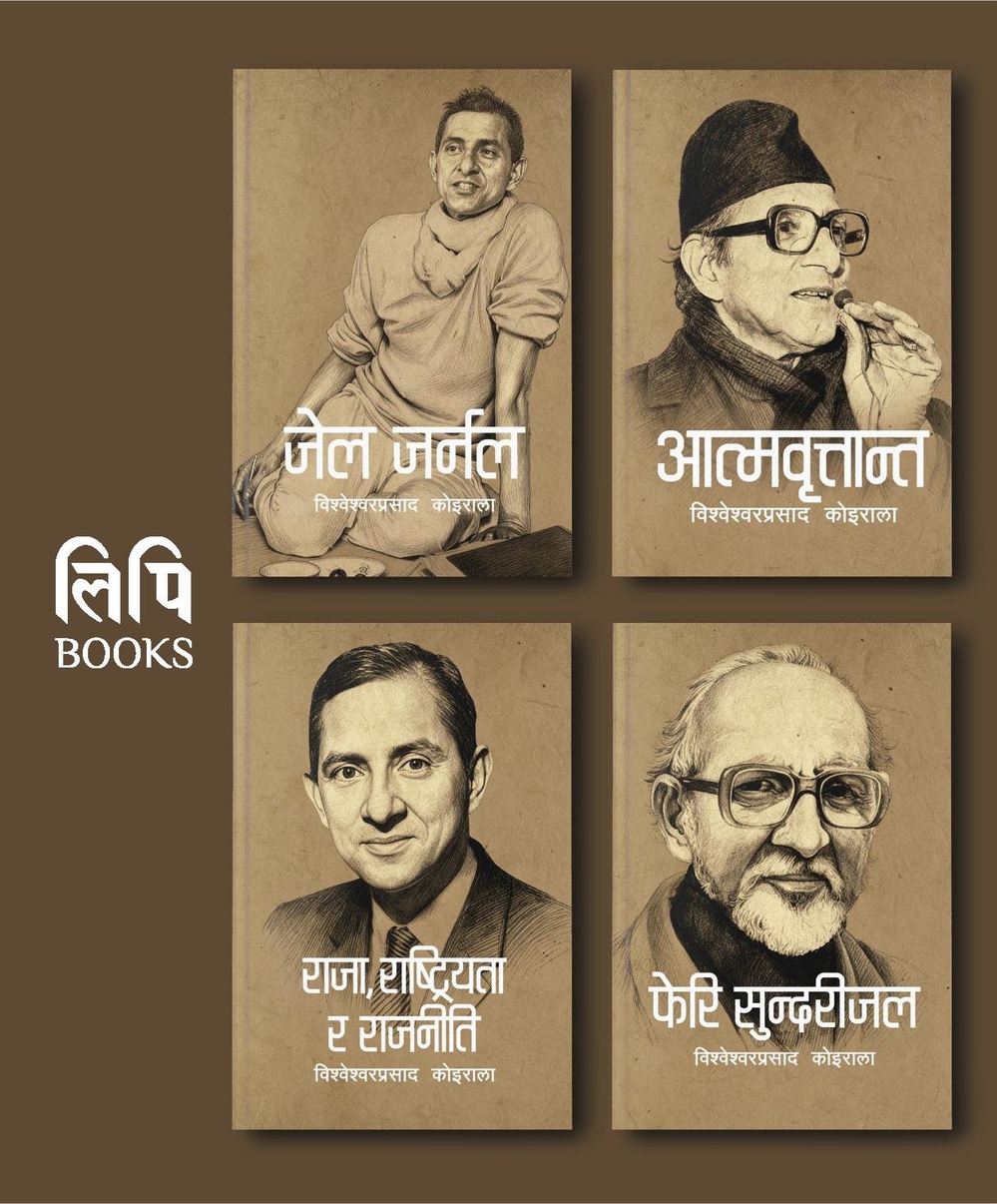 Jagdamba has claimed the copyright of these four books of BP with him. The statement states that Ganeshraj Sharma, who is also BP's lawyer, has given the copyright to Jagdamba.
Jagdamba says that BP entrusted Ganeshraj Sharmaji with the task of preserving his materials as 'NASO' and publishing them when the time comes. 'The book compiled, preserved, handwritten, recorded audio, edited, translated by Ganeshraj Sharma was preserved as 'NASO' in the then difficult situation. Fulfilling the responsibility of publishing and making the collected materials public at the appropriate time, Ganeshrajji said, "Since I saw that the publication and copyright of this work systematically vested in Jagdamba Prakashan Pvt. Ltd. is in accordance with the author's aspirations and respect, I have legally transferred all the rights related to the copy of this work to Jagdamba Prakashan Pvt. Ltd. under the following conditions stipulated in this article," Jagdamba said in a statement.
Jagdamba has stated that he has been fulfilling his responsibility of preserving, publishing and making available BP's materials available since 2054 BS.
Arjun Adhikari, publisher of Lipi Books, claims that they printed the book after obtaining permission from the BP Koirala Memorial Trust. 'We were given permission by the BP Koirala Memorial Trust. Since other matters have already gone to court, it will be decided from there,' Adhikari said.
Similarly, BP's step-son Shriharsh Koirala said that even though they gave permission to the script, he was not aware of the legal aspects. 'It may have been given by the BP Koirala Memorial Trust. I don't know what the legal aspects are,' he said.
What is the legal system?
The Copyright Act-2059 is currently in force in Nepal. However, despite many preparations to amend the Act to make the control and prevention of copyright infringement and theft of intellectual property more effective and to empower the Office of the Registrar of Copyrights, it has not been implemented.
 Copyright infringement is considered a government case in the Copyright Act-2059. In such cases, the plaintiff must file a complaint with the police office. The investigation and inquiry of this case is conducted by at least a police inspector. Section 25 of the Act contains various grounds for ‘concluding that a provision has been deemed to have violated a protected right’. Sub-section (a) of this section states—‘If, without obtaining the permission of the author or copyright owner or despite having obtained permission, he/she produces copies of a work or sound recording that is not his/her right, for commercial or any other purpose, and sells, distributes or publicly communicates or rents it.’
Similarly, Section 26 of the Act prohibits the import of unauthorized copies. The said section states, ‘Copies of any work or sound recording that would be considered an unauthorized publication if prepared in Nepal shall not be prepared abroad or obtained by any other means and imported into Nepal for commercial purposes.’ Although Section 27 provides for punishment for violation of protected rights, the implementation aspect in Nepal is weak.
Section 14 of the Act contains provisions regarding the duration of copyright protection. Section 14(1) states, ‘The economic and moral rights acquired by an author under this Act shall be protected during the life of the author and in the event of his death for fifty years from the year of his death.’ Similarly, Section 14(2) states, ‘In the case of a jointly prepared work, the economic and moral rights shall be protected for fifty years from the year of the death of the author who dies last among the authors.’
Similarly, Section 15 mentions the period of protection of a work published after the death of the author. Section 15 states, 'Notwithstanding anything contained in Section 14, if a work has only one author, and if there are two or more authors, if any of them has died, the work published after the death of any one of them shall be protected for fifty years from the year of publication.'
It has not been 50 years since BP Koirala passed away. He passed away on 6th Shrawan 2039 BS.
According to Section 25, a person who violates protected rights for the first time is liable to a fine of 10,000 to 100,000 rupees or imprisonment for 6 months or both, depending on the severity of the offense. If the same person commits the same offense for the second time, a fine of 20,000 to 200,000 rupees or imprisonment for one year or both may be imposed. There is also a legal provision that any materials published, reproduced, distributed or used for reproduction, including the press, will be confiscated.
Similarly, those who import unauthorized copies will be fined between 10,000 and 100,000 rupees. In addition, the copyright holder will have to bear the losses caused by such imports.
Related news