Increasing human encroachment on wetlands, uncontrolled mining and pollution of rivers and streams, invasive species of weeds around bird habitats, and increasing pesticide use in agriculture are contributing to the decline of waterfowl.
We use Google Cloud Translation Services. Google requires we provide the following disclaimer relating to use of this service:
This service may contain translations powered by Google. Google disclaims all warranties related to the translations, expressed or implied, including any warranties of accuracy, reliability, and any implied warranties of merchantability, fitness for a particular purpose, and noninfringement.
A month ago, during a bird count from Lothar to Ghatgai in the Rapti River in Chitwan, 2,740 Chakhewa-Chakhewi were found. Last year, during a count in the same area, 4,170 Chakhewa-Chakhewi were counted.
Similarly, last year, only 200 of the Silsile Ducks were found in the Jagdishpur Bird Sanctuary, which had about 2,000 counts, this year. That too, not in the lake but in the adjacent fields. Not a single nationally endangered Hari Hans, which had 72 counts last year, was seen this year. Similarly, the Surjure Duck has also been counted in Jagdishpur, which has been counted by about 1,000 less than last year.
According to the latest count, the number of waterfowl has decreased from Ghodaghodi in western Kailali to Barjutal in eastern Sunsari. Laxman Paudyal, the national waterfowl census coordinator for Nepal at Wetlands International, said that the number of waterfowl has decreased in the count conducted across the country under the coordination of the Nepal Ornithologists' Association.
Waterfowl are declining due to increasing human encroachment on wetlands, pollution of rivers, streams and lakes, and shrinkage of wetlands. Similarly, birds are also facing problems due to uncontrolled mining of rivers and streams, weeds around bird habitats, and increasing use of pesticides in agriculture.
55 percent decrease in water birds in eight years
The number of water birds has decreased in a census conducted in 78 places under 18 major wetlands across the country. The data from the National Bird Census conducted from December 19 to January 4 shows that waterfowl are declining.
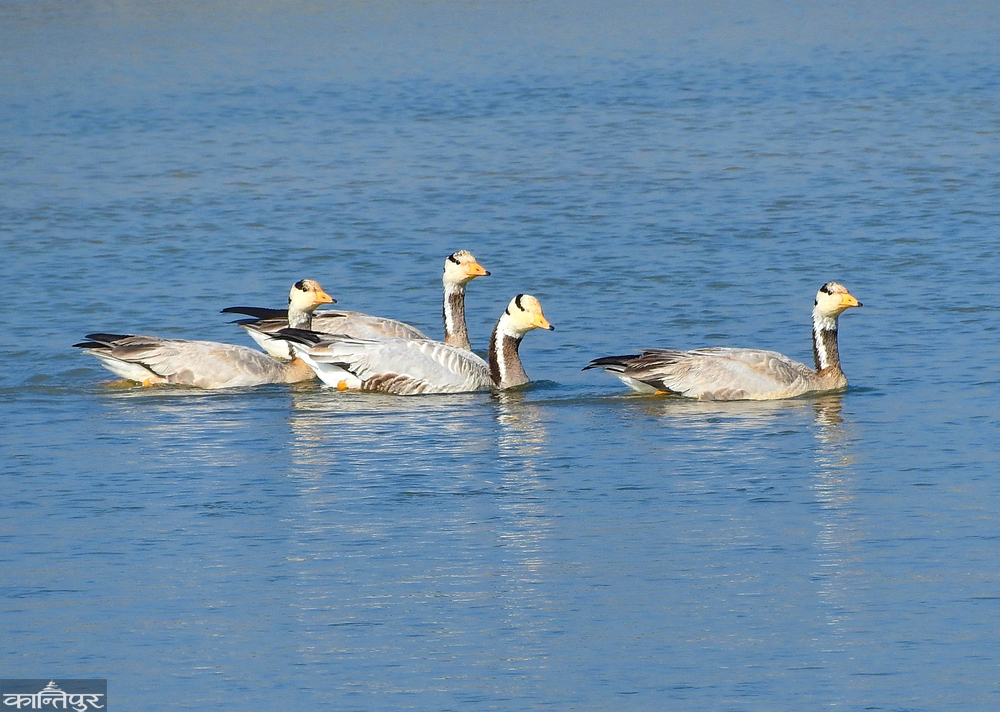
In Jagdishpur Lake alone, which has been sheltering the largest number of water birds in Nepal, the number of birds has decreased by 55 percent in eight years. Ornithologist Hathan Chaudhary said that while 23,000 birds were counted in 2018, it decreased to 10,282 birds in 2026. ‘Species have also decreased. There is a huge fluctuation in the number.’ In 2025, 12,832 birds of 48 species were counted in the lake, while in 2026, 10,282 birds of 41 species were counted,' he said.
He said that the birds felt unsafe due to steamer operations, increasing human activities and uncontrolled poaching of fish in the 157-hectare lake. The noise pollution caused by boat operations, picnics, dancing and singing in the lake and the increased environmental pollution caused by the transportation of river-borne products have disrupted the habitat of the birds, leading to a decrease in their numbers, said senior ornithologist Dr. Hemsagar Baral. 'Three or four years ago, two to three thousand birds could be seen in a single flock,' he said, 'In the last one or two years, flocks of more than 5 to 6 hundred have not been seen.'
Similarly, both the species and number of birds have also decreased in Ghodaghodi Lake in Kailali. Last year, 1,250 birds of 26 species were counted, while this year 1,000 birds of 24 species have been counted. Ghodaghodi Lake is the country's first bird reserve. Ornithologist Ram Shahi said that the number of water birds has also decreased in Banke and Bardiya.
Species increased in Chitwan, number decreased
The number has also decreased in Chitwan National Park, another major destination for birds. In the census conducted by dividing it into eastern, western and central sectors, 27,000 birds of 61 species were counted last year, while 25,000 birds of 63 species have been counted this year.
Of which, there has been an increase in the West Chitwan (Nawalpur) sector. In 2025, 9,548 birds of 41 species were counted, while in 2026, 12,887 birds of 42 species were counted, said coordinator DB Chaudhary. He said that the largest number of birds was counted at 8,523, and the largest number was counted at 946.
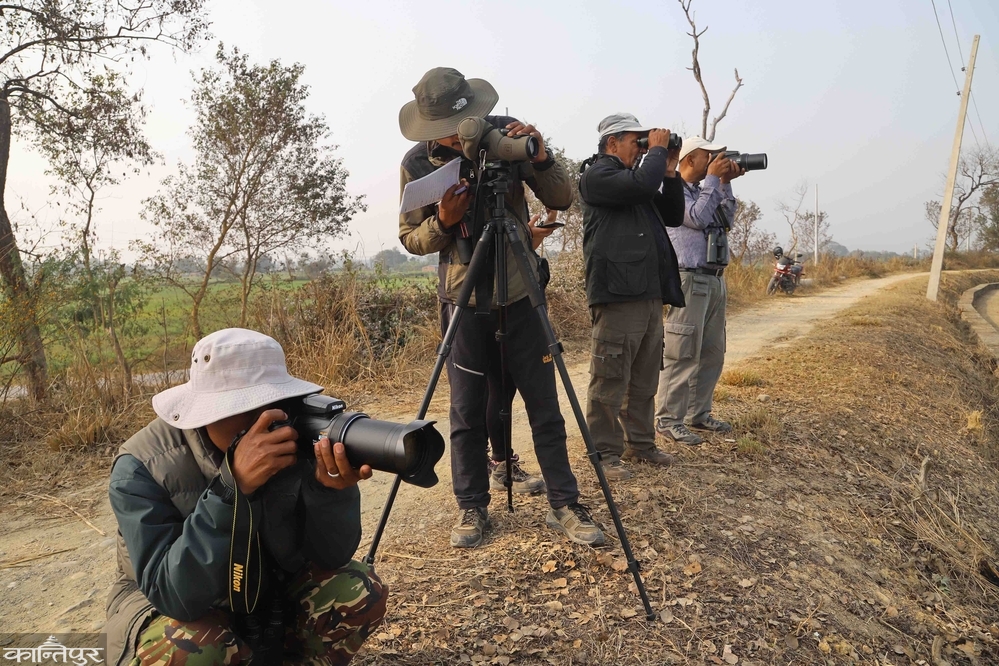 Similarly, birds have also decreased in Koshi and Barju lakes. Here, 10,000 birds of 67 species were counted here in 2025, but 6,000 birds of 56 species have been counted this year. In Barju Lake in Sunsari, 4,000 birds of 33 species have been counted this year, while 6,04 birds of 34 species were counted last year.
In the census conducted at 11 places in the Pokhara Valley, the number of birds has increased. However, the species have decreased. In 2025, 34,000 birds of 55 species were counted, but 37,000 birds of 46 species have been counted this year.
The number of waterfowl across the country is less than one lakh. Last year, 94 species of birds were counted across the country, but this year 5/7 species have been counted less. Tourists who enjoy watching waterfowl in Jagdishpur Lake could not enjoy it this year. Wildlife photographer Sudeep KC said that tourists were also disappointed as they could not see the birds' feeding habits, water activities and the excitement of their play.
Senior ecologist Haribhadra Acharya of the National Parks and Wildlife Conservation Department said that the number of migratory birds is usually found by counting and monitoring during the non-breeding period. He said that the number of waterfowl, their habitat conditions and bird activities are counted every year to make a conservation policy plan.
903 species of birds in Nepal
903 species of birds have been found in Nepal this year. Of these, 664 species of birds are found in Chitwan alone, but the low number is a matter of concern, said ornithologist Tikaram Giri.
According to ornithologists, about eight percent of the world's birds are found in Nepal. Foreign tourists come to Nepal to see those birds. This has helped promote tourism here.
Bimal Thapa, president of the Bird Conservation Association, said that this is important because the arrival of water birds gives information about the environment of the country's lakes and wetlands. 'The arrival of birds should not be taken for granted,' he said, 'it is an indicator of the cleanliness of the biodiversity here.'
This is why waterfowl are declining
Ornithologist Dr. Baral said that since the arrival of waterfowl is decreasing, we should be aware of it in time. He said that the number of winter visitors dependent on wetlands has been decreasing in recent years due to encroachment and shrinkage of wetlands. Baral says that birds are also at risk due to obstructions in flight paths and the increasing use of chemical fertilizers. Migratory birds are at high risk of natural and human predation as they get tired of traveling long distances and have to find new places to shelter.
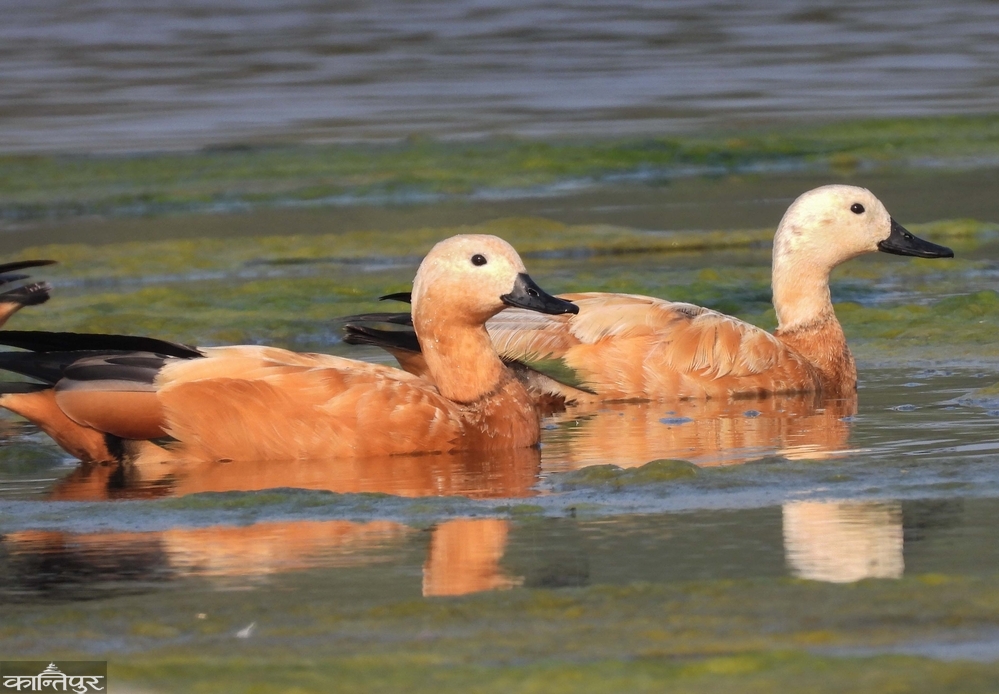
Waterfowl dependent on wetlands have been counted annually since 1987. The latest count has shown that the condition of waterfowl is endangered. 13 species of waterfowl are among the rarest birds in the world found in Nepal.
Birds begin migrating as soon as snowfall begins in the Arctic. Thousands of birds come to the wetlands, ravines, lakes and rivers of the mountains and Terai to escape the winter. Some return after giving birth and raising their young. Winter birds from the northern countries of Russia, China, Mongolia, as well as Europe, Korea and the Tibetan region come to Nepal.
Similarly, birds also come here from Turkmenistan and Siberia in Central Asia. There are statistics that more than 150 species of birds come here every year.

