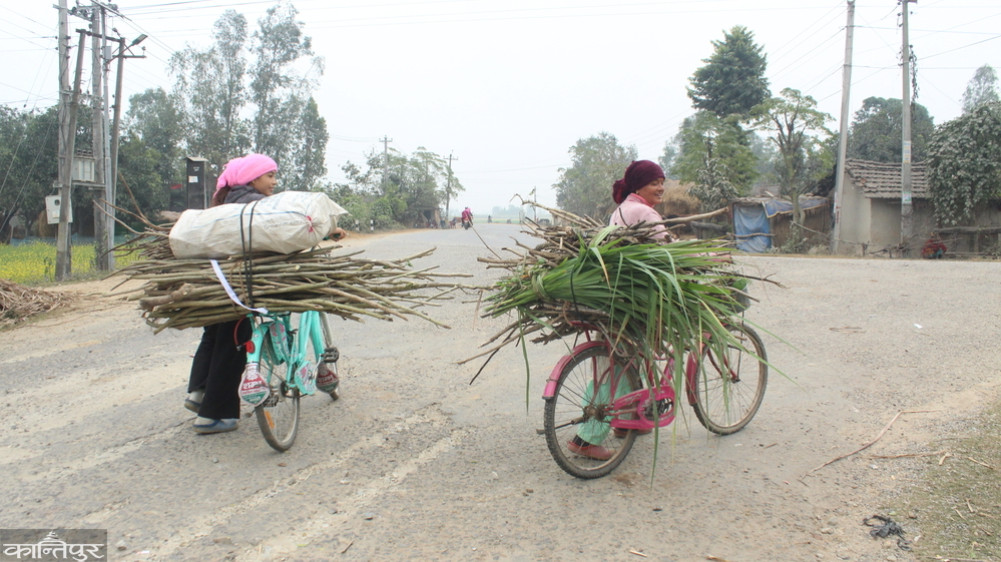
According to the National Disaster Risk Reduction Agency, the Far West has experienced 4,116 disaster events in the last 10 years, resulting in 429 deaths.
We use Google Cloud Translation Services. Google requires we provide the following disclaimer relating to use of this service:
This service may contain translations powered by Google. Google disclaims all warranties related to the translations, expressed or implied, including any warranties of accuracy, reliability, and any implied warranties of merchantability, fitness for a particular purpose, and noninfringement.
Satyawati Rana of Punarbas-5, Simari, Kanchanpur starts looking for a safe place to live every year with the onset of Asar. She has been wandering for six years to save her children, food and clothes during the monsoon. Wards 2 and 5 of Punarbas are at risk of flooding and inundation. Satyawati said that 123 houses in Simari settlement will be affected by the flood of the local Doda River.
Simari has been experiencing floods for many years. The village used to be submerged like it is now. Dakni Rana, 38, from Simari, said that the first flood in the settlement occurred in 2064. The next year there was also flooding. However, the floods did not cause trouble for a long time. She said that floods have been occurring every year for the past 6/7 years. ‘Until 15/16 years ago, there was no problem of flooding in Simari,’ she said. ‘It has been 6/7 years since floods started bothering us.’ Rana said that the cycle of rainfall has changed in recent years. ‘Earlier, there was a steady rain for a long period,’ she said. ‘Now, even in Kartik, heavy rain suddenly comes.’ An incident that happened in Kanchanpur two years ago shows how much the rainfall pattern has changed. According to the Department of Hydrology and Meteorology, 624 millimeters of rainfall was measured in Dodhara Chandni of Kanchanpur within 24 hours on Ashad 23 and 24. This is the highest rainfall ever measured in Nepal.
Short-term rainfall and subsequent floods are causing increasing economic and non-economic losses. Chandrawal Basic School in Simari houses those displaced by floods every year. The school is closed from the day the flood hits the village. The school does not open until the effects of the flood subside. Locals say that the education of children who were not affected by the flood has been affected along with the education of children who were not affected.
A major disaster occurred in Kanchanpur on Ashad 23 and 24. A study survey conducted by the National Disaster Risk Reduction and Management Authority (NDRRMA) found that 88.21 percent of families experienced mental stress and trauma. The report revealed that more than 75 percent of them did not receive any kind of psychological counseling or support. 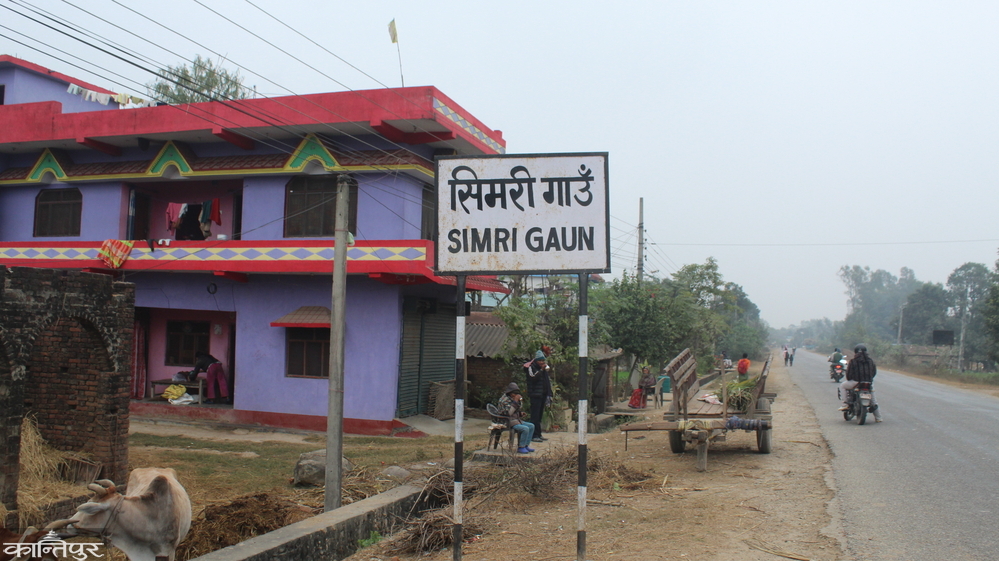
Many families who returned to the affected areas after the flood to restart their daily lives are drowning in debt. According to the report, the affected have taken loans of more than 2.17 million rupees for house repairs and livelihood. Which has pushed them into a long-term financial crisis.
The district suffered a financial loss of more than 2.25 billion rupees due to the disaster. 5 people died and 2 were injured due to the flood in the district. 1,109 houses were completely destroyed by the flood. The NEA's study states that 8,026 houses were partially damaged.
The flood caused a loss of about 830 million rupees to agriculture, which is the backbone of the district. Crops planted and stored grain on 30,463 hectares were destroyed.
//
Similar problems in Kailali
Not only Kanchanpur, the flood victims of Kailali are equally worried. Sangita Chaudhary of Bandargaudi, Kailari Rural Municipality-5 of the district, was displaced by the flood. The flood of 2078 BS displaced the entire village of Bandargaudi. 'After the flood entered the village, we were all shifted to Manakamana School.' We had no food left,' Sangeeta recalls, 'We used to have a family of 8/10 people in one house, but they would give us 1 bottle of water and a packet of noodles each for food.'
When we could not eat well, there was no way to get the necessary health supplies. At that time, Sangeeta said that she did not even get clean cloth to make pads after her period. Later, the Women's Rehabilitation Center Orek took pregnant women, children and the disabled from the school and put them in a safe house. After the displacement, the locals who were kept in the local Pavera Community Forest for some time have not been managed even after four years. The settlements near the forest are sometimes facing trouble from wild animals and sometimes from forest officials.
'The community forest is trying hard to remove them from here. Sometimes they demolish the houses. Sometimes they say to evacuate quickly,' she said, 'We have finally been able to live in peace after the municipality made a flood evacuation recommendation.' Such suffering is not only being experienced by Sangeeta, but also by the Bandargaudi settlement.
A research paper titled 'Flood Sensitivity Assessment Using Machine Learning Approach in the Mohana-Khutia River of Nepal' published in the international journal 'Natural Hazards Research' (2024) has stated that 20 villages around the Mohana and Khutia river system flowing through Kailali and Kanchanpur are at high risk of flooding. The study showed that 4.9 percent of the area is highly vulnerable to flooding. According to this, out of 171 villages in the coastal areas of Mohana and Khutia, 20 are at high risk, 46 are at medium risk, and 105 villages are at low risk.
According to the study, the villages at high risk are Badhara, Bajahange Tole, Barhanambar Basti, Bela, Beli, Chowkidanda, Dhanchauri, Dhangadhi Gaun, Geti, Ghodaghat, Kaluwapur, Karkikatan, Rajghat, Shantipur and Tarbariya. The study covered nine municipalities in Kailali and Kanchanpur. Of these, Dhangadhi Sub-metropolitan City of Kailali, Godavari, Gauriganga, Bhajani, Kailari and Mohanyal and some parts of Krishnapur, Punarbas, Bedkot and Shuklaphanta municipalities of Kanchanpur are in the flood risk zone.
No budget expenditure
According to the National Disaster Risk Reduction Statistics, Sudurpaschim has experienced 4,116 disaster incidents in the last 10 years. 429 people have lost their lives due to this. Among the deceased were 204 men, 206 women, 5 boys and 6 girls. There are 2 men and 5 women senior citizens, along with one unidentified person. 1,579 people have been injured and 24,503 families have been affected by these disasters.
According to the Ministry of Internal Affairs and Law, there have been 506 disaster incidents in the Far West in the current fiscal year alone. This has resulted in 46 deaths, 260 injuries and 4 missing persons, resulting in a financial loss of nearly Rs 20 million. On the one hand, disaster incidents are increasing, but on the other hand, the budget allocated by the provincial government for disaster management is not being spent. In the six fiscal years from 075/76 to 080/81, the province had allocated a budget of Rs 260 million for disasters. But out of that, only Rs 115.7 million has been spent. According to the Ministry of Internal Affairs and Law, a large portion of the allocated budget is frozen every year. 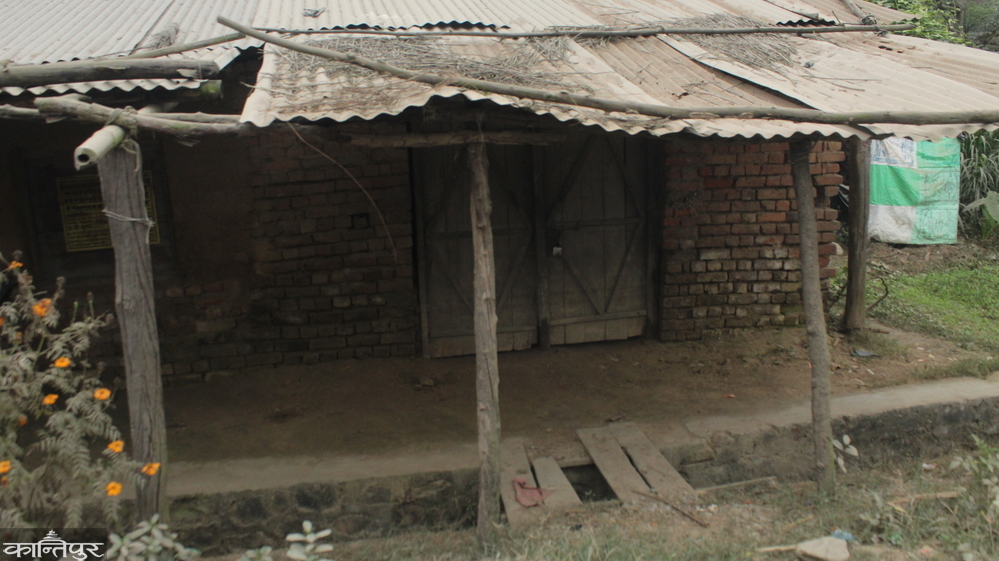
The province had set up a fund of Rs 10 million against the allocation of Rs 37.25 million for disasters in the fiscal year 2075/76. Apart from that, only Rs 20 million was spent, while Rs 22 million was frozen. Similarly, in the fiscal year 2076/77, there is data that only Rs 8 million was spent against the allocation of Rs 58.8 million. This year too, Rs 10 million was kept in the fund. In the fiscal year 2077/78, only Rs 18 million was spent against the allocation of Rs 31.98 million. According to the provincial government, in the fiscal year 2078/79, only Rs 1 million was spent against the allocation of Rs 24.8 million. Similarly, in the fiscal year 2079/80, only Rs 21.56 million was spent against the allocation of Rs 43.5 million. In the fiscal year 2080/81, only Rs 43.15 million was spent against the allocation of Rs 63.75 million.
//
Ministry's Information Officer Madhav Prasad Joshi says that the procurement of goods is not possible due to legal obstacles. 'Due to legal obstacles, the disaster budget is not fully spent,' he said. According to Janak Dhami, disaster contact person at the Ministry of Internal Affairs and Law, there are various reasons for the non-spending of the disaster budget of the Far West. 'It looks big just by looking at the budget. It is allocated under various headings,' he said, 'The budget of one heading cannot be spent under another heading.'
Women in the Martyrdom
Women and children have been killed in disaster-related incidents. According to the National Census 2078, 52.77 percent of the total population of the Far West is women. Although 47.23 percent are men, most of them are in India and third countries for employment.
//
‘Because men go abroad, only women, children and the elderly are at home.’ That is why the disaster has fallen on the part of women,’ says Geeta Chaudhary, coordinator of Orec Kailali, ‘Women who are at risk themselves are having to bear all the burden alone.’ She says that this has a huge impact on women’s mental, economic and social lives. The wave of men going abroad is also increasing in the Far West. According to the Department of Employment, the number of people seeking work permits for foreign employment from the Far West has increased by 18 times in the last five years. According to the department’s data, 1,482 people obtained work permits in the fiscal year 2077/78. By the fiscal year 081/82, this number had reached 27,165.
//
According to the World Meteorological Organization, Asia was the region most affected by climate and water-related disasters in 2023. According to the United Nations Environment Programme, 89 percent of those who die from natural disasters in the world are women. Women account for 80 percent of those displaced by climate-related disasters. Studies have shown that women and girls are up to 14 times more vulnerable than men during disasters.