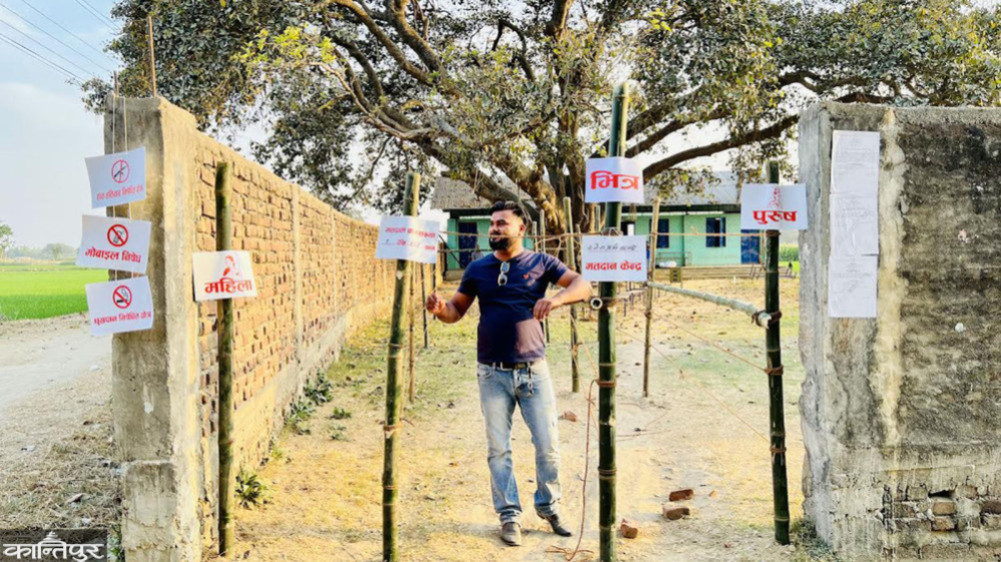
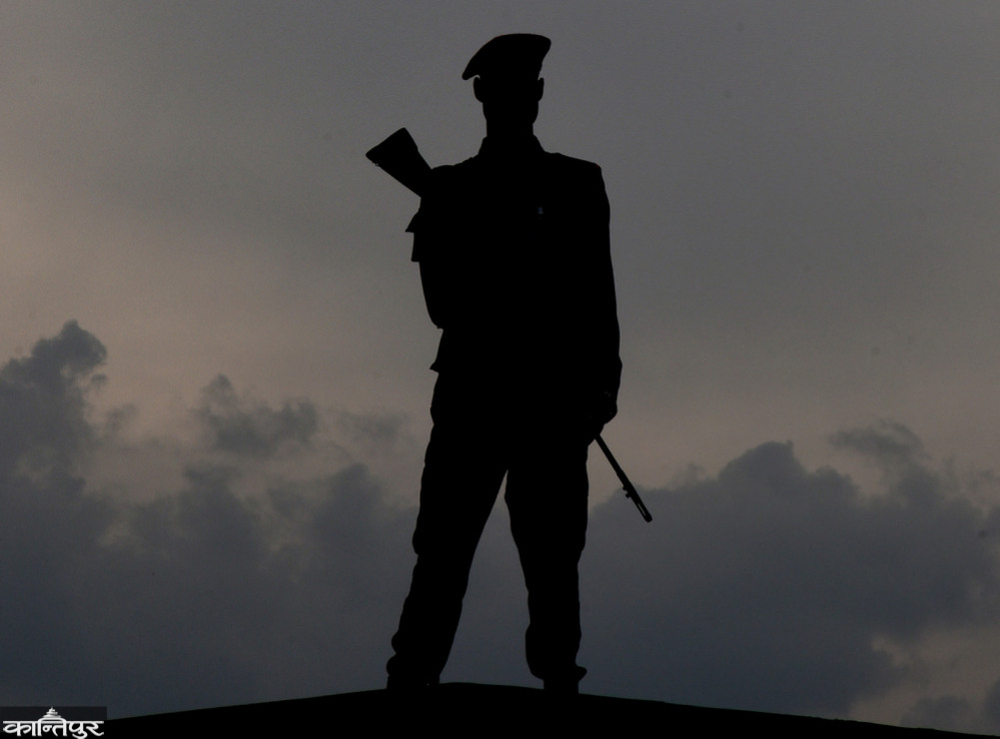
Nepal Police, Armed Police Force and Nepal Army will be deployed at polling stations classified according to security challenges. 149,090 election police officers, deployed under the police and Armed Police Force, are also being mobilized for security deployment.
We use Google Cloud Translation Services. Google requires we provide the following disclaimer relating to use of this service:
This service may contain translations powered by Google. Google disclaims all warranties related to the translations, expressed or implied, including any warranties of accuracy, reliability, and any implied warranties of merchantability, fitness for a particular purpose, and noninfringement.
The Election Commission has already designated 11,901 polling stations for the upcoming House of Representatives elections.
From a security perspective, the Central Security Committee meeting has classified the polling stations into three categories: highly sensitive, sensitive and general and arranged security management accordingly.
According to the security blueprint submitted to the Election Commission by the Central Security Committee, out of the 11,901 polling stations designated for the 21 Falgun elections, about one-third have been included in the highly sensitive list. Similarly, 4,442 polling stations have been designated sensitive and 2,845 polling stations have been designated general due to security challenges.
According to sources, 278 polling stations in the Kathmandu Valley have been placed on the general list, 237 sensitive and 12 polling stations have been classified as highly sensitive. In Koshi, 647 polling stations have been included in the general, 237 sensitive and 12 highly sensitive lists. In Madhesh, 159 have been placed on the general, 755 sensitive and 1246 highly sensitive lists. In Bagmati (excluding the valley), 437 have been placed on the general, 497 sensitive and 1288 highly sensitive lists.
In Gandaki, 392 general, 577 sensitive and 328 highly sensitive polling stations have been placed on the list, in Lumbini, 471 general, 738 sensitive and 358 highly sensitive polling stations have been placed on the list, in Karnali, 161 general, 422 sensitive and 358 highly sensitive polling stations have been placed on the list, and in Sudurpaschim, 300 general, 394 sensitive and 481 polling stations have been placed on the list.
Nepal Police, Armed Police Force and Nepal Army will be deployed in the polling stations classified according to security challenges. 149,090 election police officers, deployed under the police and the Armed Police Force, are also being deployed for security deployment. A police official said that the Central Security Committee has revised the polling station classification based on the feedback received from all seven provinces after conducting security seminars. Security personnel are being deployed based on various indicators of challenges in election security.
An election-focused security conference was held in Lumbini Province from Rupandehi on 9 Mangsir in coordination with the Ministry of Home Affairs. This process was concluded by organizing a conference in Madhesh Province on 30 Pus. Starting from Lumbini, then gradually in the Far West on 16 Mangsir, in Gandaki on 29 Mangsir, in Karnali on 9 Pusir, in Koshi on 16 Pusir, in Bagmati on 25 Pusir and in Madhesh on 30 Pusir. Election security preparations, challenges and strategies to be adopted were discussed by holding security conferences.
The government has identified the changed situation after the Gen-G movement, Gen-G support groups, the fight for existence and competition between new and old parties, activities of groups that can boycott or obstruct the election, inadequacy of vehicles and weapons/ammunition in the security agencies, low manpower, open borders and the risks that may arise from them, and misuse of social media as the main challenges.
Considering the risks created by the Nepal-India open border as the main challenge, polling stations in the border area from Jhapa to Kanchanpur have been included in the high-risk category. Nepal has about 1,880 kilometers of open border with India and 1,414 kilometers of controlled border with China.
The Ministry of Home Affairs has stated that the preparations being made by the provincial and district security committees through their respective mechanisms, the strategies to be adopted to face problems and potential challenges, have been discussed in the security seminar, and manpower and resources have been managed. The government has stated that all preparations have been made for election security and management as per the ‘Integrated Election Security and Management Plan-2082’. According to the security action plan, security is being deployed by looking at the challenges before and after the voting differently.