Although Nitish's family claims to have received all the numbers from the telecom, Nepal Telecom has denied the claim when asked for a response on the matter.
We use Google Cloud Translation Services. Google requires we provide the following disclaimer relating to use of this service:
This service may contain translations powered by Google. Google disclaims all warranties related to the translations, expressed or implied, including any warranties of accuracy, reliability, and any implied warranties of merchantability, fitness for a particular purpose, and noninfringement.
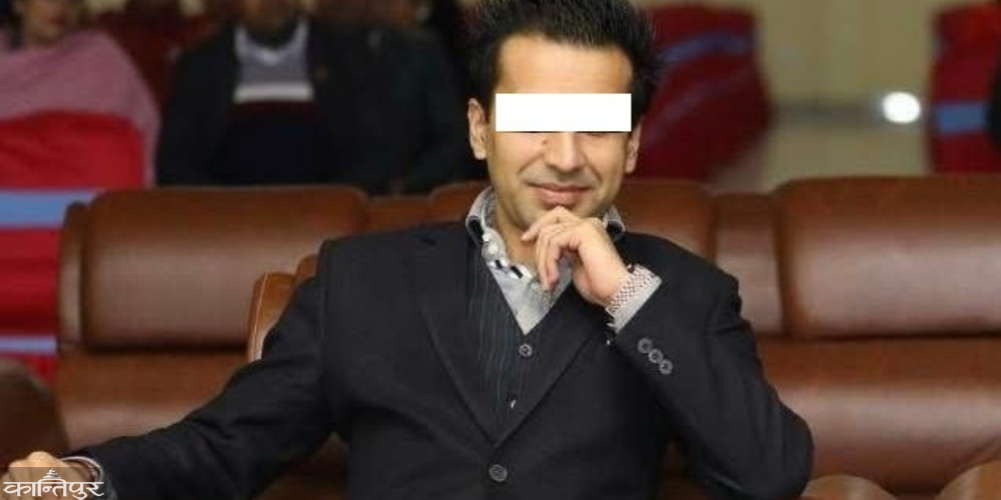
Police have arrested Nitesh Sedhai after he was accused of sending SMS to millions of people without permission. His family claims that Nitesh obtained the mobile numbers from Nepal Telecom. Sedhai's mother Sharmila told Kantipur that Nitesh had given her the information some time ago but that she did not know anything more.
When asked for a response on this issue, Nepal Telecom sources denied the claim and said that it was a random SMS sent randomly. Telecom and technology experts say that such a large number of messages is not random but appears to be controlled and targeted at a specific location.
They respond that this level of highly personal number and details are only available to regulatory government agencies or large banks or related telecom companies and that it is not possible to deliver such a large number randomly. This incident has raised great concern and fear among the general public about the privacy and security of their mobile numbers.
Nepal Telecom spokesperson Ravindra Manandhar said that anyone can send a message by creating a set of numbers in an Excel sheet by keeping the range of the telecom's mobile numbers (such as 9841 or 9851) and uploading it to the MMS gateway. 'If you keep that range in Excel or any software and keep it from 984100 to 984999, the message will go to all the valid numbers, you can also send it this way,' he said, 'The person sent the SMS by keeping the range in the Excel sheet. We do not give the number to anyone.'
Telecom has issued a statement claiming that it did not provide the customer's personal mobile number or any details. Telecom has concluded that the service providers have misused the Value Added Service (VAS) system for commercial purposes and sent messages of a political nature.
Police have arrested Sedhai, who sent millions of SMS messages to ordinary people calling for them to participate in the royalist protest. The Kathmandu Valley Crime Investigation Office has informed that he was arrested from Hattisar on Tuesday evening for an offense against public peace.
According to the office's spokesperson, Superintendent of Police Kazi Kumar Acharya, Sedhai is currently being remanded in custody with an extended term. During the investigation, it has been found that he sent about 50 to 60 lakh SMS messages. If Sedhai sent that number of SMS messages, it can be estimated from the price rate of Nepal Telecom that he would have to spend more than 1.2 million rupees just to send SMS messages. According to the price rate, sending more than 3 million SMS messages costs 20 paisa per SMS, excluding tax.
According to Sedhai's mother Sharmila, a day before his arrest, the instructions had hinted to her that 'this could happen' and that she would face possible police action. “The directive had received the numbers from Nepal Telecom 15/20 days ago and said that they would send messages to all those numbers and call them to join the protest,” said Sharmila, who is also the president of the Petroleum Dealers Association Chitwan. “I had reminded them not to do anything they did not want to do. But I did not take it very seriously.” She described her son as a “young man with political will and a desire to do something amid the current political instability.”
During his initial statement with the police, Sedhai admitted that he had sent those messages. He told the police that he was a “conscious entrepreneur” and that he had sent those messages to protest against the current government “because it had not been able to work according to the expectations of the people and to gather at the grassroots level against the government.”
According to spokesperson Acharya, legal action has been taken against Sedhai because it was seen that he had called for a demonstration in a way that would incite the society. Sedhai had obtained access to the SMS sending system (SMS gateway) by entering into an agreement with Nepal Telecom's VAS service provider Aakash Tech Pvt. Ltd. under the name of a company called 'Vedbyas Enterprises Pvt. Ltd.'.
He is a permanent resident of Chitwan and comes from a family with a business background. In the past, he used to run a car showroom in Chitwan and sell and distribute Tata company vehicles.
His activity on social media and understanding from those who know him, he had been trying to get involved in political and social issues for some time. Rajan Koirala, Sales and Marketing Manager of Aakash Tech, said that although he initially entered into an agreement to send SMS for commercial purposes through 'Vedbyas Enterprises', he later misused it to send messages of a political nature. The 'AT Alert' seen in the message that has now circulated is the sender ID of Aakash Tech.
The messages were sent using Nepal Telecom's network. According to Koirala, they only came to know about it after about 50 to 60 million SMSes were sent and blocked the account. Koirala claimed that he did not know that such a political message was sent because he had 12 to 15 thousand customers and did not have a mechanism to view or filter everyone's content in real-time.
The Personal Privacy Act, the Advertising Act and the Telecommunications Act have been violated - Advocate Baburam Aryal 'We are a value-added service provider of Nepal Telecom and Ncell,' Koirala said, 'We provide a gateway message system to customers, in which they send messages with the number and content they want.' Our clients upload the numbers from their own Excel sheets and send the content.'
Advocate Baburam Aryal said that in this SMS case, the main issue is the misuse of data or where the numbers were collected or 'leaked' from. He clarified that this is a violation of the Personal Privacy Act, the Advertising Act and the Telecommunications Act.
‘Even though operators have set certain conditions and procedures to operate SMS-based services under Value Added Services, the service providers have been ignoring them,’ Aryal said, ‘We do not even have the habit of complaining when your details are leaked. This incident shows that digital awareness among the general public and accountability in institutions are in a very weak state.’
When asked about the content of the message, the telecom responded that the content cannot be viewed. ‘If you filter it in software, no message will go through, that is not possible, only after sending it will you know what kind of message has gone through and then we will tell the second party concerned and get it closed,’ said spokesperson Manandhar. After this incident, the telecom has written to all ‘BHAS’ service providers and instructed them to pay attention before sending messages on many software and to close it if it is suspicious.’
The relevant department of the telecom is working to ensure that such mistakes do not happen again in the future and the telecom has stated that it has no further information about the arrested person. Spokesperson Manandhar says that the police may have arrested him based on the name and number received in the SMS.