Gen-G representatives said that qualifications and capabilities should be taken into account when selecting members of the National Assembly. Giving the example of being nominated to the National Assembly after losing the House of Representatives election, the participant said that the system has been brought into disrepute due to political leadership.
We use Google Cloud Translation Services. Google requires we provide the following disclaimer relating to use of this service:
This service may contain translations powered by Google. Google disclaims all warranties related to the translations, expressed or implied, including any warranties of accuracy, reliability, and any implied warranties of merchantability, fitness for a particular purpose, and noninfringement.
Stakeholders have said that even after eight years since the provincial government began its work, the common citizen has not been able to feel ownership of the federal governance system due to the neglect of the top leadership of political parties. Stating that no political system is automatic, they said that the centralized mentality of creating structures but not granting authority has spread negative perceptions towards federalism.
At a program organized in the federal capital on Tuesday, an expert group including the Chief Minister, federal and provincial lawmakers, chairmen and members of the thematic committees of the National Assembly, former National Assembly lawmakers, Gen-G representatives said that those demanding federalism are the ones opposing it. The stakeholders expressed their anger that the top leadership of major political parties, federal ministers, and civil service employees have not allowed federalism to flourish. They expressed concern that the National Assembly has been turned into a place for leader management.
Those who gathered for a discussion on the National Assembly to strengthen federalism said that the top leadership is an obstacle to institutionalizing federalism due to its tendency to not want to give up power. Gandaki Province Chief Minister Surendra Raj Pandey said that the federal government has tied the hands of the provincial government and those who demanded federalism are the ones hindering its institutional development. Pandey complained that the federal government has not made enough laws and that there are obstacles in the implementation of existing laws.
Stating that the province's income sources could not be increased due to the lack of laws, he complained that even the Chief Secretary in the Chief Minister's Office did not know who was leaving and who was coming from the union. Stating that due to the lack of federal laws, it was not possible to work in areas such as forests, land acquisition, police, and revenue collection, Chief Minister Pandey said, "The timber that can be sold in my province every year is worth about one billion, but I am not allowed to use it. If a quarry is opened, legal obstacles will start arising. All ways to increase revenue are closed. How can citizens have a sense of belonging to federalism like this?" He said that it was wrong to say that federalism was a burden on the country without conducting research and bringing out the real information. He said that the province has not been able to convince the citizens by not allowing them to collect resources and move forward with development programs.
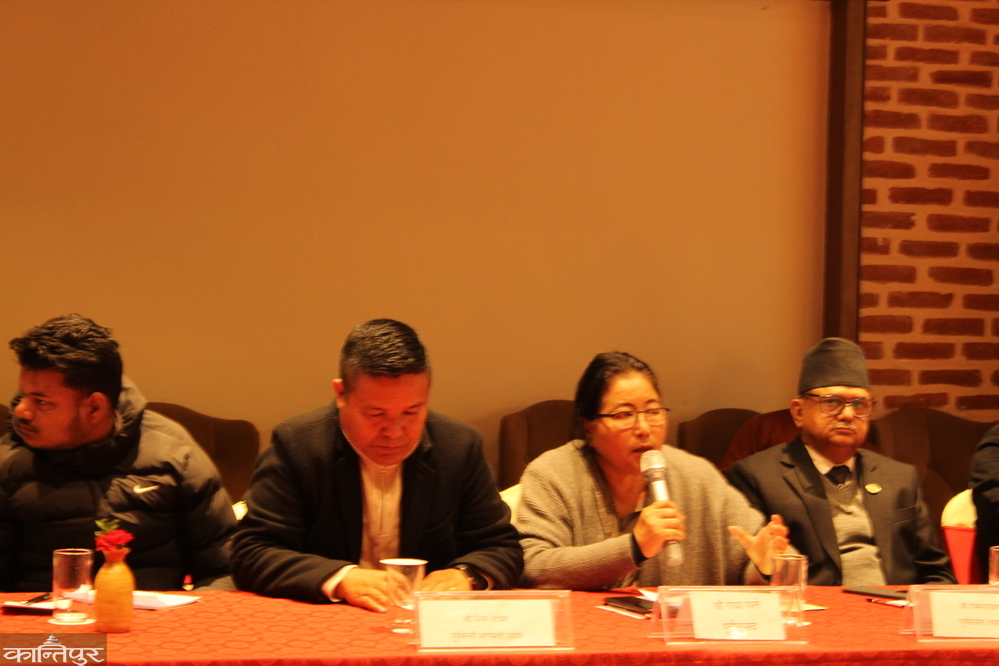 At a program organized by the Federalism and Localization Center to explore the role of the National Assembly in strengthening federalism, former National Assembly Vice President Urmila Aryal said that there was no work to strengthen federalism. She said that the work of the federal ministry located in Singha Durbar was focused on transferring employees. She expressed her anger that the ministry was unable to do work related to federal affairs. She accused the federal ministry of having lunch and digesting allowances.
Former National Assembly member and senior advocate Radheshyam Adhikari said that the commitment to strengthen federalism was not given. He said that the federalism-friendly ministers did not want to give powers to the provinces without giving them the politically approved powers. He said that the leaders themselves call federalism a sham.
Former National Assembly member and advocate Ram Narayan Bidari said that the National Assembly members should consider themselves independent and cooperate in the formulation of laws to strengthen federalism. He urged the National Assembly to use its power, saying that although the National Assembly can do a lot of work, party affiliation is becoming an obstacle. Former member of the National Assembly, Khimlal Devkota, said that federalism was implemented with the main objective of empowering the people, achieving proportional development, and changing the old political structure. He said that development expenditure should be increased by strengthening the administrative mechanism.
Maya Prasad Sharma, Chairman of the Public Policy and Delegation Legislation Committee, said that the National Assembly is doing enough to strengthen federalism. He urged the National Assembly to be seen as a dumping site for the elderly and a place for the experienced. National Assembly member Sonam Geljen Sherpa said that the National Assembly is working to strengthen federalism, but there is a flaw in the intention in not making the law quickly. He said that it is difficult to explain the issue of federalism in a country where people go to the Chief Secretary.
Vice President of the National Assembly Bimala Ghimire informed that the National Assembly has been working proactively lately and said that she would support the formulation of laws to strengthen federalism. Secretary of the Federalism Strengthening and National Concerns Committee Sita Kafle, former member of the Bagmati Provincial Assembly and Bagmati Coordinator of the Center Nima Lama, former member of the Bagmati Provincial Assembly Radha Ghale said that the role of the National Assembly should be seen to strengthen federalism. Nima called the National Assembly a representative of the people and urged them to help strengthen federalism.
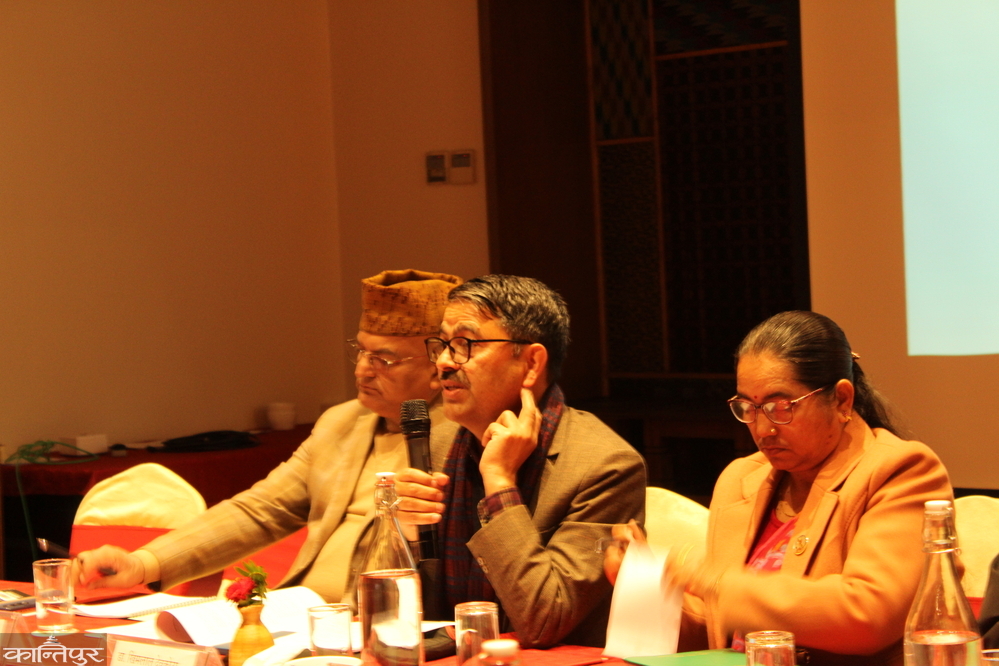 Chairperson of the Legislative Management Committee Tulsi Kumari Dahal said that the Provincial Assembly is a symbol of federalism and informed that after the dissolution of the House of Representatives, 7 bills passed and sent from there have been nullified. She complained that the constitution has weakened the National Assembly. She opined that intellectuality should be sought when making National Assembly members. She said that the provinces should play a role in making the local levels strong and capable. Former National Assembly member Dil Kumari Rawal said that capable and intelligent people should be selected when making MPs. She said that the National Assembly should work to elevate the dignity of people's representatives.
Informing about the program, Khimlal Devkota, an expert on federalism on behalf of the Federalism and Localization Center, the organizer of the discussion program, said that since the members of the National Assembly are elected by the people's representatives of the provinces and local levels, it is necessary to find the ground for the National Assembly members for the institutional development of federalism. He said, 'Was the National Assembly able to speak the voice of the provinces and local levels? What kind of candidates should be sent to the National Assembly?' We should discuss issues like this.
He said that although the House of Representatives was given authority over some issues, it was not given to the National Assembly, and he believed that the provinces were weakened when the constitution was written. Most of the speakers, including Gen-G representatives, expressed concern that the National Assembly was made a place to shelter leaders. Gen-G representatives said that qualifications and capabilities should be considered when selecting members of the National Assembly.
Giving the example of being nominated to the National Assembly after losing the House of Representatives election, the participant said that the system has been brought into disrepute due to political leadership. The discussion was held at a time when preparations were underway to hold a National Assembly meeting after the House of Representatives was dissolved.

