The ministry has also asked the organization that conducts health screenings for workers going for foreign employment to implement the health screenings and testing fees as before.
We use Google Cloud Translation Services. Google requires we provide the following disclaimer relating to use of this service:
This service may contain translations powered by Google. Google disclaims all warranties related to the translations, expressed or implied, including any warranties of accuracy, reliability, and any implied warranties of merchantability, fitness for a particular purpose, and noninfringement.
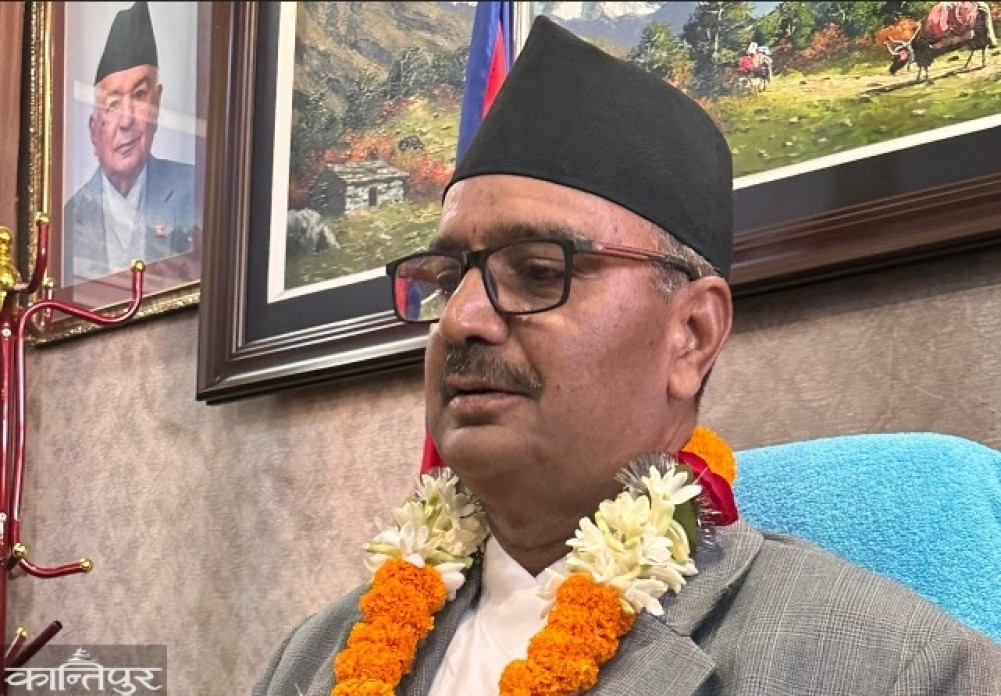
The government has scrapped new standards regarding health screening and fees for workers going for foreign employment. Newly appointed Minister for Labor, Employment and Social Security Rajendra Singh Bhandari made the announcement through a ministerial decision on Friday.
On October 30, the Ministry of Labor had fixed the fee at Rs 9,500 after expanding the scope of health tests for 34 types of workers to ensure quality health tests. Labor Minister Bhandari said that the standard was scrapped after Prime Minister Sushila Karki's directive.
'The health test fee charged by health institutions that conduct health tests for workers going for foreign employment was fixed at Rs 9,500 as per the decision of the Ministry on October 30, but in the context of complaints from Nepali workers going for foreign employment, the Foreign Employment Entrepreneurs Association and other stakeholders that the fee increase is not in the best interest of the workers, the Honorable Prime Minister has directed to correct the said decision,' said a statement issued by Labor Spokesperson Pitambar Ghimire, 'Accordingly, the fee increase has been canceled by the ministerial decision.'
The Ministry has also asked the health test institutions that conduct health tests for workers going for foreign employment to implement the health tests and test fees as before. The previous fee was Rs 6,500.
The major tests added include blood tests (CBC, ESR, platelets), tuberculosis tests (chest X-ray, Mantoux test, sputum AFB), kidney function tests (serum urea, creatinine), hepatitis B and C, malaria, sugar, typhoid, etc. Arrangements were made to separate the risk groups of the workers according to their age and occupation and perform necessary tests for occupational diseases (respiratory problems, skin diseases, muscle and bone problems, cancer, diabetes, heart disease). The Ministry of Labor has stated that workers will no longer have to undergo these tests.
A 30-member high-level expert task force formed under the leadership of the then Additional Secretary of the Ministry of Health, Dipendra Raman Singh, had recommended adding health test materials, improving labs and expanding the scope of tests to improve the health test work of workers going for foreign employment. On 23 March, the government had taken a seven-point decision to make health screening more systematic, dignified and of high quality to reduce health risks and accidents of workers going for foreign employment. Based on the recommendations of the expert committee as per the Health Institution Standards-2077 of the Ministry of Health and Population, the Report of the Study Task Force formed to improve the health screening of workers going for foreign employment-2081, and the Foreign Employment Regulations-2064,
Based on this, on 24 November, the Prime Minister and Minister of Labor made a decision at the level of the Prime Minister and Minister of Labor, and after monitoring according to the 'Work Procedures for Health Screening of Workers Going for Foreign Employment, Listing, Renewal and Monitoring-2072 (Amended)', 171 health institutions that met the new standards were listed (newly selected). 29 health institutions that did not meet the new standards were removed from the list. It took the Ministry of Labor nine months to select health institutions by monitoring the health institutions that had added health screening materials and improved their labs as per the revised work procedure. After selecting the listed health institutions, the government expanded the health screening and implemented new fees.
Meanwhile, Labor Minister Bhandari said that it is not the employer's condition to test all the diseases mentioned for workers. 'We have not seen the possibility of all the diseases in workers going abroad. Testing for all diseases is not the demand of the employer,' Labor Minister Bhandari said, 'We are of the opinion that the 6,500 rupees required for health testing should also be covered by health insurance.'
According to the report of the high-level task force led by the then Additional Secretary of the Ministry of Health, Singh, the diseases that affect workers going for foreign employment were classified into eight types. According to the Foreign Employment Board's data, only 7 percent died from workplace accidents, 12.7 percent from road accidents, and 11 percent from suicide. The health certificates of the remaining 67 percent of workers' deaths are listed as 'natural, sudden death (while sleeping), heart attack, unnatural, kidney failure. About one thousand workers die every year. In the last fiscal year, 1,500 died.