Free treatment is possible only if you can get a discharge certificate, but since follow-up costs are expensive, some of the injured are moving around the camp without obtaining discharge papers.
We use Google Cloud Translation Services. Google requires we provide the following disclaimer relating to use of this service:
This service may contain translations powered by Google. Google disclaims all warranties related to the translations, expressed or implied, including any warranties of accuracy, reliability, and any implied warranties of merchantability, fitness for a particular purpose, and noninfringement.
Dipendra Basnet and his wife from Bhagwati Rural Municipality-1, Dailekh, had come to Kathmandu for treatment of their 4-year-old son who had kidney problems. They were staying in Basundhara. Dipendra worked as an electrician to earn a living. After his son's treatment expenses exceeded 1.2 million, he was preparing to go abroad to pay off the debt. He also participated in the Gen-G movement on 23 Bhadra.
Dipendra was shot in the head in front of the Parliament building. At that time, a heartbreaking photo of his body hanging from the barricade went viral on social media.
Dipendra was revived because he was taken to the Annapurna Neuro Hospital in Maitighar on time. But due to the bullet in the head, he lost the sight in his left eye, and the left side of his body could not move. After undergoing treatment for more than two months, Dipendra was discharged from the hospital on 30 Kartik.
Before that, the neurologist had recommended that he go to the eye hospital for further treatment to prevent problems in the other eye. Last Tuesday, Mrs. Sangeeta Khadka Basnet took Dipendra to the Tilganga Eye Hospital. She was hoping that she would get free treatment based on the Gen-G card given by the government. But the hospital did not provide it free even when she showed the card. On the first day, they spent about 1200 rupees. On the second day, after pleading, the hospital made it free for once, saying on its own behalf. 'The card does not work. Even if you show this, there is no free treatment. You need a letter from the ministry,' Sangeeta said on Thursday.
On the second day, the hospital said it would provide free treatment, but had to buy medicine worth Rs 6,000. While reporting on the matter, Kantipur had told Kathmandu Chief District Officer Ishwar Raj Poudel about Dipendra's problem. After Poudel called Tilganga and facilitated it, the hospital provided Dipendra's treatment free of charge on Wednesday. 'Otherwise, they said the full fee would be charged,' Sangeeta said.
When Sangeeta went to Annapurna Neuro for a follow-up two weeks after discharge, she had to pay Rs 600 for the medicine. She was told that she would return to Neuro later and was asked to pay Rs 80,000 for the treatment. Sangeeta also has the bill for it. She says that she has spent more than Rs 300,000 on her part so far during the treatment.
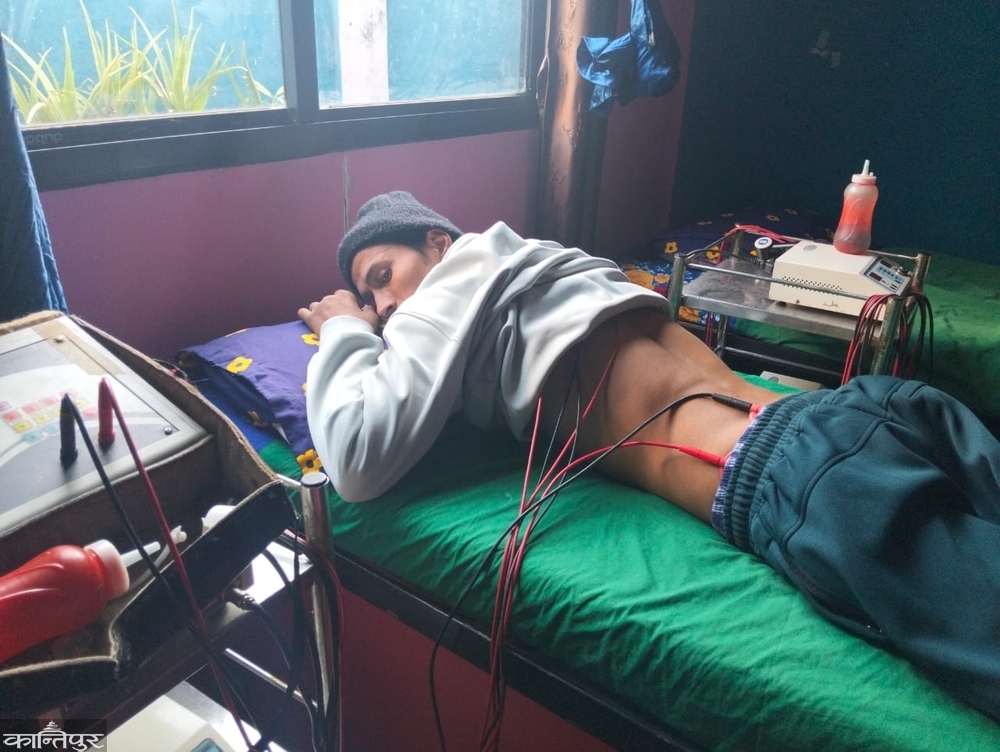
Dipendra is being taken for regular therapy at the Therapy Center in Basundhara. 'I haven't had to pay there yet. "I don't know what will happen next," says Sangeeta. On the other hand, there is a problem with paying regular rent.
The government has announced that the treatment of those injured in the incidents of 23 and 24 Bhadra is free. The government has also provided them with Gen-G cards for their convenience. The 10-point agreement signed between Gen-G and the government on Wednesday mentions the provision of employment and free treatment by the government for the families of Gen-G martyrs and the injured.
"To appropriately address the immediate and long-term needs of the martyr families and the injured, a high-level task force will be formed immediately in consultation and coordination with the concerned martyr families and the injured, and a compensatory arrangement will be ensured, including interim relief, compensation, free health treatment and psychosocial counseling, free education, employment, social security, and meaningful commemoration," the agreement states. But the injured are worried as the hospital continues to charge fees.
Immediately after the Gen-G movement, crores of rupees were raised in the name of the deceased and the injured through 'crowdfunding'. Kantipur had published a news on October 25 that Rs 25.8 million had been collected from 107 accounts but the victims had not received their treatment expenses. Even though this amount was collected in the name of the victims, it is difficult to treat the injured in the hospital due to lack of money.
Kamal Ghimire of Kavre, who was injured in the left thigh during the protest on August 23, was undergoing treatment at Kathmandu Medical College in Sinamangal. He was discharged only on Sunday. A week ago, when Kamal's chest X-ray was done, the family did not receive it without paying the fee of Rs 830. 'The hospital administration said that the treatment will no longer be free. We called various places and pleaded. After the X-ray was stopped for 3 hours, we were forced to pay,' said Kamal's uncle Prannath. 'We were also asked to pay because the medicine cost was too high.'
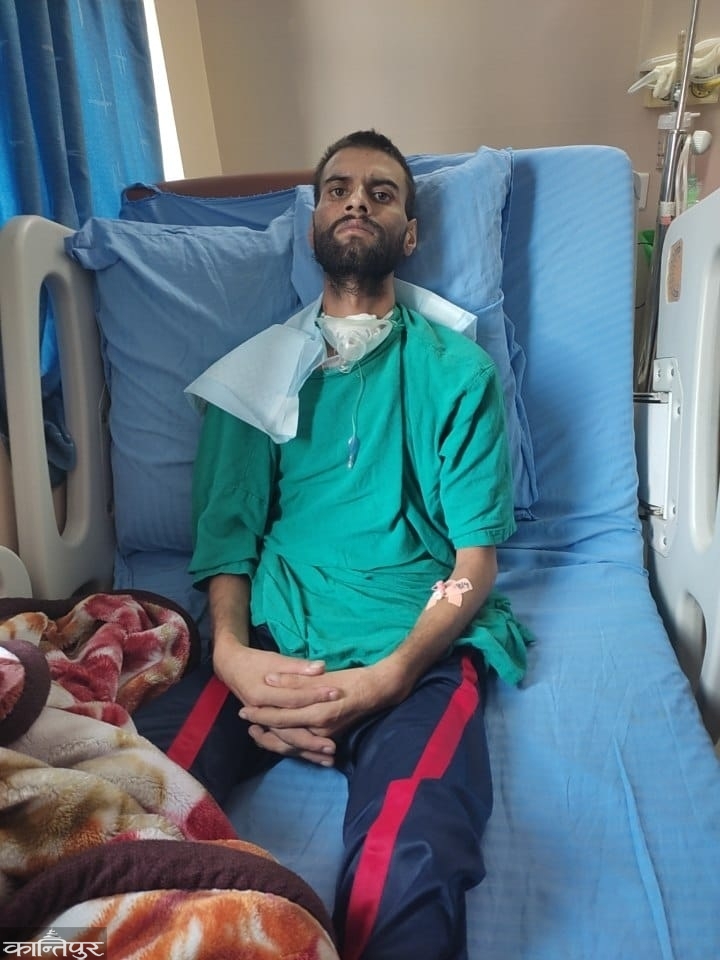
When asked about this, the hospital director Dr. Meena Thapa said that she was not aware of it. 'That should not have happened. I am sending it to understand, if it has happened, the money will be refunded,' she said. While being discharged on Sunday, Prannath asked for a refund of the fee. Initially, the administration said that it would not be refunded. The money was refunded only after they said, ‘Give us the bill, we will have to pay that bill somewhere else,’ Prannath said, ‘Now we are worried about what to do when we come for follow-up.’
Kamal has been kept in a shelter in Bhaktapur. 27-year-old Kamal had started a cow farm in Radhe Radhe. On 23 Bhadra, he joined the protest after returning from selling milk at the dairy. He was shot in the left thigh at around 2 pm in front of the Parliament building in New Baneshwor. According to his uncle Prannath, the family has spent about 3 lakh rupees on the treatment, in addition to the government’s expenses, on buying medicines from outside and spending on canteens.
Ravi Bhandari, 28, of Sindhuli, who was shot in the leg during the protest on 24 Bhadra, was discharged after undergoing treatment at B&B Hospital for one and a half months. He reached B&B Hospital from Sindhuli for follow-up on 7 Mangs. He showed his Gen-G card but was told that the treatment would not be free. Then he called the Chief District Officer of Kathmandu and Lalitpur. Only after appealing elsewhere did the hospital make the treatment free. ‘But they said that the next time I come, it would not be free. How many times do I have to call! How long will it take to recover!’ Ravi lamented.
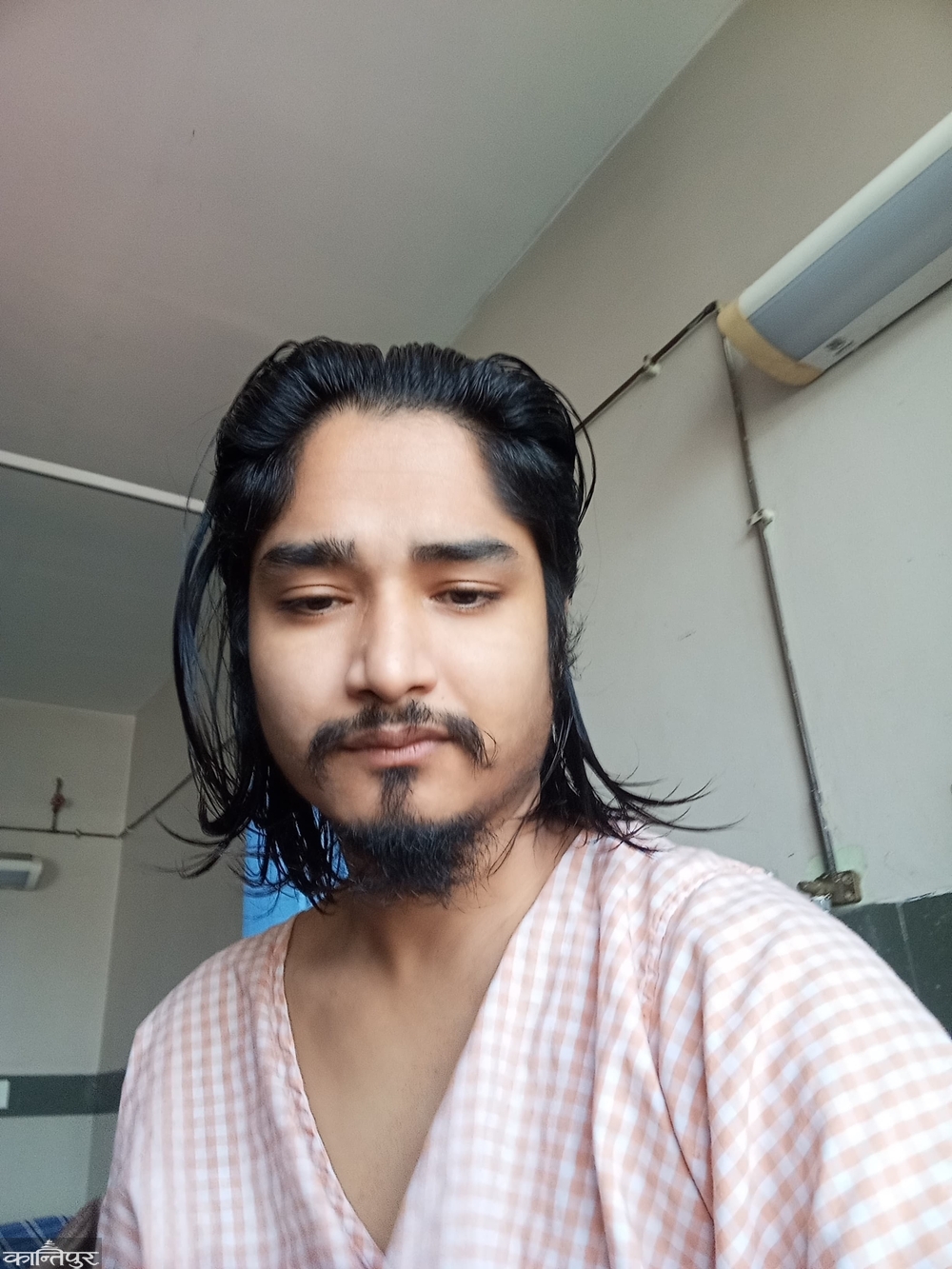
Ravi was shot in the left leg in Maharajgunj. Apart from what the hospital had borne, Ravi’s family has already spent about Rs 3 lakh. ‘We had to buy medicine from outside. We spent money on canteen, transportation of other family members, etc.,’ says Ravi.
Ravi had also been keeping his brother in Kathmandu and educating him. ‘Now the family’s situation has become dire. I have not been able to pay my brother’s college fees. I am paying the rent of the house. I was paying the installment of a loan of Rs 6 lakh to go abroad. That has also been stopped,’ he said.
He is unhappy with the government’s classification of the injured. ‘There is a deep wound on the leg. It is not even possible to eat. But the government has kept it in moderate condition,’ he complains.
Rahul, son of 49-year-old Geeta Sah, who is undergoing treatment at KMC, had lamented a month ago, ‘Mummy’s burn wound is so deep. Even in such a sensitive case, the hospital tried to discharge her. Later, we had to call the Chief District Officer and tell him. We can speak. What will happen to those who cannot speak?’
Rahul has taken his mother Geeta to her room but has not discharged her. ‘The CDO himself has said not to discharge her now, only after receiving all the belongings, saying that if she has to come for follow-up later, it will cost money,’ Rahul said. Geeta was injured by acid thrown at the police by protesters in Koteshwor on 24 Bhadra. Her hands, stomach and legs were burnt by the acid. Rahul said that the family has spent more than Rs 2 lakh on mother Geeta’s treatment.
Roshan Gautam, secretary of the Gen-G Martyrs Family Welfare Society, said that many injured people have been complaining about the treatment. He added, “There are complaints that the treatment is not free and the money paid has not been refunded.”
Roshan’s 16-year-old son Ayush was also shot in the thumb of his right hand during the Gen-G movement. He said that the hospital has not refunded the 150,000 rupees spent on his son’s treatment. “My son was treated at the Teaching Hospital. Some medicines and supplies had to be bought from outside. The hospital had said that a refund would be given, but it has not happened yet,” Roshan said.
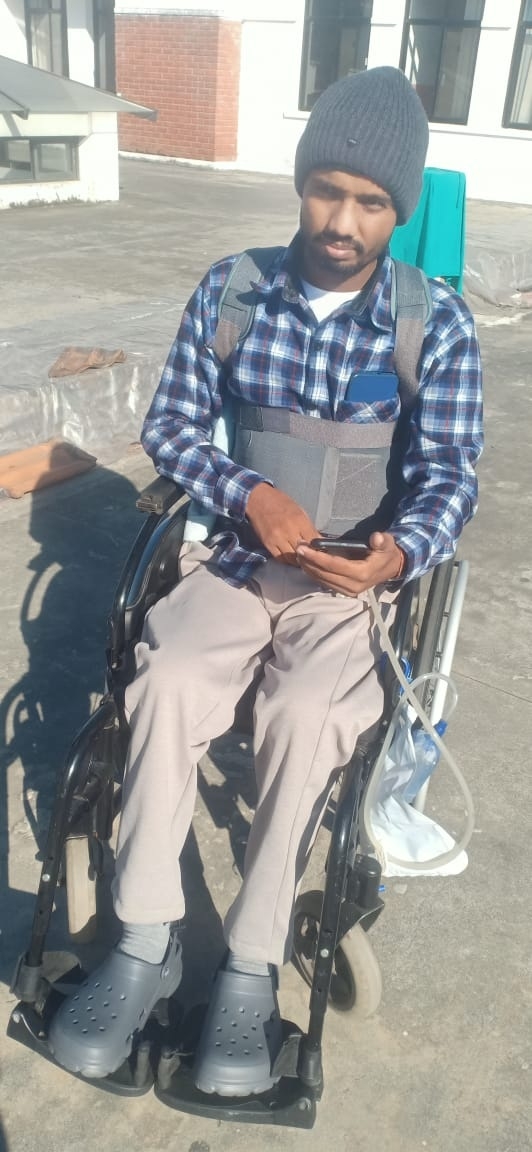
Rakesh Kumar Mahato, 27, of Sarlahi, is undergoing treatment at the Spinal Injury Rehabilitation Center in Kavre Sanga. He was shot in the back in Naya Baneshwor during the Gen-G movement on 23 Bhadau. He was immediately taken to the trauma center. Both legs were not working as the bullet had hit his spine. Although his health is improving, he is still unable to stand. He has been at the center in Sanga for a month and a half for further treatment. ‘The doctor has said that he will be discharged in a few days, but it will take a long time for my brother to recover,’ said his brother Rajesh. Rakesh now uses a wheelchair.
Dr. Bikash Devkota, Secretary of the Ministry of Health and Population, says that they have written to the hospital to immediately refund the money spent on buying medicines and supplies outside. ‘Even in cases where the hospital has ordered the patient to buy supplies that are not available, we have asked the hospital to pay the bill to the patient and ask for it from us. The hospital concerned will be paid soon,’ he says, ‘No injured person will have to pay.’
Roshan said that even when he raised the issue of refunding the money with the ministry, it was not forthcoming. ‘We are now trying to meet the minister. But we are not getting his time,’ he said. His niece Nikita Gautam also died in the Gen-G movement.
According to the Ministry of Health, there are currently 9 injured in the hospital. Two are undergoing treatment at KMC, three at TU Teaching Hospital, three at Trauma and one at the Spinal Injury Rehabilitation Center in Sanga. The government does not have the data on those who come for follow-up. Spokesperson Prakash Budhathoki says, “We are trying to keep the data on those who come for follow-up.”
The government had provided relief of Rs 20,000 and Rs 15,000 to the injured in two phases. So far, 680 people have received Rs 20,000 and 575 people have received Rs 15,000. There are also those who have received both Rs 20,000 and Rs 15,000 in installments. Spokesperson Budhathoki says that the data on the treatment expenses can be known only after all the demanded amounts are paid by the hospital.
Relatives are struggling to meet expenses
Prakash Bohra, an injured person in the Gen-G movement, has been staying at the Trauma Center for more than 3 months. His mother, who lives in Kuruwa, says, “Living here, coming and going costs money every day. Sometimes, medicine has to be brought from outside. It is becoming difficult to raise money. "I don't even know how long I will have to stay," Prakash said, adding that the cost of bringing in medicines from outside the hospital, canteen, taxi fare, etc. has already exceeded two lakhs.
Prakash, who has a permanent residence in Narayan Municipality-8, Dailekh, is the same person whose shoes became 'iconic' in the Gen-G movement. While he was engaged in the movement against corruption, he was shot in the left foot outside the Parliament building in New Baneshwor. At that time, his shoe fell off his foot. A picture of the same shoe with blood dripping down it went viral on social media.
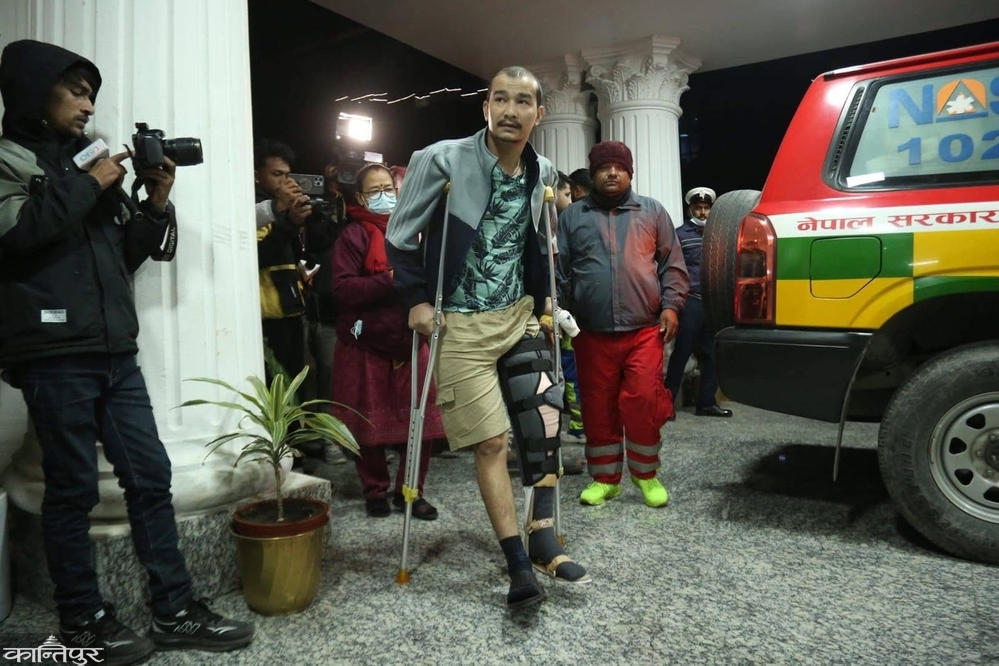
Mukesh Awasthi and Abhishek Shrestha, who were injured in the Gen-G movement, are also undergoing treatment in the trauma center. Although the treatment for trauma is free, it is difficult to meet the expenses after having to stay in Kurua for a long time. The mother of Dhak Bahadur Nepali, who is being treated at Tribhuvan University Teaching Hospital, is also suffering from the same pain.
Dhak Bahadur, who was shot in the neck, is still in the ICU. His health is gradually improving. Since his home is in Pokhara, his mother is trying to get Dhak Bahadur referred there. ‘Everyone is there. I alone have been sent here and there. If I could take him to Pokhara, there would be others who would help,’ says Dhak Bahadur’s mother. Another injured person, Santosh Bohara, is also being treated at the teaching hospital.
Why was a fee charged?
Dr. Meena Thapa, director of KMC in Kathmandu, said that a fee is charged for the treatment of patients who come for follow-up. ‘We have advised patients who come for follow-up to go to government hospitals. Only government hospitals provide free treatment. Private hospitals charge a fee,’ she said.
Although KMC had previously treated the injured for free, she said that the medicine was not free. Prakash Kumar Bhattarai, the chief of administration at B&B Hospital in Lalitpur, says that the government has not said anything about patients who come for follow-up. ‘Some patients come for follow-up for a long time. "There has been no decision from the government on how much the hospital will pay," he said. "Even though the bill for the treatment of previous patients has been submitted to the government, it has not been paid. This is how we also face problems."
Ministry spokesperson Dr. Budhathoki admits that the government has yet to pay the treatment expenses. According to him, demand letters have been received from 22 hospitals so far. The amount demanded is 75 million rupees. "Many large and private hospitals have not sent the demand amount. Now we will start the payment process for the amount demanded," he said.
Kathmandu Chief District Officer Ishwori Raj Poudel said that he keeps receiving calls from Gen-G injured people. "I am facilitating from my side," he said. Lalitpur Chief District Officer Prem Prasad Bhattarai also said that complaints from Gen-G injured people are being received. "I am facilitating over the phone to address the complaints. Problems have also arisen due to the arbitrariness of private hospitals," he added. "There is also a problem due to lack of coordination in communication. I will have a desk set up at B&B Hospital.'
Ministry says - I don't know if a fee was charged
Ministry of Health and Population spokesperson Prakash Budhathoki says that free treatment has been arranged at 16 federal hospitals designated by the government. 'The injured will go to the hospital designated by the government. Can you always say that you will go to private hospitals and get other diseases treated too!' He says, 'If you are treated for a bullet injury on 23 and 24 Bhadra, the same hospital will do it, but you cannot claim for other diseases unrelated to that.'
Spokesperson Budhathoki also claims that no hospital has charged any fee for the treatment of the Gen-G injured. 'If the injured in the incidents of 23 and 24 Bhadra went for follow-up with a Gen-G card, the hospital does not charge money. But if you go without an identity card and say that I am Gen-G, it is not free,' he said, 'From a 4-year-old child to a 100-year-old man, they came to the hospital for treatment saying that they are Gen-G. Where does this happen?’
But not all the injured in the Gen-G movement have received the cards. 2,522 people were injured in the 23 Bhadra movement and the demonstration the next day. According to the coordination committee formed under the Ministry of Home Affairs to make the treatment and relief of the injured in the Gen-G movement effective, only 734 injured have received the Gen-G cards so far. Ministry Secretary Dr. Bikash Devkota says that treatment will not be stopped even for those injured who do not receive the cards. He says that if treatment is stopped, they will be facilitated if they contact the Ministry of Health. He also informed that they are facilitating the distribution of the cards to the injured who are yet to receive the cards when they come for follow-up.
When Kantipur reported on Dipendra Basnet’s case, which was not free even after receiving the card, spokesperson Budhathoki’s response was, ‘If there was an eye injury on 23 and 24 Bhadra, the follow-up is free. But at that time, the bullet hit the knee, I will show my eyes, how can I get an MRI for free?’ When Dipendra was told that he lost his sight due to a bullet in his eye, he became angry, ‘You know. You do it. I don’t know.’ Then Spokesperson Budhathoki hung up the phone.
The government has not said anything about the facilities provided to the injured card holders. Ministry Secretary Dr. Devkota says that they will get facilities according to the government’s classification of Gen-G injured. He says that information is being provided through various press releases and notices to go to government hospitals for treatment except for serious problems. ‘This decision has come from the Council of Ministers. If there is a serious problem, the patient can go to the place where he is being treated. Otherwise, we urge them to go to government hospitals. We have already written to the hospitals,’ he said.
The Home Ministry also says that it is opening clinics in government hospitals to provide services to the injured of the Gen-G movement. In the case of patients with serious problems, they can go for follow-up where they are being treated. According to him, if there is a problem during treatment, complaints can be filed at the hotlines of the District Administration Office, the Ministry of Health and other bodies.
Yujan Rajbhandari, a member (organization) of Nepal Gen-G Front, says that the agreement between Gen-G and the government clearly states that the immediate and long-term needs of the injured will be addressed. ‘For that, a high-level task force has been formed to provide interim relief, compensation, and free health treatment and counseling. The agreement must be followed to the letter,’ he says, ‘If the injured are facing problems in treatment, the government should address it.’
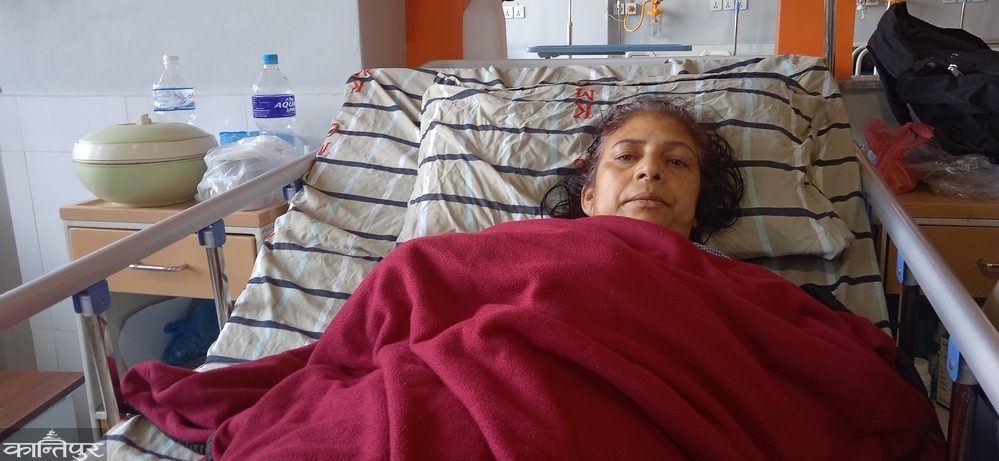
The Cabinet meeting on 24th Mangsir had also decided to provide living allowance to the injured of the Gen-G movement. The Cabinet had approved the Procedure for Providing Relief Assistance to Persons Injured and Disabled in the Movement, 2082, which includes a provision for categorizing the injured as very serious, serious, and moderate.
According to ministry officials, the working procedure has provided for a living allowance of Rs 18,000 for the very seriously injured, Rs 9,000 for the seriously injured, and Rs 4,000 for the moderately injured. According to Home Ministry Spokesperson Joint Secretary Ananda Karki, the working procedure will be implemented once the classification of the injured is completed.

