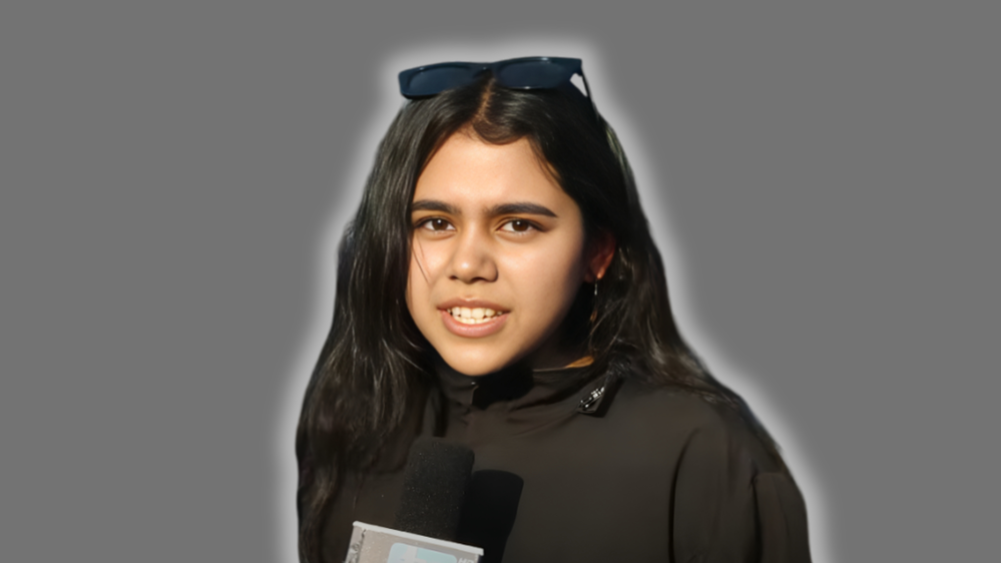
Tejashwi, who reached the convention venue seeking answers to her queries, became a topic of debate on social media after her questions to UML Chairman KP Sharma Oli became a topic of discussion. In the video, she questioned Oli's long-standing power struggles in the party and in power.
We use Google Cloud Translation Services. Google requires we provide the following disclaimer relating to use of this service:
This service may contain translations powered by Google. Google disclaims all warranties related to the translations, expressed or implied, including any warranties of accuracy, reliability, and any implied warranties of merchantability, fitness for a particular purpose, and noninfringement.
The Bhaktapur Sallaghari Maidan was abuzz with the inaugural session of the 11th UML general convention on Saturday. A question from a teenage girl participating in the convention not only stirred the ground filled with leaders and activists, but also the political circles and social media.
She is neither a party worker nor a general convention representative. Tejaswi Poudel, 15, from Bhaktapur, studying in class 9, reached Sallaghari on Saturday with general curiosity. Tejaswi's curiosity, which was watching the general convention, eventually turned into questions.
Tejaswi's questions to UML President KP Sharma Oli became a topic of debate on social media. In the video that reached many users, she raised critical questions about Oli's long-standing power struggle in the party and in power. While she was asking questions, the workers in the field were busy singing Oli's praises. The questions of the teenager, who presented them with strong confidence, were timely and democratic.
Her questions were not only about Oli's leadership style. They were also about the debate on social media regulation, the political culture of tolerating criticism, and democracy within the party. 'If someone says something against you, you delete their posts, if you don't allow criticism, that's not democracy, it's 'dictatorship',' was Tejashwi's analysis. Recalling the attempt to ban social media when he was the Prime Minister, she even compared Oli to the thinking of a North Korean-style 'Supreme Leader'.
Tejashwi had to study society, politics and good governance in school. While reading books and observing society, many questions kept arising in her. Especially when observing the recent political situation, she could not find answers to many questions. For the past few days, while going to and from school, on the road, at home, on YouTube and TikTok, she had seen posters of the UML general convention everywhere. 'After all the hype, let's go and see what it's like,' she thought to herself. Tejashwi had a school holiday on the day of the general convention. She had reached the convention venue to find answers to her questions. But she was annoyed when she saw the workers enjoying devotional songs rather than criticizing the leadership.
At that moment, a camera and a microphone were placed in front of her. A journalist from 'TV Today' asked her some general questions. Then the questions that were lurking inside her emerged. 'If only one person in the party decides, then why the convention? Why elections?', she snapped, sensing the undemocratic atmosphere in the field, 'If we don't need a constitution, parliament and judiciary, then why the decades-long movement?'
Her brilliant questions reminded her of history. Recalling the dictatorial tendencies of past rulers, Tejashwi compared, 'If we only needed one Supreme Leader, King Mahendra's Panchayat would have been fine.' Listening to Tejashwi's thoughts, her studies are not limited to the pages of the curriculum. She is also interested in narratives and non-fiction that examine history and society. Therefore, her critical mind says, 'What is the point of democracy brought about with so much suffering if it gives birth to dictators?' She is not satisfied with the repetition of the same face in the leadership. She says with a sarcastic attack, 'If KP Ba is so supreme and he cannot do any mistake, then what is the point of everyone coming to the general convention. Let KP Ba be the president, let whoever he says be a member, let whoever he says be a leader.' She also satirized the role of the constitution and the judicial system. After the
video created a debate, we contacted Tejashwi by telephone. She shared more ideas with us. She still had questions and complaints about Oli. She was shocked by the fact that the then Prime Minister did not apologize even once when students in school uniform were killed by the state bullets during the Gen-G movement on Bhadra 23. 'His ruthless behavior confirms what kind of nature he has,' she said angrily. Tejashwi also took to the streets during the Gen-G movement on the 23rd. Bullets were fired in front of her eyes, and friends of her own age fell. Those scenes deeply moved her. Even now, those tragic moments keep running through her eyes. She returned home safely from that chaos, but the memory of those who never returned continues to haunt Tejashwi.
She also made a deep observation about the consciousness of the new generation since the movement. She felt, ‘Somewhere we lacked education!’ What Tejashwi feels is, ‘The public anger that was ignited by the enthusiasm of the new generation has been devalued.’ She occasionally thinks, ‘Somewhere the movement was hijacked!’ Since then, she has become more involved in political and diplomatic matters. ‘We read about good governance in books, but we need to be updated on what is happening in the country, what the leaders are doing, and how our future is shaping up,’ she adds.
She has deep thoughts about the future of the country and the new generation. ‘This is our country, we are the future,’ she self-evaluates with hopeful tone, ‘It is not enough to just protest, we have to speak with understanding. We have to know what is happening around us.’ We must have the courage to speak up when we see something wrong, because if we don't, who will?'
PS: Since Tejashwi is a minor, we have prepared this material based on a conversation with his mother with his consent.