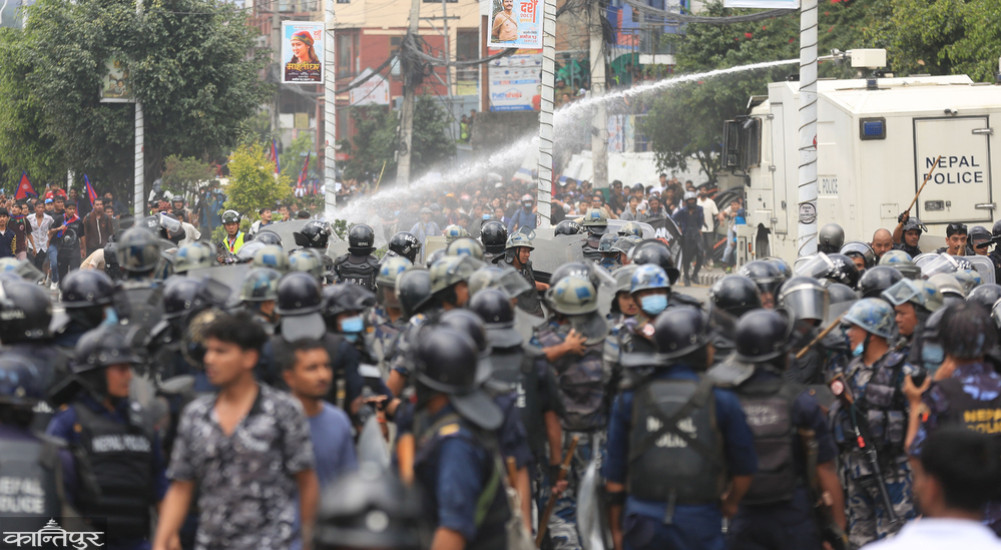
The Home Administration is holding discussions to resolve the problems seen in the mobilization of the Nepal Police and the Armed Police Force.
We use Google Cloud Translation Services. Google requires we provide the following disclaimer relating to use of this service:
This service may contain translations powered by Google. Google disclaims all warranties related to the translations, expressed or implied, including any warranties of accuracy, reliability, and any implied warranties of merchantability, fitness for a particular purpose, and noninfringement.
The Home Administration has initiated a review of the lack of coordination between the security forces during the protests on 23 and 24 Bhadra. The Ministry of Home Affairs has stated that the review has been initiated to prevent a recurrence of the shortcomings as the Nepal Police and the Armed Police Force have their own complaints regarding the mobilization of security personnel for crowd management.
The Local Administration Act has a provision that the police should be deployed first to control the crowd, and if that is not possible, the armed police can be mobilized. But during the protests in the last week of Bhadra, the police and the armed police were mobilized at the same time.
When the situation got out of control, both the agencies raised their hands together. According to ministry officials, the armed police deployed in the field were not even aware that the district police had opened fire.
The then Home Minister Ramesh Lekhak, Home Secretary Gokarnamani Duwadi, the then IGP of Nepal Police Chandrakuber Khapung, Armed Police Chief Raju Aryal, and others, who were at the command post of the Central Security Committee at the Home Ministry in Singha Durbar, did not receive information about the firing on 23 Bhadra from their channels.
Nepal Police and Armed Police Force have their own complaints about crowd management. ‘Around 4 pm, we learned from the television news that four people had died, and discussions had already started about how such damage had occurred,’ a security chief told Kantipur. ‘Even the Armed Police Force, which is supposed to act as a backup to the Nepal Police in crowd control, became amused.’
The Armed Police Force Act has given the Armed Police Force the responsibility of controlling riots that have occurred or may occur in any part of Nepal. ‘But in the absence of a clear framework for mobilization, the role of the Armed Police Force seems weak in some cases,’ says former Additional Inspector General (AIG) of Nepal Police Uttam Subedi. ‘Even in some incidents in the past, it seems that the police did not provide assistance when it should have.’
The same accusation was made against the Armed Police Force during the royalist demonstration in Tinkune, Kathmandu on March 15. Questions were raised about the mobilization of the Armed Police Force in the incident of killing 8 security personnel, including SSP Laxman Neupane of the Nepal Police, in a violent clash during the Tharuhat movement in Tikapur, Kailali in Bhadra 2072.
During the investigation conducted at that time, the weaknesses of SP Laxman Bahadur Singh of the Armed Police Force, who was deployed to control the crowd in Tikapur, were pointed out. Nepal Police officials say that the same weaknesses have been repeated time and again.
A high-ranking official of the Home Ministry informed that discussions are underway as they feel that if steps are not taken to resolve the problem, the problem may recur in the future. ‘We are also talking to officials of both the Nepal Police and the Armed Police Force on this issue,’ he said.
Anand Kafle, who is also the head of the Ministry’s Peace and Security Division, said that discussions are underway on how to manage the mobilization of security agencies under the Home Administration in the field, but no decision has been made. ‘There is no attempt to bring anything new, but discussions are underway to clarify what is already in the Act,’ he said.
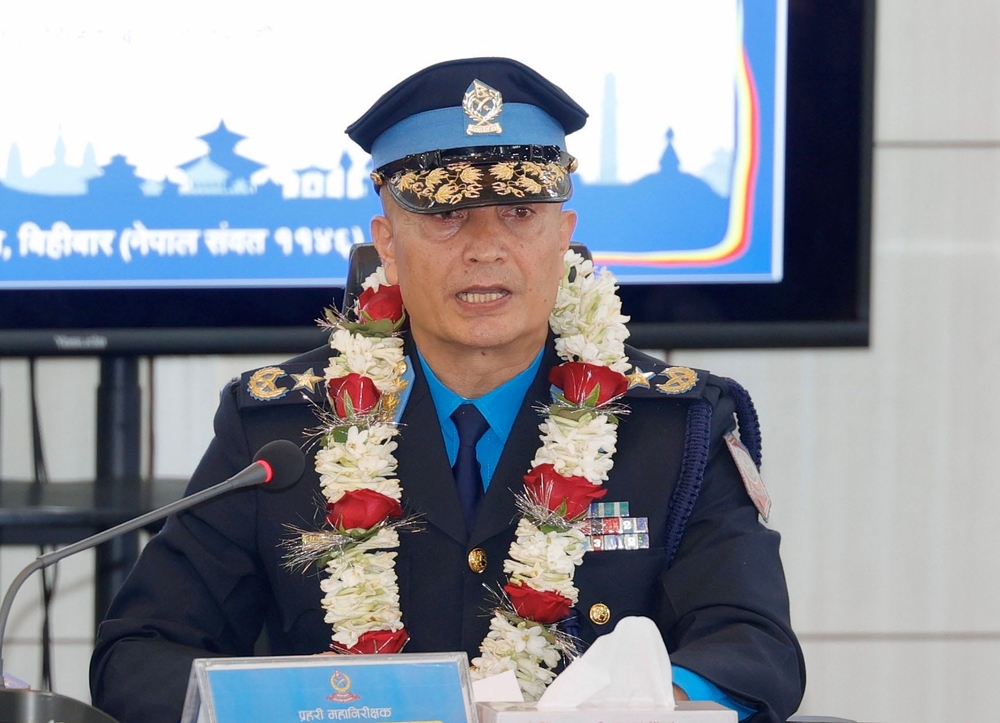 During the discussion, some officers of the Nepal Police are arguing that the Armed Police Force should be strengthened, saying that the Armed Police Force did not help in difficult situations.
‘In incidents like 23 and 24 Bhadra, the police are being blamed, while the body that should have helped has become a mute spectator,’ the officer complained. ‘We have even raised this issue with the leadership of the Home Administration.’
The Nepal Police has a 600-member Valley Armed Police Force led by the SP in Maharajgunj for riot control.
The officers of the Armed Police Force also have their own arguments. ‘Who mobilized the Armed Police Force at once, causing duplication in the field?’ A high-ranking officer of the Armed Police Force asks, ‘The problem is that it is not clear whether the paramilitary force will be deployed in such a way with sticks at the crossroads.’
When Upendra Kant Aryal was the Inspector General of the Nepal Police, a blueprint was prepared for when the Armed Police Force would be mobilized. It proposed that when the Nepal Police were deployed jointly in situations such as large protests and riots, first the Nepal Police would take action in a sequential manner according to the provisions of crowd control and then the Armed Police Force deployed nearby would be mobilized.
‘If the Nepal Police could not do it, it was said that the Armed Police would be deployed at that time, and the Nepal Police would assist in the operation command,’ says former AIG Subedi of the police, ‘At that time, the same practice was also done across the country, but that proposal got stuck in the Home Ministry.’
Now, the Home Administration is preparing to address the weaknesses seen in the mobilization of the security mechanism under the Mobilization Policy of Security Bodies in Riot and Riot Management, 2082. The issue of the police’s internal homework in the past has been brought forward in the discussion. The Armed Police has proposed that they be given full command responsibility when they are mobilized in special situations.
Earlier, when the then court did not cooperate in the mobilization of the army, the Armed Police Force was formed in 057 BS by bringing in some manpower from the army and Nepal Police. At that time, the objective of the Armed Police Force was to quell the Maoist conflict. After the Maoists joined the peace process, the Armed Police Force was given responsibilities including riot control.
Former Additional Inspector General (AIG) of the Armed Police Force, Raviraj Thapa, says that the nature of the paramilitary force is to be deployed collectively by section, platoon, company, battalion.
‘Earlier, it was deployed according to the decision of the Security Committee,’ he says, ‘But, later, the Home Administration delegated the authority to mobilize the Armed Police Force to the Chief District Officer, after which the Armed Police Force started being deployed indiscriminately.’
Even now, he says, 10 police and 10 armed police forces are being mobilized based on that decision.
‘I worked in the police force for 25 years and was transferred to the armed force.’ When this organization was formed, it was envisioned that it would not be used indiscriminately like the Nepal Police,' he adds, 'It was envisioned that it would be deployed like India's Border Security Force (BSF) and the Central Reserve Force (CRPF), but later, when the home administration did not understand the nature of the paramilitary force, it was deployed indiscriminately, and its impact was also seen in the field.'
Madhav Thapa, who retired as the Deputy Inspector General of Police (DIG) of the Armed Police Force after spending 30 years in crowd control in the valley, says that there is a lack of coordination between the four agencies - the Nepal Army, Nepal Police, the Armed Police Force and the National Investigation Department - in the field today.
'When I was the field commander, the then IGPs Achyut Krishna Kharel, Durlabh Kumar Thapa, DB Lama, Ramkaji Bantawa used to work in the field themselves.' Bantawa himself had lathi-charged when he was the chief of the valley,' he said, 'now it is a situation where the commander sits behind and the soldier is moved forward to shoot.'
According to Thapa, the main mistake in the movement of 23 and 24 Bhadau was the lack of advance warning at the beginning. 'From the Nepali Army to the National Investigation Department, everyone had zero information. If there had been information, there would not have been such poor preparation,' he says, 'On the one hand, there was no estimate of how many people would come, on the other hand, there was no coordination in the mobilization in the field.'
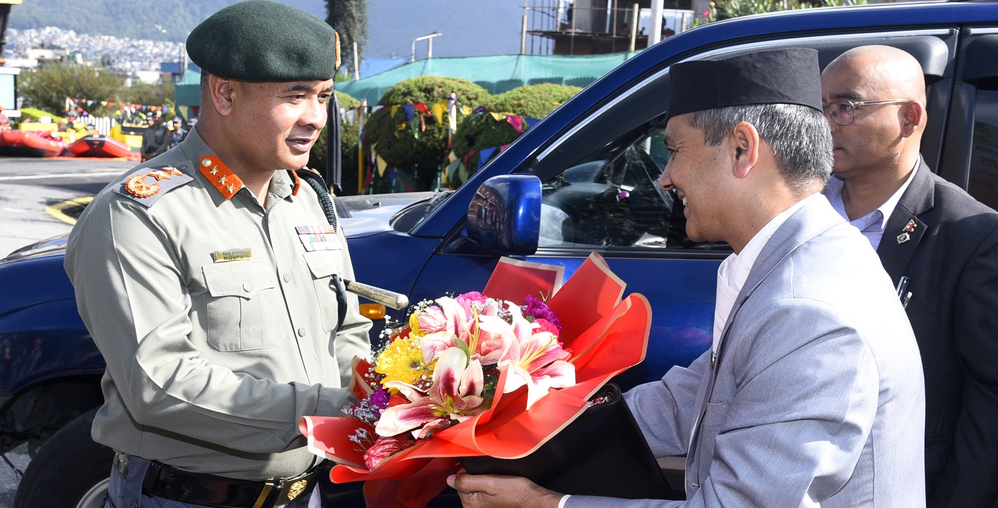
According to experts, in the security committee meeting on the night of 23 Bhadau, which also included the then Prime Minister KP Sharma Oli, it was concluded that the Nepali Army would be mobilized and the situation would be brought under control as soon as the curfew was imposed. However, officials claim that the army has not been deployed in the field since morning. The then Prime Minister Oli has been expressing dissatisfaction over the lack of mobilization of the army.
According to military officers, at that time, the army team was deployed inside the parliament building in New Baneshwor as a 'backup'. 'The army is not a force that can be mobilized at any time, and the Security Council had not even decided to mobilize,' says a military officer. 'If the army had been mobilized at that time to prevent physical damage, the human loss could have been even greater. That is why we exercised restraint.'
According to experts, in the past, joint exercises between the Armed Police Force and the Nepal Police used to be held in the field before major riots or demonstrations. The commanders and soldiers would sit together and discuss how to deploy. 'But, now that all that is zero, the problem has arisen,' says former DIG Thapa.
DSP Shailendra Thapa, joint spokesperson of the Armed Police Force, says that a review is being conducted at various stages regarding the shortcomings in crowd management. 'Discussions are ongoing on what needs to be done at which level for improvement,' he said.
While discussions are being held in the home administration regarding the lack of coordination among security agencies, newly appointed IGP of Nepal Police Dan Bahadur Karki has tried to give a different message by meeting with Chief of Army Staff Ashok Raj Sigdel at the military headquarters. He has also called Armed Police Force Chief Raju Aryal to the police headquarters to meet him and try to give a message that the security apparatus will work in coordination.