Abuses against women, such as 'cyberbullying', hate speech, 'trolling', online threats, 'revenge porn', 'AI-generated deepfakes' and character assassination, are on the rise. The United Nations has made digital violence the main theme this year in its campaign against gender-based violence, which runs from November 25 to December 10 every year.
We use Google Cloud Translation Services. Google requires we provide the following disclaimer relating to use of this service:
This service may contain translations powered by Google. Google disclaims all warranties related to the translations, expressed or implied, including any warranties of accuracy, reliability, and any implied warranties of merchantability, fitness for a particular purpose, and noninfringement.
ABC (name changed) from Kathmandu was devastated when she found out that her husband had forwarded the intimate photos and videos she had sent to other friends while chatting on Facebook Messenger and WhatsApp while he was abroad. One of her husband's male friends, who works as an accountant at an NGO, told her about it. At first, she didn't believe it, but when the friend forwarded her photos to him, she fainted.
"Intimate sharing happens between old people, no one can imagine that their own old man would do such a thing," she said, "It happened when he was returning to Nepal, I didn't say anything until he was in Qatar. After coming here, I filed a complaint with the Cyber Bureau."
When the police examined her husband's devices, they found ample evidence. He was arrested and a case was filed under Section 47 of the Electronic Transactions Act, 2073. This incident of a husband misusing his wife's intimate photos was not new to the police. Recently, such incidents of digital violence have been increasingly registered in the Cyber Bureau.
According to Deepa Bhattarai, a police inspector from the Cyber Bureau's 'Pillar Five', i.e. the branch that looks after incidents related to women and children, most of the incidents are currently based on 'blackmail', 'extortion', and 'revenge porn'. As of mid-Kartik of the fiscal year 2082/83, the bureau has received about 2,900 complaints related to violence against women.
In 2081/82, 8,040 and 9,000 women filed complaints in 2080/81. ‘Looking at the annual statistics, it seems that digital violence against women is gradually increasing in Nepal,’ says Police Inspector Bhattarai, ‘Digital violence is not limited to lovers only, it also happens between husbands and wives.’
Looking at the overall complaints received by the bureau and the statistics of arrests, women appear to be the most victims of violence through digital means. A total of around 6,000 complaints were registered with the bureau by mid-Kartik of the current fiscal year, and 44 cases had reached the court. Out of the 44 victims involved in those 44 cases, 34 were women, informed the bureau’s spokesperson Deepak Raj Awasthi.
‘Most of the victims who file complaints are between the ages of 18 and 25, including women from rural areas, educated women and celebrities,’ he said. ‘Given the nature of violence through digital media, most of the incidents are linked to social media.’ According to him, in such incidents, when the relationship is good, activities such as threatening, insulting or sending obscene messages (sexting) by misusing documents, photos or videos exchanged are often seen.
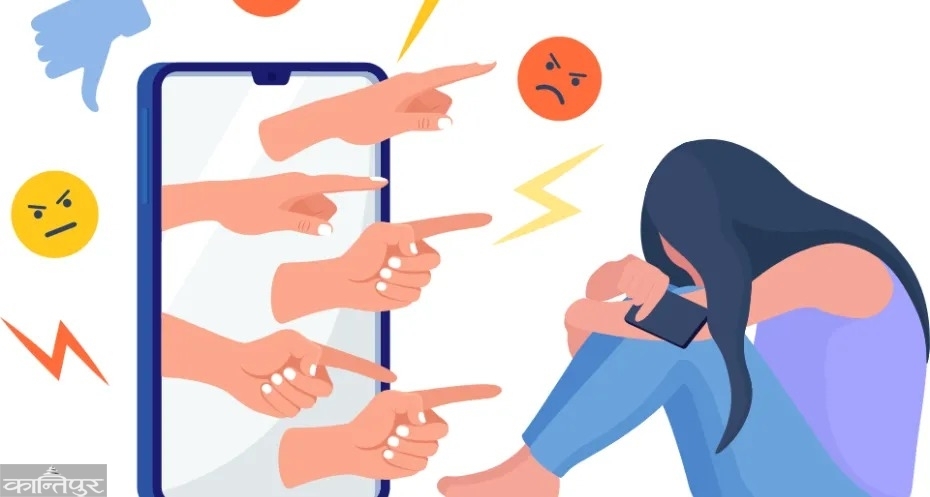
Former Miss Nepal Malvika Subba, who is active on social media, said that the biggest impact of digital violence is on mental health. According to her, due to such violence, the victim does not feel like using social media, does not feel like talking to people and feels inferior, such as ‘Did I do something wrong, am I the one with no character?’
‘Celebrities and actresses have to face a lot of violence in the digital medium, I also kept thinking for many years that I was wrong,’ she says, ‘When I started working in the development sector, I finally realized that it was not us, but those who were committing the violence were to blame.’ Malvika says that nowadays, singers and actresses should be praised for courageously raising their voices against this and encouraged.
The speakers at the interaction program organized by the Forum for Women, Law and Development (FWLD) and the Sancharika Group on Monday on the increasing digital violence against women in Nepal also emphasized that open dialogue and legal reforms are indispensable to control digital violence. Advocate Sabin Shrestha pointed out that now that all means of violence have become digital, there is no proper law to address cybercrime in Nepal.
‘The Electronic Transactions Act, which was designed to regulate online transactions, has been used to regulate cybercrime,’ he said, ‘The Information Technology and Cyber Security Bill and the Social Media Bill do not include a gender perspective.’
Advocate Shrestha suggested that the word ‘gender’ should also be added to the definition of ‘hate speech’, not only class, caste, and religion. Uday Bahadur Rana, Acting Secretary of the Ministry of Communications and Information Technology, said that the Cyber Law (Information Technology Bill) currently under discussion in the House of Representatives has reached a null state due to the dissolution of the Parliament and now it needs to be restarted from there. ‘Since social media platforms are registered abroad, it is difficult to remove problematic content,’ he said, ‘When requested from Nepal, the platform headquarters in Singapore do not listen immediately or take a long time.’
Advocate Shrestha also pointed out that the deadline for registering a case under the current law is only 35 days, which is not sufficient. He said that even though the Social Media Bill proposes 3 months and the Information Technology Bill proposes 6 months, it will be difficult to resolve such cases until the platforms are registered in Nepal.
Cyber Bureau spokesperson Deepak Raj Awasthi shared his experience that even registered platforms have not provided sufficient support to the police in cases of digital violence against women. “Rather, Meta sometimes provides user disclosure, but since it is difficult to get user details from TikTok, there is a delay in the investigation,” he shared his experience. “Since such incidents need to be technically confirmed, we cannot do anything until the user details come from social media.”
Online violence against 38 percent of women in the world
While the 16-day campaign against violence against women is underway this year, the United Nations (UN) has made the issue of digital violence its main ‘theme’ for 2025. This time, the campaign, which will be conducted from November 25 to December 10, is raising its voice against violence through digital means.
The United Nations has stated that violence against women and children is one of the most common human rights violations worldwide. While physical domestic violence and sexual abuse remain a problem, various studies have shown that online platforms have exacerbated it.
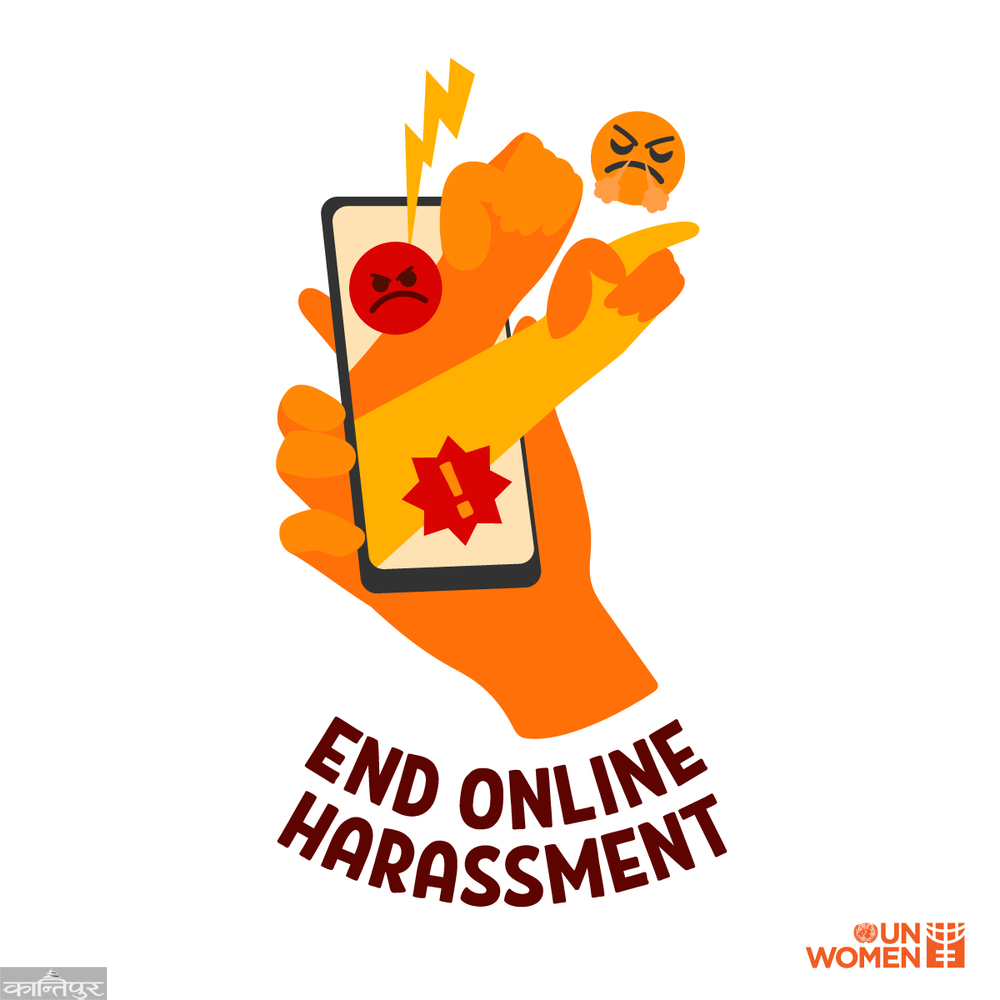
Women are being subjected to abuses such as ‘cyberbullying’, hate speech, ‘trolling’, online threats, ‘revenge porn’, ‘AI-generated deepfakes’ and character assassination, according to a ‘FAQ’ released by UN Women on November 13.
‘How would you feel if a stranger sent you a message detailing your every move from the time you woke up in the morning to the time you went to bed at night?’ The ‘FAQ’ reads, ‘Or, if you found a video of you that had been edited and posted on the internet in a pornographic manner?’ These incidents of digital abuse are not fictional, they are a reality for millions of women and girls in today’s digital world.’
According to data collected by UN agencies, 38 percent of women worldwide have experienced online violence, and 85 percent have witnessed digital violence against others. The world’s 1.8 billion women and girls have no legal protection against digital violence. ‘AI-based deepfake technology is now widely used, with 95 percent of deepfake content seen online being created from pornographic images taken without consent,’ writes Ana Carmo in UN News, ‘99 percent of the target audience for such deepfake content is women.’
Weak technical regulation, impunity for digital platforms, the use of AI, movements against gender equality, the anonymity of perpetrators, and the lack of adequate support/assistance for victims are the reasons for the increase in digital violence, according to UN Women.
“Most deepfake tools created by male developers are not designed to work with male images,” Carmo wrote in UN News, “This highlights the gender bias of technology itself. UN Women is urging technology companies to hire female developers and staff, make their platforms safer, remove harmful content immediately, and act promptly on reports of abuse.”
Some activists say the distinction between online and offline is an illusion. Activists say that the impact of digital abuse ultimately affects women’s real lives and must be addressed seriously.
At an event held at the UN building in Lalitpur on November 25, the first day of the 16 Days of Activism Against Gender-Based Violence, UN Resident Coordinator Hana Singer-Hamdi pointed out that a multifaceted approach is needed to end digital violence. "Strong and clear legal and policy frameworks are needed. Such frameworks should be based on the experiences of victims and implemented with zero tolerance," she said. "Online safety is not a privilege for women, it is a right."

